
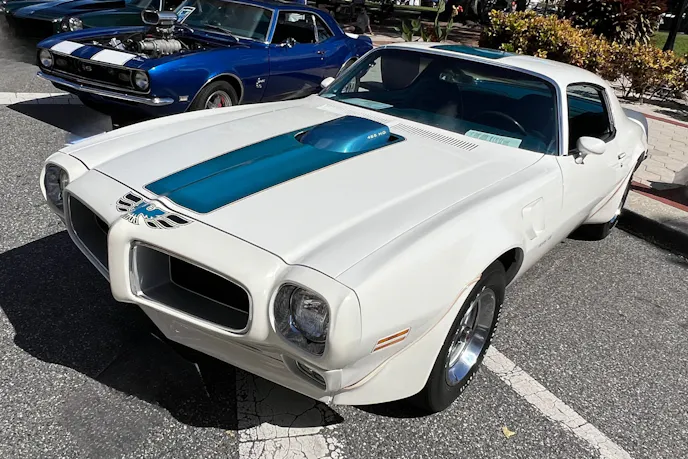
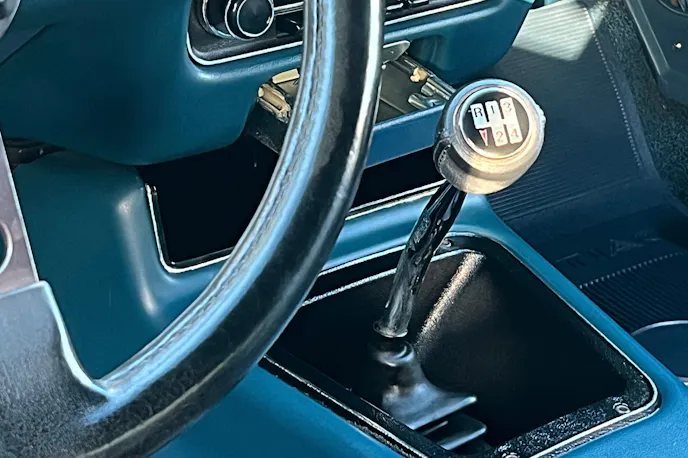
To see any Pontiac Trans Am in the real world before the movie Smokey & The Bandit came out in 1977 was a bit of an oddity. The Pontiac Trans Am was a square peg in the round performance car hole, especially from 1970-1974. Think about it: Poncho dealers moved a scant 697 Trans Ams in 1969, 3,196 in 1970, and 2,116 in 1971. Our feature car, an unrestored ’72 Pontiac Trans Am 455 H.O. with a Muncie M22 four-speed, is even more dear: It’s one of only 458 of that vintage with a stick.
Yeah, things were bad for the second-gen Poncho ponycar. A 67-day UAW strike at the start of production hampered sales in ’71. A second strike in ’72 shut down the Norwood, Ohio, assembly plant, leaving around 2,100 partially assembled Camaros and Firebirds on the line, only to be picked for parts and crushed once the strike ended. GM was considering cancelling the F-body line entirely. The Trans Am 455 H.O. was one of the few hold outs of the dying muscle car era, but for ’72 a not-so-grand total of just 1,286 were built, a sliver of the meager 29,951 Firebirds produced.
The 455 H.O. became the standard (and only) engine in the Trans Am in 1971, the year GM dropped compression ratios across the board. It was no dead smogger, however. It produced 335 gross horsepower (305 net), making it one of the most powerful muscle car engines of ’71.
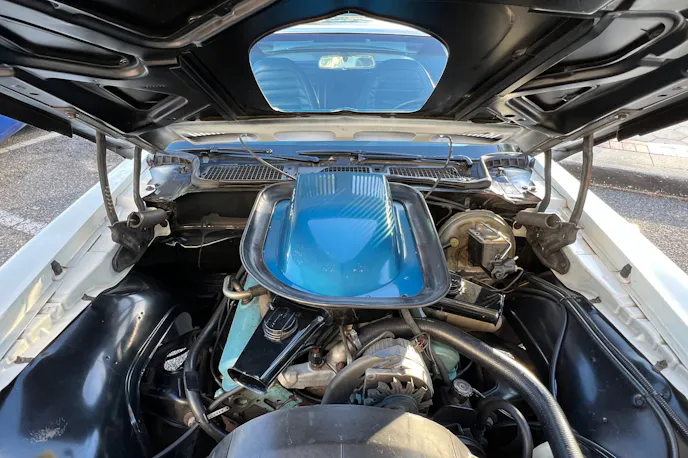
The ’72 455 H.O. was downgraded to 300 net ponies, likely the result of ever-tightening tuning to pass emissions. Cars magazine tested one and ran a supercar-worthy 14.58 at 98 mph. With proper jetting and ignition work by Pontiac tuning legend Nunzi Romano, it ran a 14.04 at 103 mph. Add headers, some head work and sticky tires and 12s are achievable.
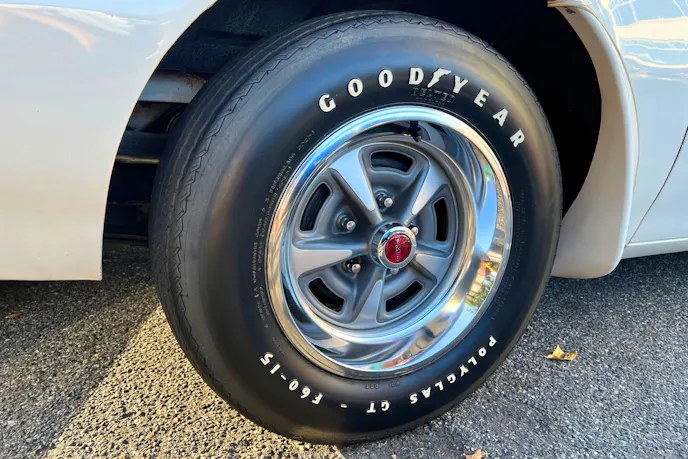
But modifications were not in the cards for our feature car, then or now. It is a documented, unrestored 32,000-mile survivor, and the only deviation from when it left the factory are the wheels. It departed Norwood with Honeycombs, but current owner Rob Timken prefers the look of factory Rally IIs, so he added a set. Fear not, the original Honeycombs are being safely stored.
… the Trans Am is probably the best handling car ever made in this country — if you know how to drive …
Cars Magazine, September 1972 issue
A Bright Spot Before The Malaise Era
What made the 455 work with a compression ratio of only 8.4:1? First, it had good round-port heads (casting number 7F6), the dual-pattern 068 cam with 288/302 degrees of duration and .410-/.413-inch lift, free-flowing exhaust manifolds, and a Quadrajet carb jetted for the functional cold-air shaker hood.
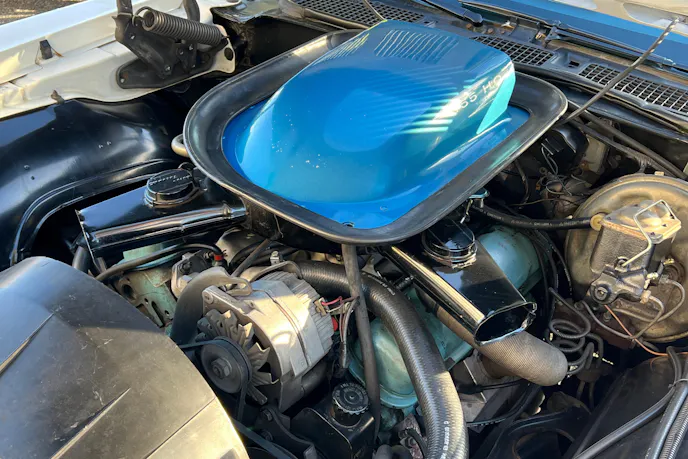
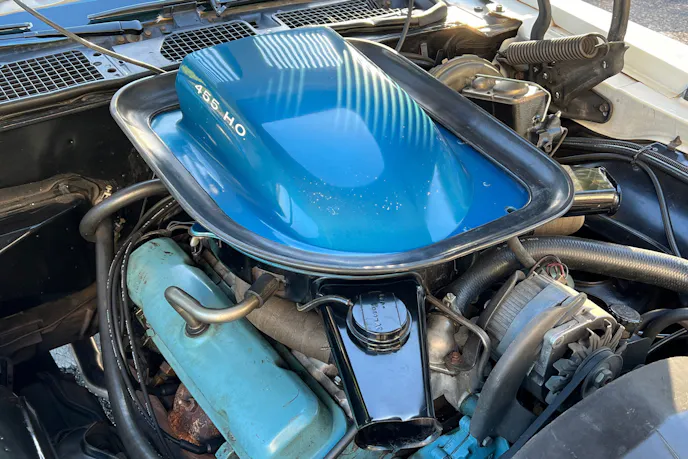
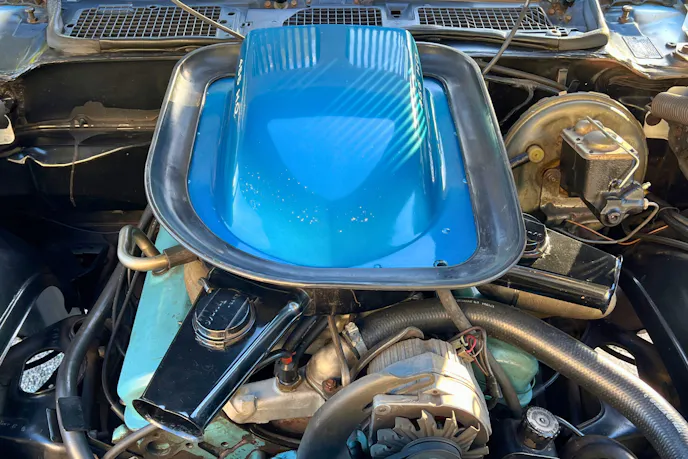
The standard gearbox in the T/A was the good ol’ Muncie M22. The rear got 3.42:1 gears — plenty for a street-driven Pontiac V8.
Of course, the Trans Am’s handling is what had enthusiasts swooning. Cars called it perhaps the best handling American car ever, with the ability to go around corners at least as well as a small-block Corvette. It reported the car’s tendency to oversteer by saying, ”The car is not one a novice will find easy to drive,” then adding, “An oversteering car does not a casual or novice driver feel at ease. An experienced driver will know how to use oversteer to get around a road course quickly, and he will revel in the ability.”
Loaded For Road Or Track
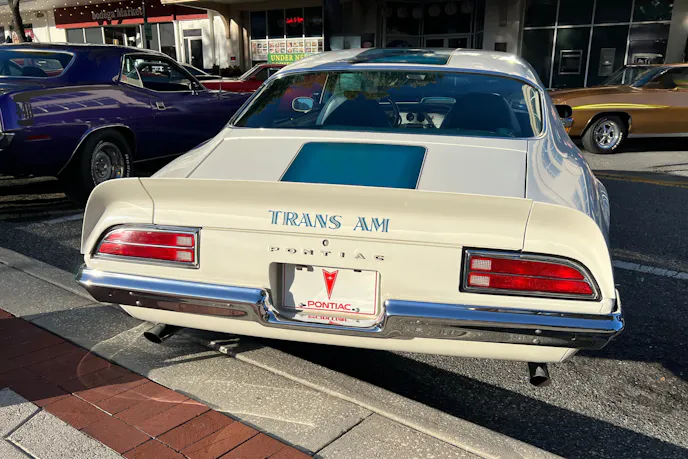
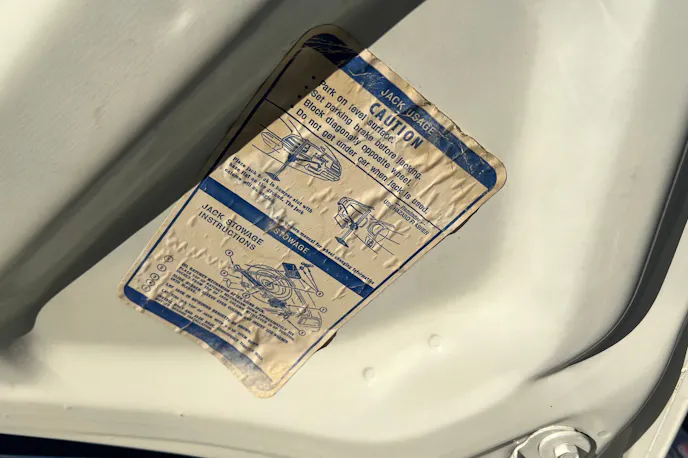
Timken has owned this F-body since 1995 and he is the third owner. It was originally out of Nelson Pontiac in El Monte, California, but was stored from 1975 until Rob picked it up. It is truly a time capsule. The Cameo White paint, blue custom interior, and unused spare tire are original. The engine, exhaust system, gearbox, and rear are untouched. The solenoid-activated scoop still ducts cold air to the Rochester carb, an asset that would disappear in years to come.
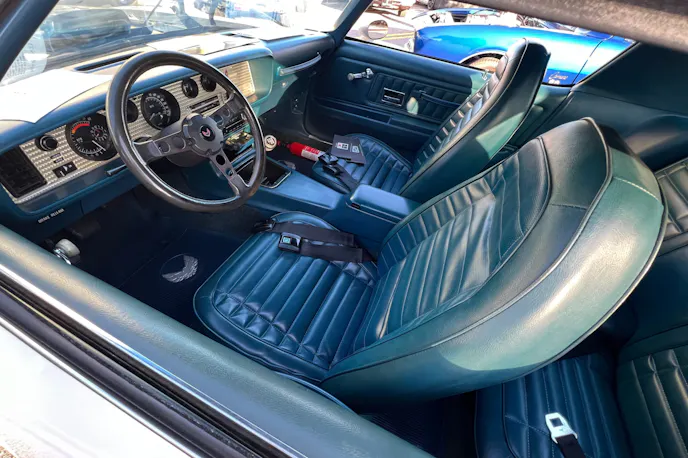
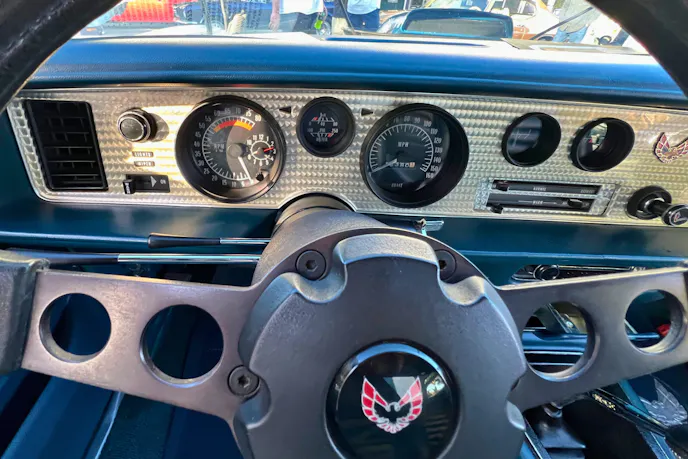
Among the options are the U63 AM radio, D55 front seat center console, N33 tilt steering wheel, front and rear floor mats, A01 Soft Ray tinted glass, K65 Unitized Ignition, and the Y90 custom trim group (which, for $78.99, consisted of a trunk-fitted floor mat, roof insulator pads, rear quarter ash tray, front door handle decor, front deluxe bucket seats and door and quarter panel trim). There was even $15.80 tacked on at the factory for the California emissions test.
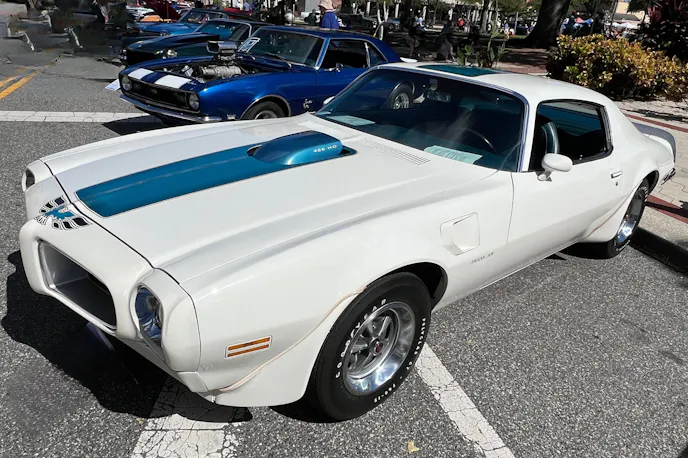
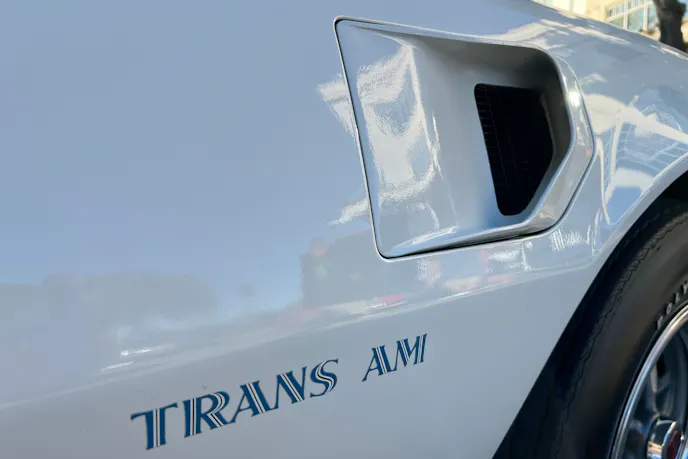
The price for the base Trans Am was $4,386, plus a $219 destination charge. With options, Rob’s Trans Am stickered at $5,002.06 — about $800 less than a similarly equipped ’72 454 Corvette coupe. True, they appealed to a completely different customer, and from what we’ve seen in vintage road tests, the big-block Vette had a slight performance advantage in the quarter-mile (14.1 at 93 in a MotorTrend magazine test).
On the other hand, the Trans Am gave you a more modern body design, room for extra passengers, and the advantage of exclusivity. At least until the general public caught on and Smokey & The Bandit made everyone in America want one.
We’re also happy to report that despite the car’s low mileage, Rob does exercise the F-body. No, there aren’t any banzai beer runs from Atlanta to Texarkana in its future, but he loves climbing behind the wheel from time to time.
You might also like
Project F-Zilla: Building A Bulletproof IRS For Our Street Truck
We wanted to address our IRS center section. To ensure it can handle all 764-horsepower, we turned to Strange Engineering.