
If you walked the aisles at the 2025 PRI Show, you’d have noticed the industry’s obsession with data. Everyone is trying to capture it faster and cleaner. Strange Engineering just released a hardware specifically designed to feed that hunger. We caught up with JC Cascio to look at two major releases that are going to matter a lot to serious bracket racers and the drag-and-drive crowd.
Precision Driveshaft Speed Sensor Kits
First up is a dedicated line of driveshaft speed sensor kits. Strange didn’t just grab an off-the-shelf sensor and slap a sticker on it. They spent a couple of years dialing these in for the most common rear ends we use: the Ford 9-inch, GM 12-bolt, Ford 8.8, and Dana 60.
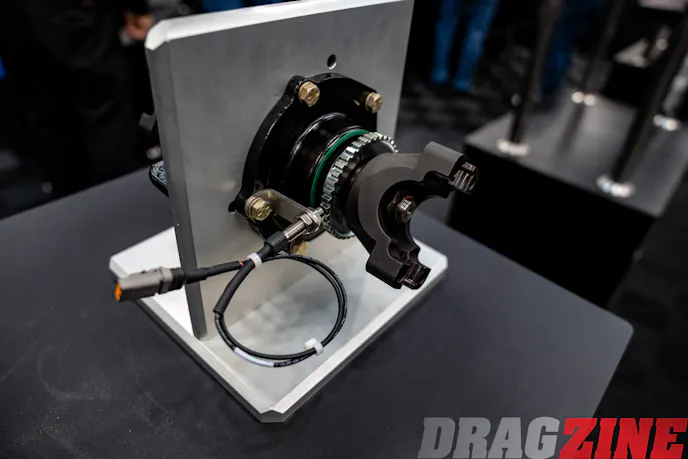
The setup uses a 40-tooth trigger wheel and a Hall-effect sensor to generate an incredibly clean signal. That resolution is critical. Whether you are managing traction control or just trying to overlay wheel speed with engine RPM to see where the converter is slipping, you need accurate inputs. Cascio emphasized that they tested these heavily to ensure they hold up to the violence of a launch without dropping the signal. It’s a purposeful tool for racers who are tired of guessing.
The Updated Evolution 2 Brake System
The part that really stopped traffic at the booth, though, was the revamped Evolution 2 brake system. Strange took the lightweight DNA of the original kit and refined the mechanics to reduce rolling resistance even further. The new two-piston caliper features redesigned pistons that retract better, ensuring the pads don’t drag on the rotor after you let off the pedal. Combined with an ultra-light 11-inch scalloped rotor and smooth ball bearings in the hub, the whole package is built to roll freely.
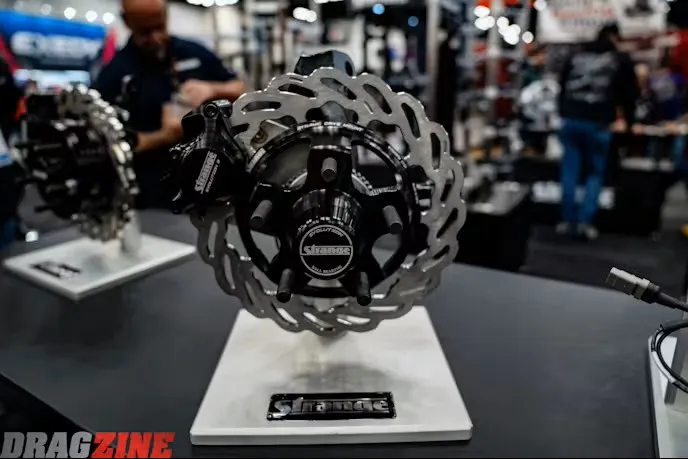
What’s really cool is how they integrated data here, too. You can opt for the Evolution 2 brake system with a built-in speed sensor. This gives you another data point for your ECU or traction management without trying to zip-tie sensors to your struts. It’s a smart update that combines efficiency with the data collection that modern builds usually demand.
You might also like
1,511-HP Street Machine: John Warren’s Nuclear ’72 Chevy Nova
It's still the same Chevy Nova that Warren drove to school, only it's packing enough power to run with the quickest cars in the country.