

Imagine you are a big wig and Chevrolet. You are all proud of your new Chevelle, a car that’s perfect for the exploding midsize class. It’s handsome and roomy, you have an SS model for the sporty set, and there are even a couple of hot small-blocks available on the option sheet. Then the Pontiac GTO arrives, based on the same A-body architecture, and it’s offered with a 389 and Tri-Power carburetion. Suddenly your new baby is as appealing as two day old bread. The answer? The 1965 Chevelle Z16.
Chevy was in a very tough spot. The ’64 Chevelle was available with the now tried-and-true 283 and 327 engines, but the only large-displacement mill in the arsenal was the soon-to-be replaced W-motor. Yeah, the 348 was good and the 409 “real fine,” but it was heavy and its replacement was a year away.
The answer came midway through the ’65 model year. Chevrolet built 201 Chevelles with a hot hydraulic lifter cam version of its new 396 Mark IV big-block. According to Car Life magazine, these were “brass hat” specials, for use by magazines, VIPs and racers, to get publicity for the 1966 SS396 model that was in the works.
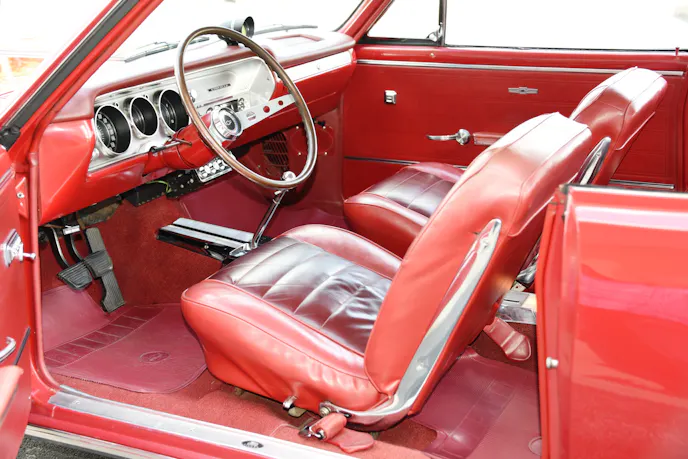
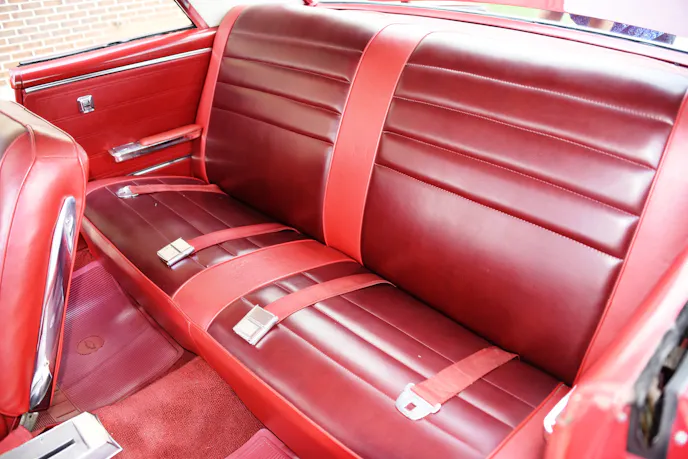
The Z16 was a $1,501 option, which sounds cheap until you look at the base price of the car, which was only $2,647. Lots of mandatory options were loaded on, too, These included (but are not limited to): Deluxe front seat belts with retractors, rear seatbelts, power steering, tachometer, power drum brakes, and stereo adapter with AM/FM radio. These and other niceties pushed their prices out the door to over $4,500.
The top Chevelle came standard with an 11:1 compression 375-horsepower 396, with 420 lb-ft of torque, 3.31 gears and a wide-ratio M20 four-speed. It was more than enough to keep up with any GTO at the tine. Our feature car was tested when new by Popular Hot Rodding magazine (RIP) in its September 1965 issue. It ran 14.6 at 100 mph, which made it the first Chevelle to run that kind of mph in stock trim.
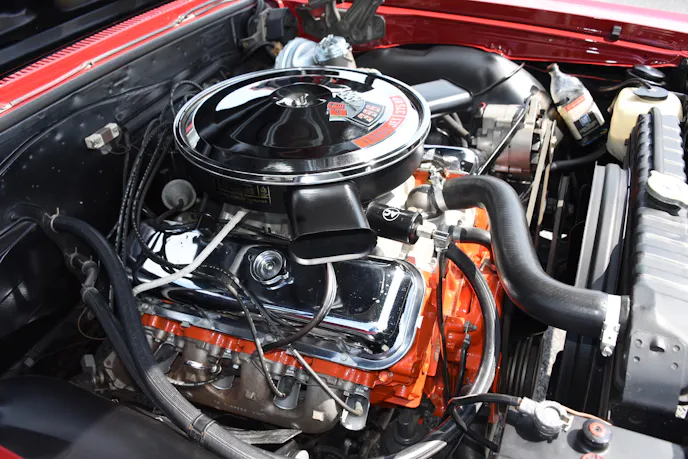
The L37 engine came with a pretty hot hydraulic cam, with split duration (342/346 degrees duration), 2.19-inch intake and 1.72 exhaust valves. It differed from the Corvette and full-size high-horse 396, which had more radical cam timing and solid lifters. The 425-horse 396 also had better exhaust manifolds and an open element air cleaner on the Vette.
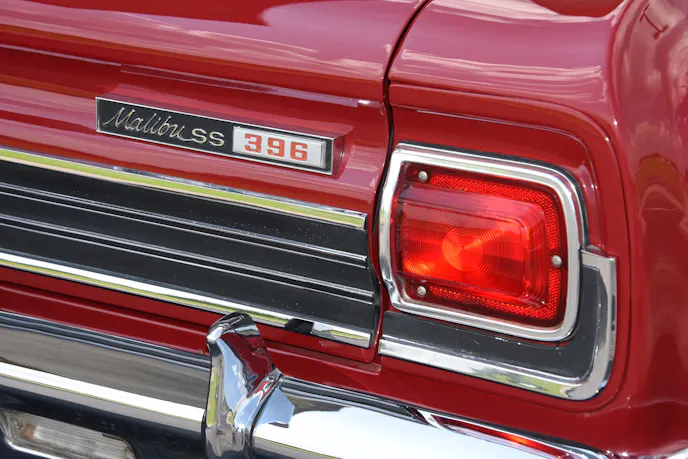
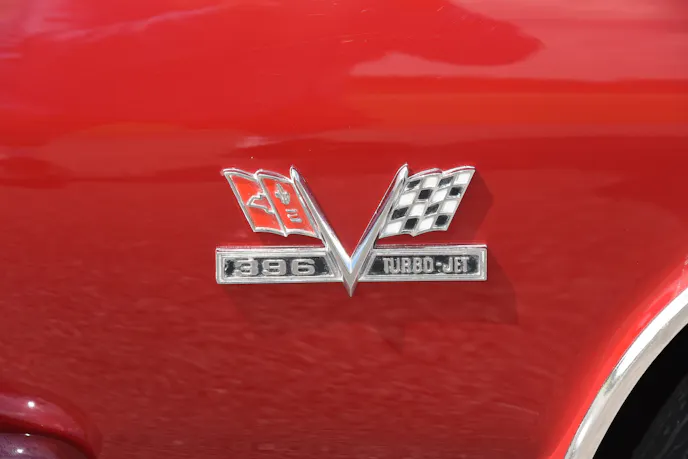
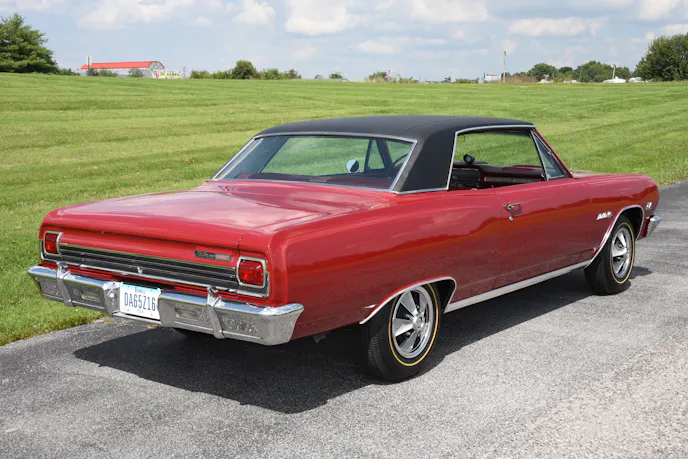
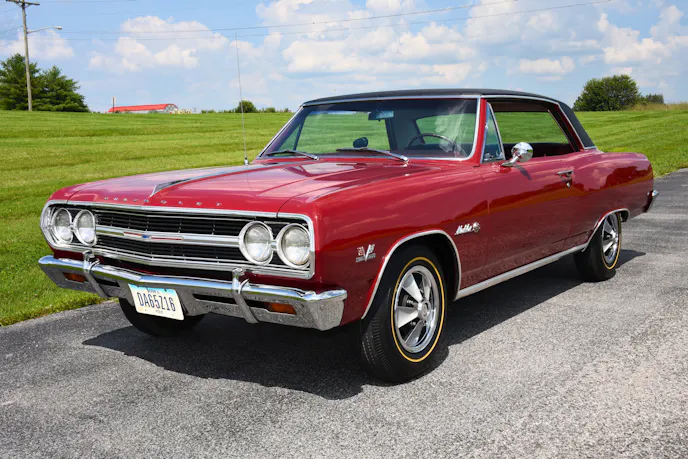
Ankeny, Iowa’s Dennis Albaugh is the proud owner of this Z16 option, 1965 Chevelle Malibu SS two-door hardtop. It is the 17th Z16 off GM’s Kansas City, Missouri. assembly line.
The Z16 package included 11-inch power drum brakes, a boxed convertible frame, heavy-duty radiator and fan shroud, boxed lower control arms and rear anti-sway bar, 160 MPH speedometer, 5,600 redline tachometer, black vinyl top, and dash mounted clock. Left hand remote control mirror, power windows, tilt steering, simulated “mag” wheel covers, bumper guards, special rear chrome package unique to the Z16, and a dual snorkel air cleaner, Our feature car proudly wears its code 786 red bucket seat interior, power windows, and tilt steering wheel.
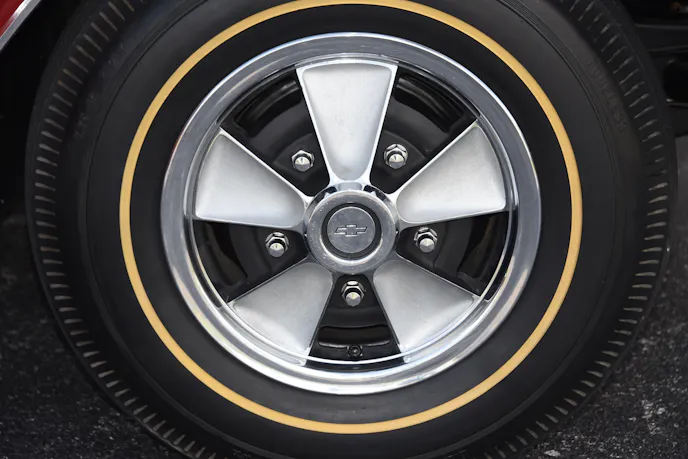
This 1965 Chevelle Z16 may well be the most original example in existence, having only received a minor cosmetic restoration. Even the interior is 100 percent factory issue. It sold new through Southern California’s Clippinger Chevrolet.
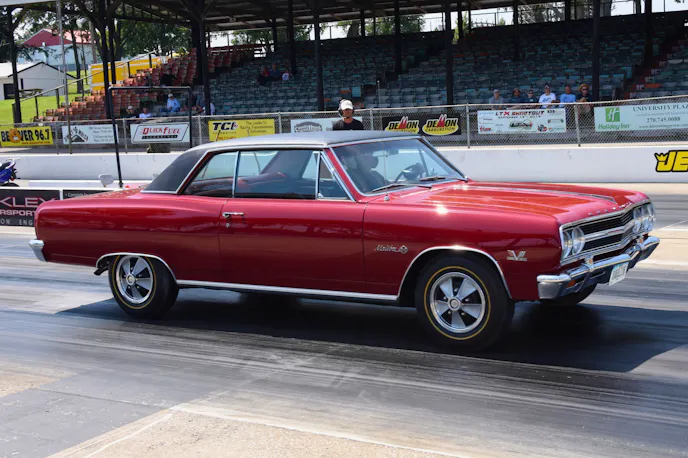
By the end of 1965, Pontiac had sold 107,802 GTOs (in two years) to Chevy’s 201 SS396 Chevelles, but this was just the opening salvo. Chevrolet was just getting started and by 1969, the SS396 would become the best selling muscle car in America.
You might also like
1,511-HP Street Machine: John Warren’s Nuclear ’72 Chevy Nova
It's still the same Chevy Nova that Warren drove to school, only it's packing enough power to run with the quickest cars in the country.