
The muscle car has always been loosely defined as an American-made, midsized, rear-wheel drive, two-door coupe with a powerful V8 engine, designed primarily for straight-line acceleration. In 1970 though, Plymouth, the low-cost division of the Chrysler corporation, introduced the Sport Fury GT 440 Six-Barrel, a muscular car that defied many facets of that definition.
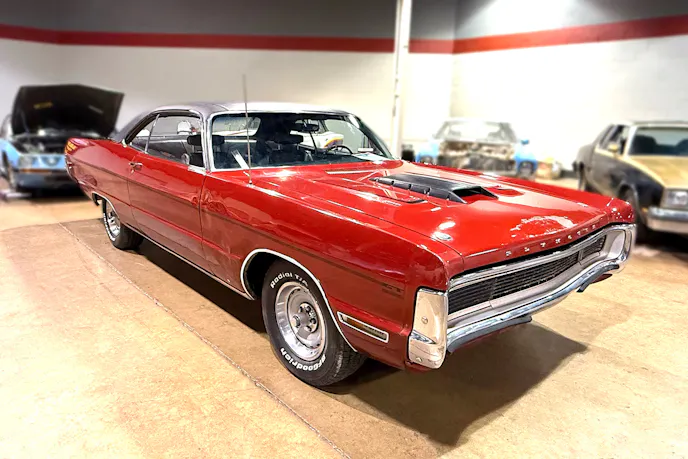
Absolutely massive by anybody’s standards, the 1970 Sport Fury 440 Six-Barrel looked more like your grandpa’s boulevard cruiser than a muscle car, and came devoid of the scoops, wings and other histrionics that were hallmarks of the subspecies. What it did have though, clearly recognizable by any muscle enthusiast, was power. Lots of it.
By the time of its release in the autumn of 1969, plus-sized muscle cars had largely gone the way of the Dodo, and despite Plymouth’s earnest attempt to reignite the segment with this offering, the big car failed to capture the hearts and minds of buyers.
Because of this though, the 1970 Plymouth Sport Fury GT 440 Six-Barrel was produced in outrageously small numbers, making it a scarce and desirable classic today, and a perfect subject for this month’s installment of Rare Rides.
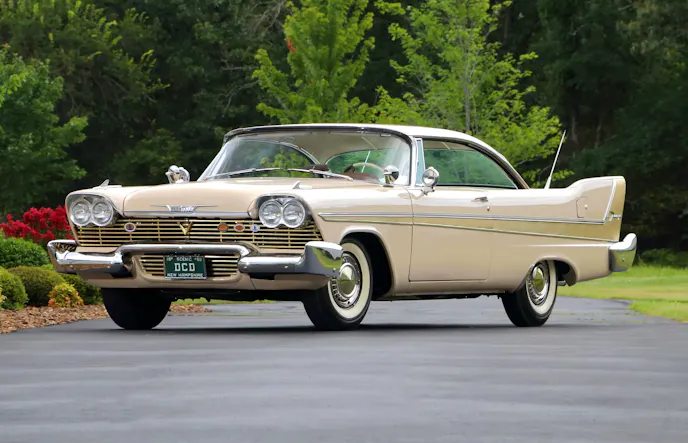
The 1970 Plymouth Sport Fury GT 440 Six-Barrel story begins back in 1956, when the Fury was released as a midyear trim level on the Plymouth Belvedere. A two-door hardtop adorned with gold anodized trim and only availably in a lone color, Sandstone White, and the Fury made quite an impact on consumers. In 1959, it became a standalone fullsize model positioned above the Belvedere.
From there, the Fury vacillated between being a midsized offering from ’62 to ’64, and then back to being a fullsize vehicle from 1965 until 1974. Throughout these generations, the Fury was given cutting-edge styling and a selection of powerful V8 engines (including the legendary 413 Max Wedge), and as a result became an iconic model in the Plymouth lineup.
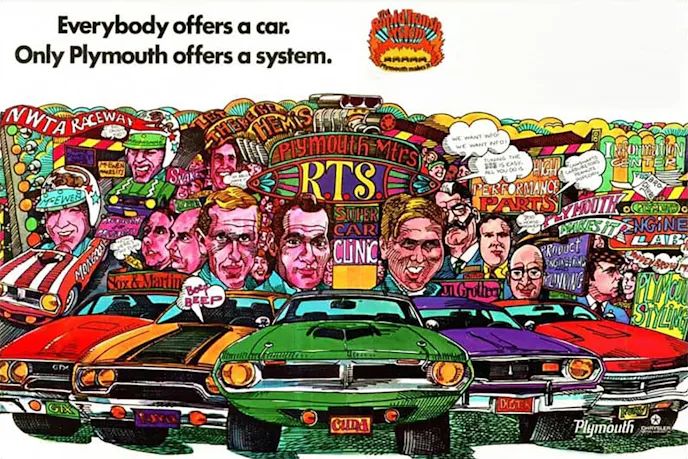
Plymouth prepared for this titanic 1970 model year battle by producing a fleet of performance vehicles the division deemed its “Rapid Transit System,” that could all be outfitted with Mother Mopar’s most spirited mills. This stable consisted of the new E-Body Barracuda, the B-bodied Satellite, Road Runner, GTX and outrageous Superbird, the compact A-Body Duster, and the fullsize C-body Fury and Sport Fury.
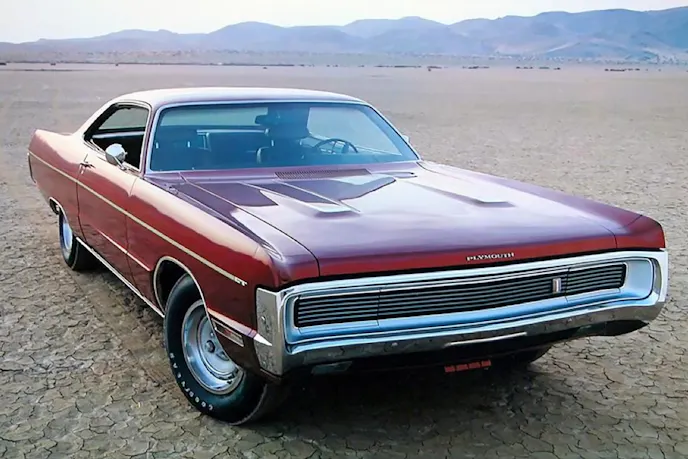
In the case of the C-body, 1970 was the second year of its “Fuselage Styling.” Hallmarks of the look included curved side glass that leaned inwards at the top of the greenhouse, and body sides that curved inwards at the rockers, creating a subtle look comparable to a jet airliner in cross section.
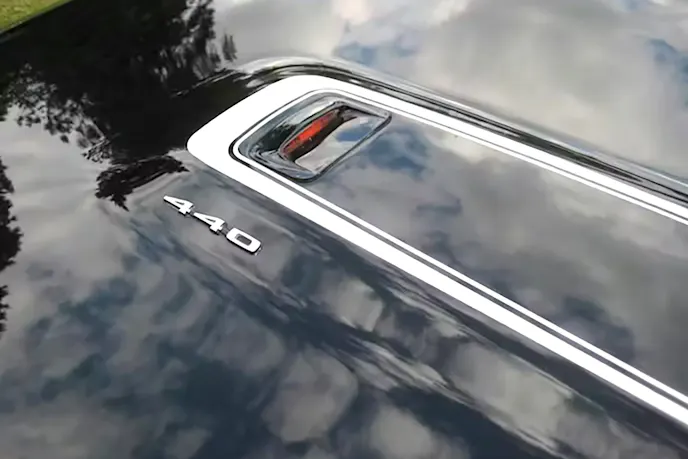
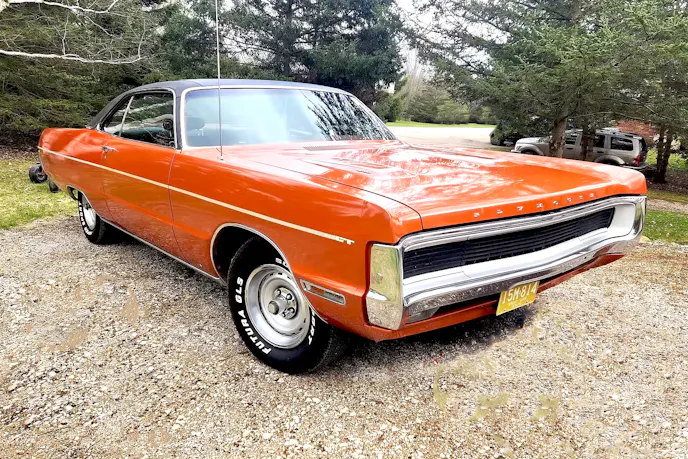
At the front, the Sport Fury GT featured a full-width, loop-style, chrome grille which incorporated the front bumper and surrounded an inner section with horizontal slats and doors that hid quad headlights. A long hood followed which was treated to twin faux vents with engine callouts and a stripe that could be deleted by special order.
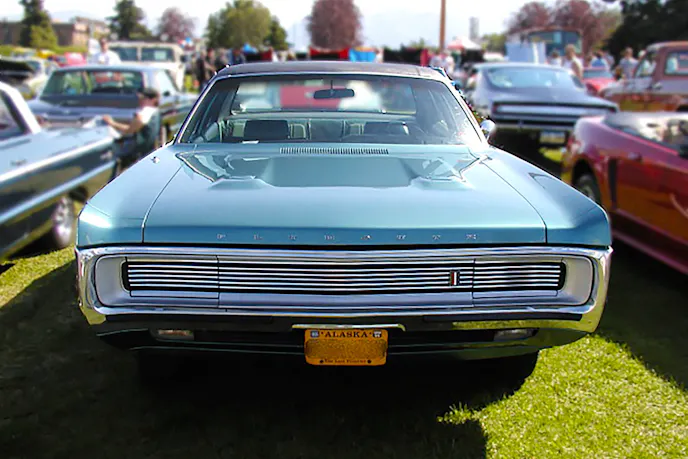
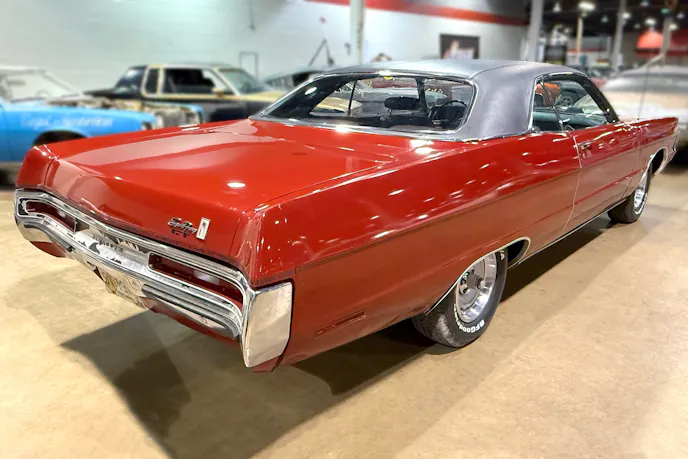
A steeply-raked windshield was next, leading to a low-slung greenhouse. A wide C-pillar gave way to curved rear glass and a long trunk. The car’s rear features mirrored the front, with a chunky chrome loop bumper that encircled thin, rectangular taillights flanking a center panel adorned with a simple “PLYMOUTH” logo.
The car’s flanks were largely unadorned, with only two fine cut lines to break things up. The higher cut line was covered by a thin, full length strobe stripe with a “GT” logo at the head of it that could be deleted by special order. Additionally, the top half of the rear wheels were covered up by the bodywork.
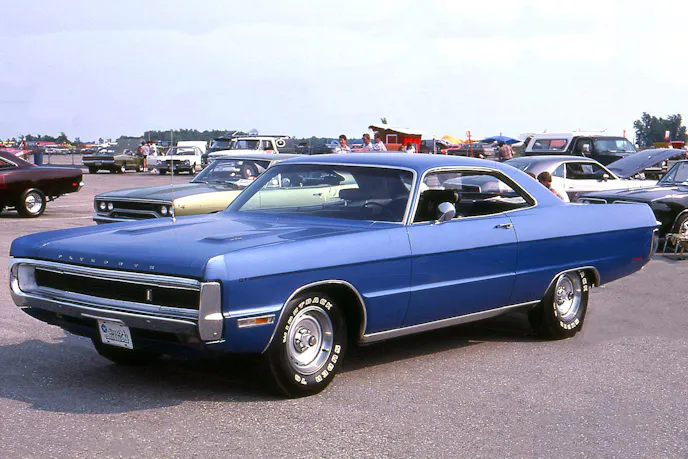
Exterior options included vinyl roof coverings including Boar Grain Vinyl, Gator Grain Vinyl, and Turtle Shell Vinyl that featured a “Snapper” turtle image on the C-pillar. Other options included fender mounted turn signals, a remote-control driver-side window, bumper guards, and color-keyed side moldings.
Dimensionally, as was previously stated, the car was a beast, especially for a coupe. Overall length was 214.9 inches, with a wheelbase of 120 inches, and a width of 79.5 inches. Curb weight was a hefty 4,200 pounds. Owing to its sheer bulk, owners could forget squeezing their Sport Fury GT into tight parking spaces and many home garages.
In many respects, the design language was quite conventional, with all details concentrated at the front and rear of the vehicle, in contrast to the aggressive looks of the rest of the 1970 Plymouth line.
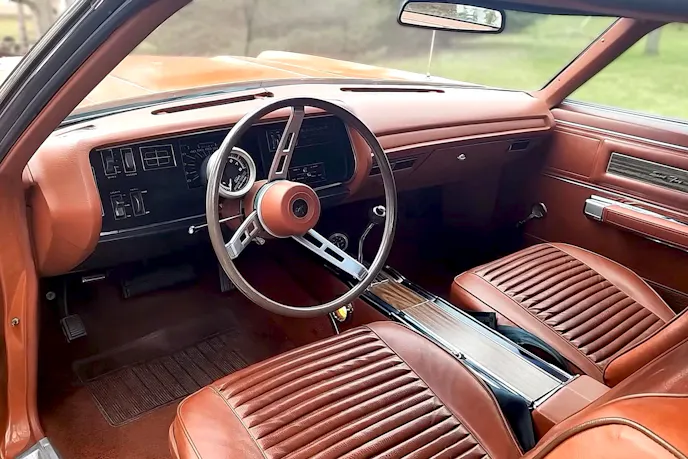
Inside, the Sport Fury GT was conservative too, with a large box in the dash situated in front of the driver that contained all the instruments. They consisted of buttons and dials for the wipers, windshield washers, headlights, panel lighting, and hazards all to the left of a rectangular binnacle that contained the speedometer and gauges for the alternator, coolant temperature, and fuel. To the right of the cluster was the radio and controls for ventilation.
Standard on the Sport GT was a front split bench seat upholstered in vinyl or cloth-and-vinyl with a folding center armrest. Optional were individual sport bucket seats covered in pleated vinyl. A center console with faux-wood trim was available when the latter seat configuration was chosen, and it moved the shifter from the column to the console.
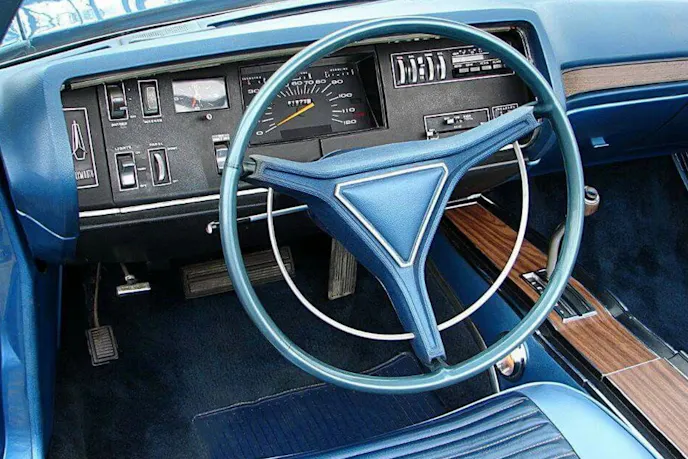
The rest of the car’s interior, such as the door panels and dash, were covered in vinyl, and carpet lined the floors. A Brougham package that featured plusher seating, trunk dress-up, and additional sound insulation was available. Other interior options included a simulated wood-grain steering wheel, an upgraded AM/FM stereo, power windows, power seats, an electronic clock, and air conditioning.
Interior colors included Black, Light Metallic Blue, Dark Metallic Blue, Burnt Orange, Deep Burnt Orange, Light Metallic Green, Dark Metallic Green, Red, Maroon, Tan, and Pearl White.
What made the 1970 Plymouth Sport Fury GT a standout though was what lurked under the hood. Only two engines were available, and they were the two largest, in terms of displacement, in Chrysler’s stable. Standard on the vehicle was the venerable 440 cubic-inch raised block (RB) “Commando” V8 equipped with a single four-barrel carburetor. In Sport Fury GT guise, it was tuned to produce 350 horsepower and a brawny 480 lb-ft of torque. It did not get the high-performance cam of the 375-horse variant.
Optional was the upgraded 440 cubic-inch V-code RB “Six-Barrel” V8, so named for the three two-barrel Holley 2300 carburetors that rested atop the motor. First released the year before, the Six-Barrel (alternately known as the Six-Pack in Dodge speak) featured a bore and stroke of 4.320 inches by 3.750 inches with a 10.5:1 compression ratio. It produced 390 horses and a stump-pulling 490 ft-lbs of twist.
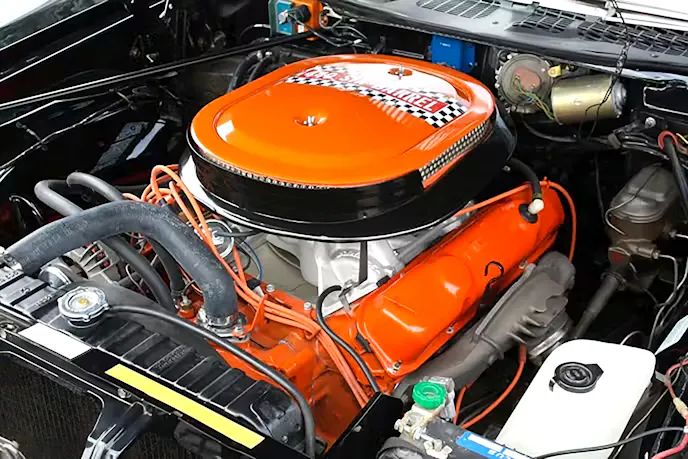
The Six-Barrel engine received several heavy-duty reinforcements over the base Commando. The block was a high-nickel, cast-iron unit which had five main bearings. A heavy-duty, forged steel crankshaft was employed for increased durability and was specifically balanced for the heavier Six-Barrel’s reciprocating assembly. Reinforced heavy-duty “Six-Pack” rods were installed to withstand the engine’s torque production. Special forged aluminum pistons with large valve relief cutouts were also used.
A hydraulic, flat-tappet camshaft with a three-bolt timing gear attachment featured 268º intake and 284º exhaust duration with .450-inch lift. 2.08-inch intake and 1.74-inch exhaust valves had heavy-duty chrome silicone dual valve springs borrowed from the 426 Hemi.
As for the intake, a massive cast-iron unit was used. High-flow, cast iron “HP” exhaust manifolds directed the exhale into a 2.5-inch dual exhaust system. A high-capacity radiator provided extra cooling, and a dual-breaker distributer ensured consistent spark at high RPM.
Transmitting power to the rear was a lone offering: the bulletproof A727 TorqueFlite three-speed automatic. In Plymouth Sport Fury Six-Barrel guise it had four-pinion planetary gearsets rather than three and was equipped with additional clutch plates to handle increased torque. Ratios were a 2.45:1 first, a 1.45:1 second, a 1.00:1 third, and a 2.20:1 reverse.
Power then spun through a heavy-duty driveshaft to Chrysler’s ubiquitous 8.75-inch “Carrier Type” 489 casting rear axle, with a standard “open” differential. Optional was a “Sure Grip” limited slip unit. Final drive on the standard open diff was 3.23:1, while an optional 2.76:1 ratio was available for those who preferred lower RPMs on the highway.
A heavy-duty suspension package consisting of an independent torsion bar setup with heavy-duty shocks and a standard 0.98-inch diameter anti-sway bar up front, along with a solid axle with semi-elliptic six-leaf springs and shocks in the rear was standard equipment. For slowing down, heavy-duty 11-inch drum brakes came with the car, and options included power assist as well as 11.75-inch front discs with Kelsey-Hayes single-piston calipers.
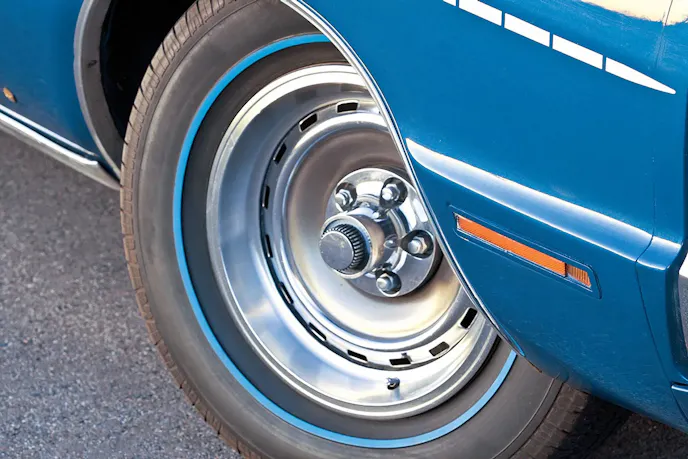
Standard wheels consisted of 15×6-inch stamped steel Rallye wheels typically finished in argent silver with a chrome ring and center cap. For an upcharge, a 15×7-inch version of the Rallyes could be had. For rubber, standard was a set of Goodyear Polyglas H70x15 fiberglass-belted tires. Blackwall or white stripe tires were also on offer.
A period Road Test magazine evaluation saw the car achieve a 16.01-second quarter-mile at 92.5 mph, and called its performance, “fairly sedate,” but it was pretty much identical to a Mercury Marauder X-100 with the 360-horse 429, its only real competitor at this point.
Despite this, the 1970 Plymouth Sport Fury GT 440 Six-Barrel was not a sales bonanza with the public. Perhaps because the 440 Six-Barrel motor lacked the market hype of the 426 Hemi, or the fact that it added $250 to the car’s base price, pushing it over the $4,000 mark, only an estimated 61 to 69 buyers (according to many of today’s authoritative Mopar journals) opted to tick the Six-Barrel box on the order form. The fact that you couldn’t get air conditioning on any of Mopar’s three deuce engines probably diminished sales further.
But Chrysler’s failing at the time has turned the 1970 Plymouth Sport Fury GT 440 Six-Barrel into one of the scarcest Mopars of all time today, with only an estimated 11 or 12 left in existence. As such, when one is up for sale, they can fetch in excess of $200,000, securing the 1970 Plymouth Sport Fury GT 440 Six-Barrel’s position as one of the world’s premiere Rare Rides.
You might also like
1965 Plymouth Satellite 440-Plus Six Packs A Punch
Kenton, the second owner, was lucky enough to score a complete, running 440 Six-Pack out of a totaled '71 Charger R/T