
Horsepower makes heat. Always has, always will, and the more power you make, the more heat that lump under your hood produces. This can have a negative effect on parts, especially when it comes to those near intake and exhaust manifolds/headers. Rising underhood temps cause numerous problems, from vapor lock/hot start issues in carbureted cars to lower horsepower.
That’s where Design Engineering Inc. comes in. It offers a wide array of products to protect both you and your car from the dreaded “H” word.
Mention heat protection to most enthusiasts and they probably think of insulating their floors and interiors to keep temperatures from rising. The reality is keeping temps in check under the hood will help your parts last longer and help your car run more efficiently.
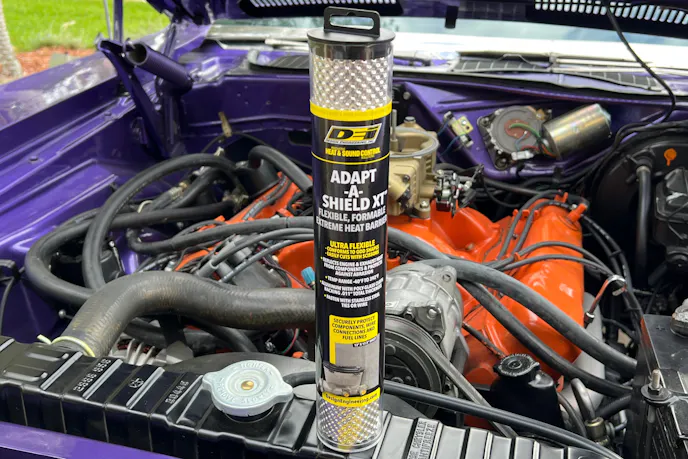
Design Engineering has been around addressing heat and sound-related problems for decades. It consistently comes up with unique and innovative products to help enthusiasts, whether their vehicles have four wheels or two. Two of its newest are Adapt-A-Shield and Lokjaw locking ties (we ran a news item its new products recently).
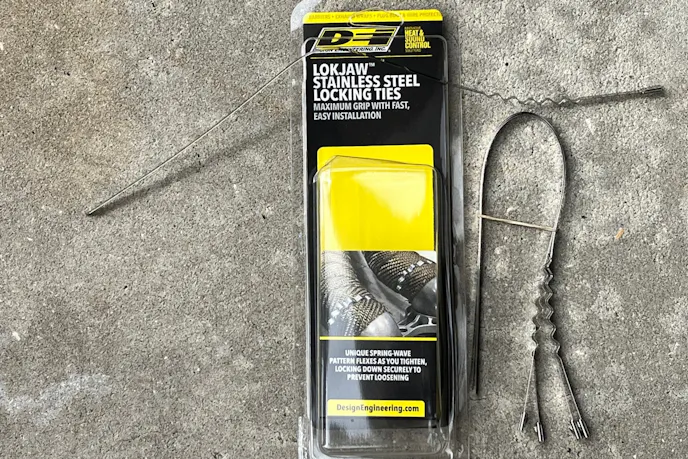
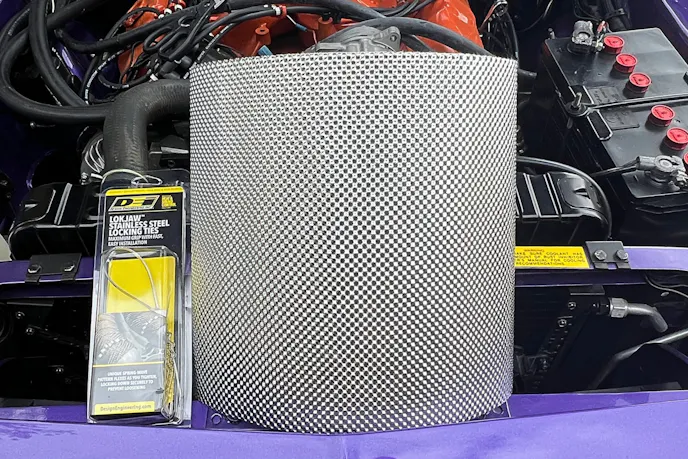
Adapt-A-Shield XT is a formable, flexible, extreme heat barrier to reflect engine and exhaust heat from components and protect against abrasion. It easily conforms to odd shapes and can be cut with scissors or a utility knife. It comes in a 12- x 17.5-inch sheet, so you can cut a little or a lot, depending on your job.
Lokjaw ties are designed to be the tightest-holding locking tie on the market. They’re engineered for maximum grip and lasting tension in any application. They’re also incredibly versatile and easy to use. The waves in the ties create a lasting spring tension around whatever they are tying.
Easy Driveway Install
To see how these products work in the real world, we gave a call to Jeff Burke, whose ’70 In-Violet big-block Plymouth ’Cuda is a perfect test subject (and will be the subject of a future photo shoot). Its 500 cubic-inch Mopar Performance crate engine was advertised at 505 horsepower and 595 lbs.-ft. of torque when new (it has since been discontinued). The cross-bolt-main RB motor uses a .509-inch lift hydraulic flat-tappet cam and breathes through a set of ceramic-coated TTi 1 ⅞-inch long-tube headers.
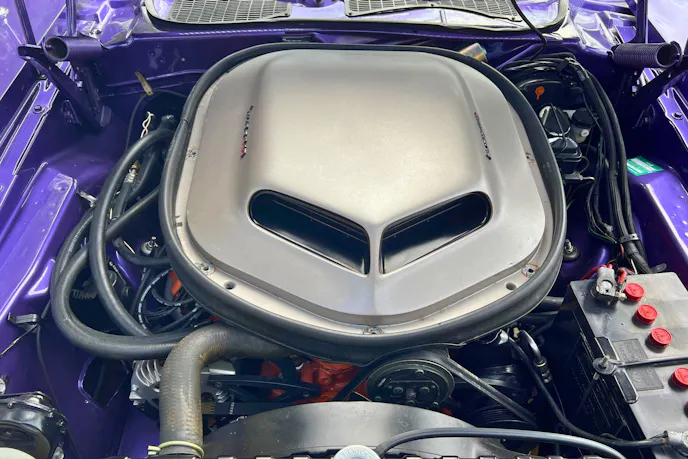
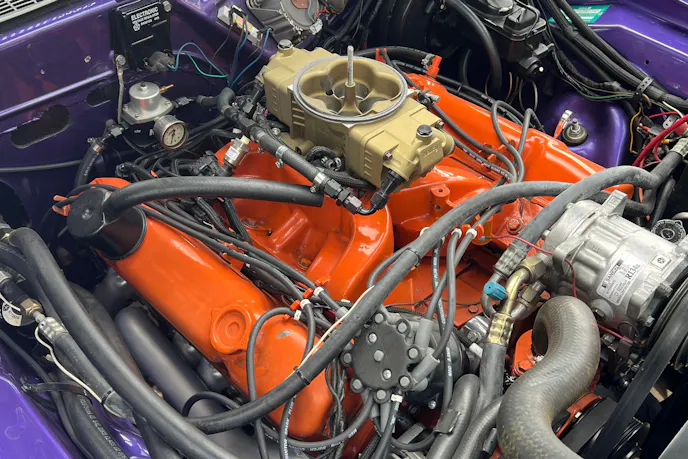
The engine is topped with an M1 single-plane intake manifold and uses Holley Terminator X electronic fuel injection.
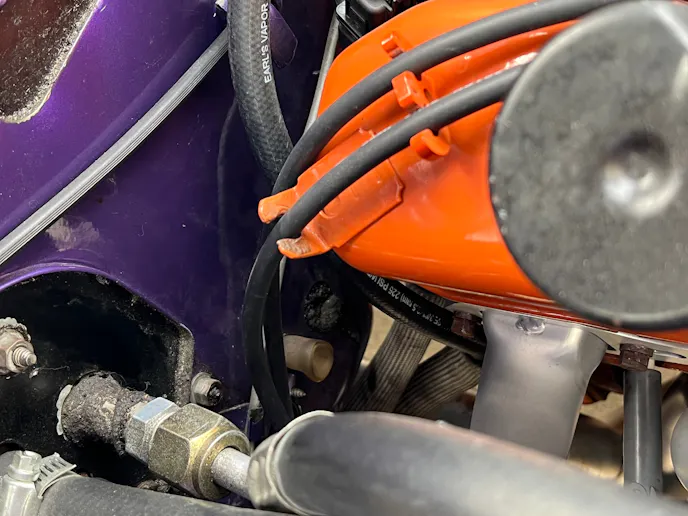
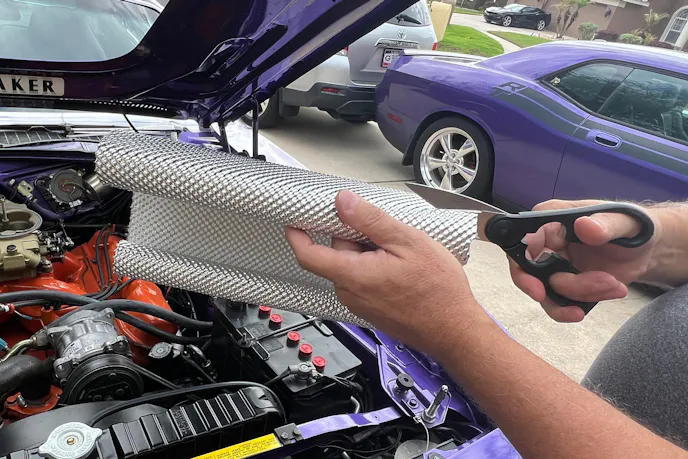
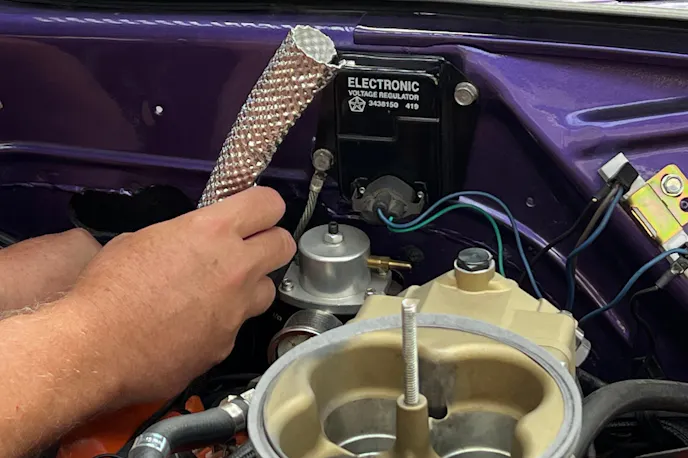
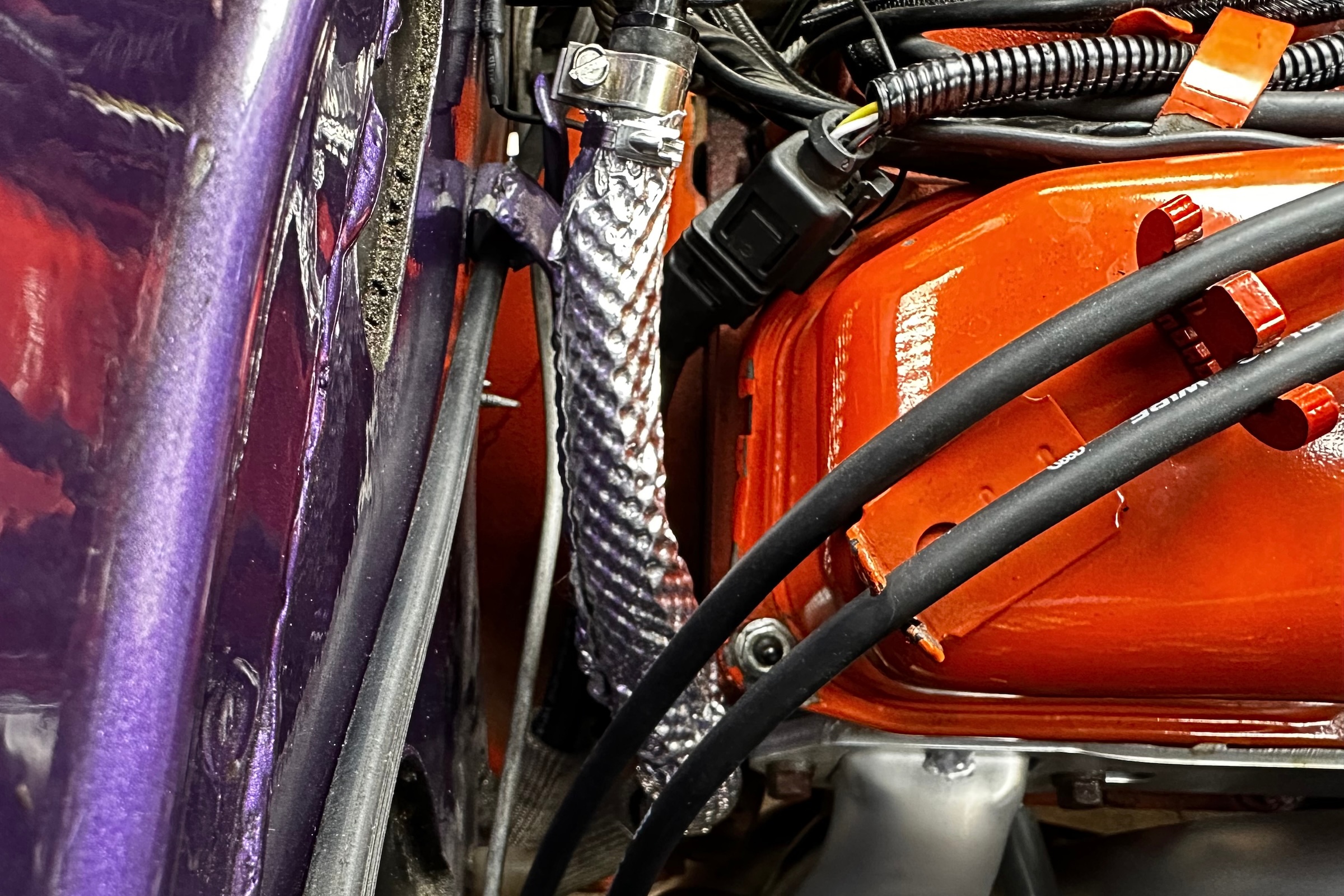
The one major issue Jeff saw in his engine compartment was a fuel line that ran up behind the block and was a little closer to the passenger-side rear header tube than he would have liked. A wrap around the line with Adapt-A-Shield added protection, as it not only reflects engine and exhaust heat, but protects the line from possible abrasion.
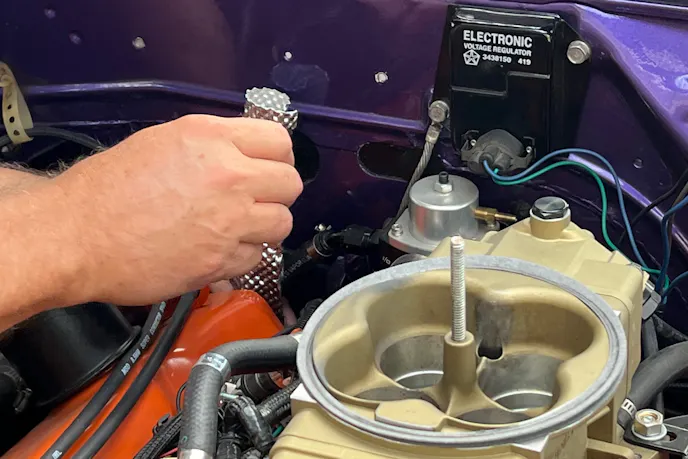
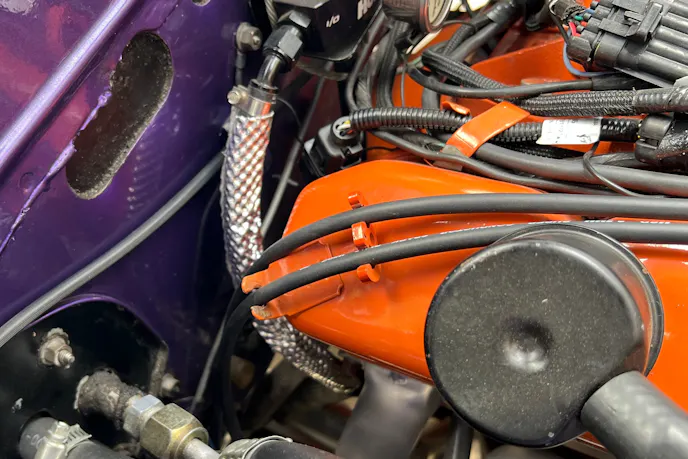
We loved how easy the Adapt-A-Shield was to work with. Jeff formed a nice little tube that held its shape, but could be undone with no ill effects when he wanted to re-shape it.
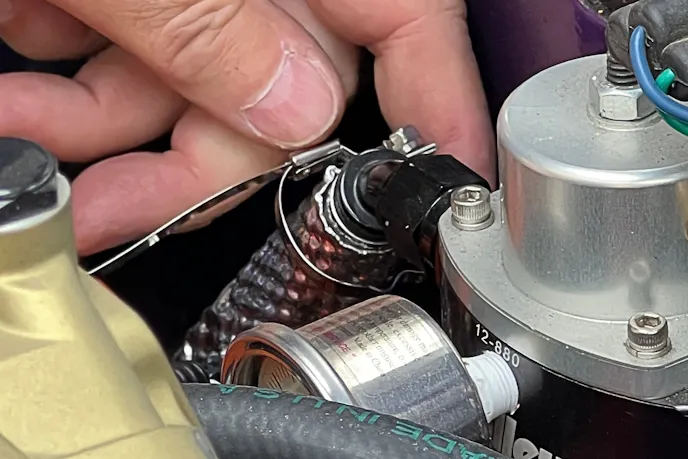
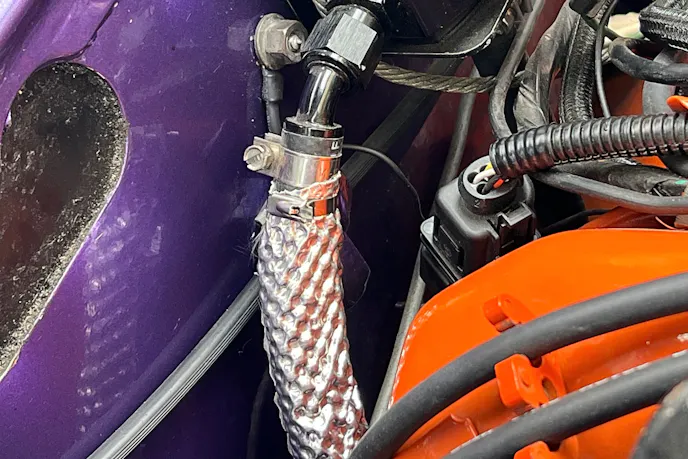
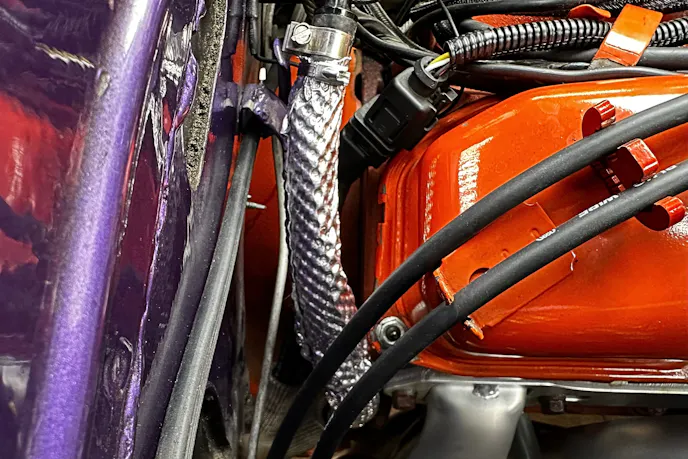
Once he had it where he wanted it, he grabbed a Lokjaw tie and wrapped it around the top of the wrap. It was really too long for the job (the ties come in 8- and 14-inch lengths). He solution was to flatten a couple of the spring bends and feed it through the locking joining until it was tight. He then cut off the excess and, voila, it was perfect — tight and secure.
You might also like
1,511-HP Street Machine: John Warren’s Nuclear ’72 Chevy Nova
It's still the same Chevy Nova that Warren drove to school, only it's packing enough power to run with the quickest cars in the country.