
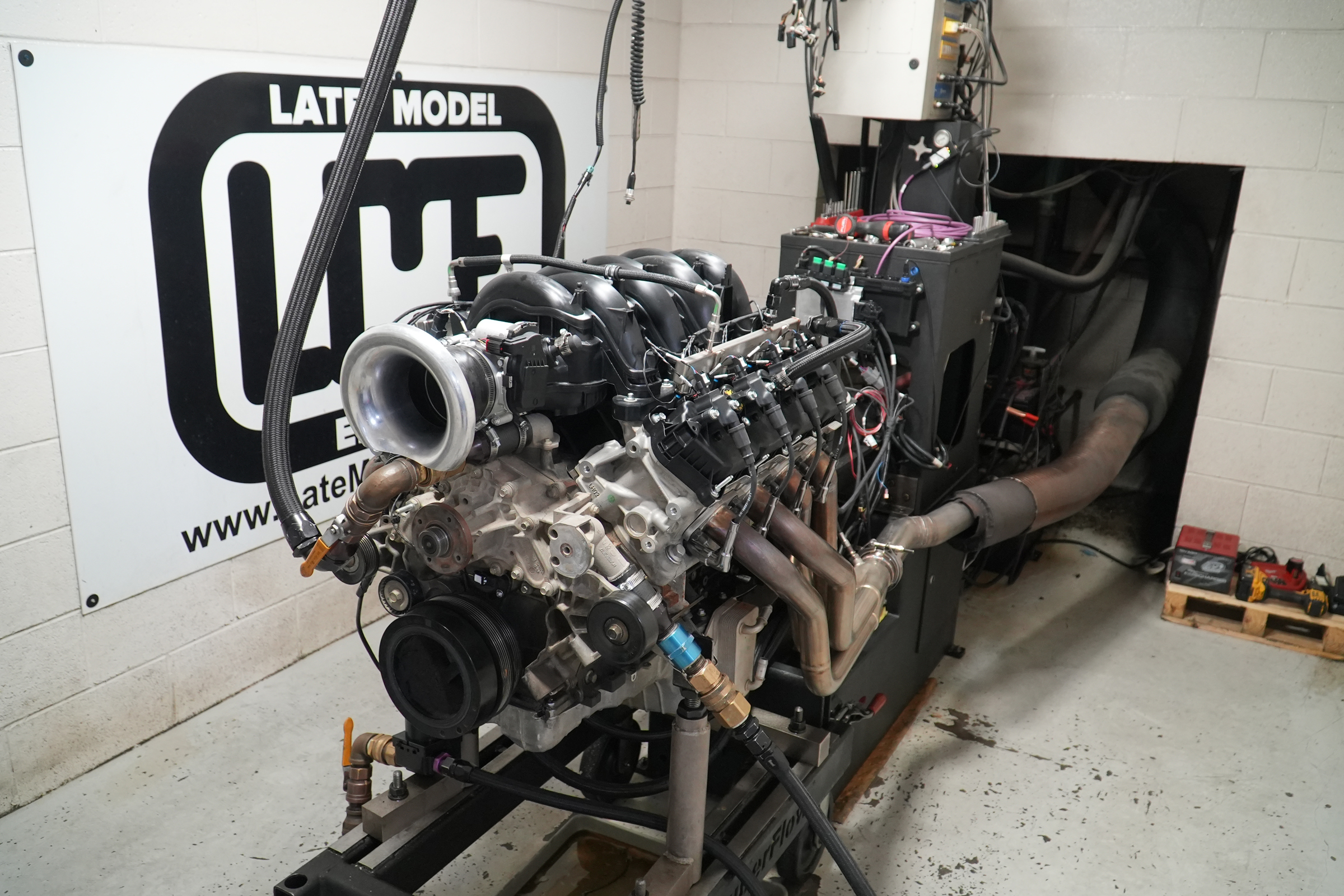
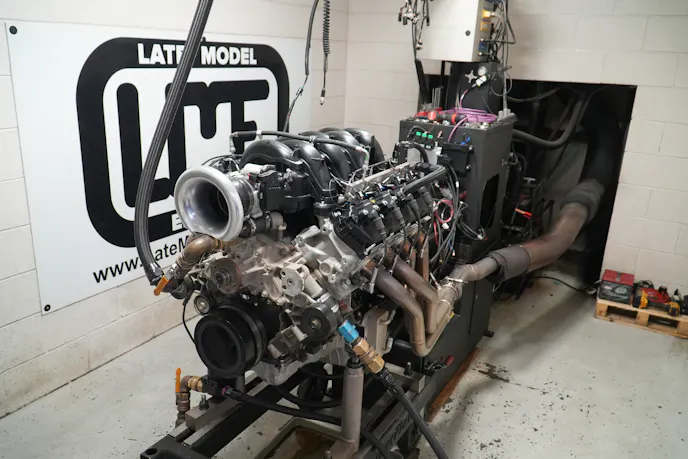
Project F-Zilla, our farm truck-cum-earth-rotating burnout monster, is getting a heart transplant. The new organ is 764-horsepower worth of Late Model Engines Godzilla stroker.
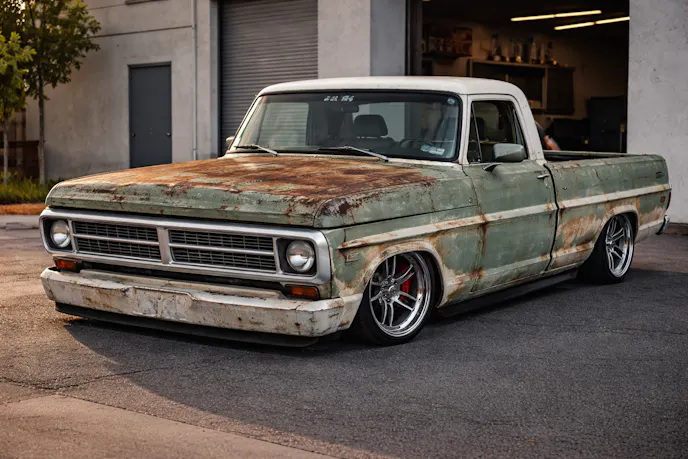
We gotta tell you, F-Zilla is going to be one of the greatest Ford pickups on the planet when it’s done. It’ll have the look that preserves the patina it earned working on a California farm, but virtually everything else will be modern and insane. Click here to get caught up with Part 1 and all our diabolical plans.
Take the chassis. It’ll be a brand new Art Morrison Enterprises unit custom built to our specifications. It’ll have an indepedent rear suspension, so it’ll handle like no one alive in 1969 would have thought possible. It’ll have a modern TREMEC manual transmission with two overdrives. This will make for a demanded top speed and relaxed cruising on the highway.
Best of all, it will have the latest Ford pushrod powerplant under the hood. Ford’s 7.3-liter Godzilla V8 is the pushrod engine Blue Oval loyalists have wanted since the Windsor series of small-blocks disappeared. A Godzilla engine provides builders with a massive canvas straight out of the box, offering large displacement (445 cubic inches stock) and a cam-in-block design that is more compact that Ford’s dual overhead cam efforts.
Recognizing the raw potential of this modern platform, Late Model Engines put together a tire-annihilating stroker engine that will be extremely streetable and reliable.
Careful Geometry And Big Displacement
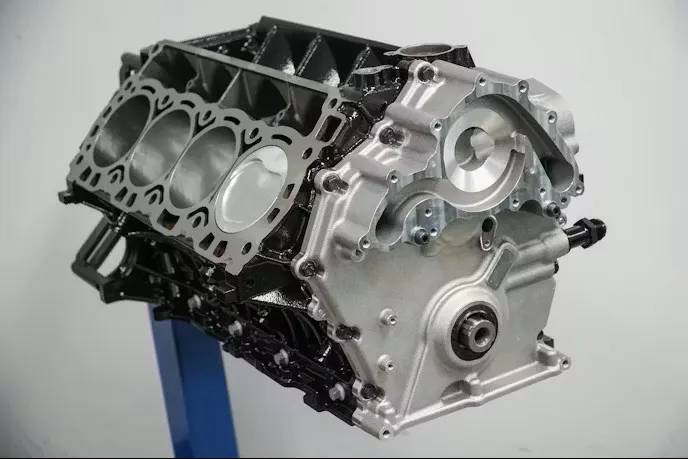
We didn’t go crazy here. Though we expect F-Zilla to smoke its tires down to the cords, the basic architecture can make over 700 naturally aspirated horsepower without blinking an eye. LME increased the bore by a microscopic five-thousandths of an inch, preserving the thick cylinder walls for maximum structural strength. A Callies Magnum forged crankshaft featuring a 4.125-inch stroke provides the extra volume. This precise combination pumps the displacement up to 460 cubic inches while leaving plenty of room to grow even larger in the future.
Ford handed engine builders something unusual when they introduced its 7.3-liter pushrod V8: Lots of cubes, modern combustion efficiency, and it comes wrapped up in a package that actually makes sense for swaps. That alone makes it interesting, especially considering Ford’s history of introducing physically huge/wide engines that barely fit in the bay for which they are intended. (Think vintage Fords from the ’60s and those intrusive shock towers.) The folks at LME will build the Godzilla engine up to 505 cubic inches, but that’s not what we were after here. We knew we could make lots of robust horsepower with moderate changes to the bore and stroke.
That 460 number is the headline with a nod to Ford’s big-block engine history, but the details matter more. Our engine built around a 4.225-inch bore and a 4.125-inch stroke. For reference, in stock form, the engine comes with a 4.22-inch bore and 3.98-inch stroke. The bore increase is practically negligible at only five thousandths of an inch, which tells you immediately what the goal is. This isn’t about pushing the cylinder walls to the edge. It’s about adding displacement without compromising the foundation.
That’s an important detail. It keeps cylinder wall-thickness nice and beefy to handle the extra side loading created by extra stroke and avoids introducing unnecessary risk. Instead, the extra displacement comes from stroke, which is where things get interesting. LME’s program extends out to 4.375-inch and even 4.500-inch stroke combinations, landing the engine into 491 and 505 cubic inch territory.
Forged Internals To Handle Abuse
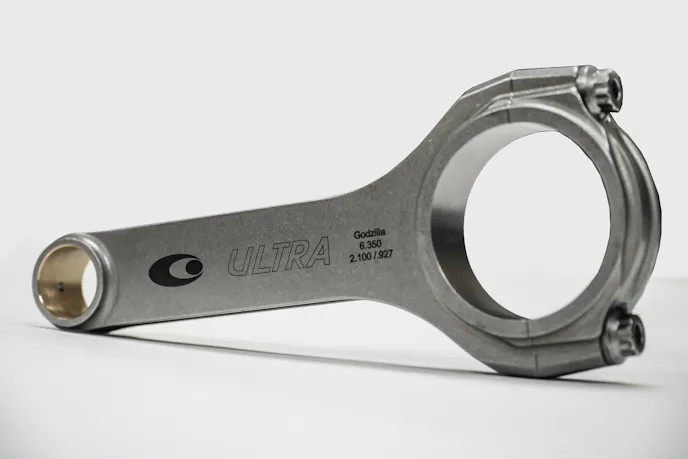
The connecting rods are Callies Ultra H-beam units forged from Timken steel and secured with ARP2000 bolts. They are paired with custom JE forged pistons featuring a specific 1.212-inch compression height. Keeping the compression height incredibly tight allows the use of a longer connecting rod, which perfectly balances the rod ratio. The deliberate piston dish volume keeps the total compression right at 11:1 for highly reliable pump gas operation.
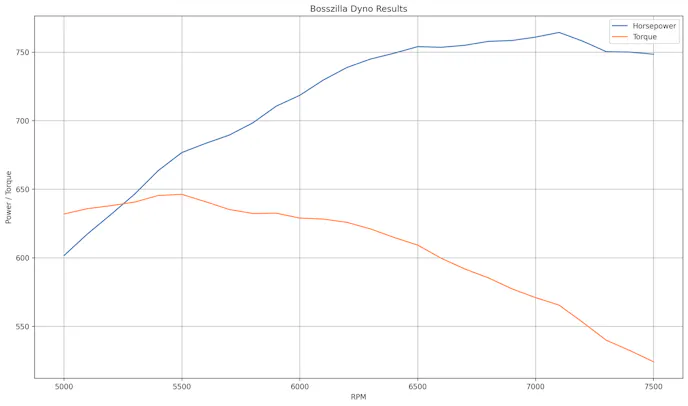
This is not some 10,000 RPM engine with overhead cams or huge ports, nor is it for those who think the tachometer is an applause meter. It has usable power all over the rev range, and while peak power was made at 7,100, it made 675 horsepower at 5,500, which is incredibly useable.
F-zilla Oil Pump Conundrum
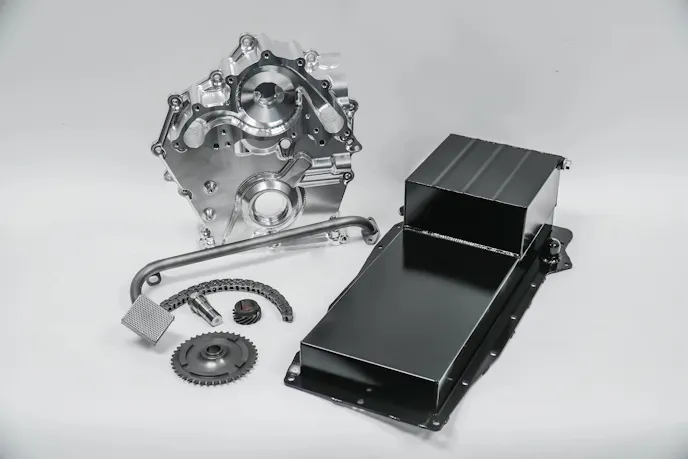
The factory variable-speed oil pump operates via a rear jackshaft, which severely limits oil pan options for custom builders in an old-time chassis. Our ultra-modern, all new AME chassis will present no such challenges, but for other builds where that is a concern, Late Model Engines fabricates a custom front cover that deletes the jackshaft system entirely. This intelligent upgrade utilizes a front-driven oil pump with Coyote-style gears. It dramatically simplifies the entire package and gives fabricators the absolute freedom to run either front or rear sump configurations.
Breathe Deep
Unfortunately, while the Godzilla’s block design makes it easy to go over 500 cubes, you won’t automatically unlock bottomless power and torque thanks to limitations in other areas of the design. Namely, we’re talking about the stock cylinder head castings.
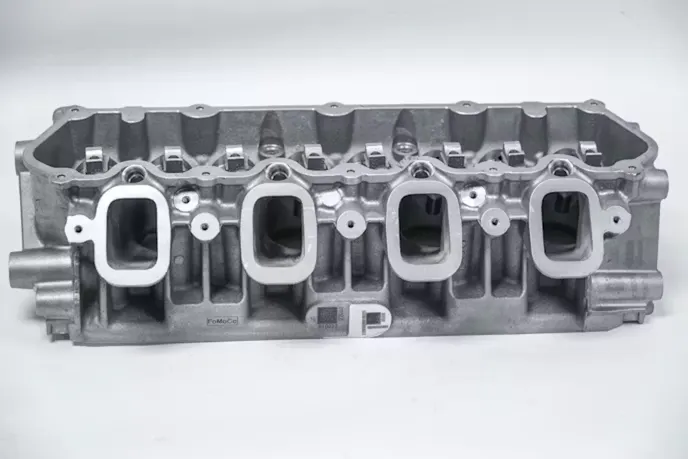
Neelen is blunt about it: “In my opinion, the factory casting is just not set up for big power with the real larger cubic inches,” he says. “The bore size being 4.220 inches from the factory allows for some pretty large valves. But with the current head design, you can’t make the changes you need without requiring a lot of work. You can’t just go in there with a grinder and get to where you want to be. Still, for our build, the guys at LME did what they could with some light port work on the cylinder heads.
That doesn’t mean the heads are bad. It just means they become a bottleneck when the displacement (and the need for big airflow) climbs. The 4.225-inch bore opens up a lot of opportunity for airflow, but the factory intake and exhaust port designs can only take you so far.That doesn’t mean the heads are bad. It just means they become a bottleneck when the displacement (and the need for big airflow) climbs. The 4.225-inch bore opens up a lot of opportunity for airflow, but the factory intake and exhaust port designs can only take you so far.
Speaking of the intake, we used the Ford Racing Parts piece, which is perfect for our steerable application.
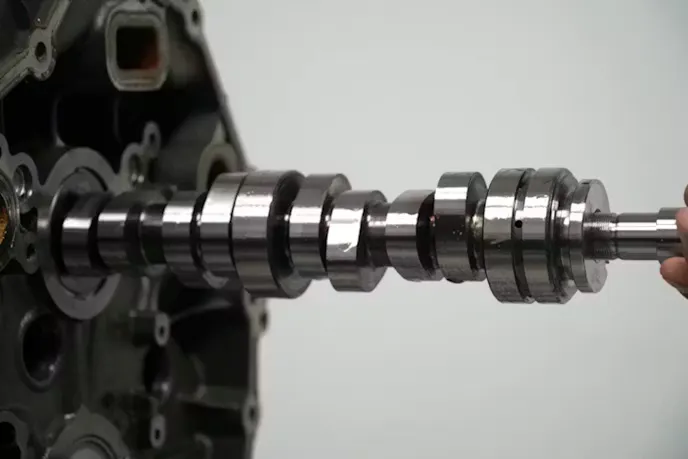
All those cubic inches and ported heads are worthless without a proper camshaft. LME went pretty aggressive here. It spec’d out a Cam Motion dual-pattern cam with .640- /.641-inch lift and 224/234 degrees duration. The lobe separation angle is 112.
Staggering Dyno Results
The factory cylinder heads currently limit maximum airflow, but light port work helped maximize the new cam profile. The final dyno pull proved the massive potential of this exact combination. The naturally aspirated engine produced 646.2 lb-ft of torque at 5,500 rpm and ripped to an astonishing 764.4 horsepower at 7,100.
Taking a factory workhorse block and reliably spinning it past 7,000 rpm proves the incredible versatility of this modern architecture. Ford enthusiasts seeking massive torque numbers now have a highly capable alternative to dual-overhead-cam powerplants.
What’s next for F-Zilla? We went to Auto Metal Direct for some new floorpans. Patina is one thing; being able to do a Fred Flintstone impression with a state-of-the-art chassis and powertrain is just silly. Stay tuned for Part 3 of our series, where we address some serious concerns.
You might also like
Governor Newsom Has Leno's Law Signed To Protect Classic Cars
Governor Newsom officially had Leno's Law signed in Burbank. The statute exempts qualifying collector cars from biennial smog tests.