
Seven- and 800-horsepower street cars are the norm today, and if you only have 500, well, that really is fine, but it is at the low end of the spectrum. Our hot street cars are hotter than ever and that means you need more cooling capacity than ever before. At the forefront of the movement is SPAL, a company known for fans that are up to the task of cooling your street car, even if it has 1,000 or more horsepower. Brushed or brushless, a SPAL electric fan install can help you cool your ride.
Austin Atwood found himself in a predicament with his 1994 Mustang. It is powered by a 408-inch Windsor with a 96 mm turbo that put 786 horsepower and 971 lbs.-ft. to the tires on E85 before he ran out of fuel system. That was with a mere 9 psi of boost. He had a brushless aftermarket electric fan on it that just could not keep up with all that horsepower. Though it was advertised as being capable of moving almost 3,000 cfm, its performance didn’t back up that claim. Austin turned to the fan expects at SPAL to keep his pony car from boiling over.
(Learn more about electric fans by reading this story, too.)
Mustangs built from 1994 to 2004 seem to be the forgotten ponies these days, but not in the street/strip segment. These SN95/Fox-4 cars sold like crazy when new and the 2000 model is the last Mustang to sell over 200,000 units, yet they are overshadowed nowadays by their Fox brethren from 1979-1993 and anything with a Coyote under the hood.
We can state from experience they make fantastic street, strip, and open track machines. The aftermarket support is huge, so whether you want a smooth cruiser that eats up corners, a drag car you can drive on the street, or a classy show car, you can build it any way you’d like. Also in the plus column? They can swallow up all kinds of V8 engines (and their power adders) and they are priced right in today’s market.
Test Mule & Install
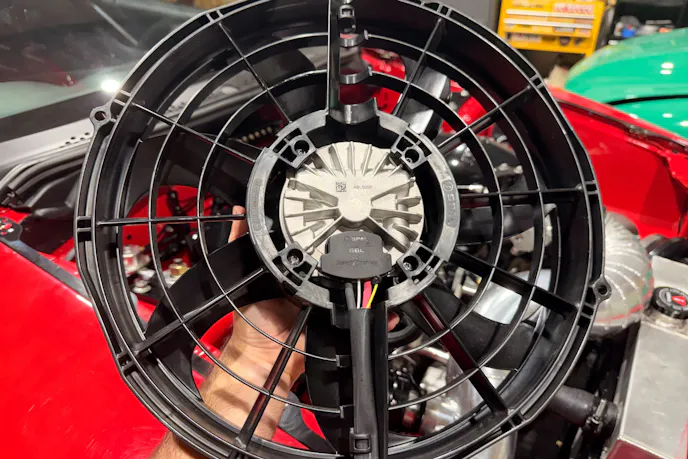
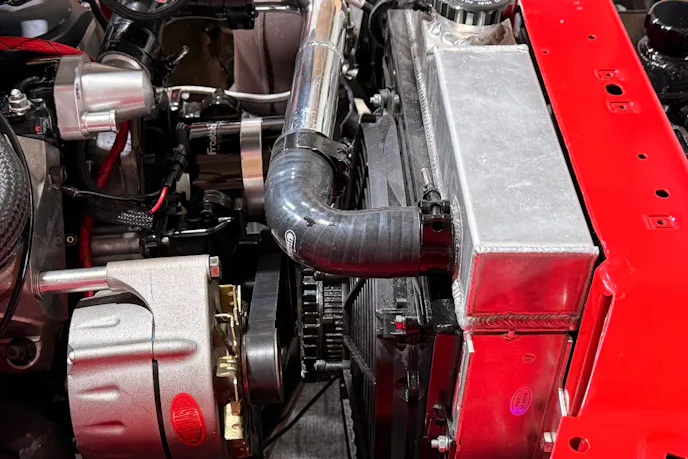
Our test mule today is fairly typical of what is possible with this platform. With a new upgraded fuel system, it should be close to 850 horsepower at the tires on E85 and 1,300 or more with the race fuel tuneup and 25 psi of boost. The Mustang has a 16-volt system and a tight engine bay thanks to the turbo and its plumbing, making it the perfect real-world application to showcase SPAL’s brushless fan design, slim fitment, and superior airflow performance. The fan’s compact design made it possible to maintain proper cooling in a space-limited setup.
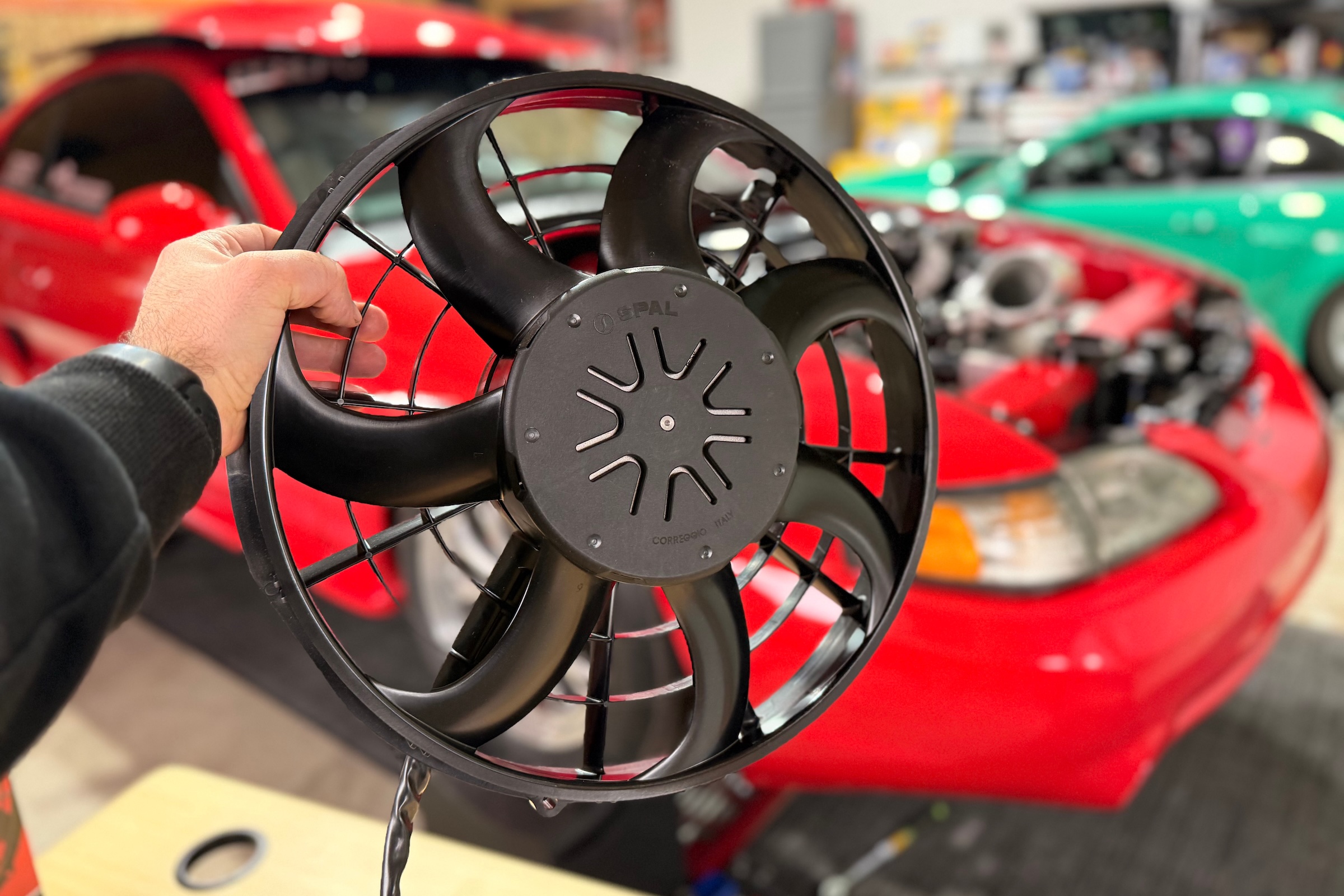
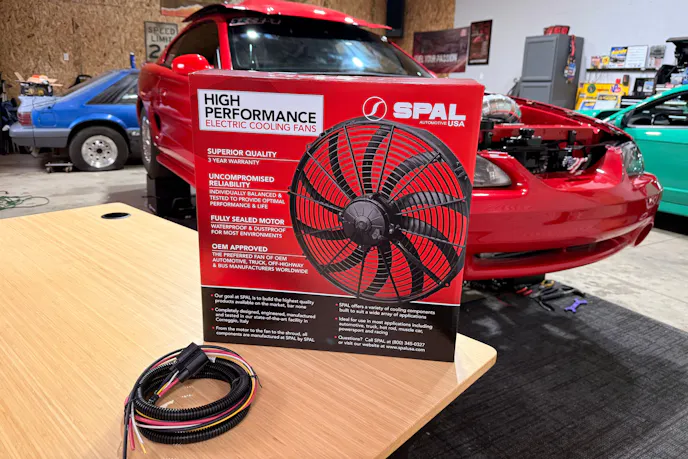
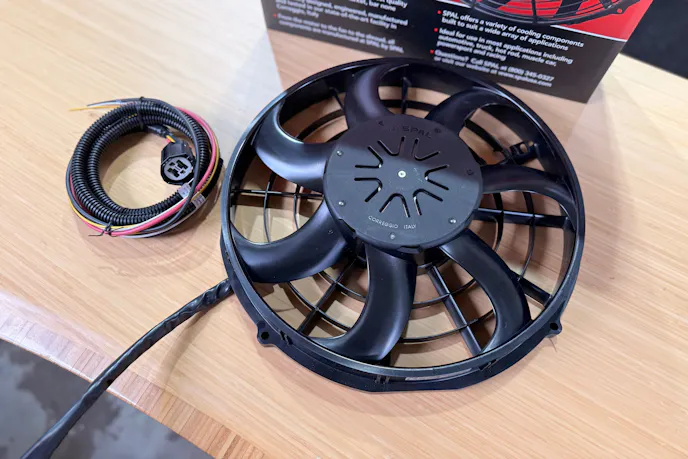
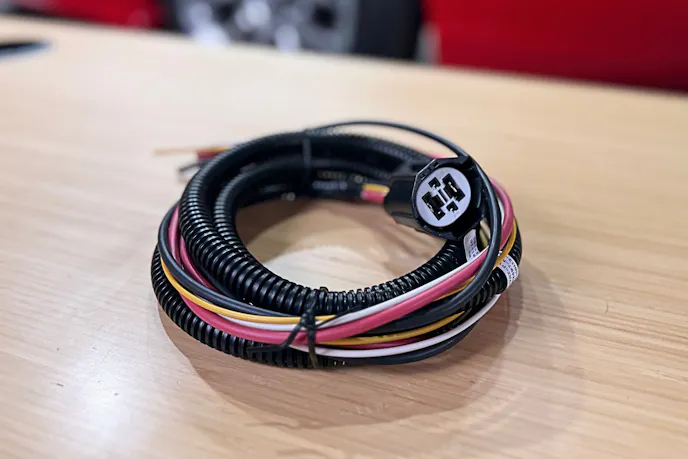
We used SPAL’s (30107102) 14-inch brushless puller fan and supporting harness. The modified nature of the car made us veer off the directions a tad, but the physical install took less than a half hour. We were able to re-use our existing shroud. This is a lot of fan, but SPAL does have larger units that move even more air should you have the need. The install was incredibly simple, and now the car runs a lot cooler and there’s more space between the engine and the fan.
“You can feel the fan is moving a lot more air just by putting your hand behind it,” said Atwood. “Even though the old fan was rated at a higher CFM [nearly 3,000 vs. 2,350].
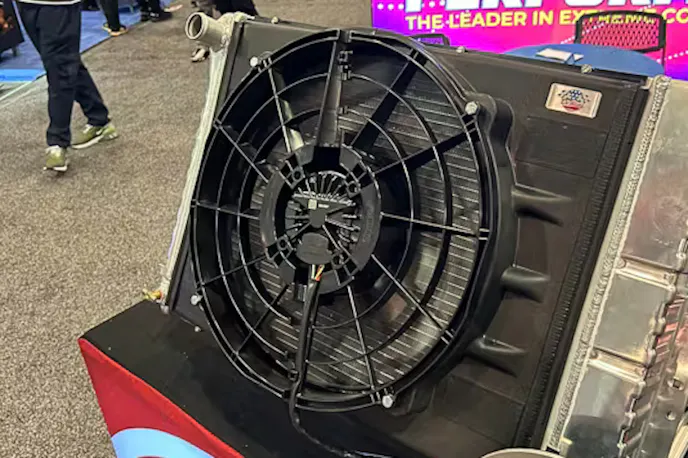
The cooling system is comprised of a four-row radiator for a 1965 Mustang and a brushless fan with a shroud. The previous fan had the car running 205 degrees — not bad, but certainly not optimal, especially when it got in heavy traffic. Less good was the old fan sounded like something was failing, as if it was going to give up the ghost at any moment. Austin felt he had to do something before the inevitable occurred, not to mention up the performance before he added more horsepower, which would only tax the system further.
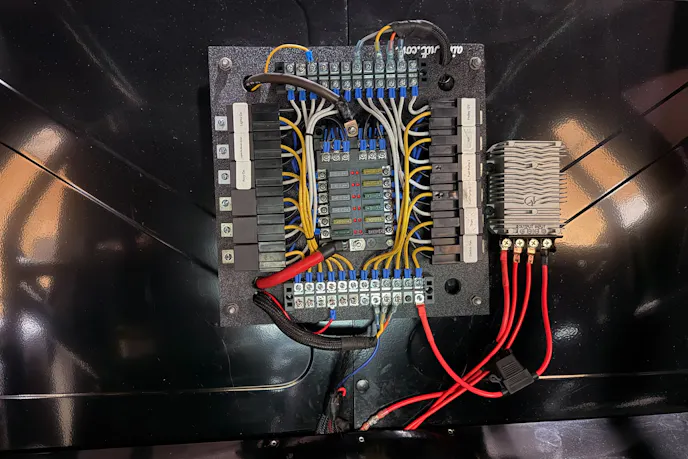
The new SPAL fan dropped the max temp down to 185 degrees, even in heavy traffic. In normal conditions, it was in the 175-180 range. With the brushless technology, the fan would start to rotate at 150 degrees and ramp up quicker. This fan is being used as a puller, but it can be used as a pusher, too if your vehicles needs that kind of fan. The fan itself is programed to the ECU.
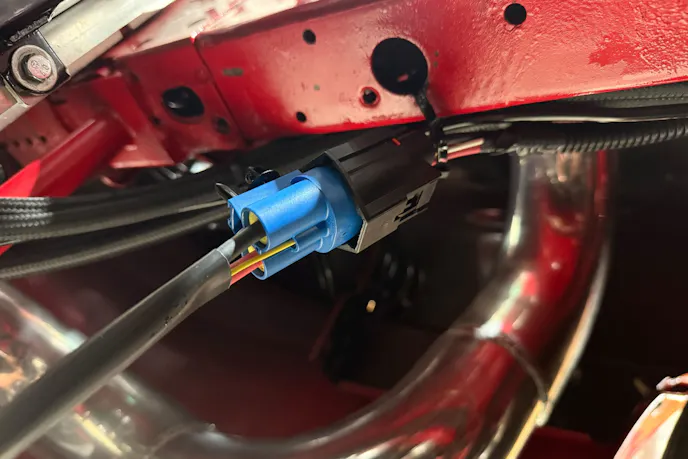
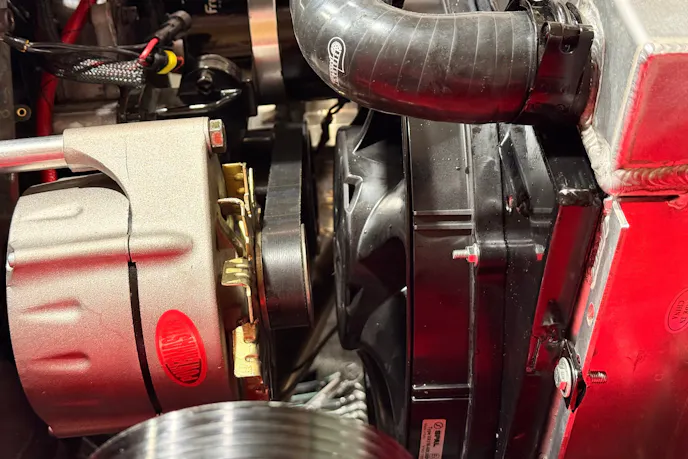
Another benefit was just how much more room there was between the fan and the engine damper.
“I picked up at least a half-inch of space,” said Atwood. “Also, the new fan fits more flush to the radiator.”
At the end of the day, this was a fairly simple, yet elegant solution to car cooling. Except for the previous fan, everything was up to snuff. Now, Austin can relax, whether he’s stuck in traffic on Woodward Avenue or the staging lanes at the track. Keeping his Mustang cool is not something he’s going to concern himself with.
You might also like
Governor Newsom Has Leno's Law Signed To Protect Classic Cars
Governor Newsom officially had Leno's Law signed in Burbank. The statute exempts qualifying collector cars from biennial smog tests.