
When a Sicilian falls in love at first sight, it is said he was hit by the thunderbolt. When Ford stuffed a special dual-quad 427 into a lightweight ‘64 Fairlane, they called it the Thunderbolt. Coincidence? We think not. How could you not instantly fall in love with a car that could run high 11-second quarter-mile times when the average high-performance street car was lucky to sneak into the 14s?
Yes, the 1964 Thunderbolt was a heaven-sent goddess for drag racing. Everything was designed with rapid acceleration in mind for the NHRA Super Stock class. Let’s forget about the engine for a minute. It came with one sun visor, one windshield wiper and zero arm rests. Want to roll down the back window? You couldn’t because there were no window cranks.
Fiberglass fenders and a special teardrop hood were employed to take weight off the nose (and make room for the two Holley carbs on a high-rise intake).
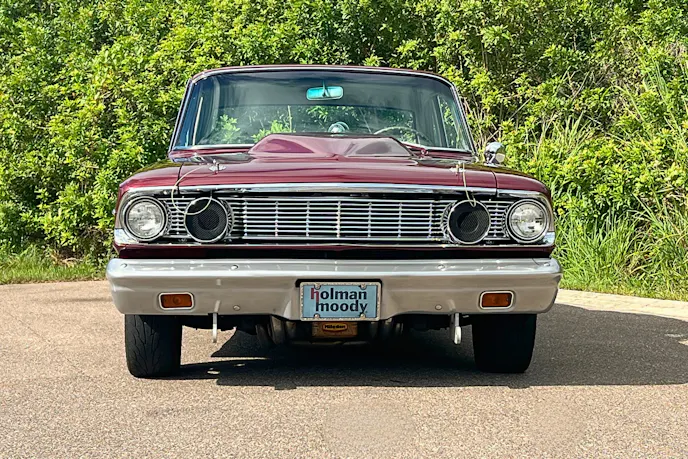
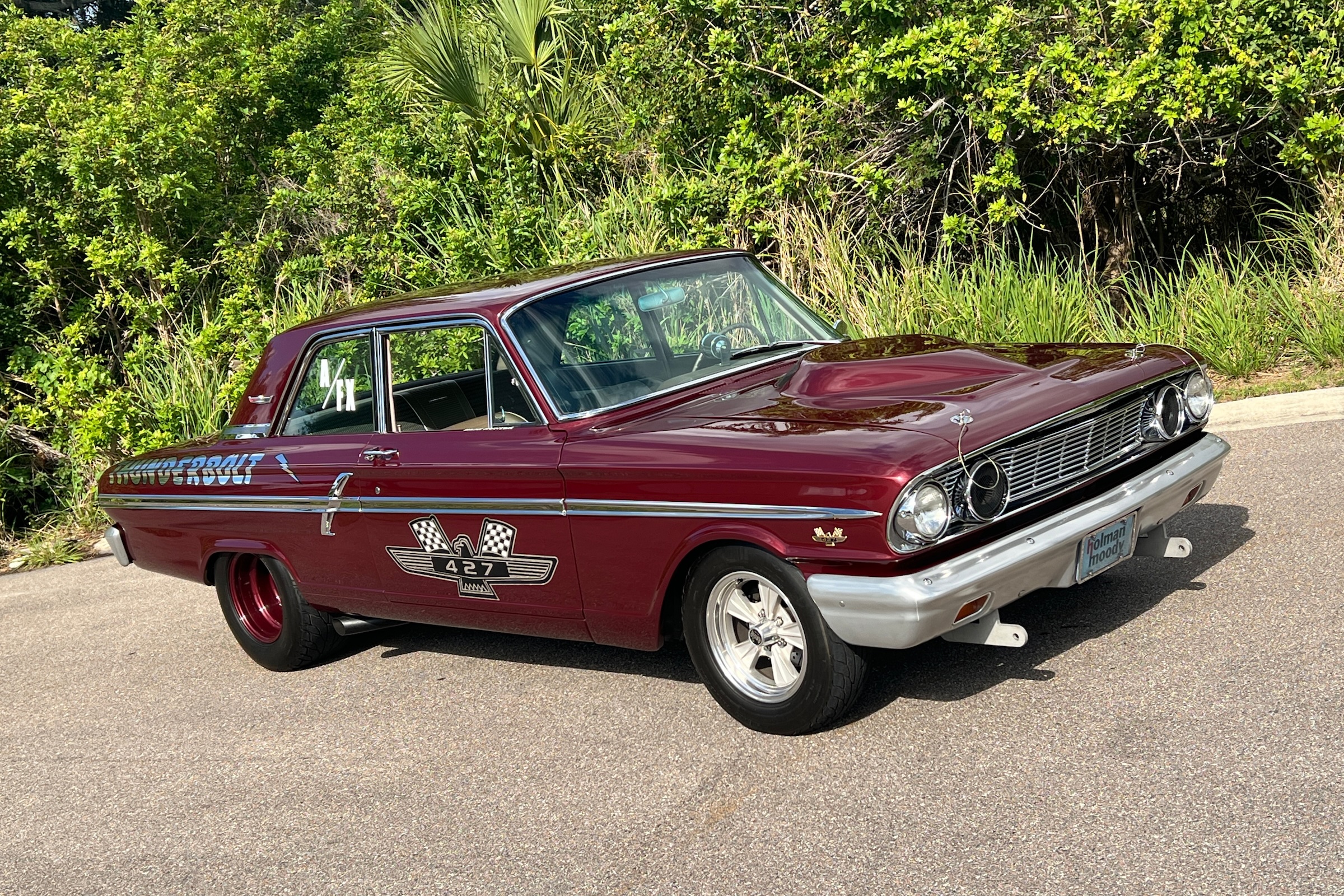
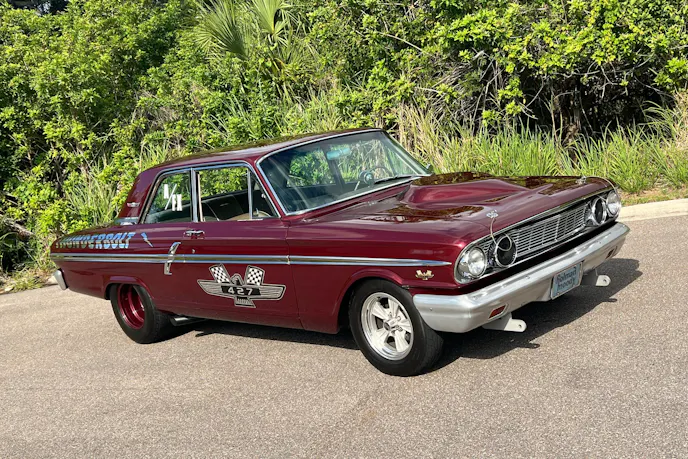
Andy Carrano has a thing for cars from that era of drag racing, but he also loves driving on the street (something you are not apt to do with a real one-of-100 Thunderbolt with 13.5:1 compression). He owns the 1964 Thunderbolt tribute car you see here and while the engine is still slightly north of 11:1 compression, it never sees a trailer. Also sharing space in his automotive universe is a ‘68 Dodge Hemi Dart clone and a ‘67 Comet Cyclone with a non-original 427. All are registered for street use.
Yes, it’s good to be Andy.
The actual Thunderbolt got a unique powerplant. It was a modified 427 high-rise, center-oiler engine (not a side-oiler). It came with a high-rise intake manifold with dual Holleys. Engineers raised the ports 0.5-inch on the cylinder heads to get more flow area …
What Was The T-Bolt?
The original idea for the Thunderbolt technically didn’t come from inside Ford. Much like the 428 Cobra Jet of ‘68, it was born out of necessity and a renegade Ford dealership out of East Providence, Rhode Island. The brainchild of Bob Tasca at Tasca Ford, they built a 427-powered ’63 Fairlane that pretty much became the prototype for the T-bolt a year later. The Tasca Fairlane, driven by Bill Lawton, went to the finals at the U.S. Nationals in its maiden season, before losing to a Z-11 Chevy.
The actual Thunderbolt got a unique powerplant. It was a modified 427 high-rise, center-oiler engine (not a side-oiler). It came with a high-rise intake manifold with dual Holleys. Engineers raised the ports 0.5-inch on the cylinder heads to get more flow area and the new manifold positioned the carbs a full three inches higher than other 427s. This necessitated the large teardrop hood, though the carbs were fed cold air through large ducting that picked up air where the high-beam headlights used to be. The large tubing ran back to an air box that sealed the ducting to the carbs. Equal-length tube headers snaked their way around suspension components.
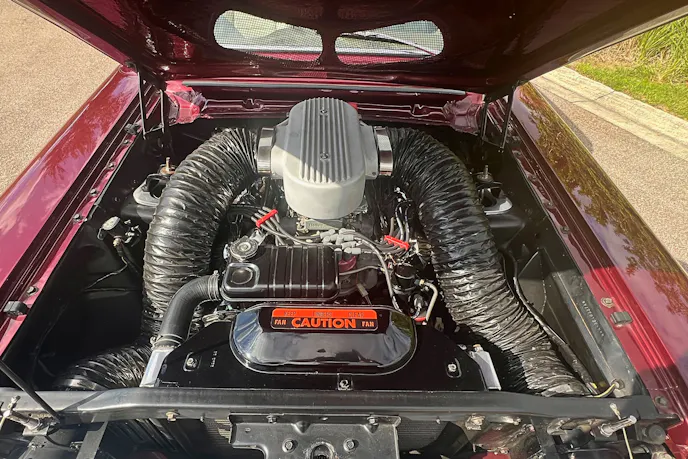
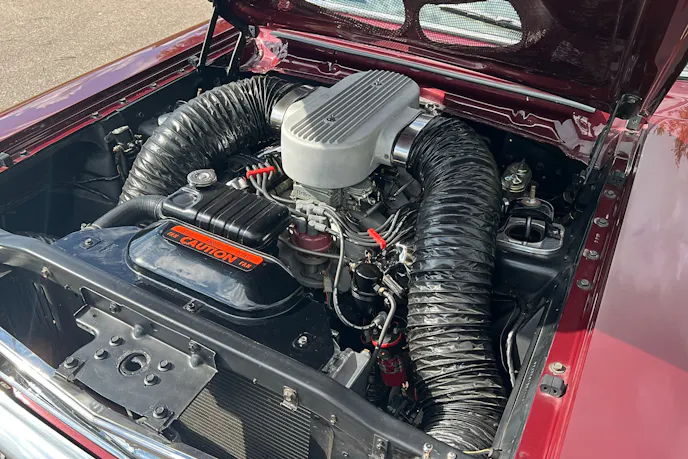
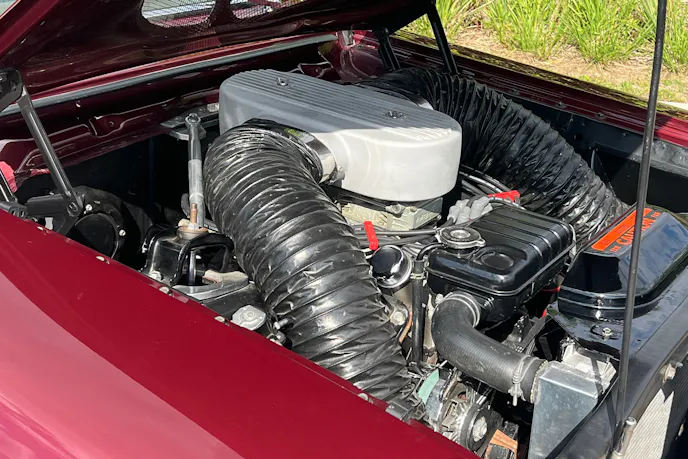
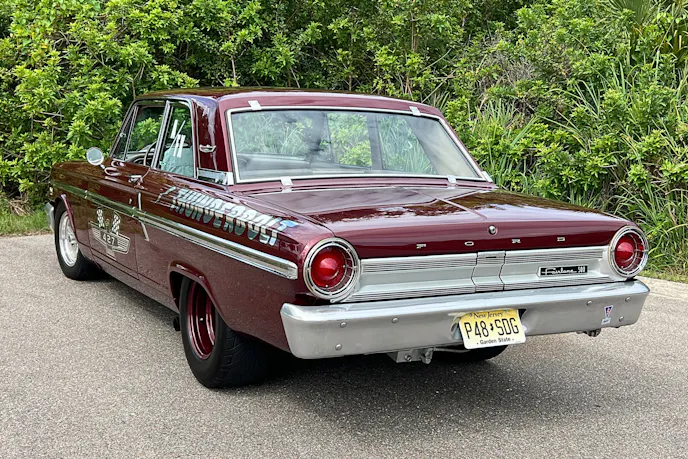
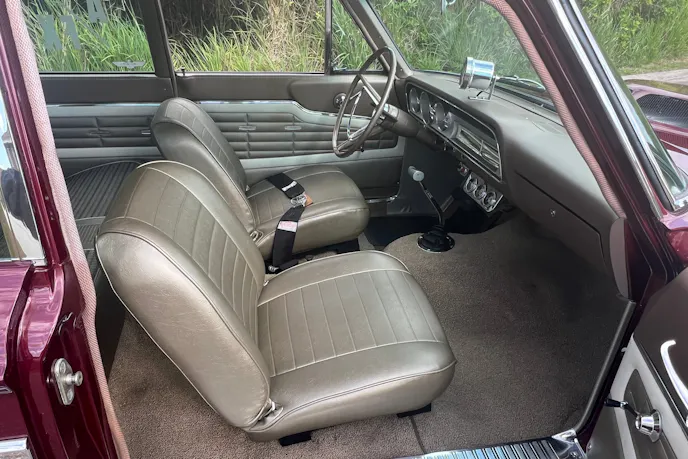
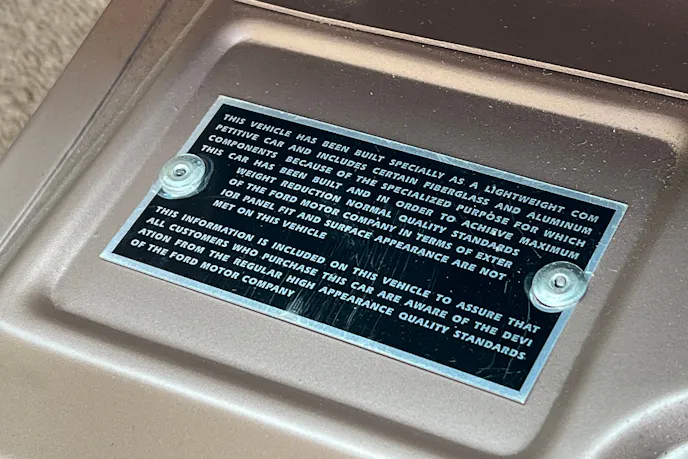
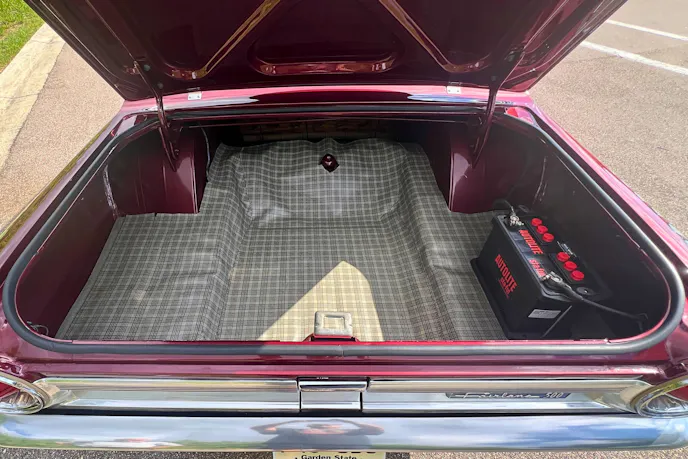
Further helping to get the T-bolts down to around 3,200 pounds were a set of Econoline E-100 van seats, a rubber floor mat instead of carpeting, a fiberglass front bumper, which was later supplanted by aluminum when the competition complained about it. (The rear bumper was a factory steel piece to help traction on the 7-inch wide cheater slicks of the day, which were the legal tires in Super Stock in ‘64. Plexiglas side windows replaced the heavier factory glass and some Bolts even got a plexiglas rear window as well.
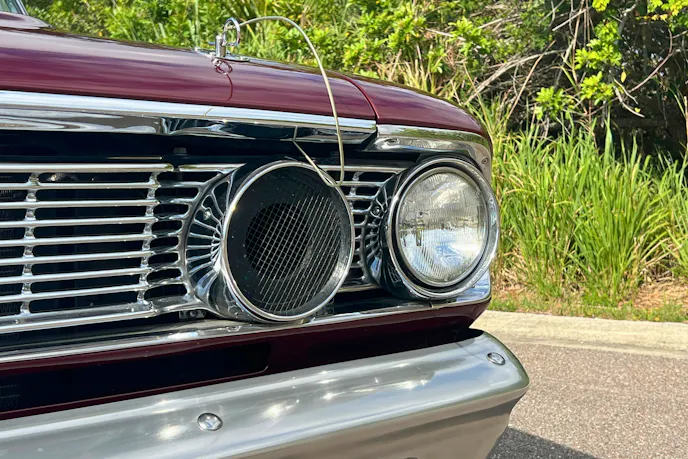
It has long been believed that 100 1964 Fairlane Thunderbolts were built (49 with Top Loader four speeds and 51 with modified Lincoln automatics), but there is some evidence that an extra 27 may have been built for racers with factory connections.
Making It To The Street
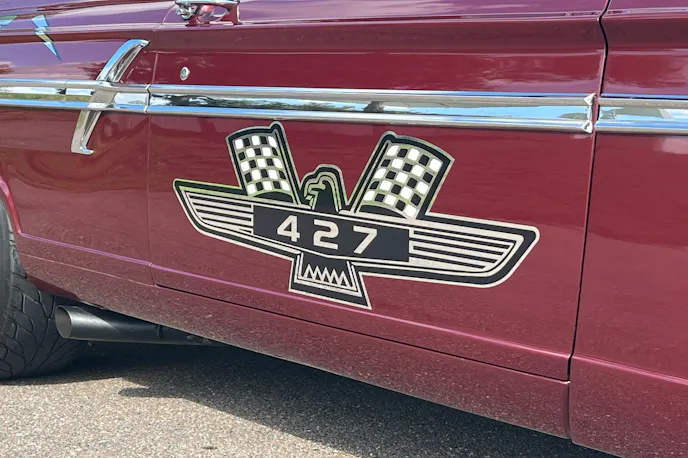
Obviously, no vintage car is going to work well on pump gas with an all-iron big-block and 13.5:1 compression. Andy’s engine is a ’65 427 side oiler (with the G suffix) and a little more than 11:1 compression. It has an aluminum intake with a pair of 600 cfm Holleys on top. The headers and exhaust run similar to the factory T-bolt set up.
Real Thunderbolts came with 4.56:1 gears in a 9-inch rear when Dearborn Steel Tubing assembled them, Andy’s Thunderbolt tribute machine has a TREMEC TKO five-speed instead sending all that FE power to a 3.50:1-equipped 9-inch with Moser axles. That gives him great ratios from first to fourth, and relaxed cruising at highway speeds.
Andy’s ride has the correct van seats and gauges, but it does use carpeting instead of a rubber mat. In a nod to authenticity, there are no arm rests or rear window cranks. It has one wiper and one sun visor, too. Window clips keep the rear glass from coming out at speed.
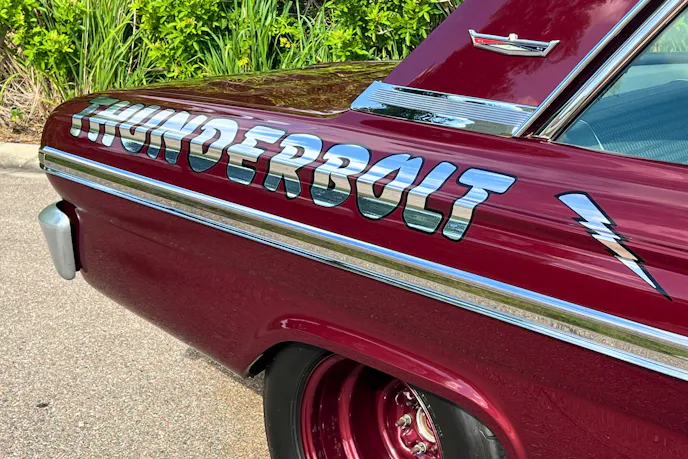
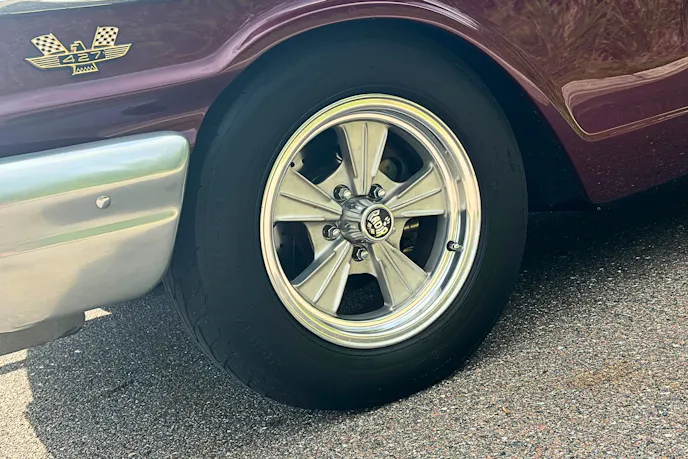
The most obvious deviation is Andy’s Bolt is tubbed to accommodate 10-inch wide wheels wearing Mickey Thompson radials. Up front are classic Radir mags wrapped in skinny Mickeys. In a not-so-obvious departure, four-wheel-disc brakes hide behind all four wheels. The bumpers are powder coated to look like aluminum, though they are steel. There are tow bars welded to the frame, just as they would have been in 1964.
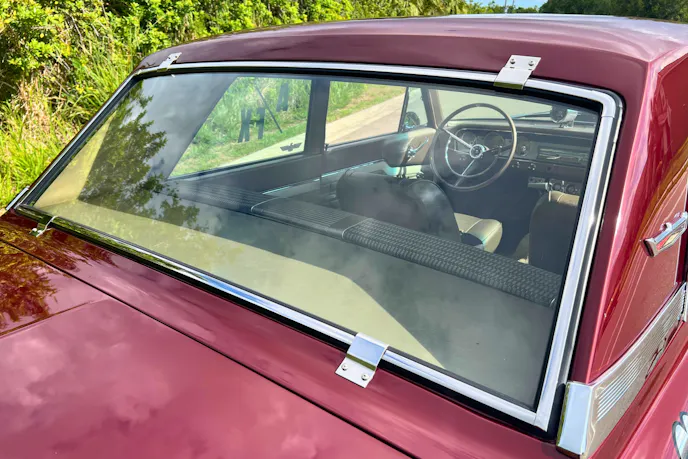
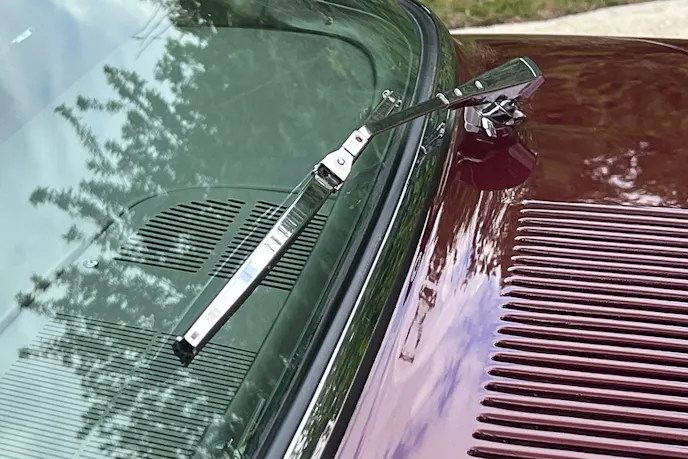
“It is a five-speed car with four wheel disc brakes, so it is fairly easy to drive if you want to take it out on a cruise,” Andy says, “But it doesn’t have any creature comforts, though, as the Thunderbolts didn’t have heat, air, defrost, everything was delete. The arm rests were deleted from the car, as well as the arm rests and window cranks in the back.”
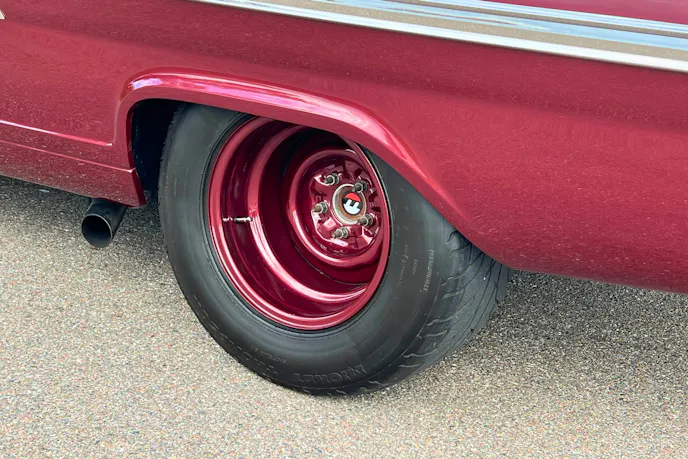
The exhaust exits from the side, just in front of the rear wheels. It also features cutouts, but we can state for the record that it is plenty loud exhaling through the mufflers.
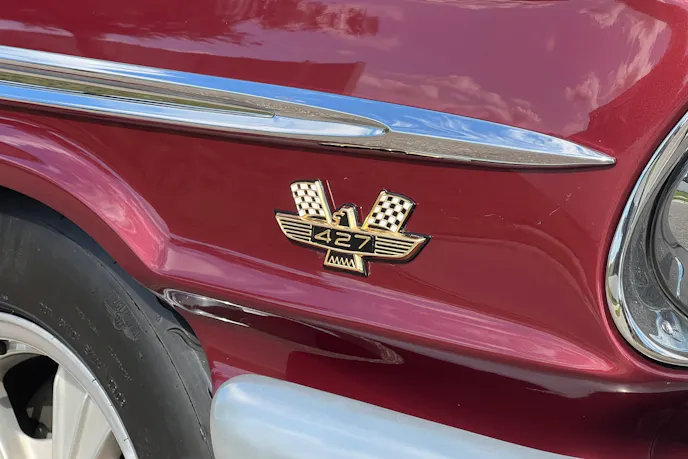
Driven by such luminaries as Hubert Platt, Al Joniec, Butch Leal, Dick Brannan and Gas Ronda, the Thunderbolt cleaned house in ’64. Ronda won both the Winternationals and the U.S. Nationals en route the to Super Stock championship. He also set the ET record in his T-bolt, with an 11.52.
Now Andy Carrano can relive those glory days every time he gets behind the wheel of his ’64 Thunderbolt street machine.
You might also like
1,511-HP Street Machine: John Warren’s Nuclear ’72 Chevy Nova
It's still the same Chevy Nova that Warren drove to school, only it's packing enough power to run with the quickest cars in the country.