
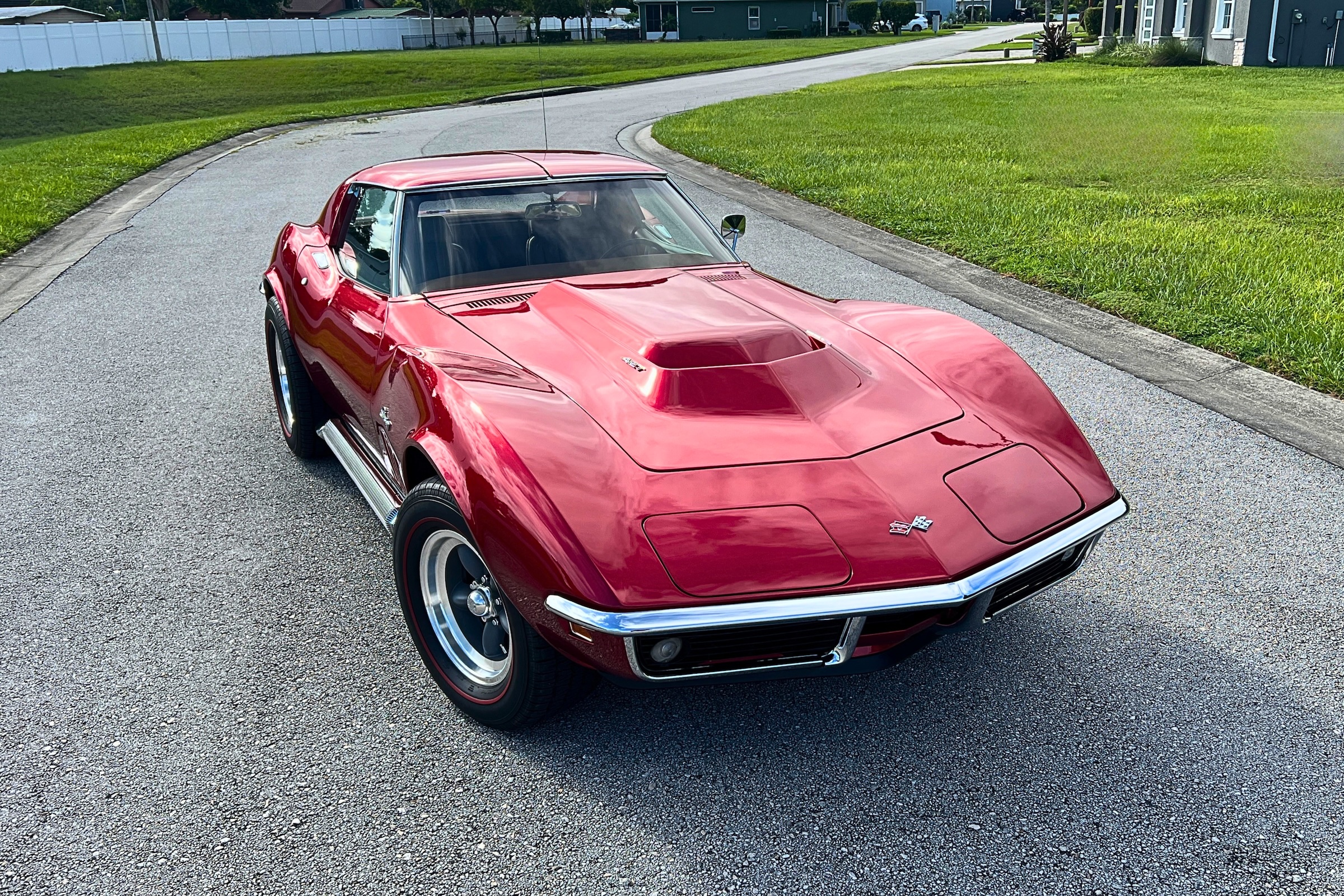
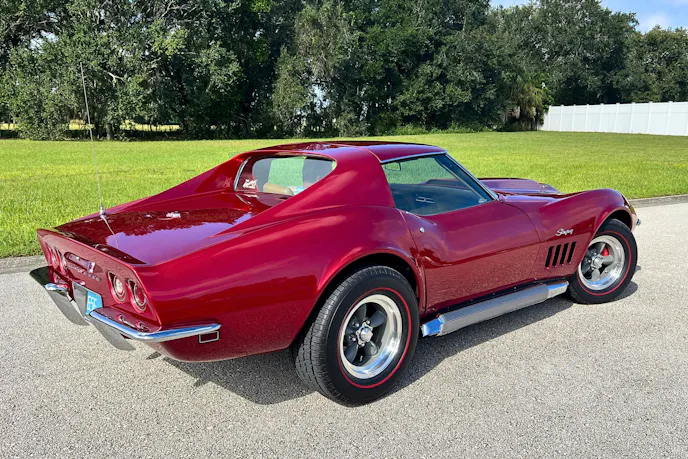
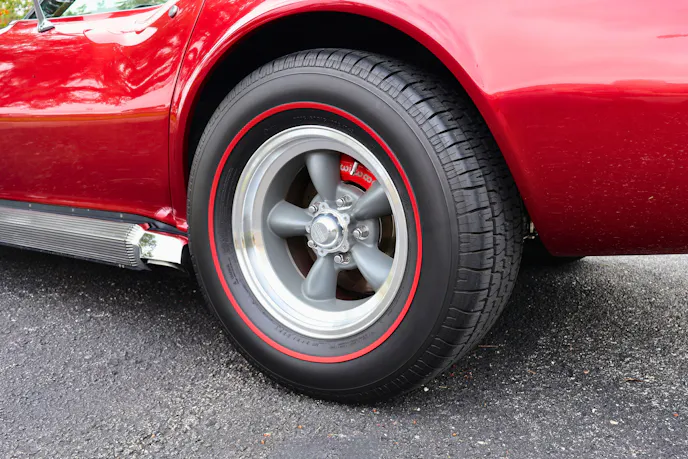
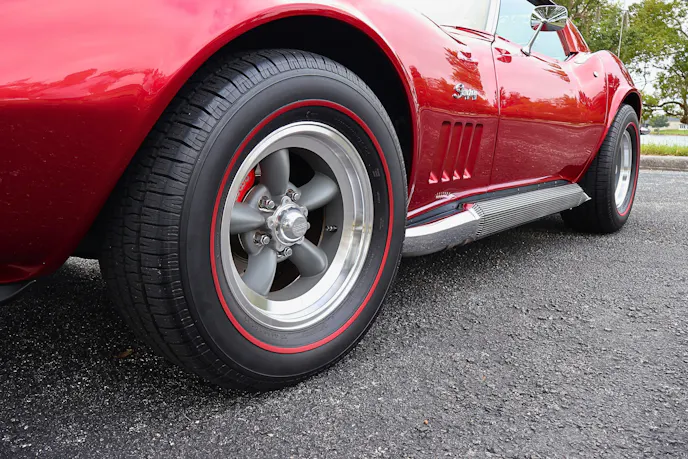
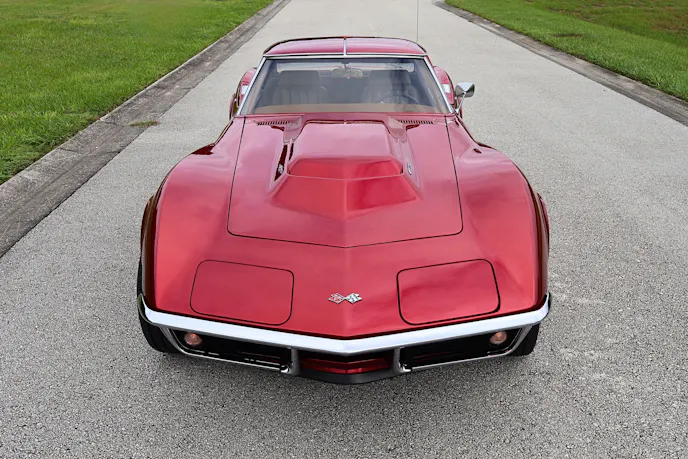
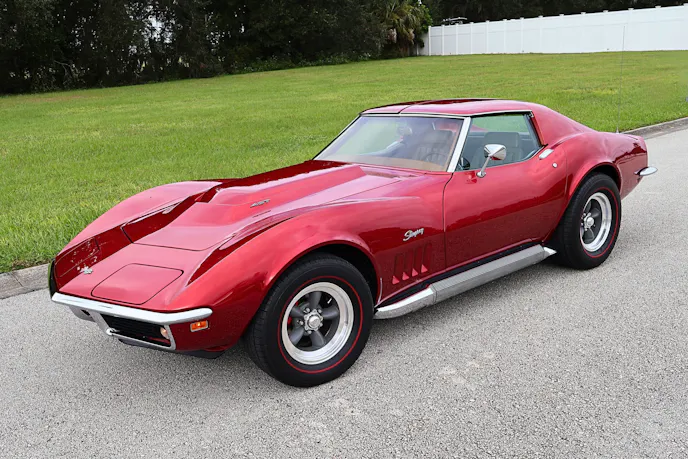
Once upon a time, Corvettes were for young people. In 1971, the average buyer of a new Corvette was 26 years old. They were driven hard, blown up, rebuilt, and (many times) customized until they were unrecognizable. This ’69 Corvette was sold new with the 427/390 horse hydraulic-lifter engine, but looks today for all the world like it might have back in the early ’70s: TorqThrust rims, fatter than stock redline tires, custom paint, and an L88 hood, with more power than the tires can handle.
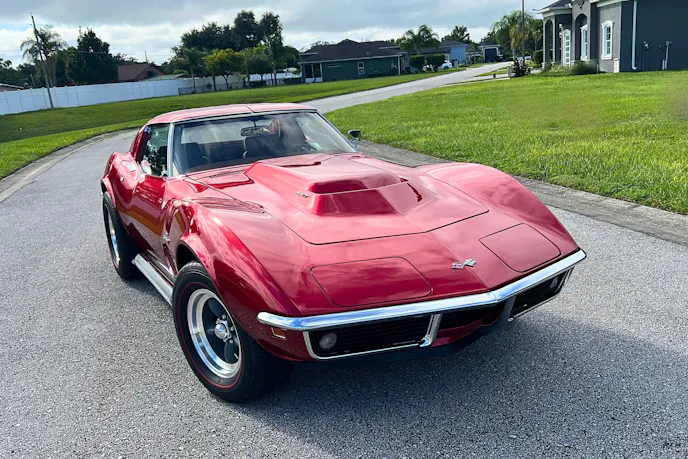
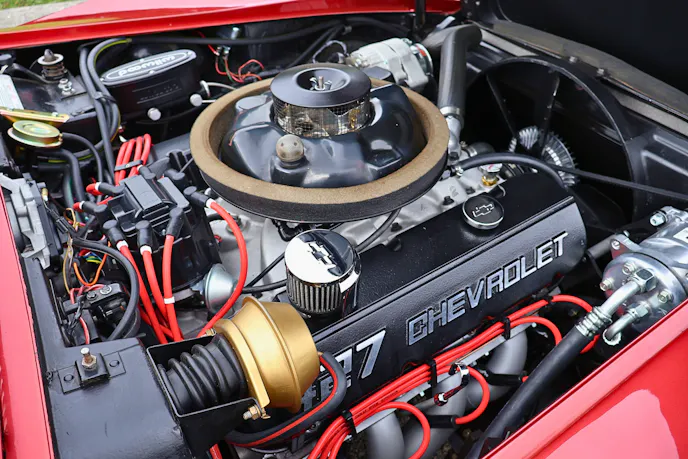
Tom Lambert purchased this car in 2024 and it already had a 454 in it, but he always wanted one of these with the ZZ427 crate engine, so he purchased that particular engine from Chevrolet Performance (PN 19331572) and proceeded to build the Stingray his way.
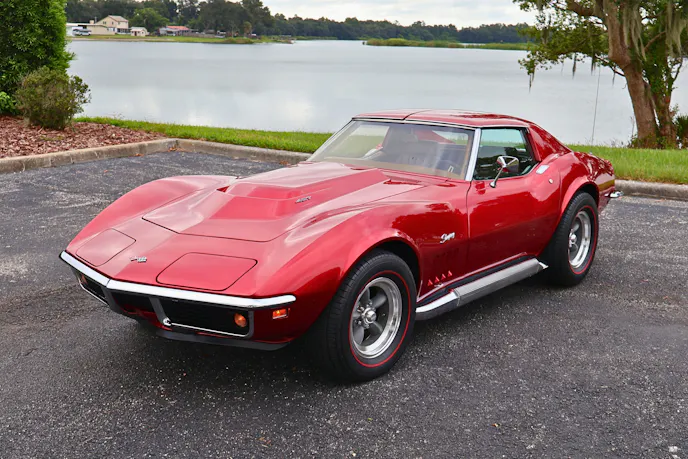
“I put a Tremec five-speed transmission behind it and I totally redid the car,” Tom said. “I added Wilwood brakes. It’s just a beautiful driver, it’s a fun car to drive, and of all the car’s I’ve owned, the ’69 Corvette is absolutely my favorite. I’ve had five ’69s and this is the best.”
Modern L88 In A Crate
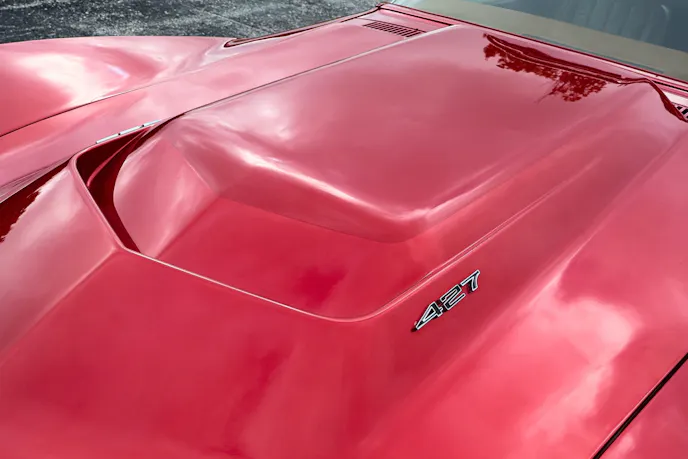
According to the description in the Chevrolet Performance catalog, this over-the-counter Rat is “the classic L88 with a modern twist.” For those who do not know, the original L88 had an iron clock, L89 aluminum heads, an aluminum intake manifold, 800 cfm Holley carb, a radical solid-lifter camshaft and 12.5:1 compression. It also had a wild, functional cold air hood (as you see here).
It was designed as a street engine, prone to loading up, fouling plugs in traffic, etc., so Chevy rated it at only 430 horsepower and you couldn’t get it with certain popular options, a ploy to discourage prospective Corvette buyers who were prone to ordering “one with everything.”
In actual dyno testing, the original L88 made 540 horsepower and was wildly successful in both drag and road racing …
For the street, the L88 was simply too much. It was designed for the track, so there was no fan shroud. It was a bear to live with, even if you could afford the requisite race fuel, which it gobbled up at about 5 mpg.
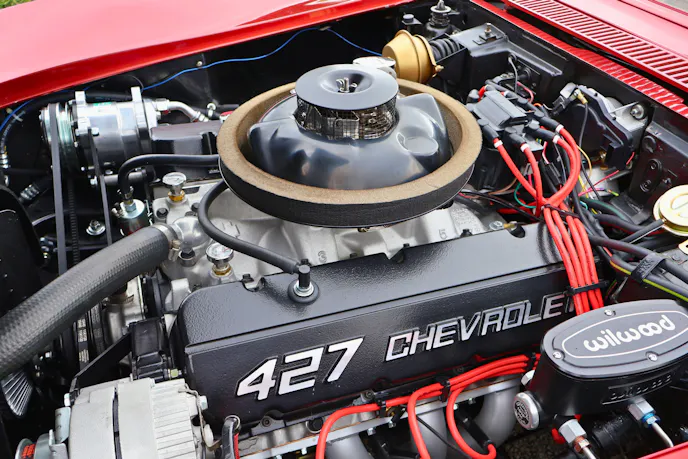
The modern version it inspired has an iron block, aluminum heads and intake, a hydraulic roller camshaft and in a not to pump unleaded premium, 10.1:1 compression. It even includes a 770 cfm carburetor. Output is 480 horsepower at 6,000 and 490 lb-ft of torque at 3,800. Combined with the light weight of the Shark-era Corvette, and the low first gear of the Tremec TKX five-speed, this thing is an absolute missile on the street.
She’s Got Looks That Thrill
There’s no doubt that the 1968-’82 Corvette is the wildest design to reach production from a major American manufacturer. The Viper was pretty out there, too, but it was a modern interpretation of the original Shelby 427 Cobra.
These Vettes, with their front and rear chrome bumpers, were like Motorama show vehicles — lots of flash, including a fiber-optic light monitoring system in the cockpit and a vacuum-operated door at the base of the windshield that hid the wipers. In production, the door rarely worked. People are fixing them to this day. The one on this car works perfectly, which is kind of like walking on water in the miracle department.
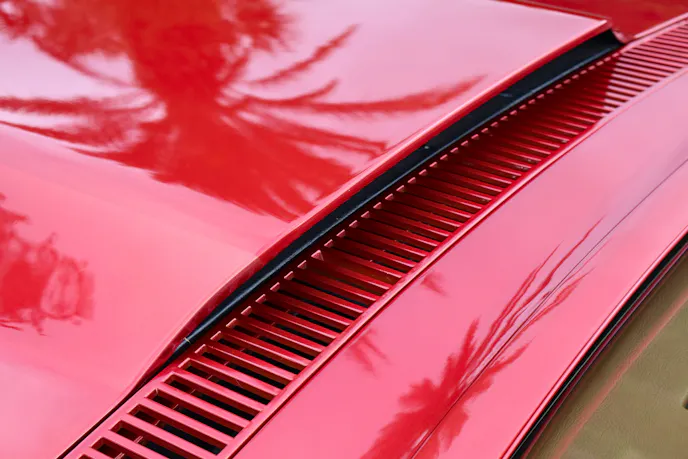
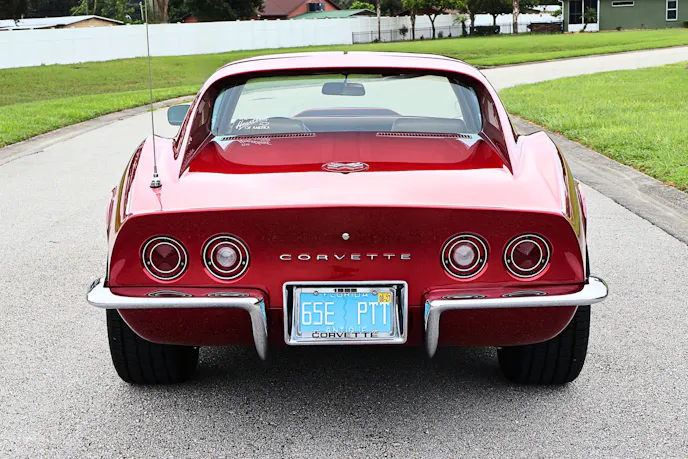
One of the biggest knocks (aside from the lack of luggage space) was the low-profile hood, which not only didn’t allow for a tall intake manifold, but kept underhood temps very high. Carb air was in short supply. The big-blocks were especially affected by this and the three-deuce intake from ’68-69 was probably 20-horsepower worse than the unit used in ’67.
Recognizing this shortcoming, a proper cold-air hood was designed for L88- (and later ZL-1-) powered cars. The hood used on Tom’s car is a legit factory L88 unit, gulping air from the rear opening, which then goes through the air filter mounted in the hood bulge itself. The rest of the body remains stock, and with something as futuristic as this era Vette, what can you add that won’t detract from the overall lines?
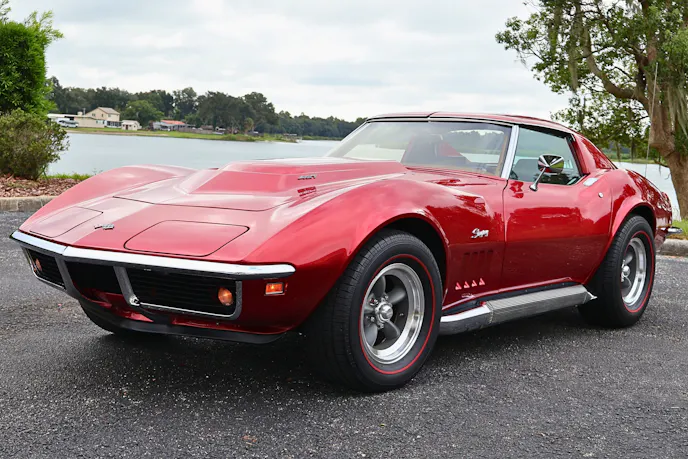
The color is Iridescent Flame Red and hidden in the center of the hood is a slightly different color red stripe that is almost impossible to detect unless the sun is really hitting it.
More Mods, More Power
Tom added ceramic coated McJacks headers and HighFlo Performance three-inch exhaust, which exit out of chromed factory sidepipe covers. The sound is positively majestic.
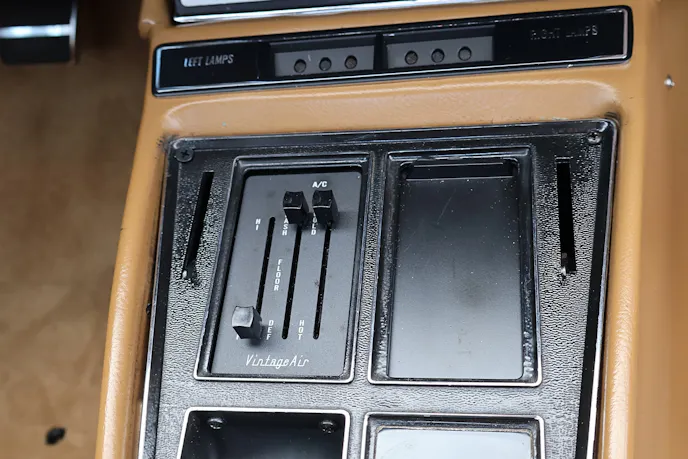
“The headers fit perfectly. The carburetor, the original-style air cleaner [base], HEI distributor, and I put a Vintage Air air conditioning system in it,” Tom told us. “The car originally came without power brakes, no power steering or no air conditioning. They didn’t want to steal any power.”
To keep the car from boiling over in the Florida heat, Tom replaced the factory radiator with a high-performance unit from Dewitts and retained the stock fan. Even with the air conditioning blowing on the day of our shoot, the car never went over 190 degrees. In fact, Tom says, 195 is as hot as it ever gets — quite remarkable considering 427/454 cars were known to run 225-235, or worse, overheat, even when new.
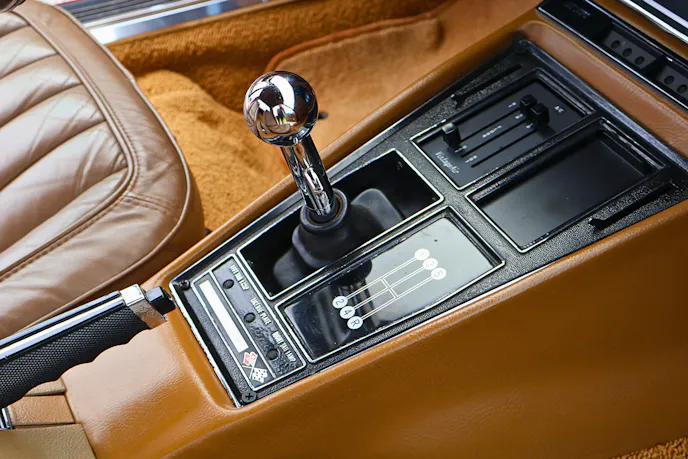
Backing the 427 is a TREMEC TKX five speed, which sends all that torque to a 3.55 geared rear. In fifth gear at 70 mph, the Rat motor loafs along at 1,900 rpm.
Suspension & Interior Upgrades
Not much has been done to the suspension. The front end was rebuilt using stock components. Tom did swap in a fiberglass transverse leaf spring and employs offset trailing arms so he can run wider rear tires than he could with the factory components.
The rear tires are Diamond’s version of the BFG radial with redlines cut into them. They measure P275/60R15 and the wheels are 15×8, which is the stock side. Up front, the tires measure P255/60R15, the wheels 15×7. Wilwood brakes replace the factory discs at all four corners and the Wilwood master stays true to its non power-assisted roots.
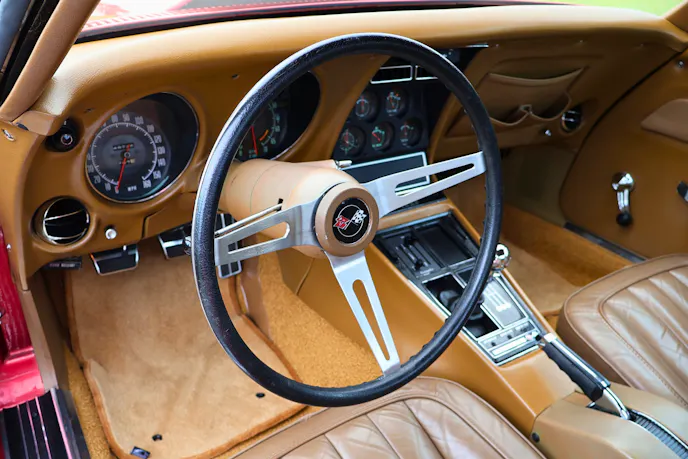
Corvettes of this vintage had a space-age-inspired cockpit. The driver got an incredible view of those arching fenders (which were actually taller on early proposals). The 160 mph speedometer and 7,000 rpm tech were front and center. Tom added a correct 6,500 rpm redline tach when he swapped in the L88.
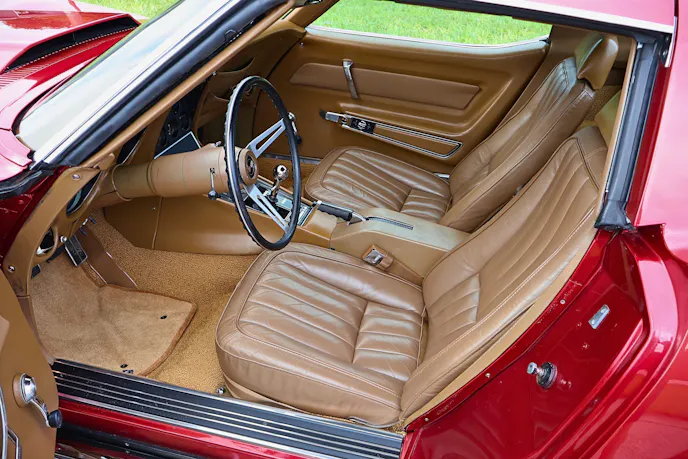
Not many changes were made inside the Stingray. The seats are original, but Tom has replaced the carpeting. The factory mechanical tach was converted to electric to work with the HEI ignition, and the original radio got the heave-ho in favor of an original-style delete/block off plate.
“I never listen to the radio when I’m driving my old cars,” says Tom.
We have to hand it to Mr. Lambert. He built a phenomenal Shark-era Stingray — it’s his favorite of the five he’s owned — and when he’s not tooling around in it, he’s got a restored 1968 396/375-horse Chevelle SS he likes to burn rubber in.
Yes, it’s good to be Tom!
You might also like
Project F-Zilla: Building A Bulletproof IRS For Our Street Truck
We wanted to address our IRS center section. To ensure it can handle all 764-horsepower, we turned to Strange Engineering.