
Matching-numbers ’60s muscle or a modern high-horsepower upgrade? Gearhead problems for sure! Darryl and Faye Lee already owned a Plymouth Hemi Road Runner most Mopar guys would spend years hunting for. Their ‘69 was factory-correct down to the wheels. It was the kind of car you want to preserve, not improve. After 12 years of owning that muscle-era survivor, a 2018 reveal from Mopar Performance set the Lees on a new path.
The announcement dangled a ridiculous carrot: a 1,000 horsepower Hellephant 426 supercharged crate engine would be offered for sale.
“I heard that and a crazy thought came in my mind,” said Darryl. “To go ahead and build the ultimate Road Runner. I hope we accomplished that.”
Flashback To A First Build
The ultimate build that was to become the Lees’ Roidrunner was not their first experience with a project car.
”I had a 1955 two-door hardtop Bel Air in high school,” recalled Darryl. ”In the late 1990s, I started working on that and like happens with most guys, my wife had to write checks for that every month.”
Those car part bills weren’t Faye’s favorite expense, but that Bel Air build became the catalyst that changed her mind about cars. One peek at the ’55 fresh out of paint, and her conversion began. By the time the interior was buttoned up and the Chevy was show-ready, Faye was all in.
That Bel Air opened the door to years of shows, and morphed into more than a few cars, but it never turned into another ground-up project. Until the Mopar announcement, when Darryl got a case of Hellephantitis.
History or Hellephant: That Is The Question
The Lee resolution to that age-old dilemma was the kind that puts an ear-to-ear smile on any car enthusiast’s face and fills both sides of a two-car garage. They kept their numbers-matching ’69 Hemi Road Runner intact and began to build a second one, betting on Mopar’s promise that the limited-edition four-digit horsepower crate package would make it to market. For most Mopar fans, the Hellephant was a wish list item that is fun to talk about. For the Lees it was a dream that they were willing to build a whole other Road Runner around.
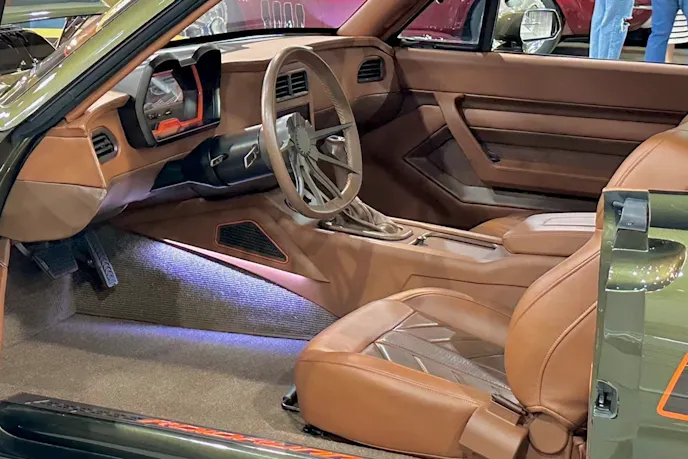
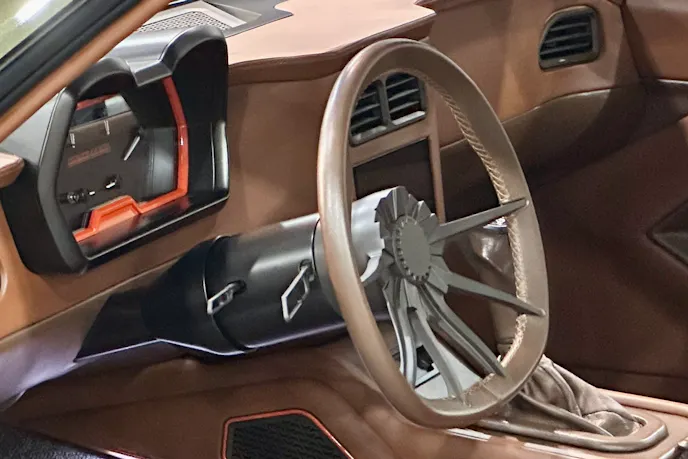
”We started on the car, hoping Mopar would follow through on their word of the Hellephant’s release,” Darryl added.
With the two Road Runner strategy in place and Tyler Nelson of Revision Rods & Rides chosen to lead the way, the ’69 reboot began with a rendering from Eric Brockmeyer Design. The concept featured a replicated chevron pattern as a signature detail, woven into the build so deeply the search for it became part of the experience — Easter eggs hiding in plain sight.
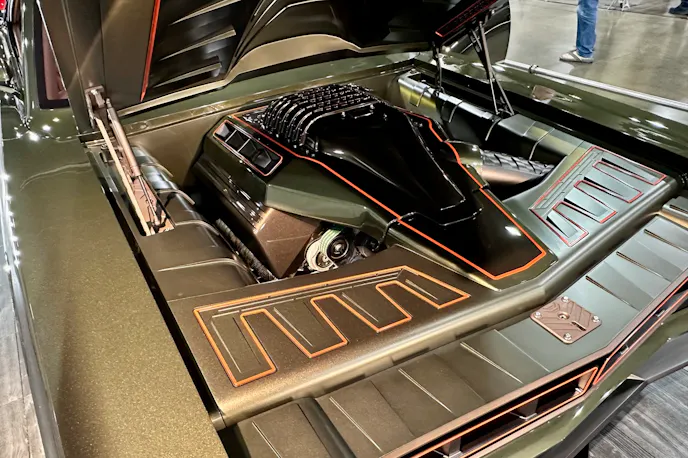
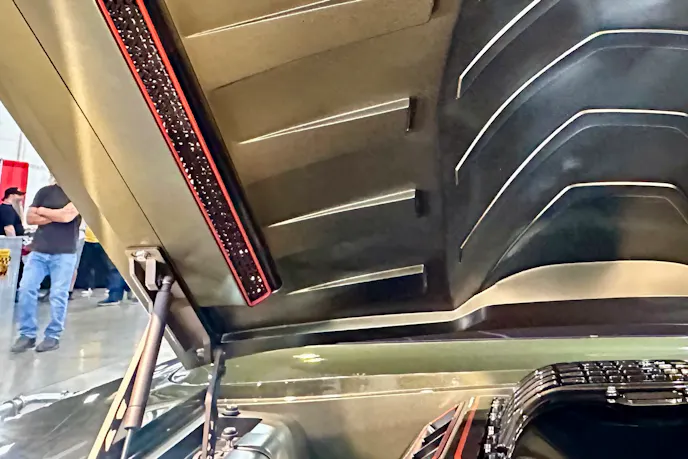
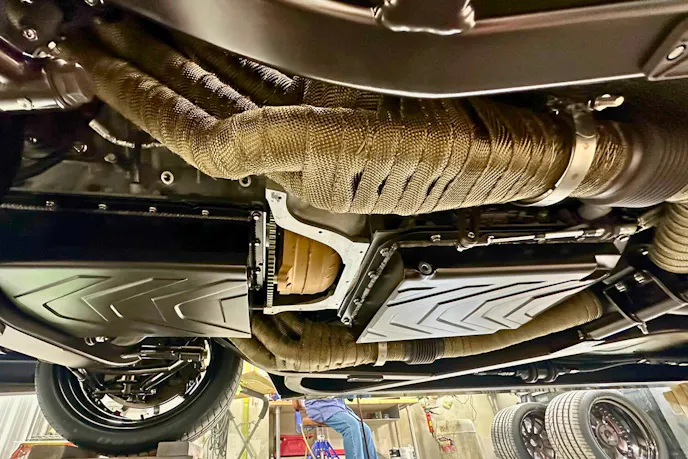
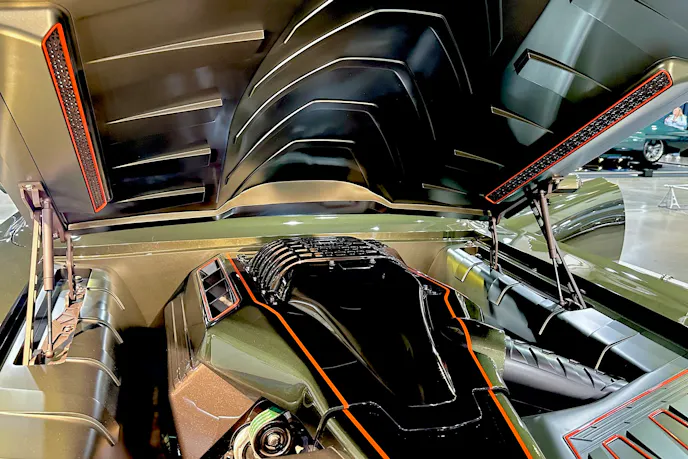
”A lot gets covered up when doors and hoods close, but you can see that chevron on the engine bay, the bottom of the hood, engraved in the interior, in the floorboards — throughout the whole car. If you look underneath, you will even see a custom oil pan and a custom transmission pan with that pattern.“
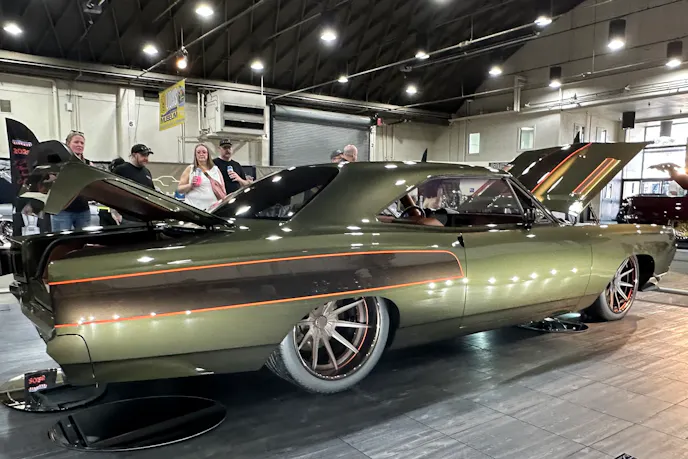
The Lee’s survivor Road Runner is a date-code-correct, real-deal piece of history, wearing a period-original Frost Green exterior color. And although its OG paint scheme was inspo for their Road Runner revamp, there is no mistaking the original for its motor-swapped modern muscle counterpart.
They Say Nothing Good Happens After Midnight. They’re Wrong
Purchased two minutes past midnight on its pre-order release date – 4/26 – HEMI Day in 2019, a Hellephant became the Lees. Its $32,000-plus price tag didn’t scare buyers and the estimated 100 initially produced Mopar supercharged crate HEMI sold out within 48 hours.
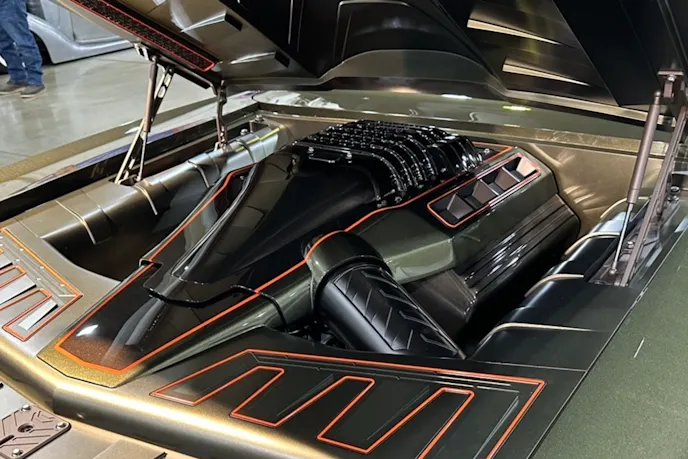
”The parts manager of Watertown Chrysler entered it at that time of the night for us to get it,” Darryl remarked. ”How is that for dedication?”
The Hellephant’s 3.0-liter supercharger delivers 15 pounds of boost and creates 1,000 horsepower. Intended for pre-1976 street and off-road vehicles, the 7.0-liter aluminum Hellephant was dropped into a ‘69-era Plymouth B-body donor with a custom intercooler, and PRC radiator.
To accommodate its 950 lb-ft of torque, a specially built Bowler 4L80-E transmission and a 3.73:1 gear ratio limited-slip differential completed the drivetrain. With high-torque and four-digit horsepower on the horizon, Nelson was the one who gave the build its name. The Road Runner became the Roidrunner — not to be confused with Nostalgia Hot Rod’s Roid Runner.
Hand-Craft Hits Hard
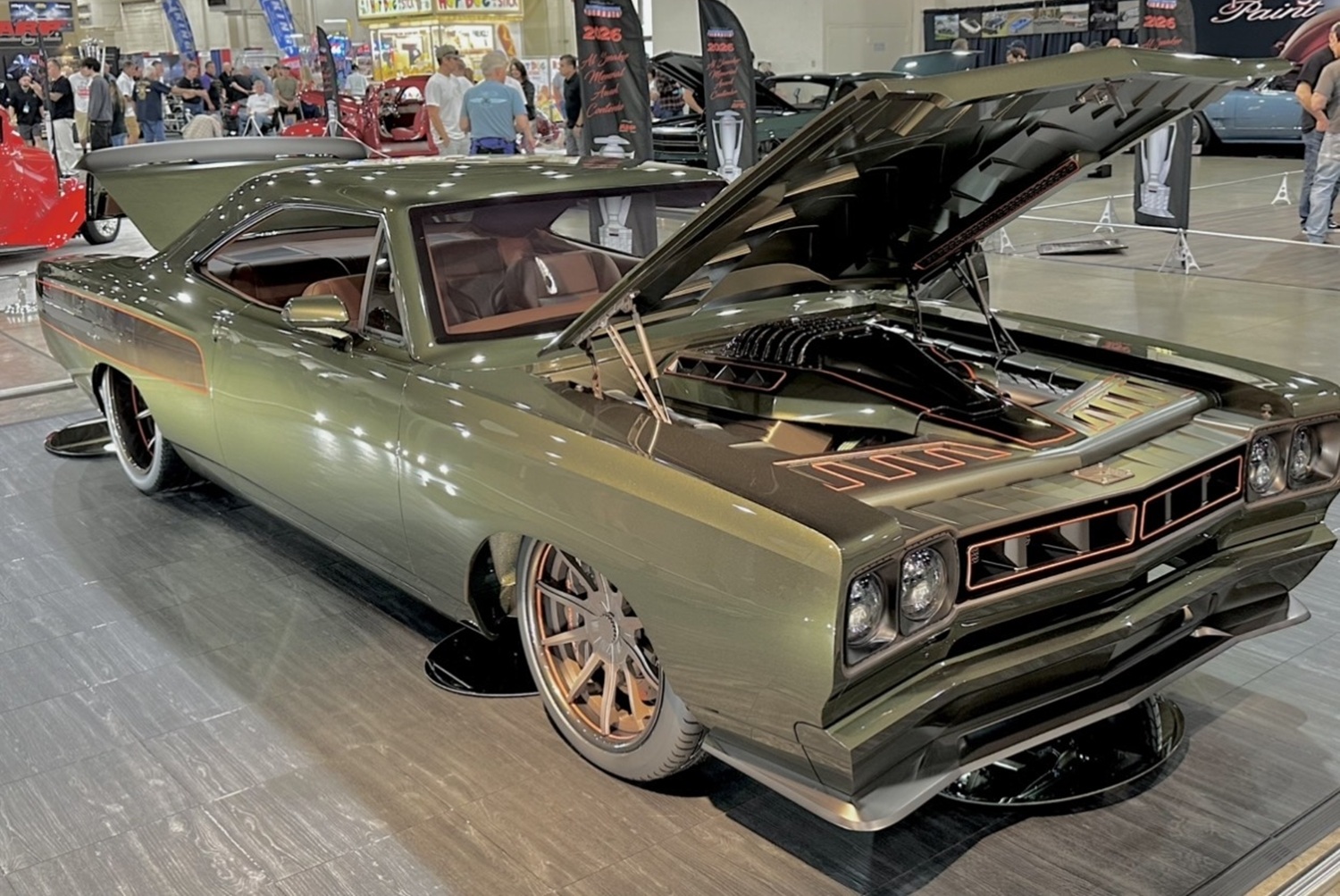
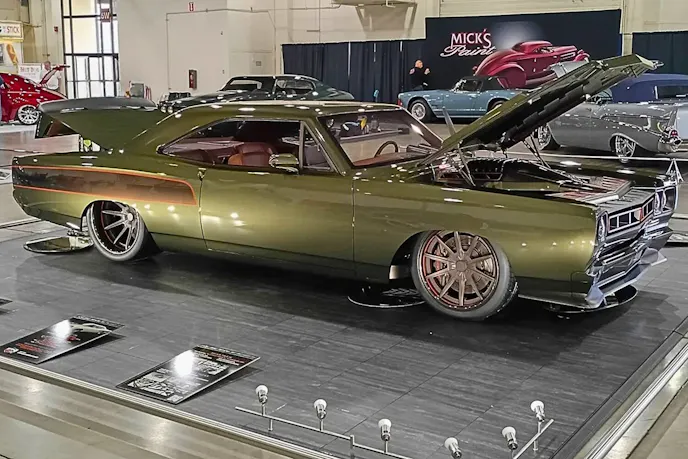
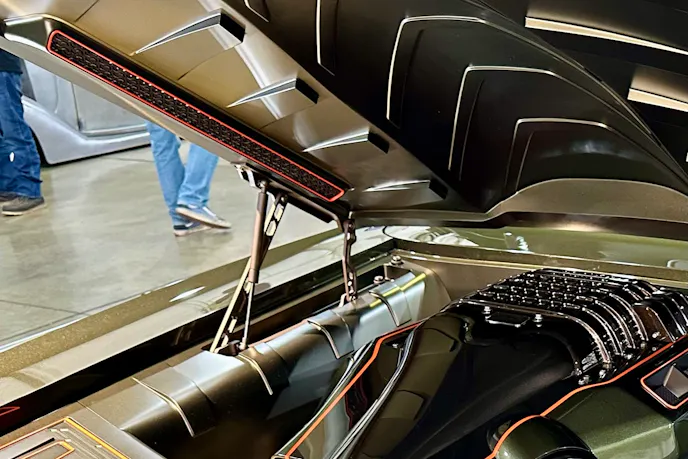
Beautifully-finished in green Glasurit paint, the next flex from this Plymouth is the in-house bodywork. Revision was responsible for tucking, tubbing, and overall one-offing much of the metal, morphing the classic B-body silhouette into a more contemporary version of itself. One of the biggest neck-breakers is the hand-crafted all-aluminum hood complete with scoop and CNC-machined vents.
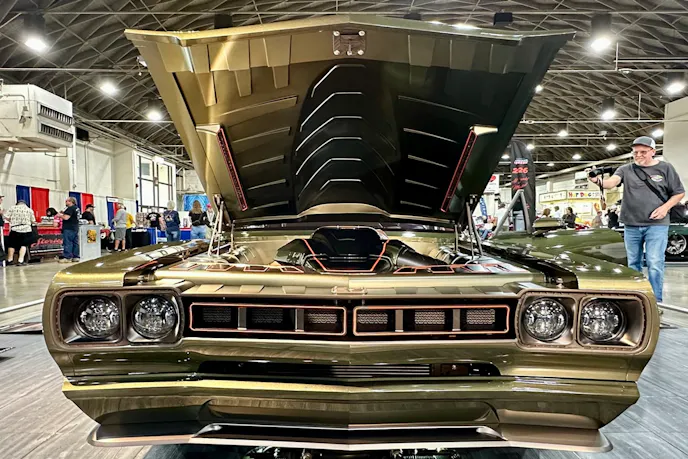
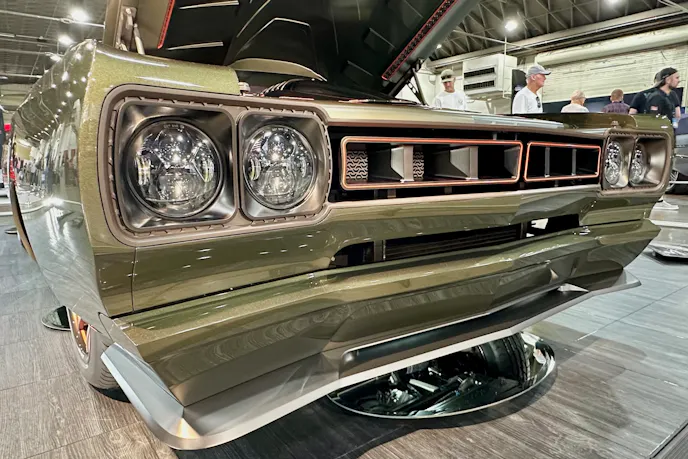
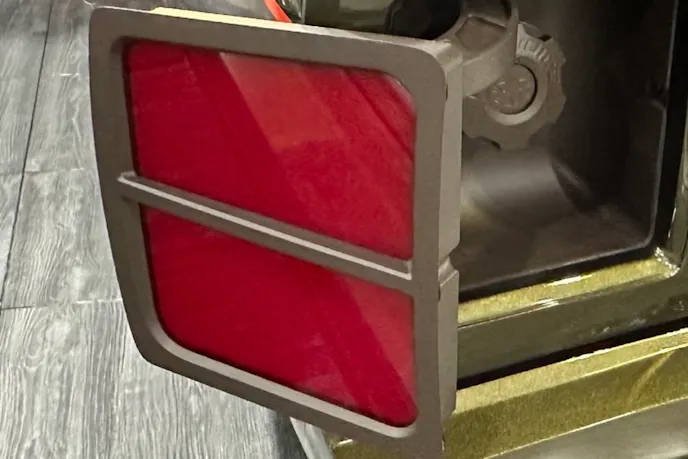
The build team started from the ground up at the floor and subframe, raising the wheelwells and laying a foundation that could handle the Herculean power of the Hellephant. Flush-mount glass and custom drip rails upped the Roidrunner’s sleek scale, while the rear was reworked for custom exhaust tips. A hidden rollbar was integrated into the cabin. The team also fabricated front air dams, a rear spoiler, and a gauge bezel for the Dakota Digitals. A CNC’d grille and taillights with a hidden fuel filler were added to the list of shop-made adds.
”Faye was as involved as me,” said Darryl. ”We worked with Tyler to make sure it was everything we wanted. He didn’t want us to have any surprises at the end.”
The engine bay was crafted into an artfully-designed centerpiece, incorporating a full multi-piece engine cover with CNC’d valve cover vents and a custom-fabbed firewall. Adding to the list of Easter eggs are discreet access points that allow cover removal for service and fluid refills.
Mounted on an Art Morrison Performance chassis, the Lees’ Roidrunner sits on bespoke wheels from Colorado Customs, wrapped in Pirelli P Zeros. DCE Electric modernizes the driving feel, while a Wilwood/Tesla booster combo halts the Hellephant with confidence.
SewFine Finishes the Story
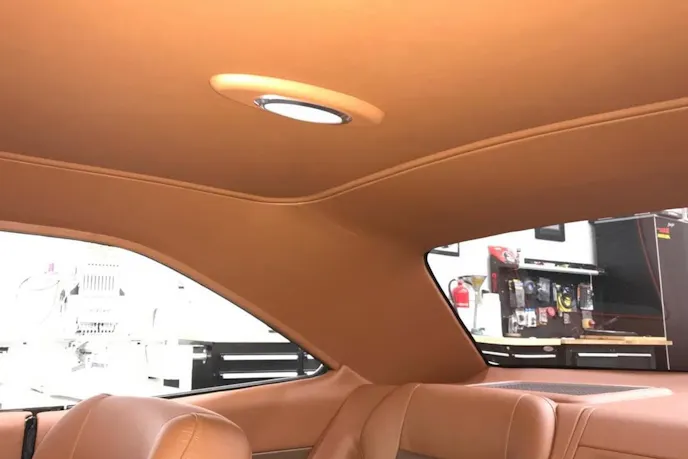
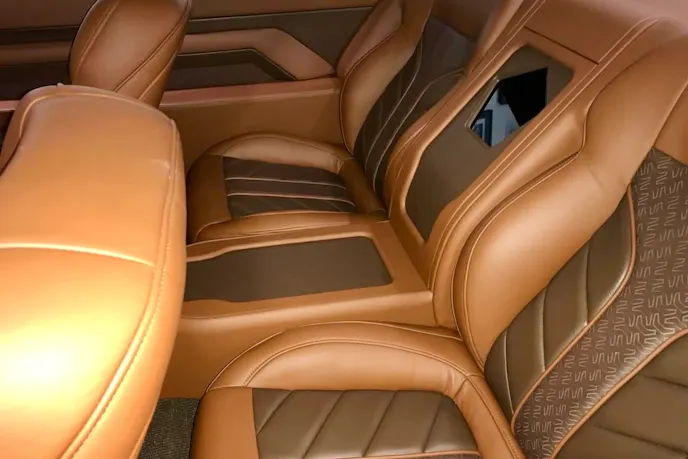
Continuing the Eric Brockmeyer design, Kerry Gluck of SewFine Interiors in Canada executed the interior.
”We went to the World of Wheels shows for probably 10 years, and we got to know Kerry’s work,” Darryl said. “I knew from the go it would be Kerry that would do the Road Runner. Faye went with me to pick out colors before he got started.”
The warm caramel shades inside give a vibe that mixes luxury and still feels sporty. Gluck completed the work, including an Easter egg or two, within a rocket-quick, three-month time frame.
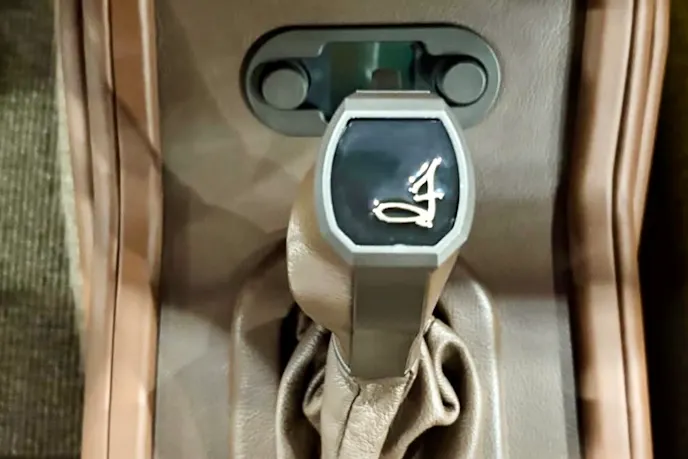
Unfortunately, Faye’s health didn’t allow her to see the fully finished product, which just qualified as a contender for the January 2026 Al Slonaker award at the Grand National Roadster Show in Pomona, California.
“She passed in July of 2025,” Darryl explained.
In her memory, Gluck added Faye’s signature “F” emblazoned in jewels on the top of the shifter.
“The checks that went out every month were pretty big, and Faye supported me and this idea 100 percent,” said Darryl. “Kerry made a memorial plaque in her honor for when we show it.”
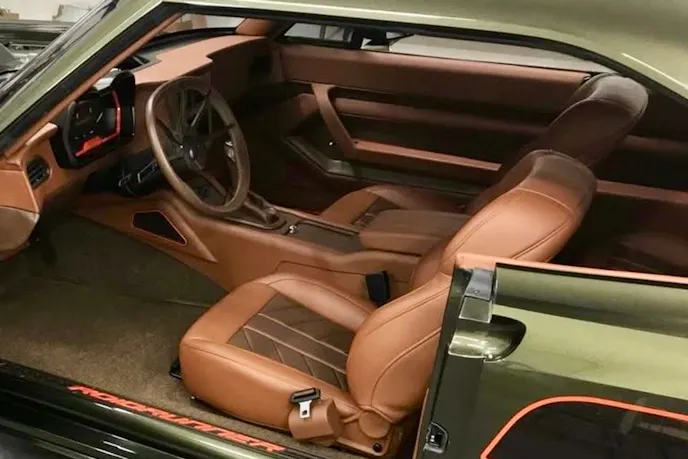
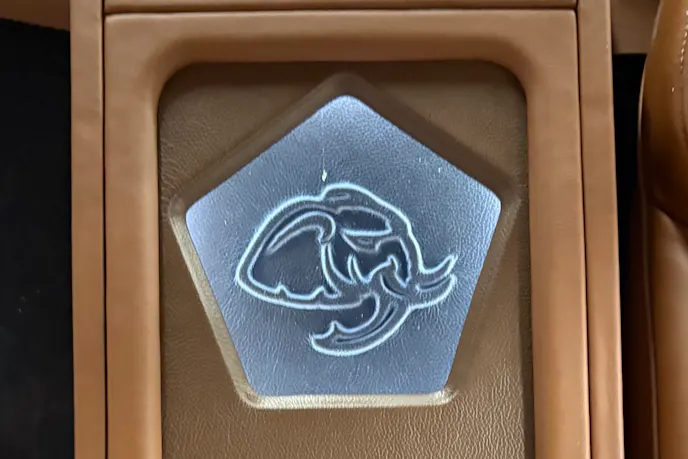
The plaque was present for the Slonaker judging at this year’s Grand National Roadster Show.
The Lees’ journey as a car couple set them on a path that only true car enthusiasts could understand: two versions of the same car, one a piece of history and the other a way beyond version of the same dream. In a way it was the perfect bookend to Darryl and Faye’s couple car building days starting with their first — his original ’55 Bel Air and culminating with their second — the Hellephantized Roidrunner they built together.
You might also like
Sick Week Right-hand Drive ’55 Chevy Is A Global Love Affair
Rules have changed now, but we converted it to right-hand drive having no idea that it was ever going to make it back to America.