
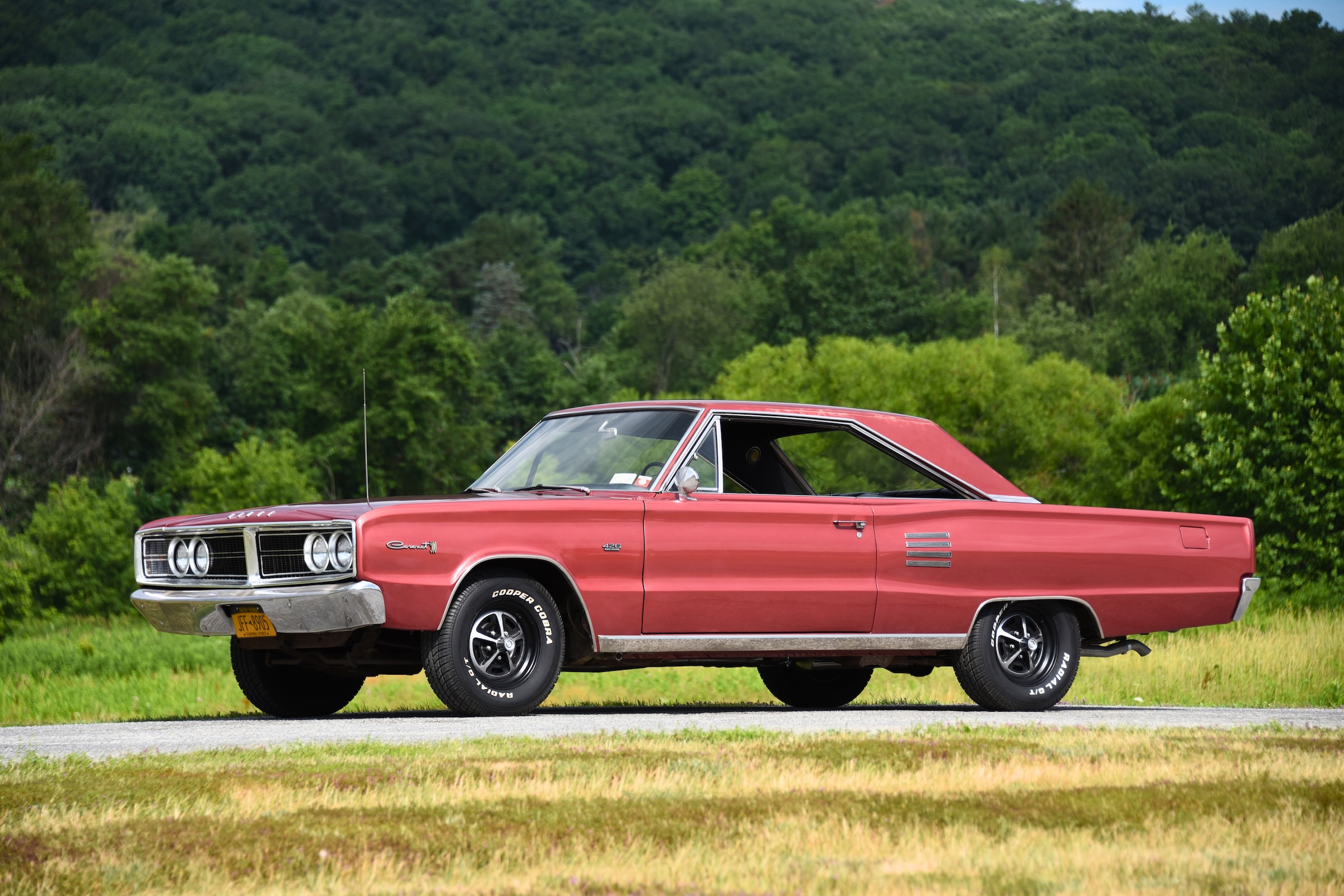
Upstate New Yorker Bobby Brennan is the proud owner of not one, but three vintage ’60s Mopar Street Hemis, (two 1966 Hemi Coronet 500 Dodges and one Code D Light Blue metallic 1967 Plymouth GTX). All were born with four speeds, and all three are running and driveable cars. Out of the three, Brennan’s Metallic Red ’66 is his favorite.
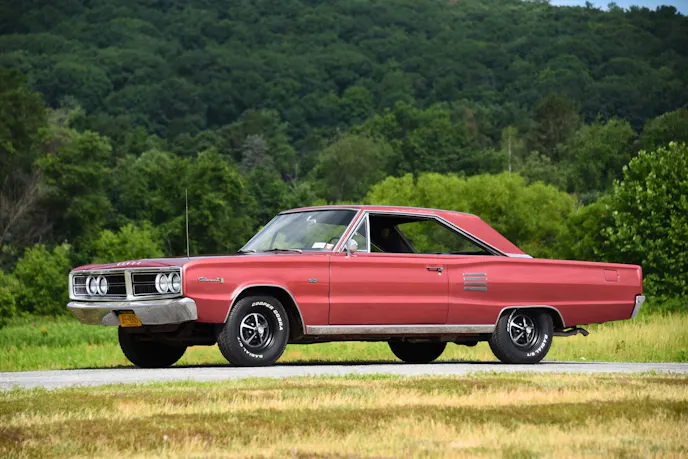
“The red 1966 Hemi Coronet was originally sold new to Newburgh, New Yorker Lynn Gardner through Rockland County [New York] Chrysler Plymouth Dodge. Remarkably, on that same night, Ms. Gardner’s father bought a ’66 Hemi Charger with a four speed. I bought the Hemi in 1975 from Wingdale, New York’s Dean Dennis for the whopping sum of five hundred dollars,” says Brennan. “As you can no doubt guess, the Hemi had been ridden hard and put away wet. For openers, the car needed new tie rod ends and shimmied so badly that you could hardly drive it. The Hemi engine also smoked pretty badly. Once I got the thing home and tore the engine down and found two cracked pistons and the bearings were practically shot.”
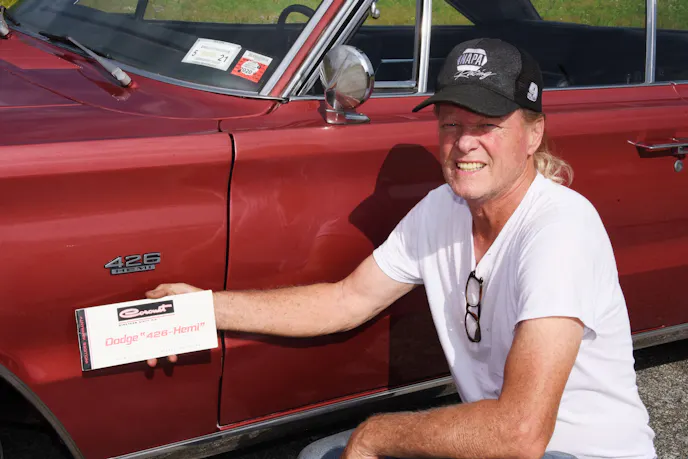
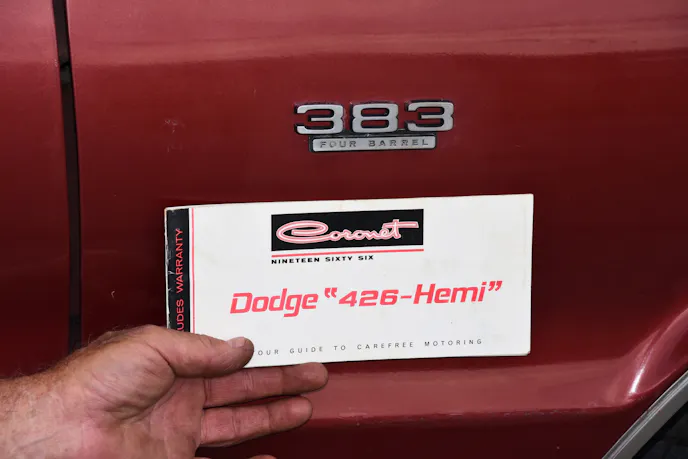
But that’s not the craziest part of the story. One side of the car has the proper 426 Hemi badge, the other a 383 emblem.
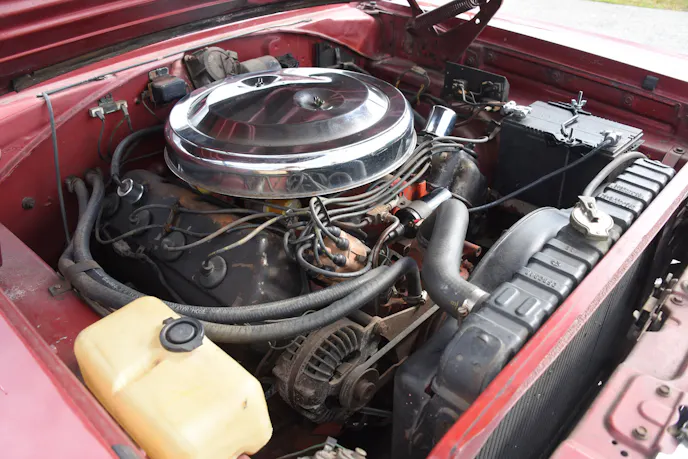
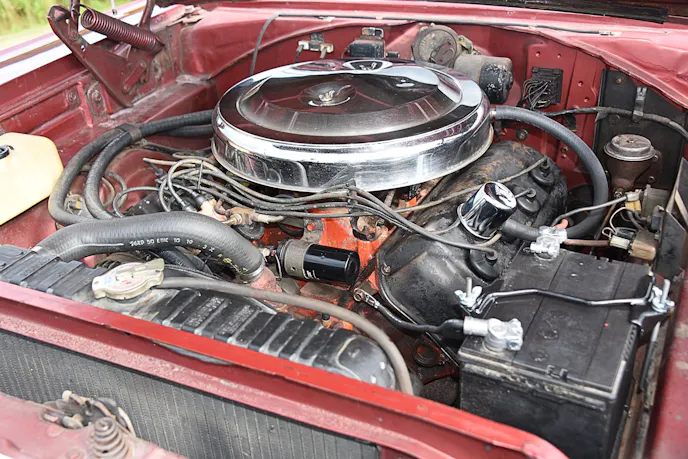
When asked about the 383 fender badge on the driver’s side fender Brennan replied, “When Ms. Gardner originally walked out to the lot to look her new car over, she immediately spotted the 383 fender badge and pointed it out to the salesman. Not risking the loss of a sale, he immediately sent for a mechanic to change it out. But Gardner had second thoughts. ’I have to drive the New York State Thruway every day to work and when I pass my buddies they’re going to think the car’s a 383 and they won’t bother to go to all the risk of racing me,’ ” Brennan claims.
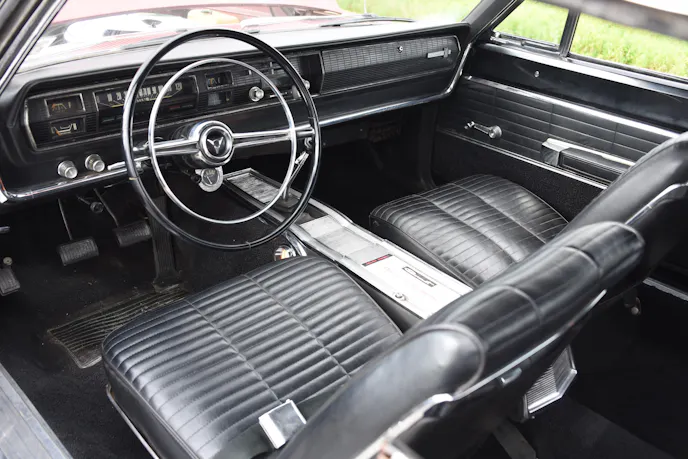
He added, ”Now I never bothered to change it out either and if anyone ever questions its legitimacy — and no, the car has never been wrecked before — I just show them the H in the data plate and that satisfies most folks’ curiosity. In the end game, it’s a great conversation starter.”
We hear anecdotal stories like this all the time, but Chrysler historian (and StreetMuscleMag contributor) David Hakim, has confirmed numerous reports like this, including on his own Super Bee.
I bought the Hemi in 1975 from Wingdale, New York’s Dean Dennis for the whopping sum of five hundred dollars …
“A lot of the line workers in Detroit then didn’t read English real well. They were first-generation Americans and they’d put the wrong emblems or decals on,” he noted.
The year 1966 was the first for the Street Hemi engine, a detuned version of the feared race mill. Chrysler created the Street Hemi to homologate the engine for NASCAR. As is well known, it came with a 10.25:1 compression ratio, dual Carter AFB carbs, and a solid-lifter cam. It was rated at 425 horsepower at 5,000 revs — about 50 horsepower and 1,000 rpm below reality. It didn’t make an ideal street engine, but if you knew how to maximize the tune and weren’t afraid to drive it hard, precious little could keep up.
Vintage road tests could vary anywhere from 13.5s to low-15s, depending on the magazine, driver skill, state of tune, and test methodology. It was on race tracks, both NASCAR ovals and drag strips, where the Hemi was in its natural element.
Brennan also owns and races a fairly potent, Mopar Performance Parts, Wiseco and Eagle-equipped .030 over 440 Magnum-engine, Torque Flite-equipped 1966 Dodge station wagon which has run a wheels up best of 12.35-108.00 at Brennan’s home track, Lebanon Valley Raceway.
You might also like
Sick Week Right-hand Drive ’55 Chevy Is A Global Love Affair
Rules have changed now, but we converted it to right-hand drive having no idea that it was ever going to make it back to America.