
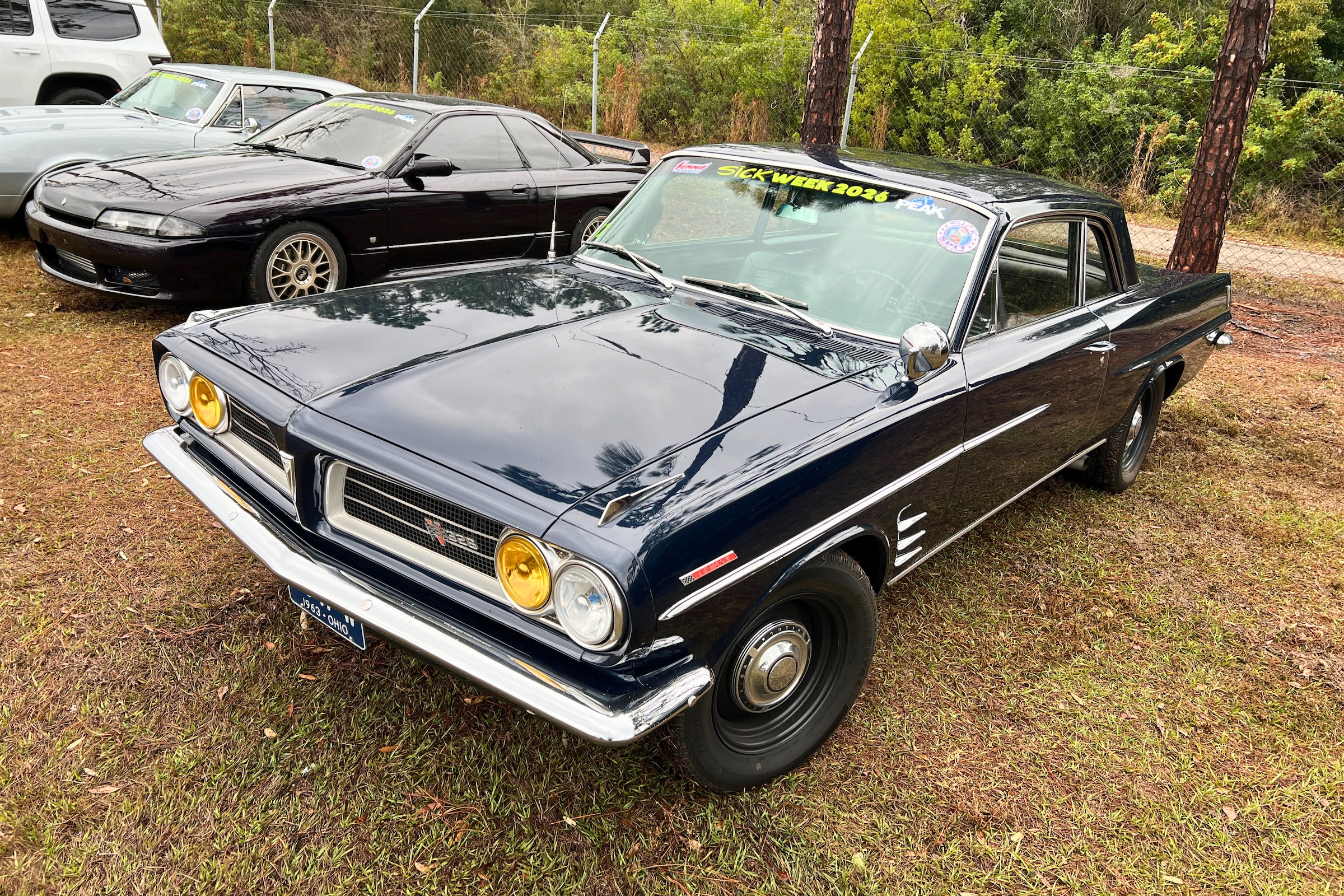
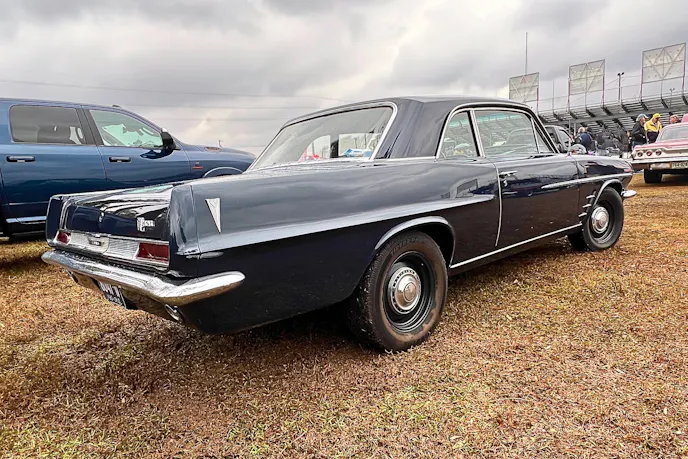
At first glance, you may look at Norm Harris’ ’63 Pontiac LeMans as just another LS-swapped vehicle. The truth is this car’s a lot different. Why? As we all learned from Marisa Tomei in “My Cousin Vinny,” this car had an independent rear suspension from the factory — not to mention a transaxle, and a flat floor. Adding a 408 LS stroker meant re-engineering most of the unibody.
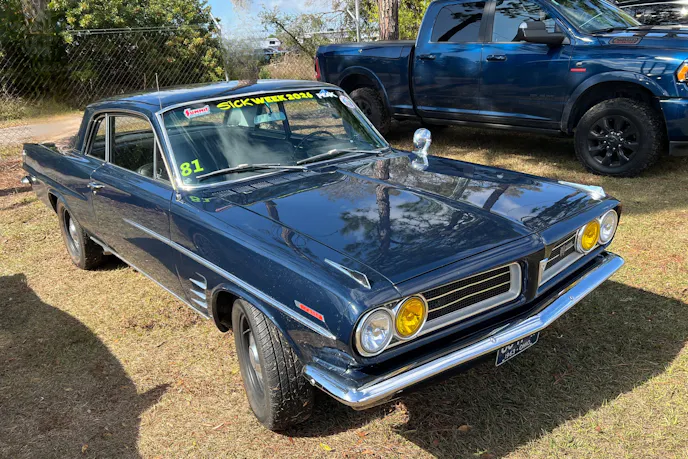
You can never underestimate the genius or determination of hot rodders. Norm’s ‘63 Pontiac LeMans had a mere 50 miles on the build when he departed the Columbus, Ohio, area and headed for Sick Week in Florida, which took place the first week of February. He drove it down, relishing every one of the 500-plus rear-wheel horsepower the car made.
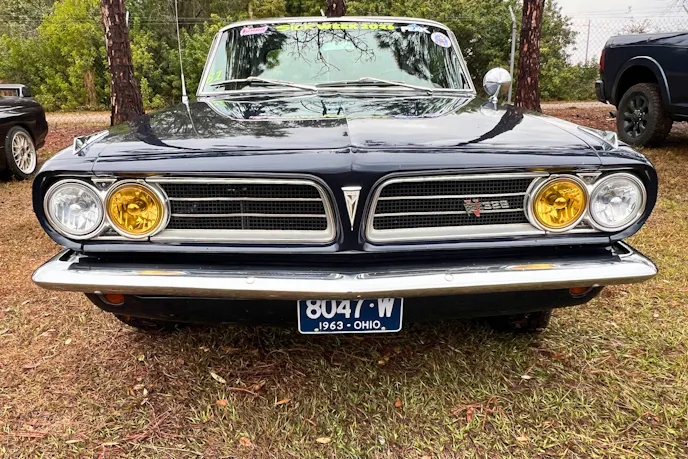
This was an original 326 V8 car, which was fairly uncommon. Before Norm purchased it, someone had installed a set of Pontiac H.O. cylinder heads, which combined with a four-barrel intake and the factory 10.25:1 compression, must have made for a sprightly performer. Still, it was small potatoes compared to what was coming.
Goodbye Poncho Power, Hello 408
He had Texas Speed & Performance assemble an LS2-based 408 stroker. This all-aluminum V8 made 520 ponies at the wheels at 6,400. Redline is 7,100, but since the engine was so fresh the run was called early. A Holley Sniper 2 throttle-body injection system feeds a single-plane Edelbrock intake. Texas Speed specified its own cam and topped the short-block with LS3-style PRC CNC-ported heads.
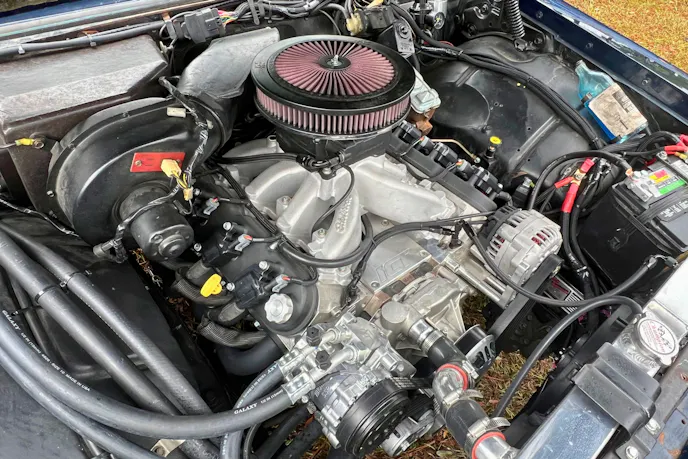
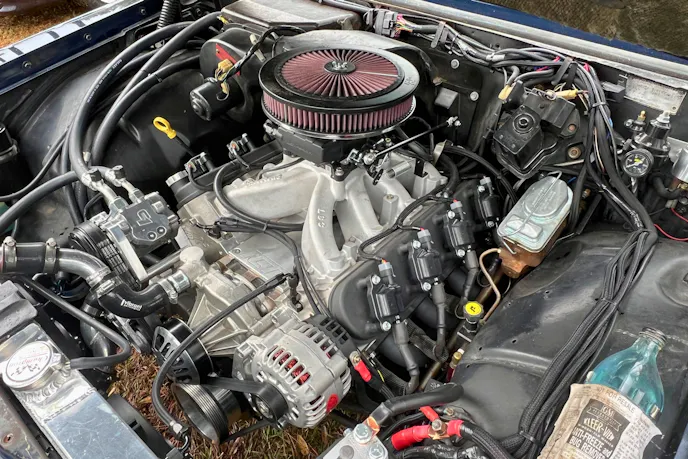
For those wishing he’d kept traditional Pontiac power under the hood of this Indian, the owner reports the LS depleted 200 pounds off the nose vs. the factory engine.
According to Norm, the LeMans only weighs 2,800 lbs (3,000 with him in it). For those wishing he’d kept traditional Pontiac power under the hood of this Indian, the owner reports the LS depleted 200 pounds off the nose vs. the factory engine. That alone would have made a huge difference in performance.
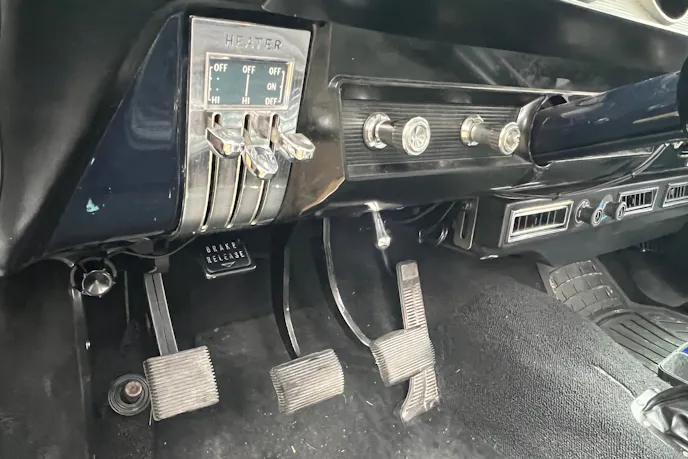
The transmission is a TREMEC TKX five-speed sourced from Kontros Performance in Columbus, Ohio. It uses a hydraulic Ram clutch. Norm says there was very little room to add that setup, but they made it work, and he’s glad they did. There’s still no power steering and the brakes remain of the manual variety.
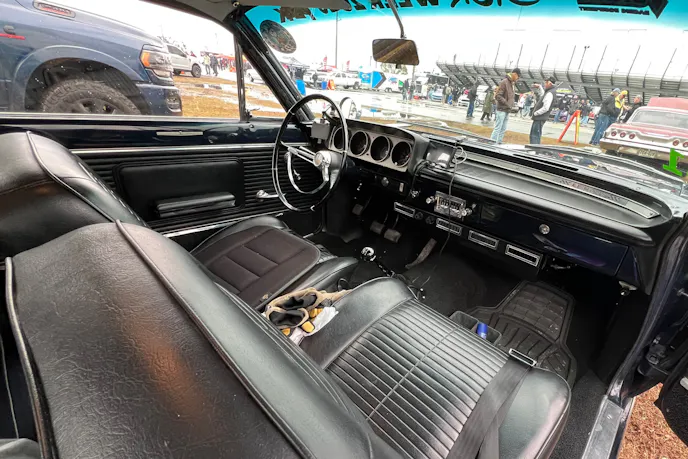
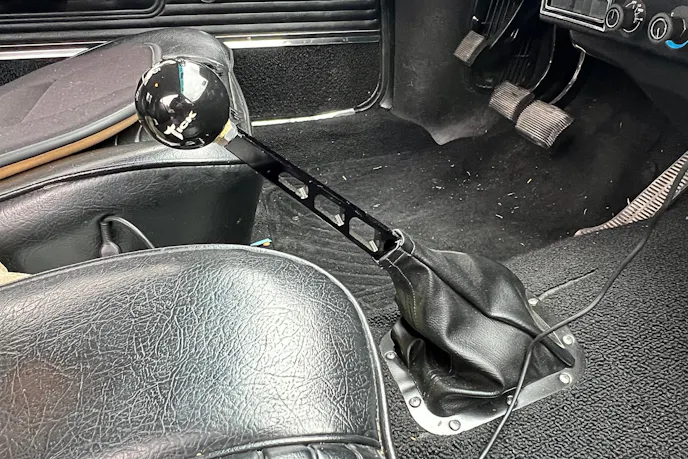
Still, even without PS and PB, the car is a dream to drive.
“I didn’t find it objectionable at all, and I’ve had shoulder problems,” says Norm. “I found the steering to be easy.”
Fabrication … And More Fabrication
According to Norm, Kenny Kontros and his team spent months trying to fabricate everything that went into the build. They had to add a lot of metal to the floor — not to mention a transmission tunnel — so the car could take all that modern horsepower. A custom aluminum driveshaft was fabricated to take all the power to a Quick Time 9 rear spinning 3.50:1 gears. Long gone is the Pontiac “rope” driveshaft and IRS.
“It’s a scream to drive,” Norm reports. “You’re a busy boy in there. You don’t have to worry about coffee or donuts or anything like that because there’s no hands for it.”
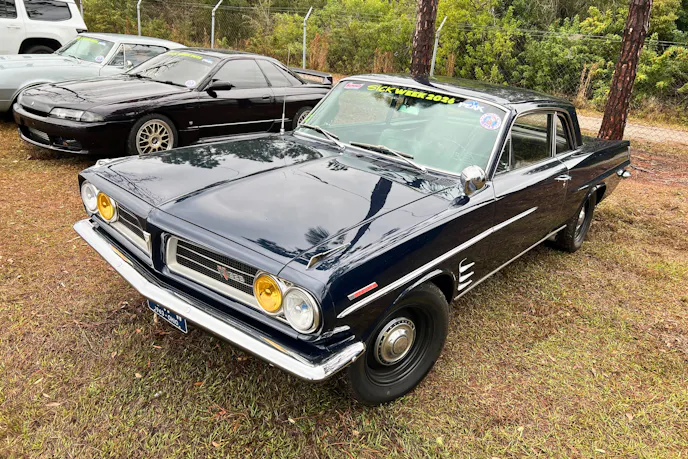
Pontiac sold over 100,000 Tempests and LeMans in 1963, but you certainly don’t see them everywhere today. Our feature car owner had to travel quite a ways to purchase this one.
“I found the car in Salem, Oregon. A fellow had it in his collection. It is a manual steering/manual brake car,” says Norm. “That was a little bit much and he hadn’t driven it much for many years, so I bought it. I had to put brakes on it immediately. The brakes were tiny and they’d lock up if you even looked at it funny.”
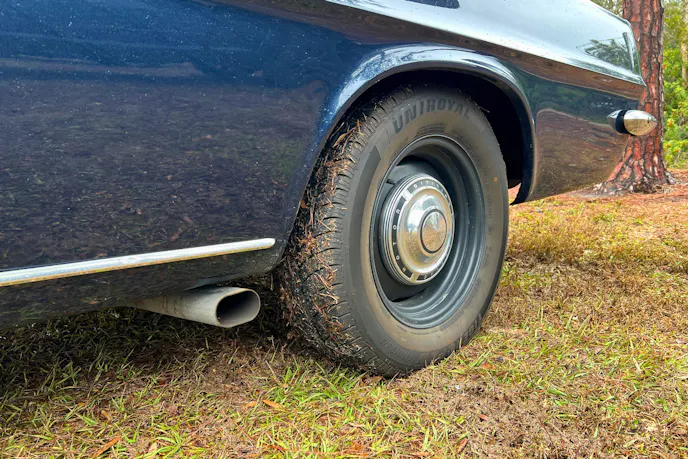
To address this, Norm added discs in front and bigger drums in the rear, but he didn’t just whip out a credit card and call an aftermarket company. Parts for these Y-body “senior compacts” are difficult to come by. And the ’63 is a bit of a one-year-only proposition, growing in size from ’61-62. He called on Ben’s Auto Parts in Ohio to put together a unique setup that was quite an improvement over stock.
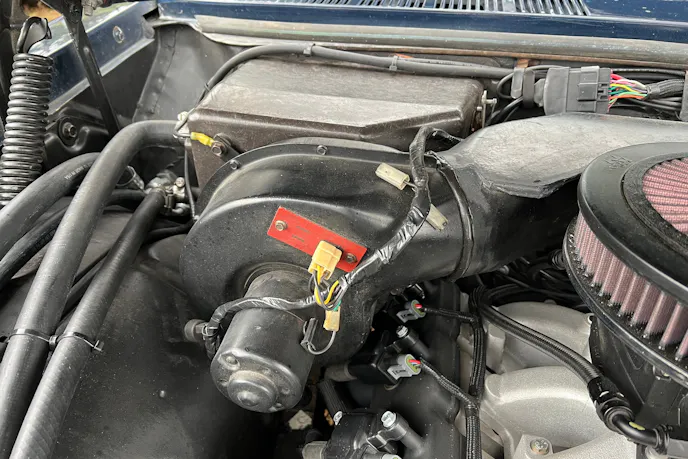
The car started life in Starlight Black and somewhere along the line the color was changed to Midnight Blue. Inside is an original-style black bucket seat interior. The biggest difference (and improvement) is the addition of a modern HVAC system. It kept him warm en route to Florida and was ready to blow cold had the temperatures necessitated it.
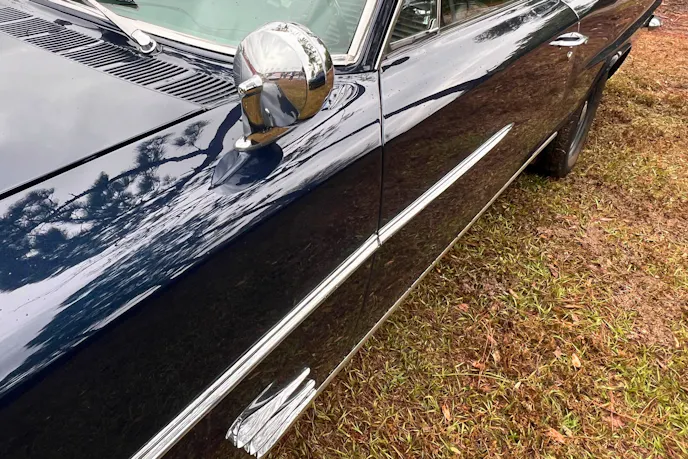
Norm took in the grandeur of Sick Week from the so-called ”Sick Ward,” where those who follow to road show park if they’re not participating in the drag portion of the event. With so few miles since its completion at the time of the event, we will definitely give him a pass.
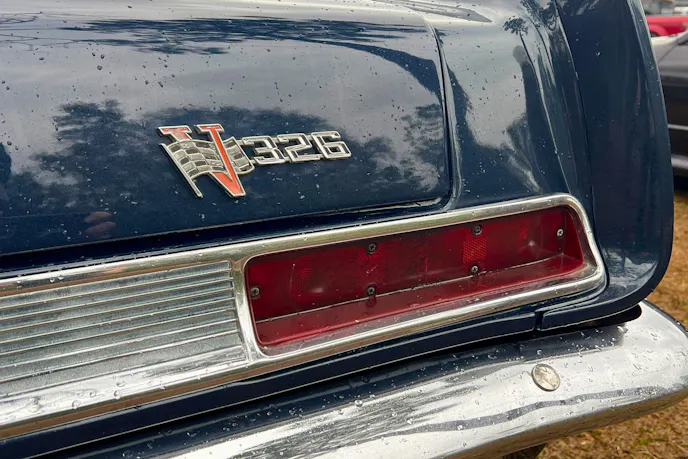
In fact, Norm’s creativity in building this prehistoric Pontiac gets him a free ride to do whatever he wants with it!
You might also like
Sick Week Right-hand Drive ’55 Chevy Is A Global Love Affair
Rules have changed now, but we converted it to right-hand drive having no idea that it was ever going to make it back to America.