
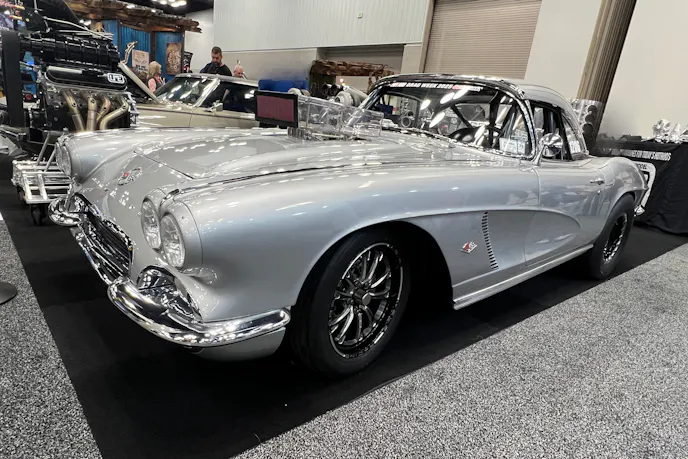
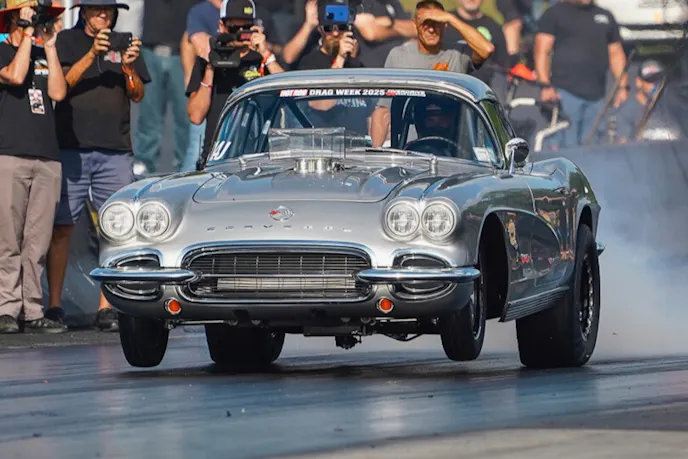
Proving your street car’s true mettle is a time-honored tradition. From Pro Street shootouts in the 1980s to True Street in the 1990s and beyond, right up to specialized events like today’s drag-and-drive events, the real beasts have put it all on the line for decades. Cars like Glen Sheeley and his ’62 Corvette Drag Week slayer separate the genuine article from the keyboard warriors.
Yeah, the Internet —especially Facebook — is alive and unwell with what we call “micro records.” Guys will boast they have the quickest red Mustang with a grey interior and stock front wheels with factory exhaust and so-and-so’s supercharger or turbo on such-and-such tires, or the fastest purple Hellcat Charger with stock pulleys or whatever, but let’s get real. Records are set at sanctioned events under close scrutiny. The rest are just empty claims — fodder for social media.
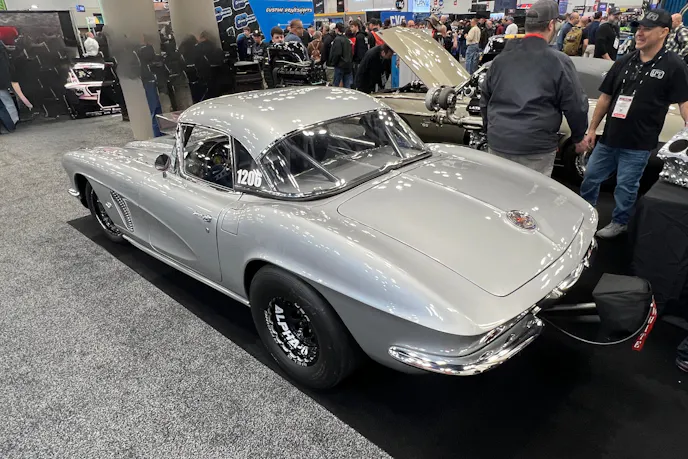
Sheeley’s Corvette is legitimately recognized as the quickest all-motor small-block-powered street car in the country.
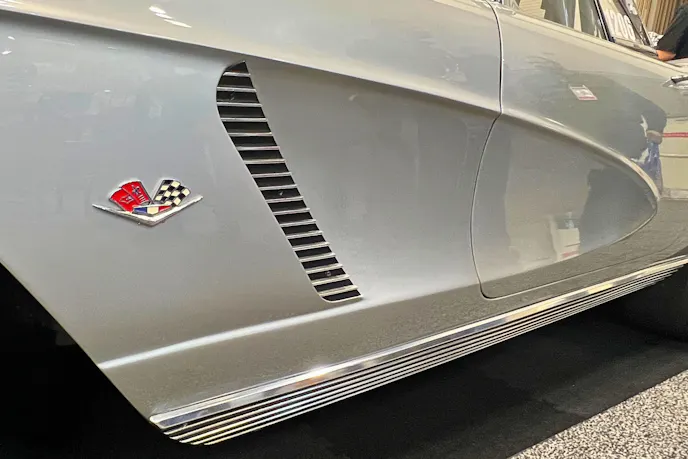
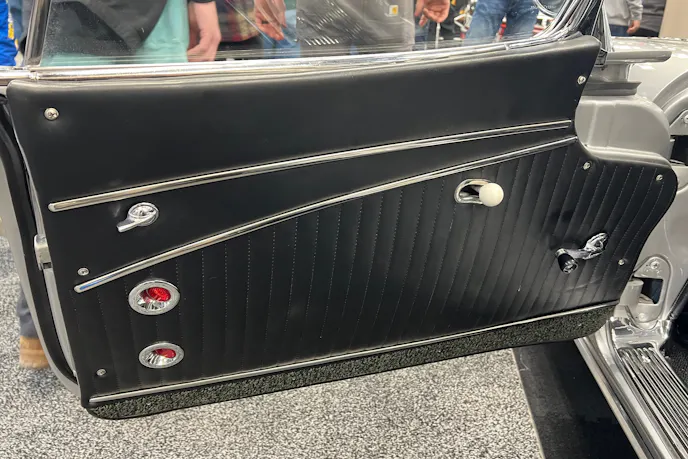
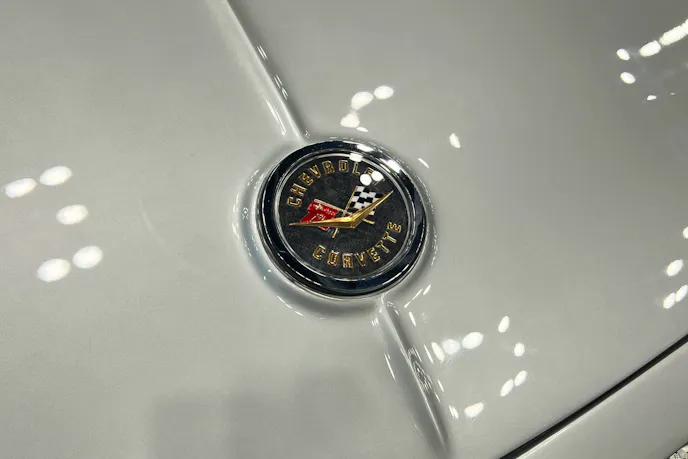
How quick? How does 8.332 at over 159.5 mph grab you with an all-motor LME 429 LS? Perhaps even more remarkable is how docile the car drives. Is it more radical than your buddy’s 9- or 10-second Nova. No doubt. But it retains a stock body and rear wheelwells, and much of what made the ’62 Corvette a unique automobile, including the emblems, door panels, and more.
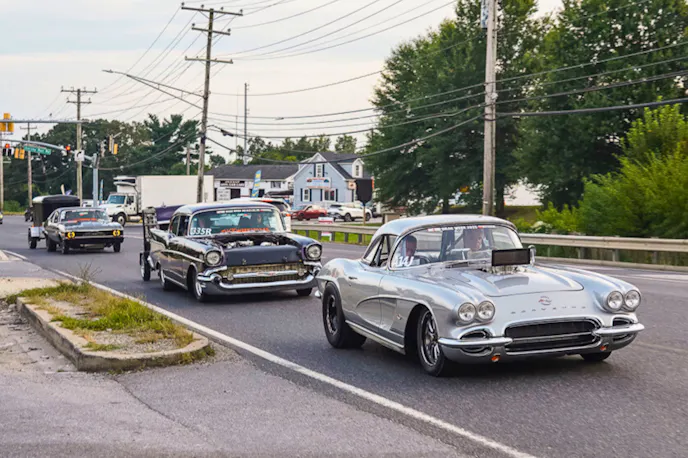
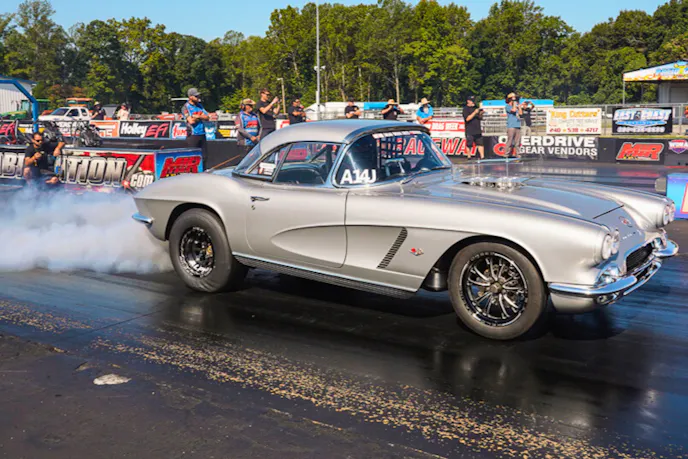
“I’ll be honest, it’s very well-mannered going down the road. It was sitting in our trailer for a few days and then just fired off,” Glen told us. “I have two different [fuel] tanks and two different tunes for the street and the race. With the overdrive on, I cruise at 50 mph at 2,500 rpm.”
That’s not bad considering the 4.57:1 gears in the Mark Williams 9-inch, which was fabbed by Larson Race Cars. (The first year, he ran the car with 4.88s.)
No Power Adder Here!
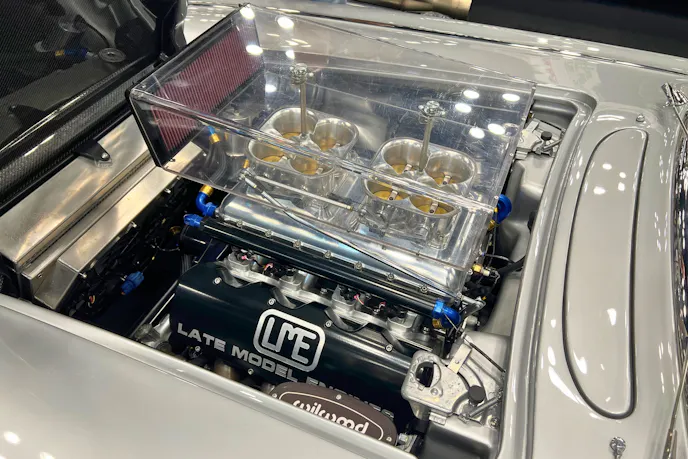
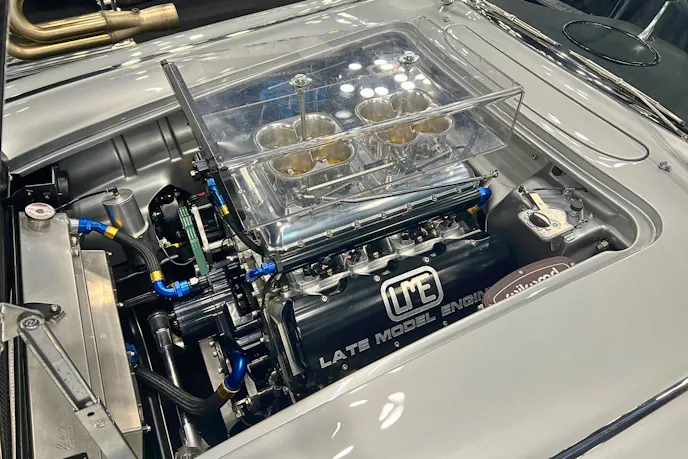
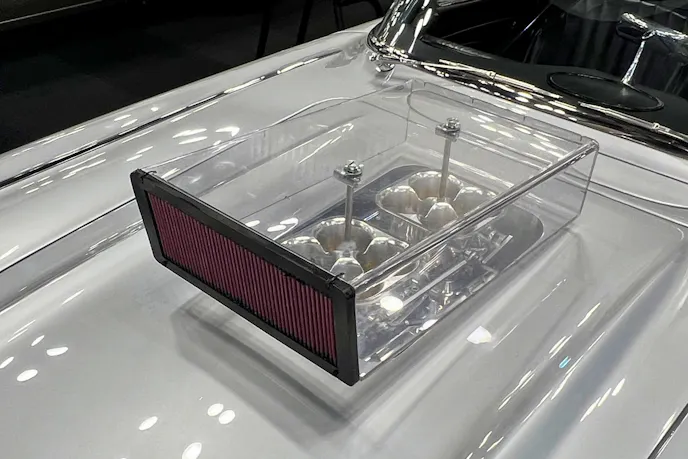
Let’s start with what’s under the hood. It’s a Late Model Engines (LME) 429 built around a Dart block. It has 16:1 compression, a custom-ground LME-spec custom cam, LME canted-valve heads with a Jesel rocker system, and LME billet intake. Atop the intake is a pair of 4500 Accufab throttle bodies. The oiling system is a full dry sump setup. Now that LME has introduced its own billet aluminum block, Glen is preparing to substitute one of those. The combo you see here makes over 1,000 horsepower.
Glen will stuff all his belongings, including tools, etc., to get from track to track. No trailer for him. He races on VP Q16 in the small fuel cell in the trunk, then he fills the factory tank with C16. As the tank empties to about half a tank, he tops it off with 93 octane pump gas. When it gets down to a half-tank again, he fills it with 93 and adds Boostane to stave off detonation, according to Bryan Neelan, co-founder of LME.
The transmission is a Rossler 4L80 automatic with overdrive. A Precision Industries air shifter is used to change gears — which Glen bangs off at 9,600 rpm on track. A Neil Chance 8-inch billet aluminum two-piece converter with a 5,800-rpm stall speed is employed.
Why a Corvette? Glen’s dad (Wayne) always had them, including a ’60 with a traditional small-block and a tunnel ram intake, so Glen was hooked at an early age.
“I always wanted something similar in theory, and Bryan helped me out with that part of it,” said Glen, who obviously went all-in on the bonus plan. “I can’t say enough great things about them [LME]. They’ve been behind me since day one.”
To ensure it never loses its cool, the Vette runs a Wizard Cooling radiator and SPAL brushless fans.
What It Has & What It Doesn’t
We noted above that the car never had a soft top, which is a good thing as it leaves more room for the roll cage. The race seats mimic the pattern of the 1962’s pleated design. The steering wheel is a small-diameter replica of the original and is wrapped in leather. Yeah, it runs an automatic, but not a Powerglide. A Fueltech FT600 ECU sits in the center stack, allowing Glen to switch between tunes when needed. The tune was done by Larry Larson.
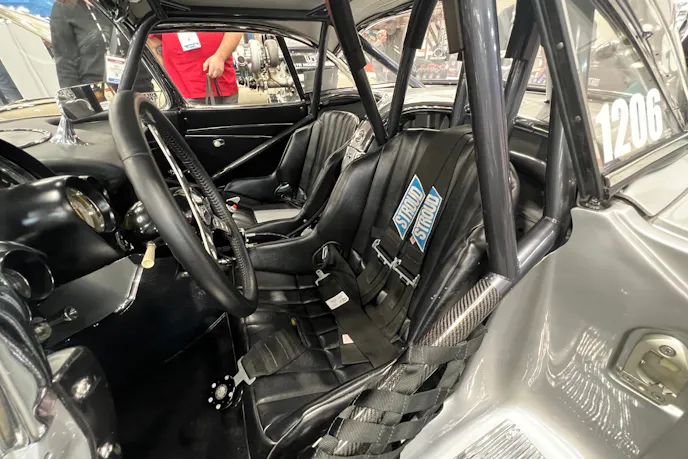
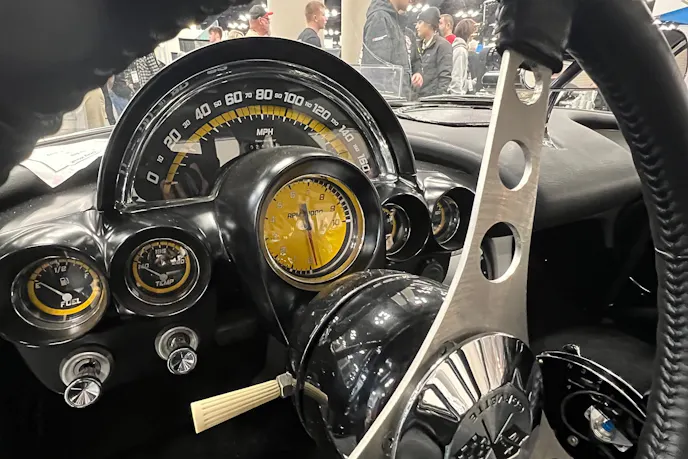
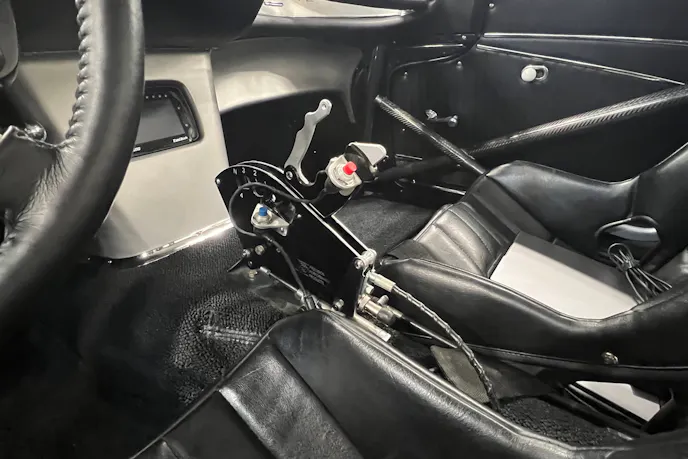
Don’t go looking for full slicks, tubs, or any other race-only devices. The car won the ”Fastest Without A Trailer” award at the 2025 Hot Rod Drag Week. It is running on Mickey Thompson treaded rain tires on the street and a set of Pro Bracket radials on Weld 28×10.5-inch wheels. Up front are 27×6-inch V-series front runners.
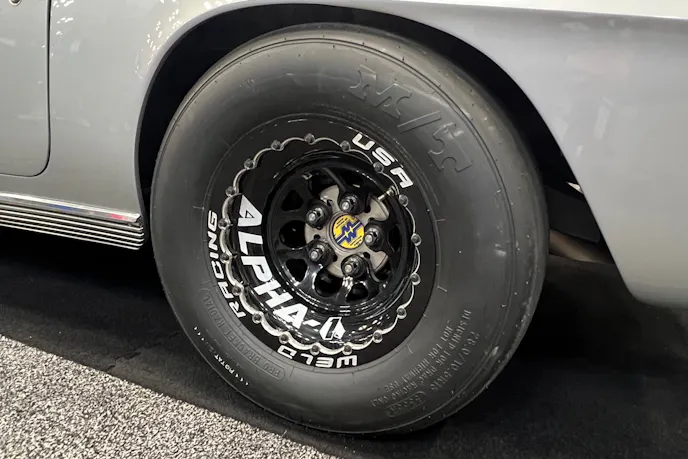
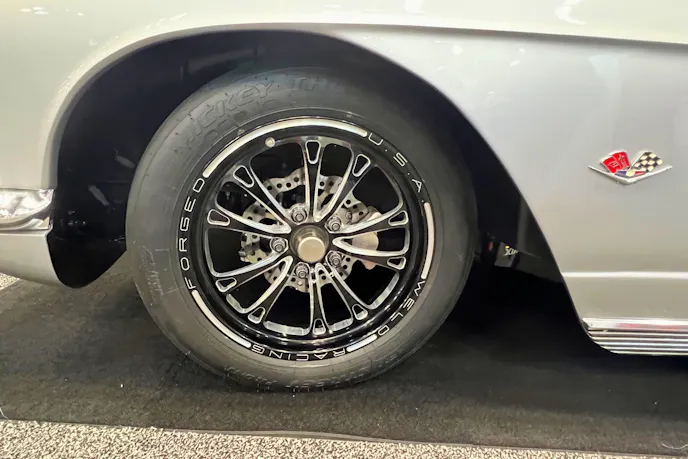
In addition to running the quickest elapsed time ever for an N/A small-block in Drag Week history last year, it also set the standard in 2025 for the Fastest Small Block Average ET (8.372). It also won the All-Motor Small-Block class at Drag Week in 2024 and was the first car in impound with a small-block.
The rear suspension is a Larry Larson four-link with Menscer Motorsports shocks installed by Larson Race Cars. Up front is a Martz Chassis front suspension with Menscer shocks and rack-and-pinion steering. Hauling it down from 160 mph are TBM Brakes at all corners.
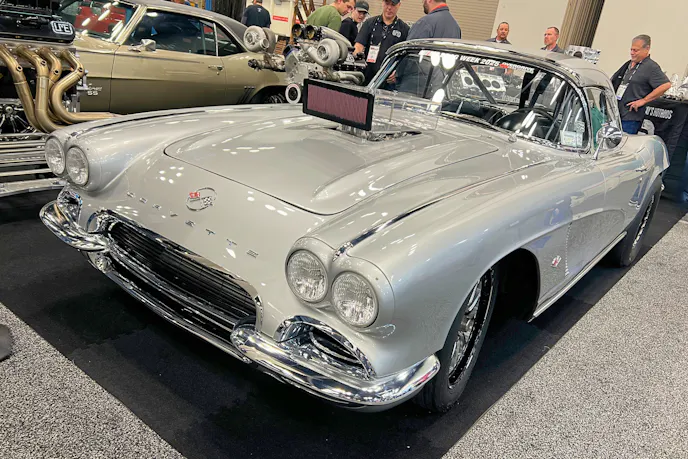
”There are many people who really made that thing. Obviously, Late Model Engine did a lot for me,” noted Glen. ”Larry Larson did a lot for me. And my father, Wayne Sheeley. Then there is my co-pilot, Ed Ensor. He’s someone who really helped a ton. And he’s the one who won Drag Week and broke all the records with me. He actually has all the big-block all-motor records.
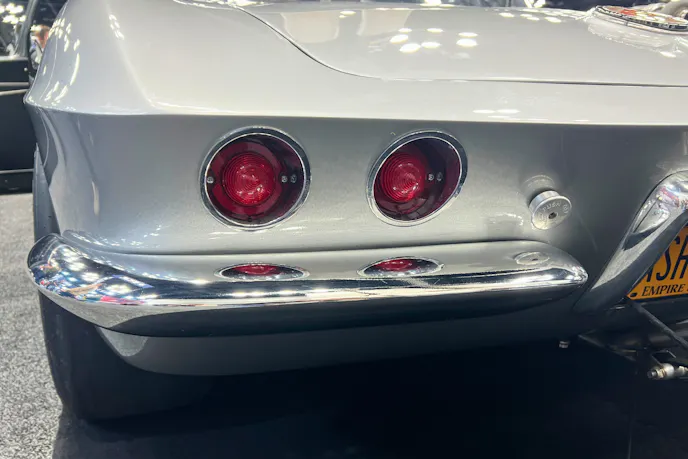
It definitely takes a special breed to try to run this fast with a naturally aspirated small-block. There is no doubt that adding a simple turbo or supercharger to an engine like this would put him at the same elapsed time (or quicker) and it would be a lot easier. On the other hand, there’s nothing like the sound of a high-winding small-block shifting near 10,000 rpm, whether it be a Chevy, Ford, or Mopar. We tip our collective editorial cap to Glen for building a unique car in this day and age of “me too” hot rods.
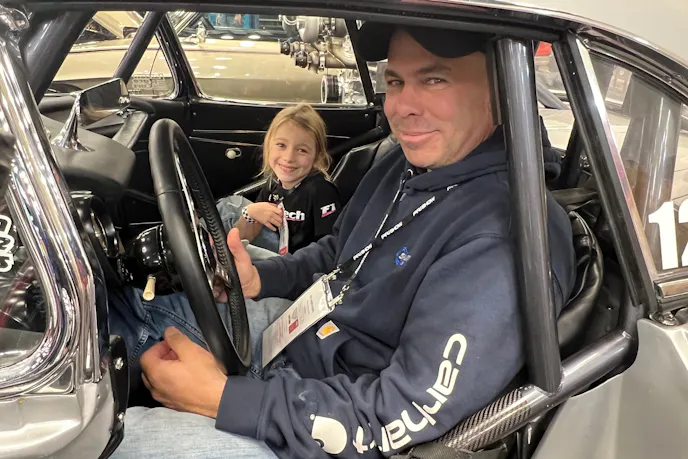
“I’m probably N/A for life,” reported Glen. “I love high-revving … I love the sound of a naturally aspirated engine. I’m not saying never, but I just love a high-revving small-block. It seems to just do it for me.”
You might also like
Willow Springs Reimagined returns This October
The massive automotive festival Willow Springs Reimagined returns this fall. Fans expect thrilling track demonstrations and rare vehicles.