
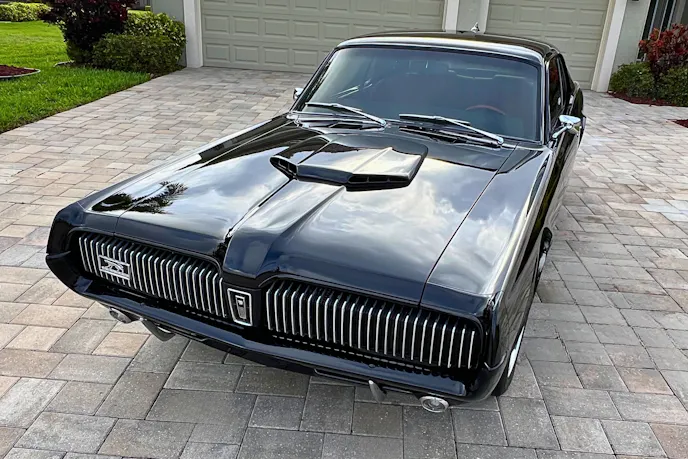
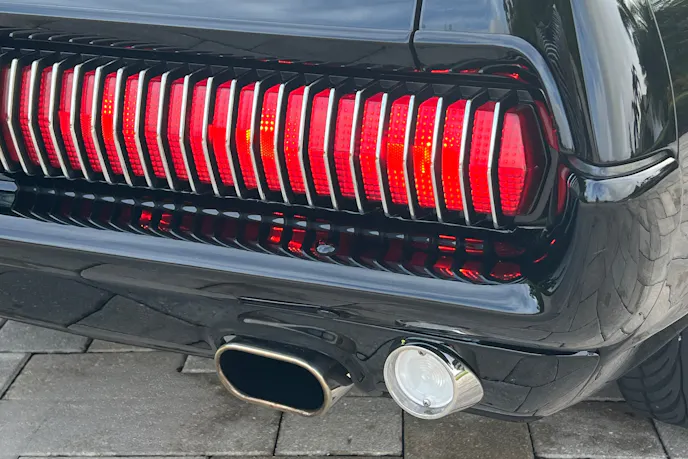
The 1967 Cougar was more than just Mercury’s version of the Mustang. It offered high-style, with an electric shaver-style grille hiding the headlamps, wide, sequential taillights, and three inches more wheelbase between the tires. This homebuilt 1967 Cougar is all that and a whole lot more.
A 289 V-8 was standard and everything was just a little fancier, you know, befitting its status as a Mercury. The car you see here was born with the top engine option for that year, a 390 four-barrel FE rated at 320 gross horsepower and 427 lbs.-ft. of torque. In a Car Life Magazine test (two people on board and a full tank of fuel), it lumbered to a 15.9 at 89.1 in the quarter-mile, not exactly earth shattering, though the MPH indicates it should have been closer to low 15s.
This being 1967, the Cougar was immediately pressed into race duty. Its biggest success was in the SCCA Trans-Am series, where driven by the likes of Dan Gurney, David Pearson, Parnelli Jones and Peter Revson, it came within two points of beating the Mustang for the season championship. It did so well, in fact, that Ford scrapped funding for the team immediately thereafter. Imagine their embarrassment had Mercury usurped its original pony car.
The Cougar sold a remarkable 150,893 units that inaugural model year, outperforming the well-established and all-new Plymouth Barracuda and the Pontiac Firebird on the showroom floor.
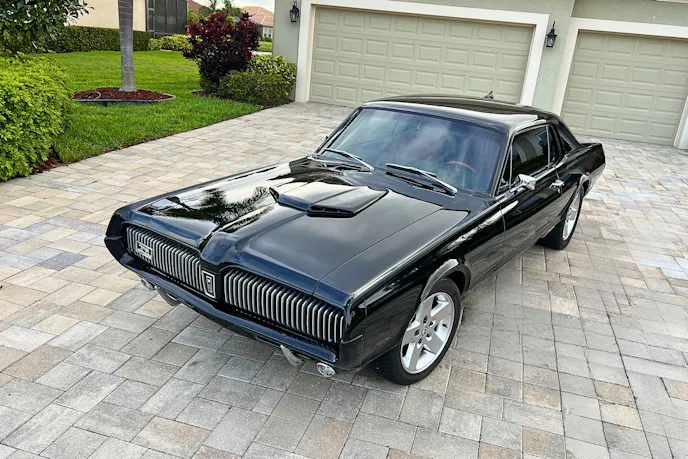
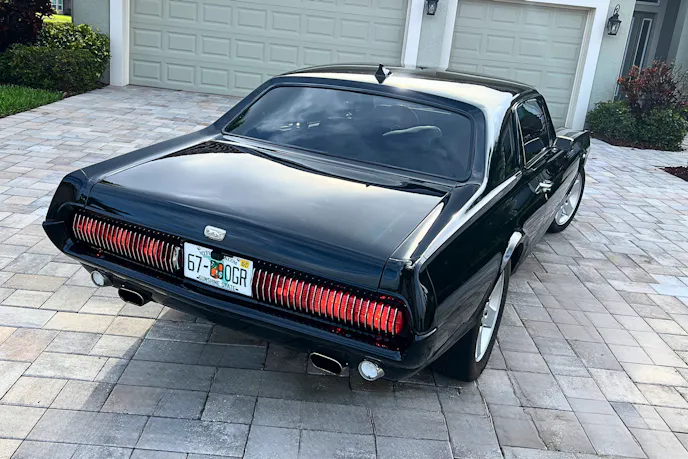
When David Conley acquired this car, it wasn’t the history that mattered. He loved the design and wanted to customize it and make it his own. What is truly remarkable is he did all the restoration and custom bodywork himself (and there is lots of that), then had the audacity to have the car painted black. Peering down the sides, the body is laser-straight, even where he cut and modified the factory metal to fit his vision.
Man With A Vision
What you see here is a gorgeous example of a modern restomod, but it’s a far cry from where David started. And to brand purists, he did the unthinkable: Instead of another FE or modern Coyote power, he went with a 5.3 LS.
“It was basically a tub. There was no motor, no trans, no rearend, no front suspension. It had no interior and the floors were marginal,” he explained. “I bought the car five years ago. It took me four years to build it. I built a few other projects in between to fund this project. But it took a long time because I had a lot of vision for the car. I love the body style.”
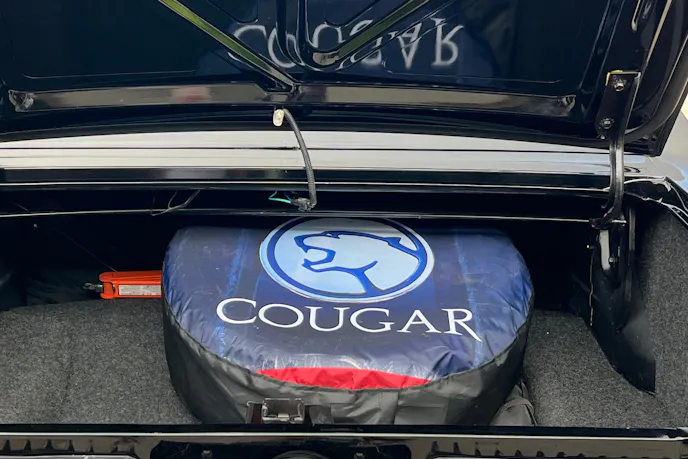
Surprisingly, there was just a tiny bit of rust in the back of the rear quarter-panels and he put patch panels in that. But if you open up the trunk and take out the lining and everything else, you can’t tell where he put the patches.
“What I do when I put in patches like that, I use silicon bronze mig welding. Not as much heat [goes] into the panel, so it doesn’t distort as much, therefore you need less plastic,” explained the owner.
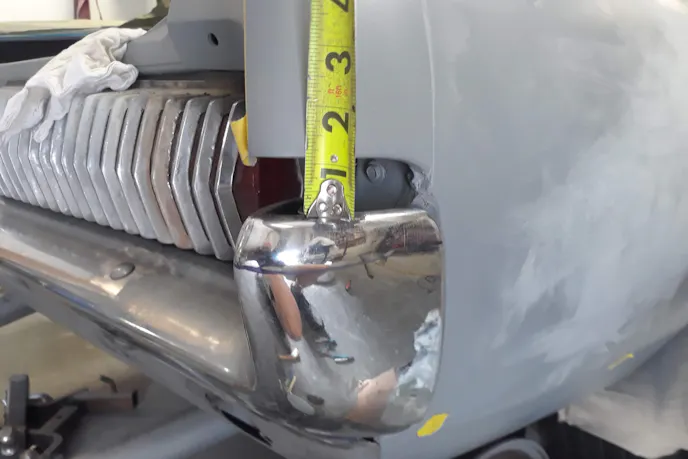
Because David wanted a more modern look, he changed the shape of the bumpers, cutting and pulling them in like you’d see on the flexible panels of a new car.
“The front bumper used to have a space of 7/8s of an inch in between the bumper and the fender extension and ⅞s in between the bumper and the fender. When I raised it up and pulled it into the body, the front bumper was a little too wide, so I had to section out about a quarter of an inch on each side to pull it in so it was closer to the shape of the fender.”
David continued, “And then when I raised it up, there’s a body line at the very bottom of the bumper up ⅞ of an inch. It didn’t line up with the fender, So what I did is cut off the bottom of the fender, that detail, and brought it down and put a fill piece in so I could match up the body line.”
What’s that old saying — every action has a reaction?
“Of course, once I pulled everything in on the front, then the lower valance stuck way out so I had to reshape the lower valance and re-do the ends, tuck them in, so I had a nice clean line.”
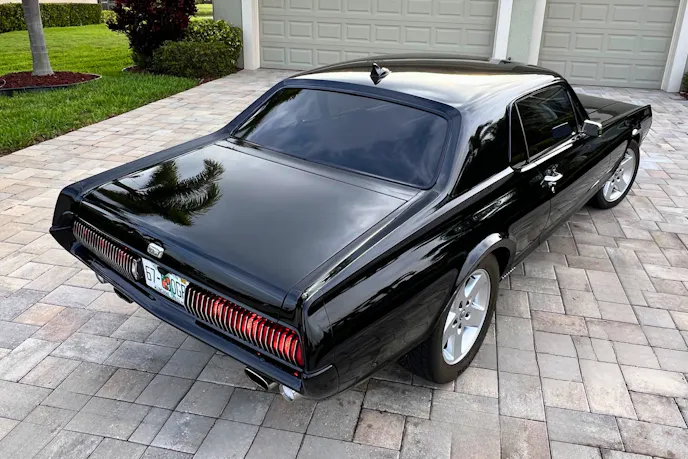
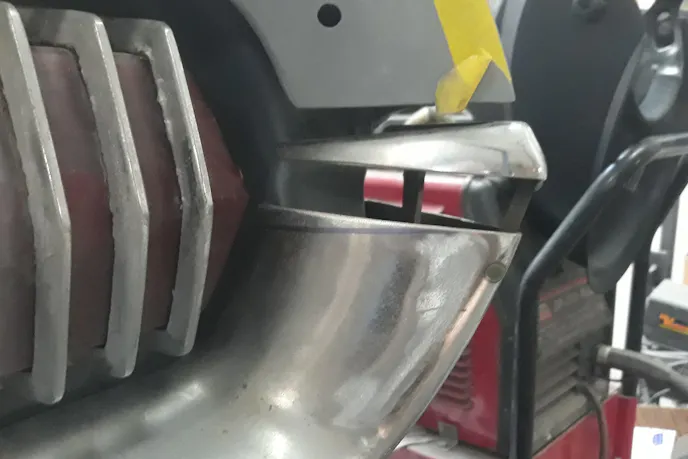
It was a similar story for the rear bumper. He could not raise it —its travel is limited by the taillights, so he cut off the top of the bumper and put a filler strip in between to raise it up to make it so all the margins are as tight as a Lexus’ door margins. The result is remarkable. At first glance, all appears to be stock. Only a dedicated Cougar maven would notice the myriad of alterations.
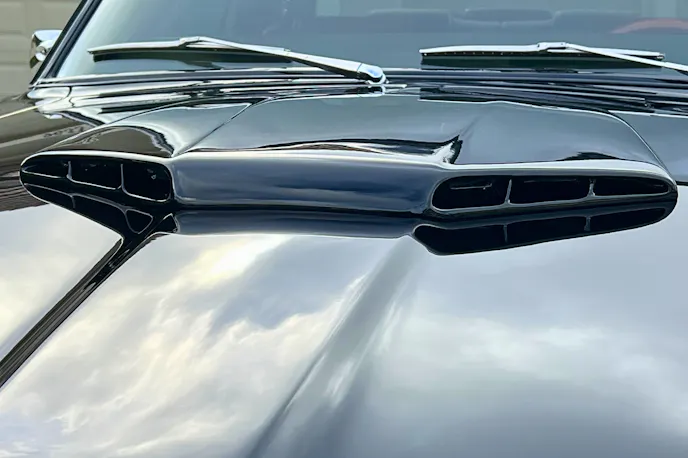
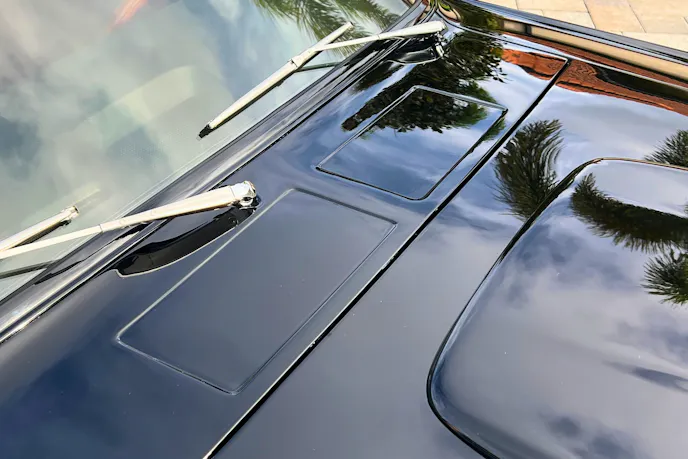
The ‘68 hood scoop looks good, but it was really added out of necessity. The Cougar had been a drag car and there was a gaping hole in the hood to accommodate the car’s previous tunnel ram intake. There was no aftermarket replacement at the time of the build, so he had to use a second hood to save this one. The inner structure/bracing had been cut out of the original bonnet to save weight; the second provided the necessary reinforcements. Still, the front seven or eight inches of the factory hood had to be refurbished. A shark fin antenna was added to the roof for the car’s GPS system.
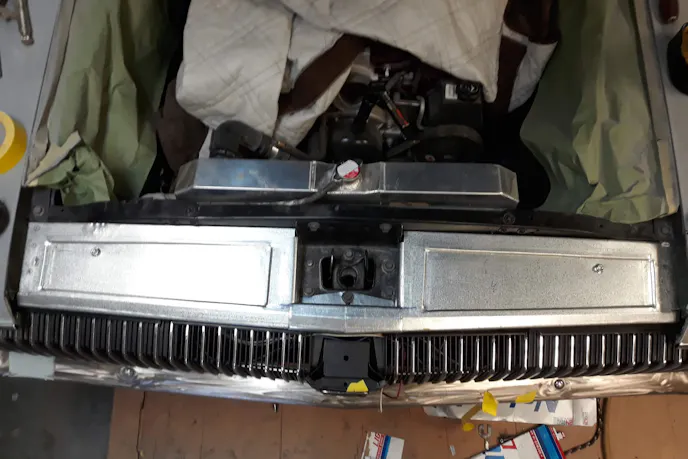
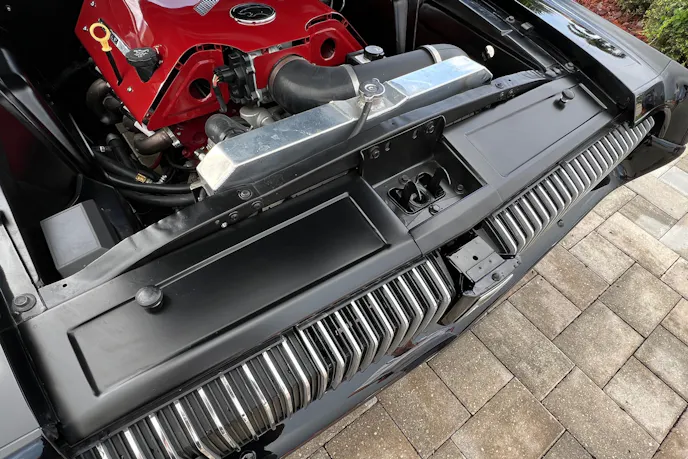
But David is a fabricator, so he just took his time and put it back in game shape.
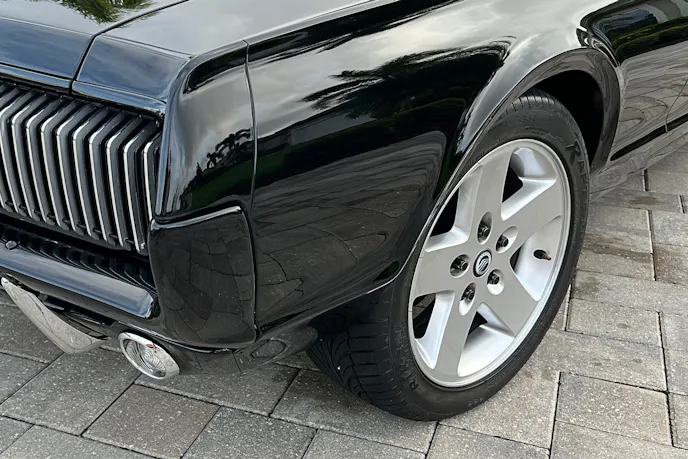
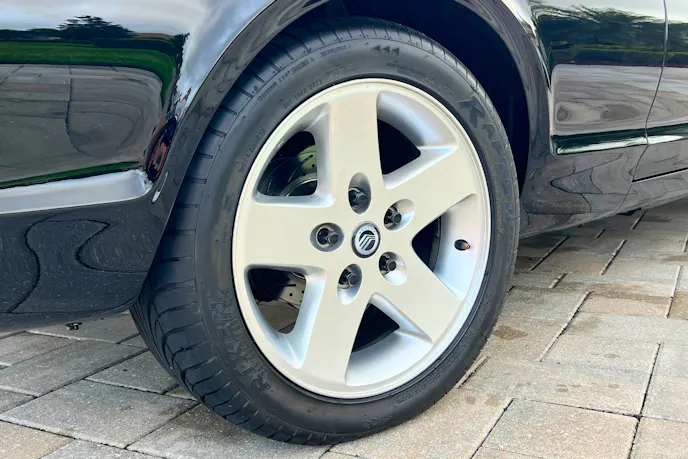
The wheels are another place he went outside the mainstream. They are modern, but don’t be fooled by the Mercury center caps. They are off a 2017 Jeep JK, which really leaves people scratching their heads. At a glance, no one can tell what they are from. Some think they’re aftermarket, one guy recently asked if they were off a late-model Mercury Marauder. At the end of the day, David simply enjoys the wider spokes of the Jeep wheels.
“I like the look of it. It pushes the wheels out and gives the car a more modern look. A lot of people are using the deep dish wheels and it’s very nostalgic and everything else, but that wasn’t the look I was trying to achieve,” said David. “I’m building a restomod. I want it to be like driving a modern car, like you would buy at a dealership in the last 10 years.
Serious Undercarriage Mods
That restomod theme would be carried over into the stance, overall appearance and features of a newer car on the interior, braking, the suspension, the driveline and everything else.
Four wheel disc brakes. 8.8 Ford out of a ‘98 Ford Explorer, but this was no simple bolt-in. Because the pinion on the truck rear has a four-inch offset, he had to take three inches out of the driver’s side and shorten it, and used a right axle on the drivers side. This gave him the standard one-inch pinion offset the car required.
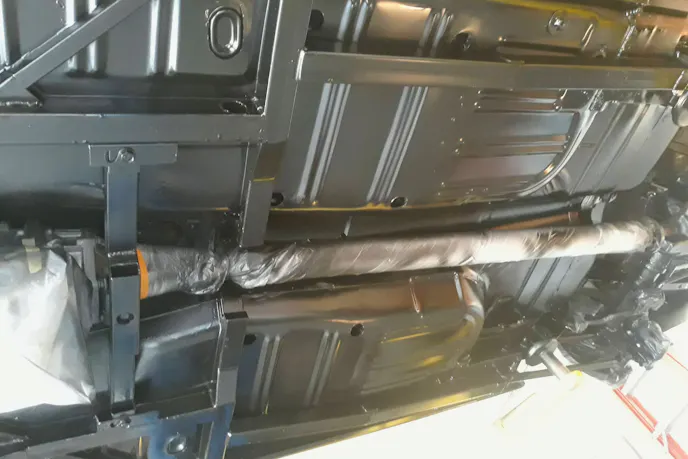
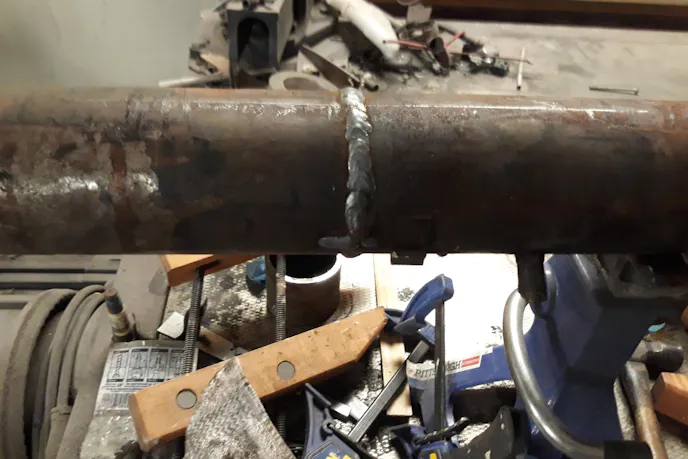
Unfortunately, the subframe of the Cougar was not in as good shape as the body. David put in a lot of work to bring it back to life. The seat-rise was destroyed by its constant use as a jacking point. He built a 2×2 square tubing frame that ran from the firewall and plug welded it, and then did a perimeter weld, extending that out to where the old seat support went to the seat riser. He created a custom crossmember that followed the floor line from rocker to rocker. Off that, he created an H that went back to the front spring perches for the rearend.
“The car is so stiff if I jack it up on one corner, the doors open and close like it’s sitting on the ground,” boasts David.
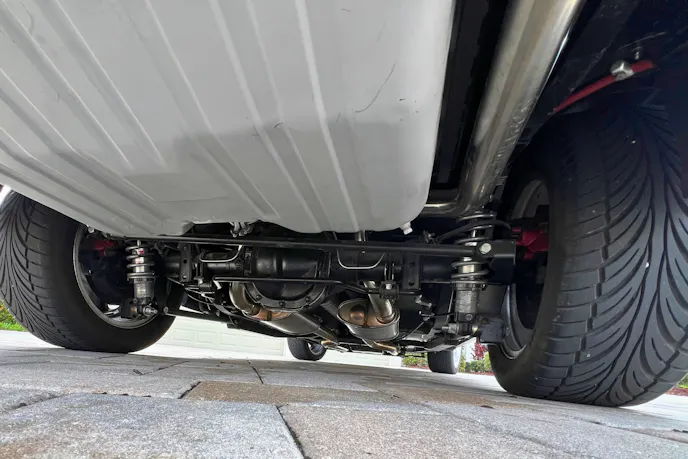
The rear suspension is a four-link he found on eBay. As for the brand? Well, David is not sure it actually had one. “It was the closest thing I could buy that I could modify in order to fit the car because nobody was making anything for the Cougar at that time.”
The entire front suspension is a Helix Corner Killer, including the crossmember.. It uses tubular upper control arms, allows you to rid yourself of the dreaded Ford shock towers, and unlike a Mustang II suspension, gets all dialed in with a single ¾-diameter thread.
“That is how you change your caster and camber, through that,” said David.
The steering rack that came with the kit was a close-ratio unit that he felt was a little too quick for its own good — its over-sensitive nature calling for constant corrections on the highway. Ergo, he went with a more relaxed rack.
Motor-Vational Issues
David didn’t purposely start out looking to anger Ford purists by putting an aluminum 5.3 LS under the hood. His plan was Ford-power all the way, specifically a Coyote swap.
“There were several factors that made me change my mind. The Coyote motor looks great and everything else, but trying to put a Coyote in the engine compartment is A: very difficult, and B: There’s no place for a brake booster, for a master cylinder on the firewall because the cowl is too narrow. I would have to relocate the brake booster and master cylinder either underneath the car or underneath the dash, where there’s no room anyway because I put in aftermarket air conditioning.”
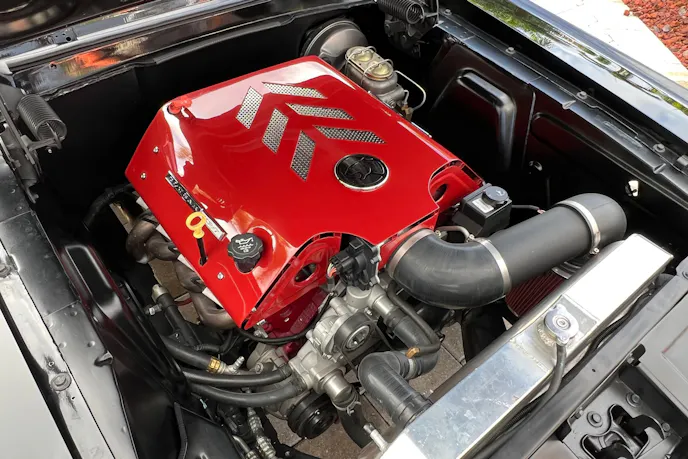
Then there was the cost. He was looking for wrecked late-model Mustang GTs for the powertrain, but at the time he was looking at $15,000-$18,000 for a low-mileage motor. Instead, he came across a reasonable low mileage 5.3 out of a 2005 Chevy Avalanche. All he had to do was relocate the power steering pump, essentially adapting the Corvette parts locations, which are different from a truck, which stood up too high and wide.
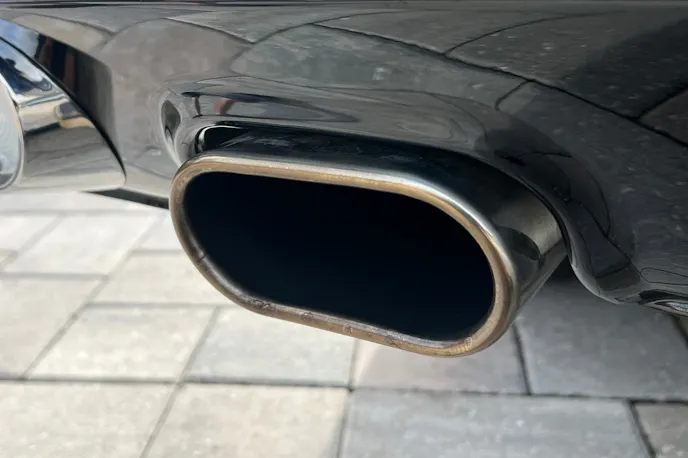
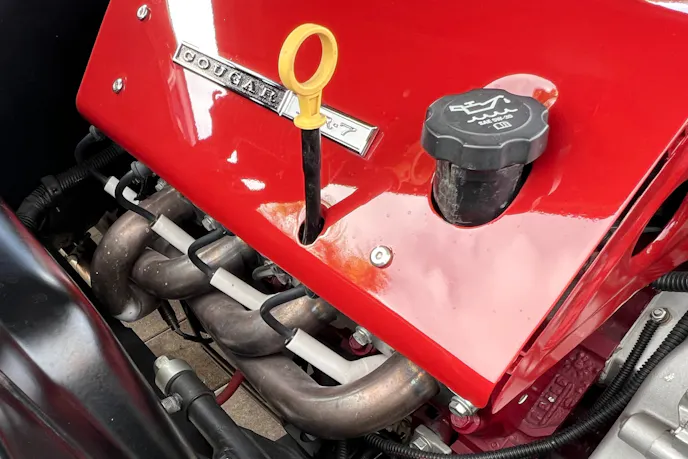
Speaking of which, he used a Corvette intake manifold as well. This had a much lower profile and boosted the pony count. Stainless steel headers into a 2.5-inch H-pipe with Quiet Flo mufflers also helped in this department. With the large engine cover and the LS’s change to non-siamese exhaust ports, few people realize this is not a 302 or 351.
An aftermarket LS harness was employed, but the factory ECU was retained. The transmission, not surprisingly, is a 4L60E (unmodified). It started right up and ran OK, but it was not 100 percent. Jimmy Reinhardt of LS Pro Tuning in Bradenton, Florida, took about five hours to get everything
Creating A Masterpiece Interior
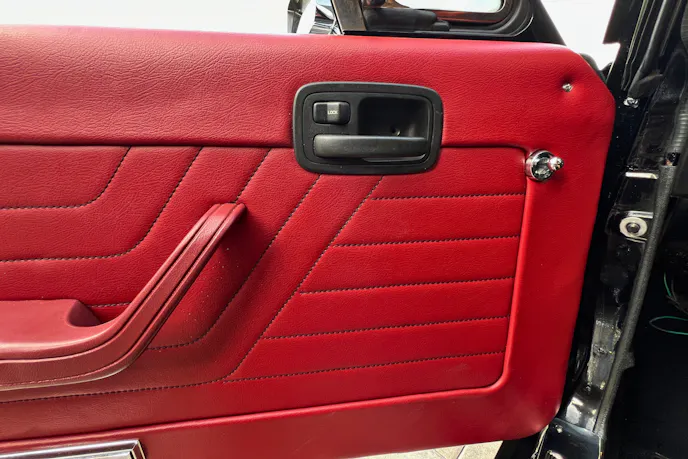
The modern styling and functionality extends deep into the interior, which the owner also did. He started with S550 Mustang seats and recovered them, but if you look, they match the custom door panels and side panels out back, which he designed. He tried to mimic the modern Mercury emblem from the wheels on the inside. David also relocated the door handles to the upper part of the door (they are out of a ’98 Jeep Cherokee). The console came from a 2011 Hyundai Sonata, of all things.
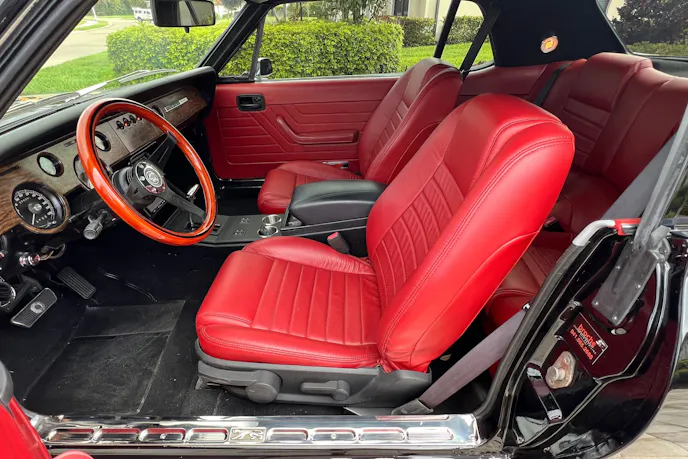
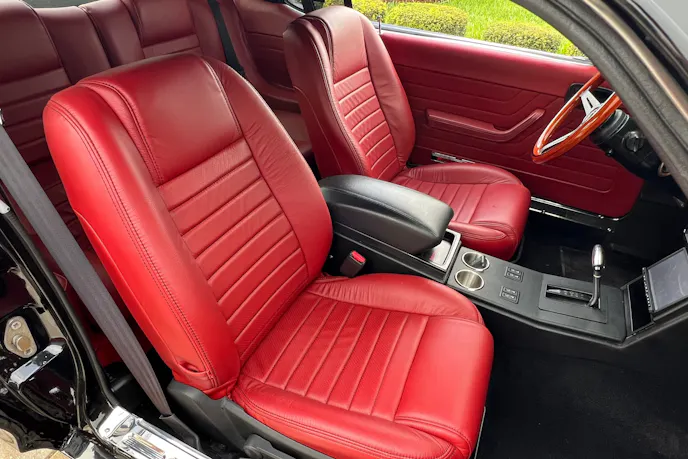
“I changed the door panels and armrest and everything else and the new armrest was shaped like a hockey stock, what brought to mind the Mercury emblem, right? So I had my upholstered put in the stitching to follow the lines of the arm rest and also give it the look of the Mercury emblem,” David explained. “So when you look at the seats and you look at the door panels, the two-inch facing and all the stitching all lines up, so it’s blank at the top of the seat, blank at the top of the door and it’s two-inch space stitching down the face of the seat, and we did the same thing on the door.”
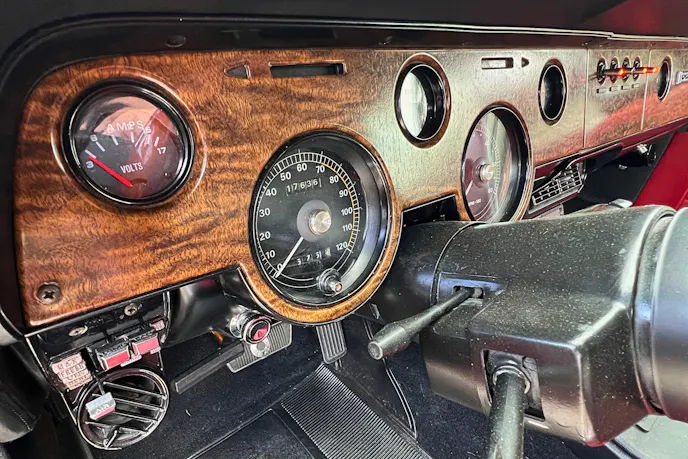
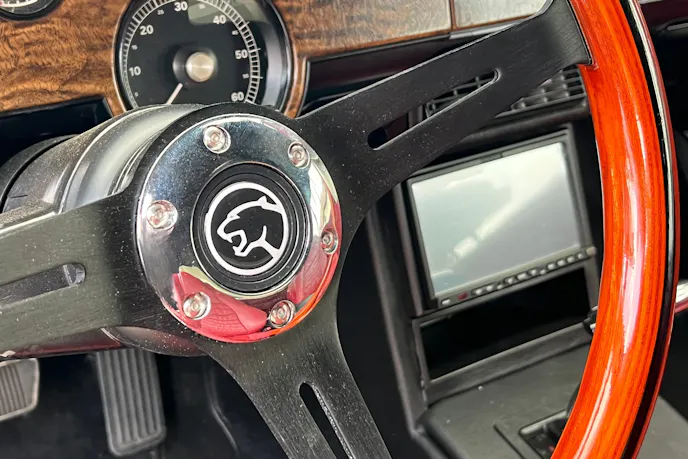
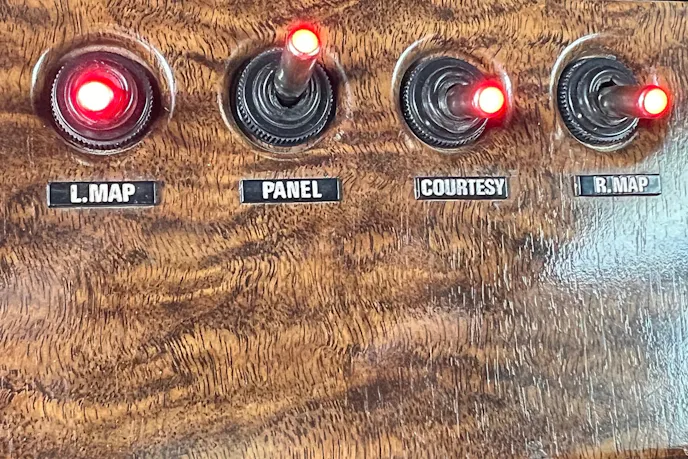
They followed the same pattern in the rear, as well. The package tray is out of a 2013 Mustang. For safety, there are three-point seatbelts for all passengers. While the inside was David’s vision, Carlos Santos of A&M Trim in Bradenton, Florida, turned his ideas into a reality.
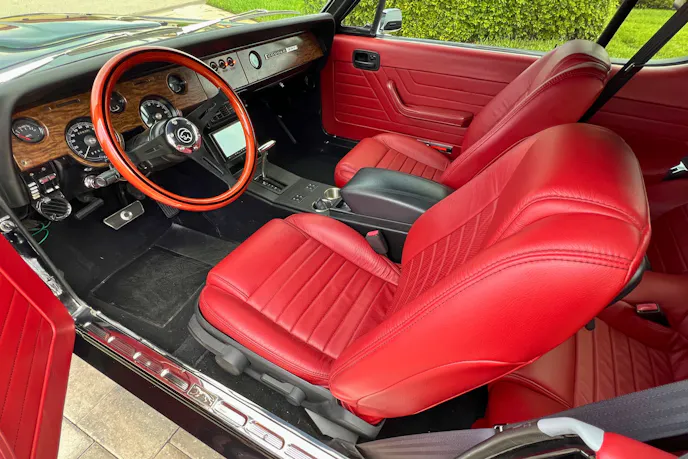
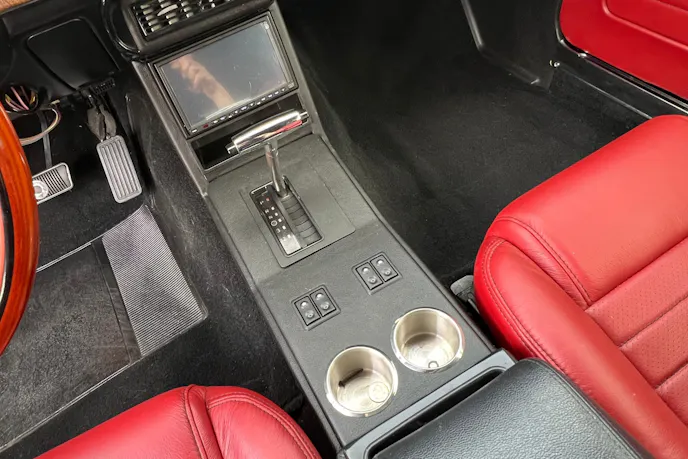
The steering column is out of a ’93 Jeep Cherokee and the wheel something he picked up off Amazon. The 7-inch touchscreen is capable with GPS, AM/FM and bluetooth. It also has a rear camera wired into it. Again, modern touches the Cougar could never have had new.
So while David didn’t get the Coyote-powered Cougar he originally envisioned, he did turn out one of the most complete, remarkable examples of Mercury’s pony car we’ve ever seen.
You might also like
Bulletproof Your GM LS, LT and Vortec Engines With SFI Flexplate Kits
Prevent massive driveline damage on high horsepower GM engines by bolting up durable new ATI SFI Flexplate Kits before hitting the track.