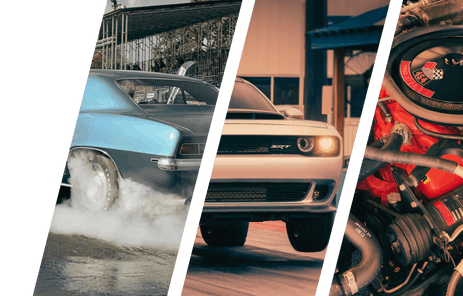

Most standalone EFI conversions require accurate ignition timing, but the hardware to get it is often ugly and heavy. ATI Performance Products addressed this at PRI 2025 with a solution that focuses on packaging. Its Lightweight Modular Trigger Shell ditches the external sensor brackets and heavy steel wheels common in racing for a system that becomes part of the harmonic damper itself.
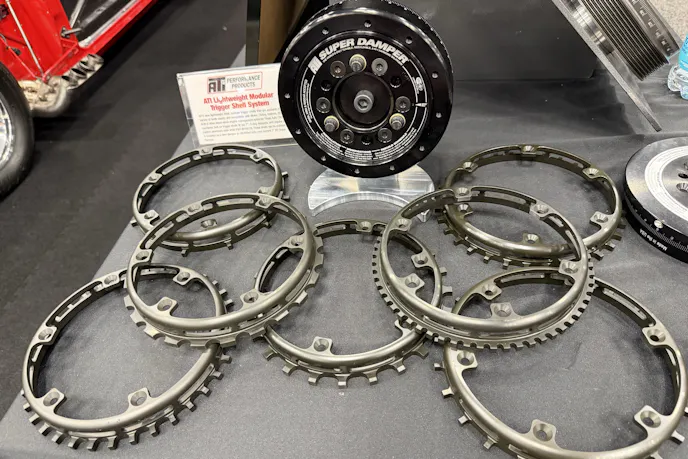
“We make a full steel trigger, but it’s heavy,” said J.C. Beattie Jr., CEO and president of ATI Performance Products. “So now we’ve got our three-ring aluminum shell damper with a modular design to bolt any trigger combination you want, and we’re gonna stock all the popular ones — Big Stuff, AEM, Holley, and then 12 teeth, 24, 36, you name it. And it just bolts on the aluminum shell. So you’re saving about 3 pounds overall.”
Saving 3 pounds of rotating mass on the nose of the crank is a massive gain for throttle response. The system gives builders the flexibility to swap between different tooth counts without redesigning the front of the motor. It supports major controllers like MoTeC, Holley, Haltech, and others out of the box. By using the Lightweight Modular Trigger Shell, the ignition timing hardware is locked concentric to the damper, reducing the chance of signal runout at high rpm.
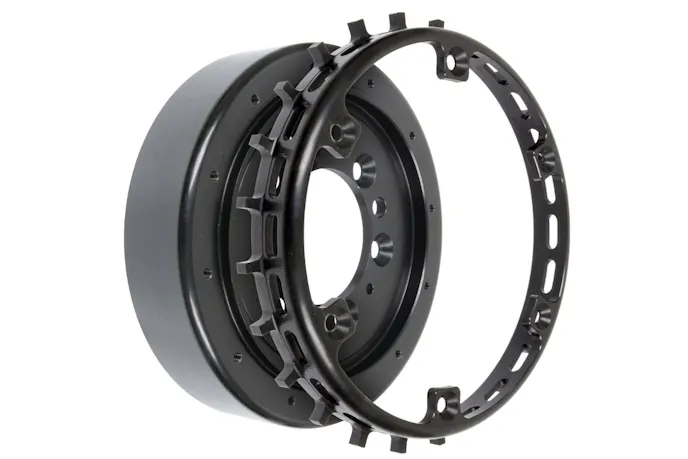
The system also cleans up the engine bay significantly. “We have so much nice stuff, just a hunk of steel bolted to the front,” Beattie added. “It seems like a spot for something to go wrong, so why not make it nice and integrated?”
ATI takes the integration a step further with custom machining. The shells are manufactured with a full ring of teeth. When ordering, customers specify if they need a missing tooth and exactly where it should be. ATI cuts the tooth and balances the unit before shipping. This process guarantees that the Lightweight Modular Trigger Shell works perfectly with your specific ECU strategy while keeping the engine build clean, light, and professional.
You might also like
How Big 3 Racing Used An Ididit Pro-Lite Column To Gain An Edge In Horsepower Wars
Adapting a Camaro Pro-Lite column to our C10 shaved weight from the truck while keeping all the functionality required to stay street legal.