
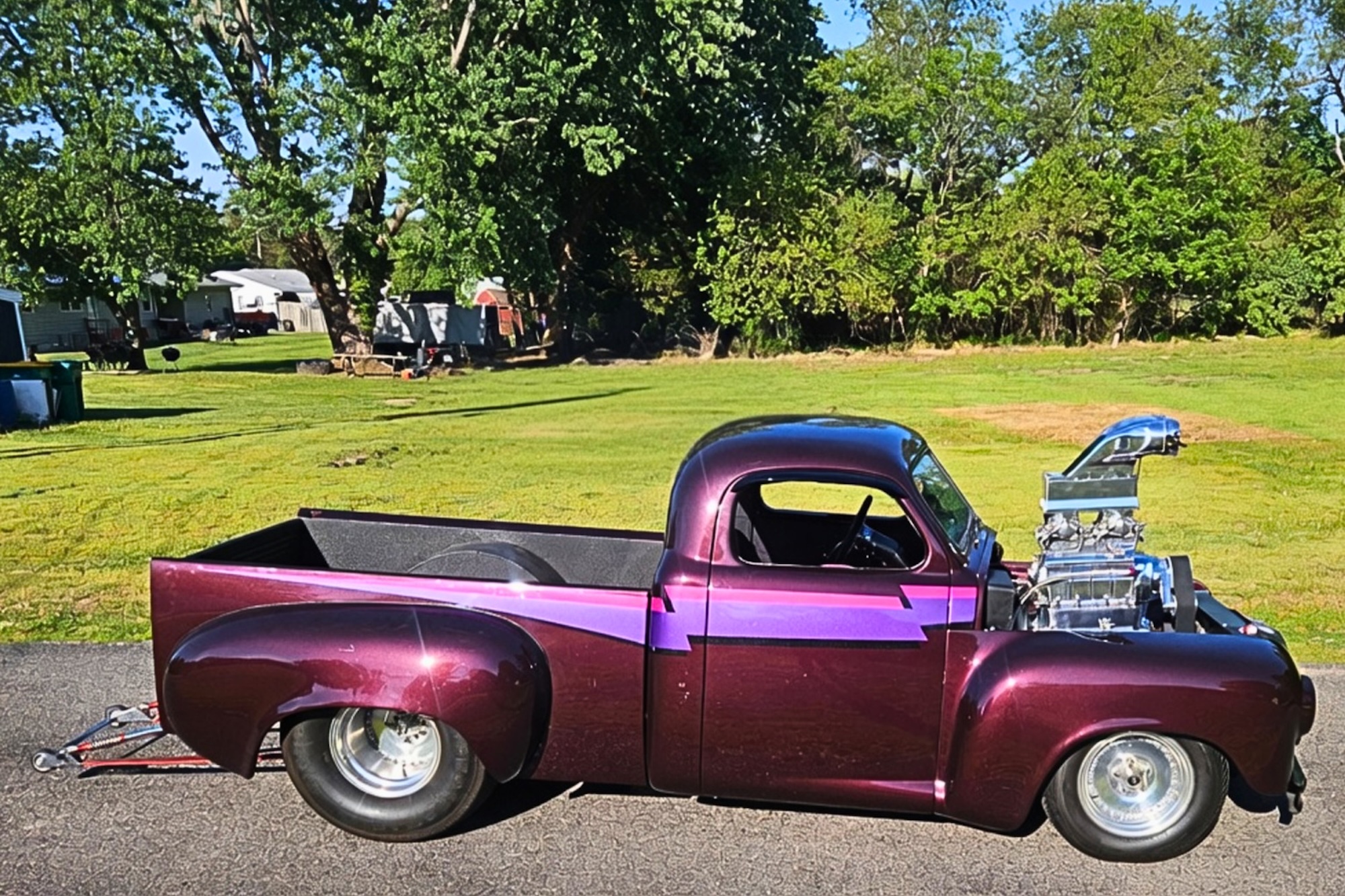
Studebaker had a long and interesting manufacturing and sales history before it shut down auto production in 1966. What started out a blacksmith shop quickly became the largest purveyor of horse-drawn carriages and wagons in the United States. As the 19th century gave way to the 20th, the focus shifted from wagons to automobiles, which were electric at first (1902), then gasoline-powered (1904). That gave way to decades of successful automobiles and truck production. After World War II, Studebaker dealers had the exclusive rights to sell Mercedes-Benz imports before the German brand started its own dealership network in this country. This 1949 Studebaker 2R5 Pro Street truck is a long way from how it left South Bend, Indiana, in the post-war years.
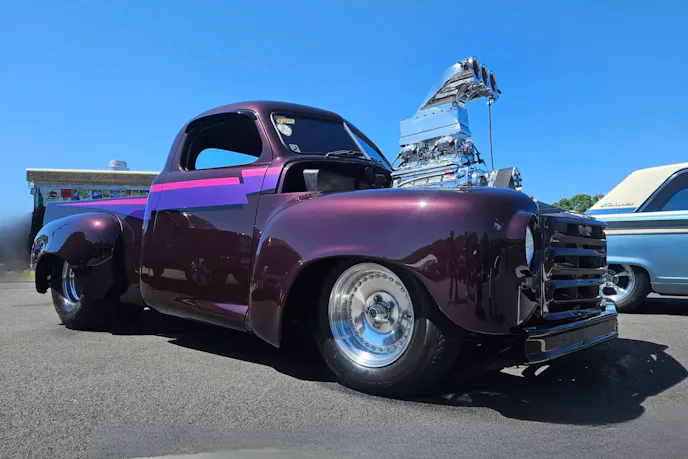
The Studebaker 2R5 was rescued it in 2021 by owner Jimmy Pierce from an enclosed car trailer that had been left to rot for a couple of decades. In fact, itwas so stuffed with stuff, he bought the trailer, too, simply because it would be easier than unloading the car on the spot. It took a couple of months to actually finalize the deal because the owner was in Florida and Jimmy was in New Jersey, but for some reason he persevered and the decrepit truck became his.
“It seems like it was probably built in the early ’80s judging by how the frame was back halved, but it sat in this trailer for probably 20 years and had fallen into a very bad state of rust, cracking body filler, disintegrated interior, and work half-done,” Jimmy said. “I bought the entire trailer with the truck in it and towed it home.”
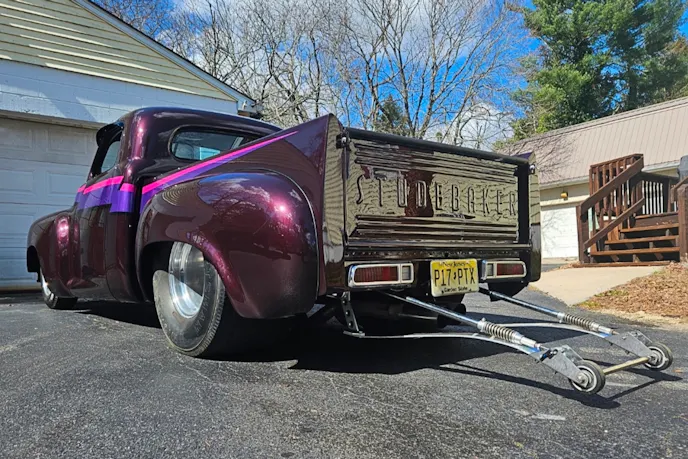
Once the unboxing was complete, Jimmy assessed the situation. It was painted in the early ’80s and both rear fenders were rusted. There was a small-block Chevy under the hood with a tiny single carb that he actually got running, but he counldn’t get the rings unstuck. It had a straight-axle up front and there were places where the body filler was over a half-inch thick. He had his work cut out for him.
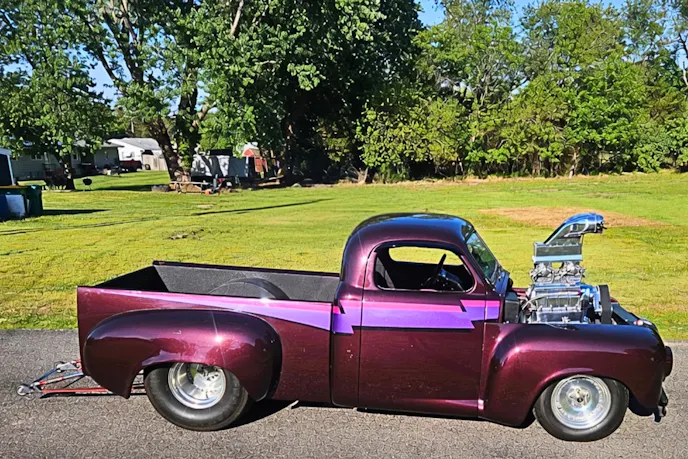
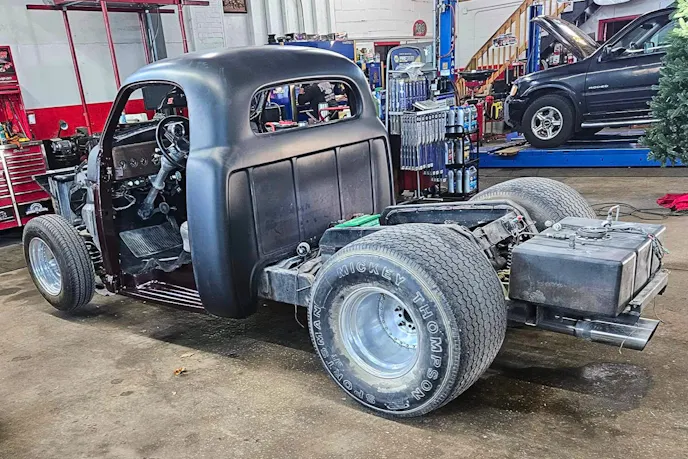
Jimmy tore the truck down to nothing but the frame and bare cab. While it was apart, he redid the four-link and installed a Mustang II front suspension in place of the old straight axle. Every single body panel needed extensive metal work to bring it back to show quality. The top was chopped three inches and the owner did all the bodywork himself.
It originally had been very rusty and even wrecked in the front,” he said. “After having a professional body shop lay the base paint, I had a custom air brusher make the lightning bolt stripe down the side, then clearcoat over everything. — owner Jimmy Pierce
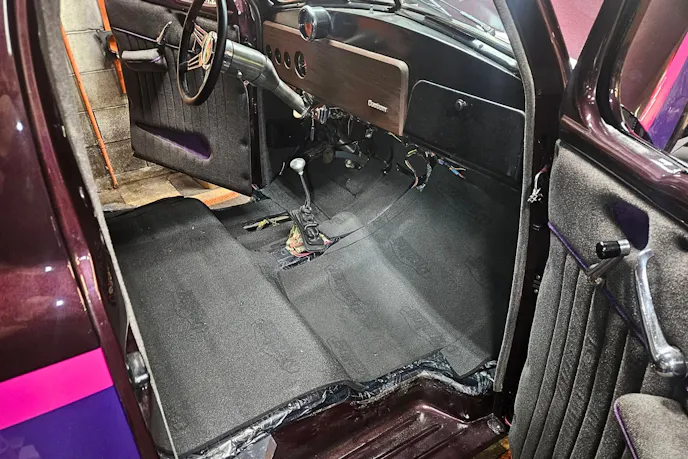
Making The Interior Inhabitable
Jimmy tore the entire interior out and made all new backing panels for the interior himself, including the overhead radio (by Bose). He then covered the inside with Dynamat heat and sound insulation and wrapped everything in a charcoal grey fabric, with accents to match the exterior. The truck is much cooler on summer days than he expected; quieter, too.
Then it was on to the engine. It went through a couple of less radical incarnations before settling into its current configururation. It is fairly traditional: A 383 gen-1 stroker was built from the original block. Jimmy did the machine work himself. An Otto’s Custom Crank with a big-block Chevy snout made sure it could take the intense strain imposed by the blower drive. It swings forged pistons and a Howards “lumpy idle blower cam” opens and closes the valves in the World Products Royal Sportsman II iron heads.
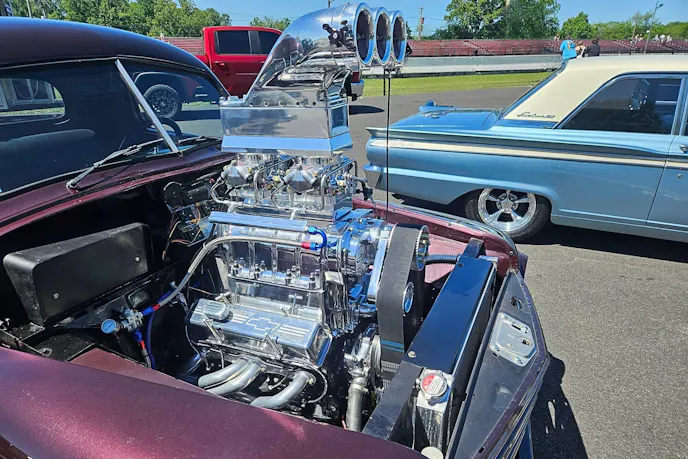
It backed by a built Turbo 400 transmission that uses a TCI converter, and a 9-inch Ford rear sporting 4.10 gears and 33×21.5 Mickey Thompson tires on old school polished Center Line wheels. A Lokar shifter handles the gear changes.
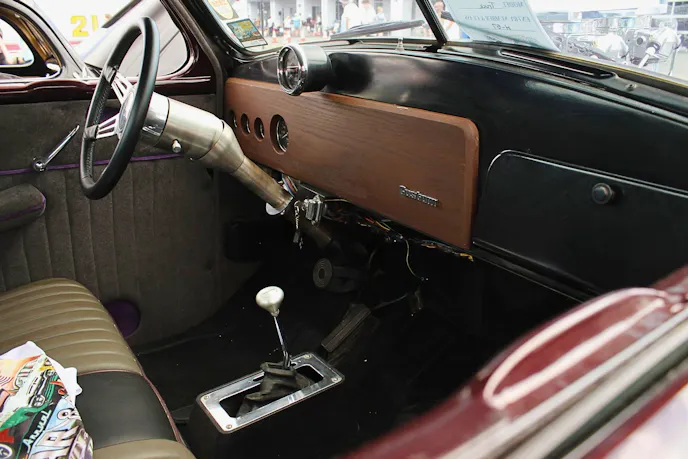
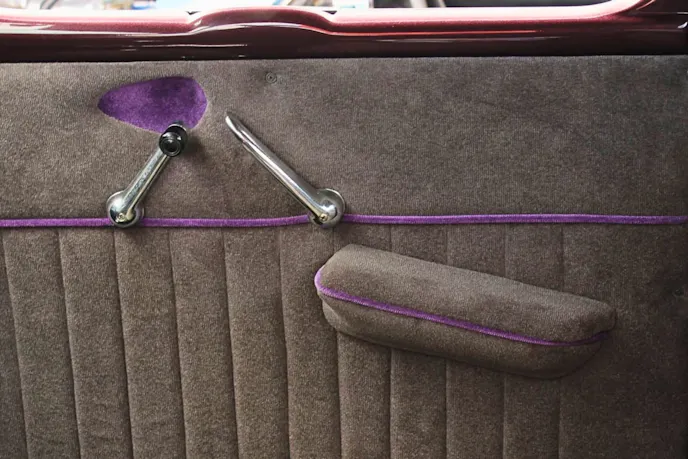
“My idea was to keep the build true to ’90s Pro Street while using new tech on the engine to keep it reliable,” Jimmy explained.
It was complete in April of this year and Jimmy plans to drive it as if it were an everyday car and hit as many shows as possible.
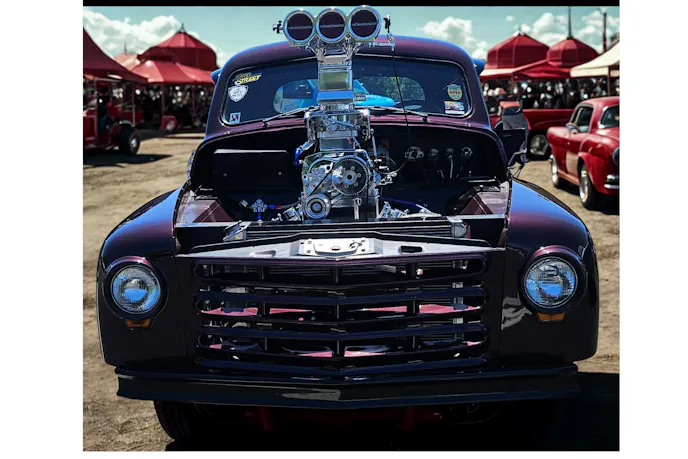
“So far I have done 1,200 miles this summer, which is a good amount for how much rain and insane heat we have gotten,” said Jimmy. “I plan on taking it to Daytona Turkey run in the fall at the pro-street section in Destination Daytona. But my home state is New Jersey and we still have plenty of somewhat bigger shows here left this summer i plan on hitting up first.”
Sounds like Jimmy is putting the “Street” back in “Pro Street” in a big way.
You might also like
Pushing The Limits: Making Ultra-Durable V8 Engines For Retail
Ford engineers test powertrains to failure. This aggressive track abuse results in ultra-durable V8 engines for everyday drivers.