
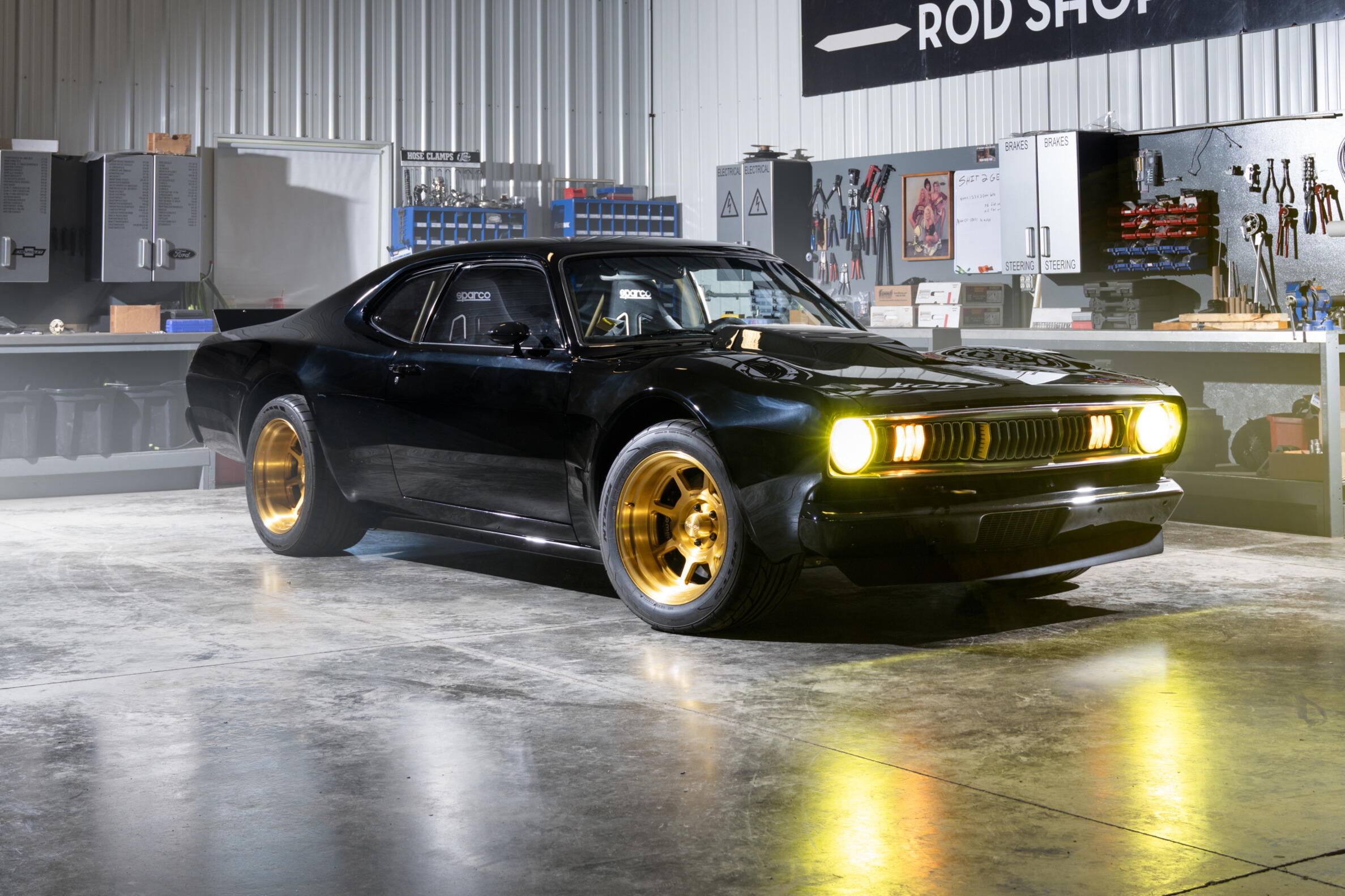
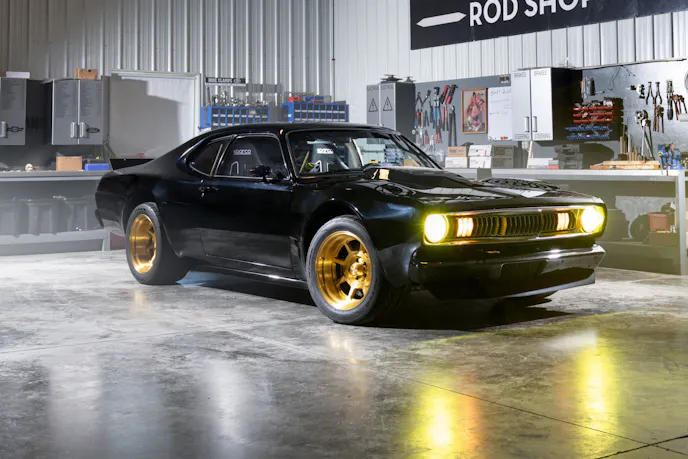
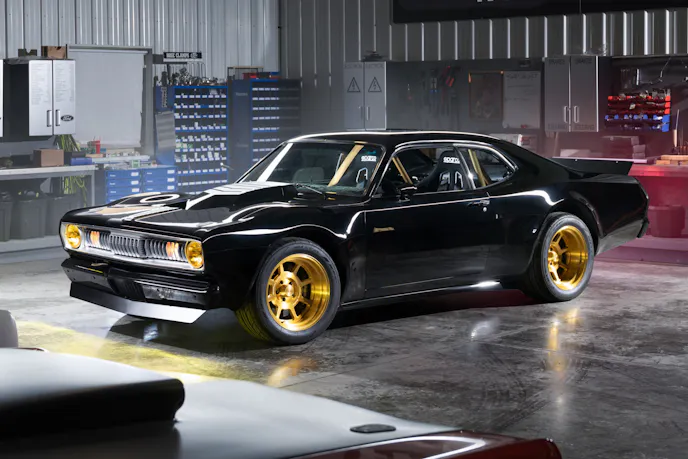
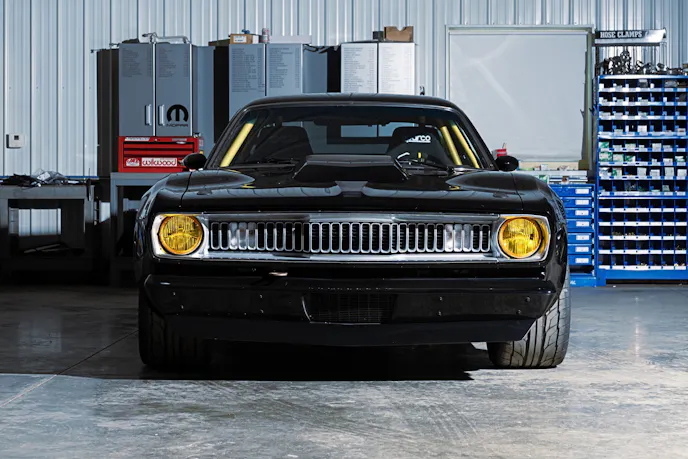
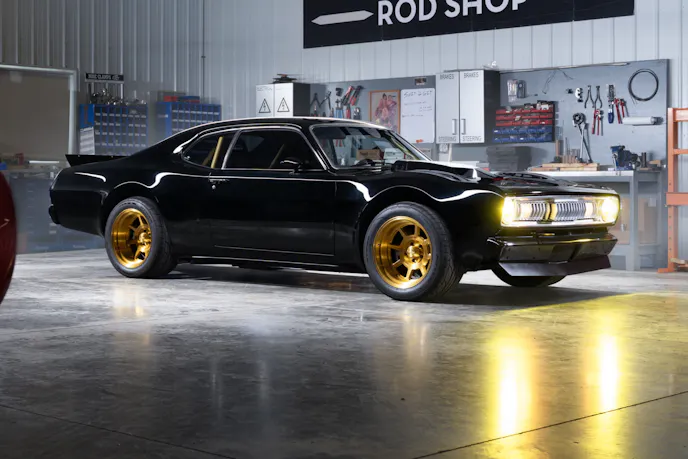
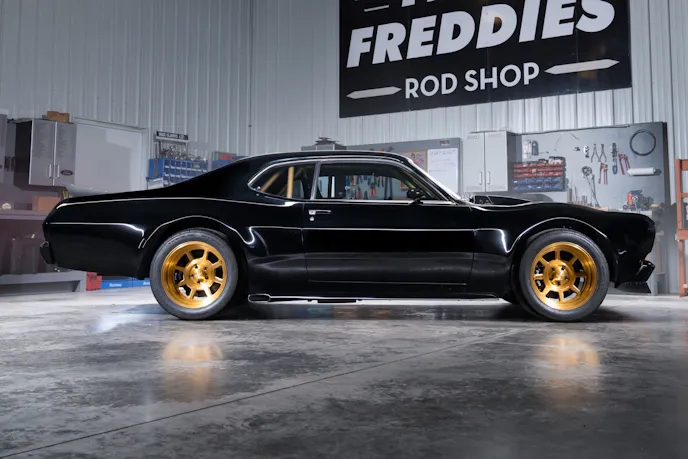
The Plymouth Duster. It started life with humble roots as basic economy transportation, a competitor to the Chevrolet Nova and Ford Maverick. Sure, the legendary 340 V8 was optional, but 95 percent were sold as demure grocery getters with either a Slant Six or 318 two-barrel. But here we are in 2026. Allow us to introduce the War Child, the Hellcat-powered brainchild of Fast Freddie’s Rod Shop in Eau Claire, Wisconsin. It is one of the most stunning examples of the street muscle breed we’ve ever seen.
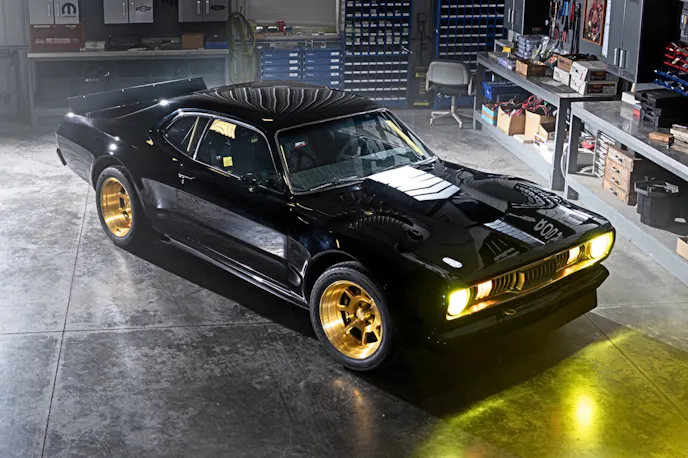
The War Child Duster has it all: A bold, brawny appearance, gobs of horsepower, a unique interior, an upgraded suspension with an independent rear, and a six-speed manual transmission.
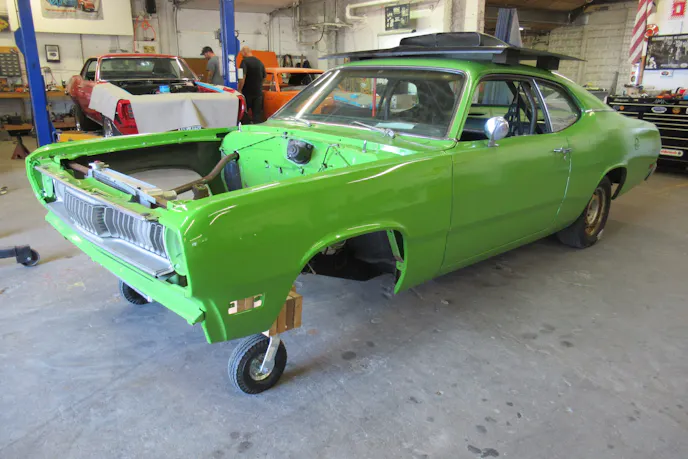
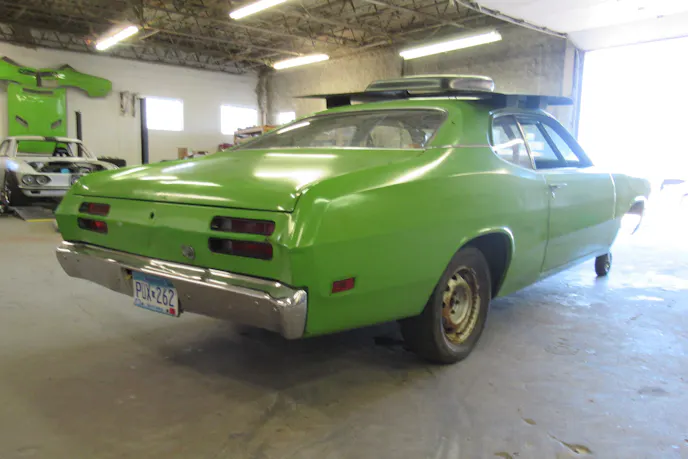
It started out as a worn-out drag car in Lime Light with a Six-Pack-style fiberglass hood. It’s come a long way since then.
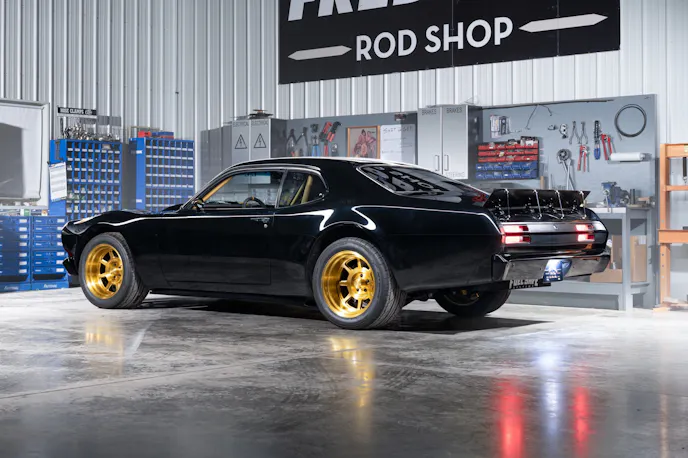
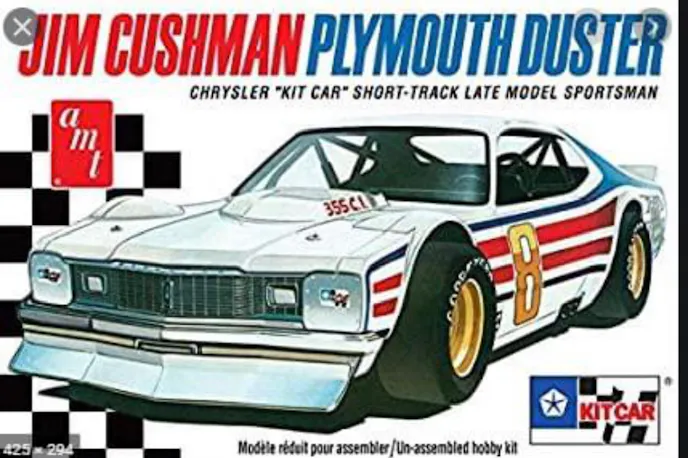
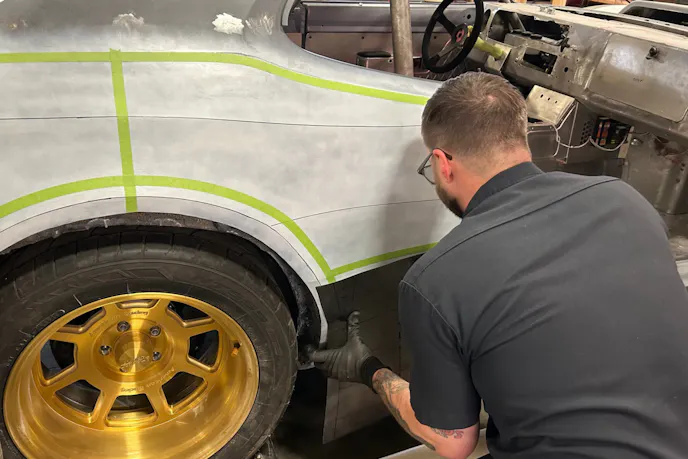
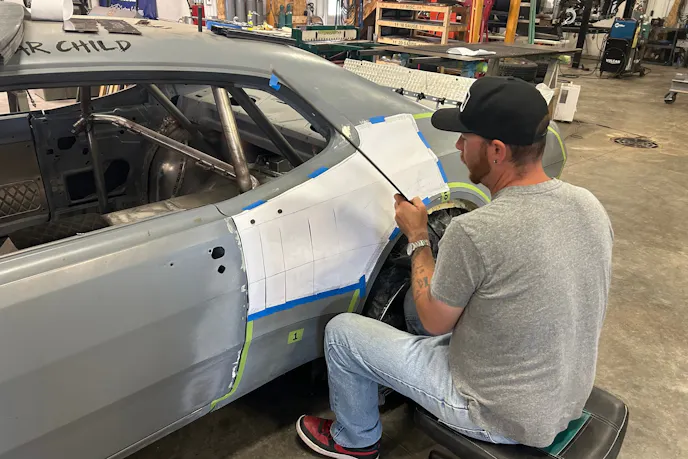
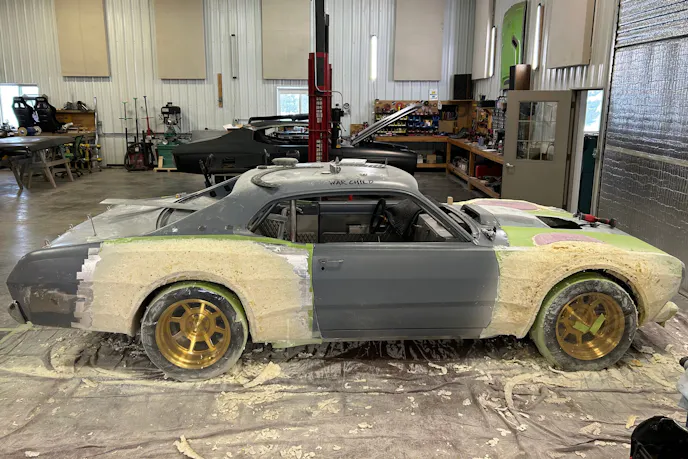
“We started the build in late 2021 and finished in late 2025. Our typical build time is under two years, but this one grew in scope immensely,” said Fred Kappus, the owner of Fast Freddie’s Rod Shop, “especially after we took the direction of the tribute to the Jim Cushman Duster. That was the inspiration for the widebody/fender flares.”
Fred was quick to point out that every member of his seven person team contributed to the end product.
“It was a group effort with every member of my team. I have seven guys that work with me at the shop and each guy has his own niche,” Fred told us. “But we all came together for the fender flare project because it was such a big undertaking and many of my guys wanted to learn metal shaping. Final body and paint was sent to a good friend of mine, Chris Cesafsky. He’s a veteran body guy and specializes in Mopars. He did an incredible job with it.”
Team Effort Yields Total Custom Build
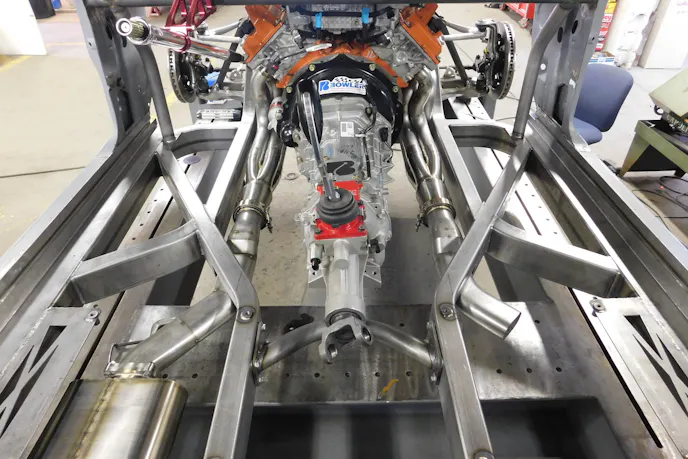
There’s so much to love about this once-humble A-body, but we’ll start with the powerplant, a stock Hellcat crate engine with OE electronics and wiring. Naturally, the engine was tuned on a chassis dyno for maximum performance. According to Kappus, the Gen-III HEMI is now making 652WHP and 613WTQ on 91 octane pump gas.
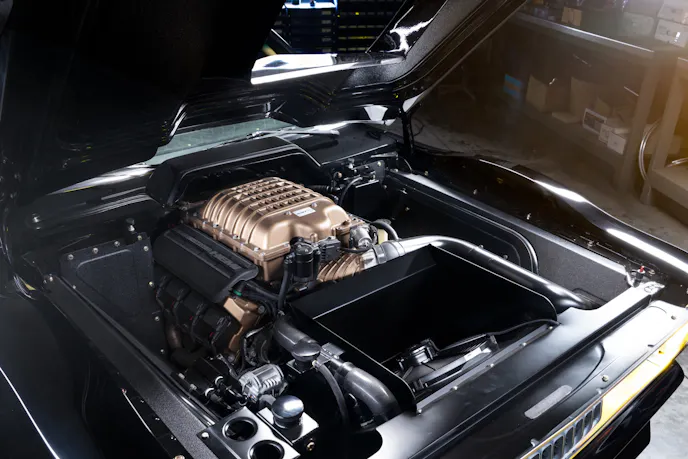
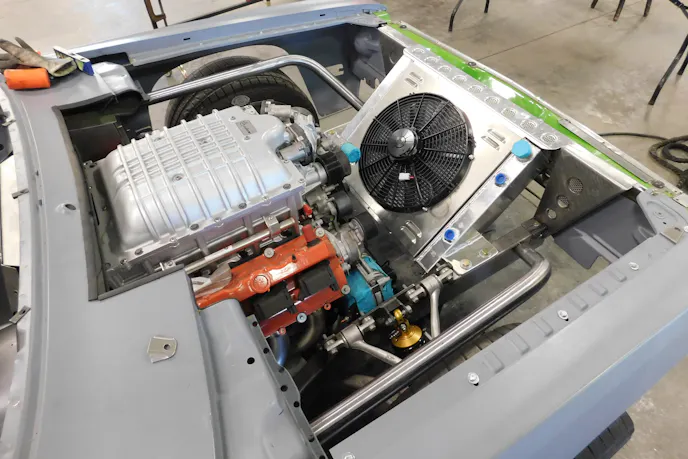
Some would have been happy to stuff this powerplant in the 3,200-pound Plymouth, but that would not do. It doesn’t just make great power. It looks the part of a true custom.
“We used Burnt Bronze Cerakote on the supercharger and valve covers. We built the headers and complete exhaust system in-house,” said Fred. “The exhaust exits at each rocker panel through a custom side skirt we fabricated. The exhaust system was hi-temp Cerakote in Burnt Bronze also.”
Ensuring that the HEMI never boils over, the cooling system is a pair of blank race radiators from Northern Radiator were modified with ports for the engine and supercharger cooling. A single SPAL fan on the engine radiator keeps temps in the normal range, even under boost.
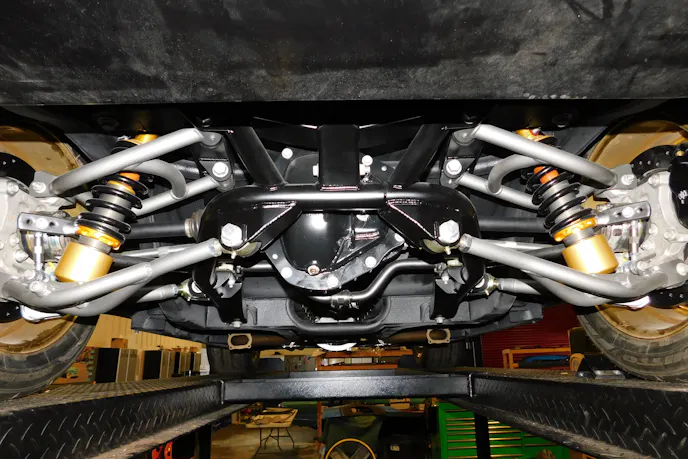
Bowler Transmission supplied the TREMEC T-56 magnum six-speed, A Quick Time SFI scattershield and Ram dual-disc Pro Street 10.5-inch billet street clutch and Tilton hydraulic throwout bearing were used. The power goes to the Art Morrison Enterprises independent rear suspension via a custom-built QA1 carbon fiber driveshaft. The AME IRS system uses a Strange Dana 60 “Hammerhead” diff and Fred spec’d a 4.10 ratio based on tire size and the overdrive ratios of the T-56.
Nothing Stock Inside Or Out
Then there’s the 100 percent fabricated custom interior. It is truly a work of art.
“Man, where do I start?!? The biggest challenge was the custom firewall and removable “doghouse” because of the engine setback,” recalled Fred. “We set the engine back for better weight placement, so we built a modular firewall so we can access the back of the engine if needed. So that caused us to build a complete custom dash, as you can see in the pics.
”We wanted to keep the instrumentation Mopar-based so we used a Dakota Digital B-body Rallye cluster so it can use the modern engine data. We built a custom glove box on the passenger side. Then we mounted the cutoff switch and main switch panel in the center of the dash.”
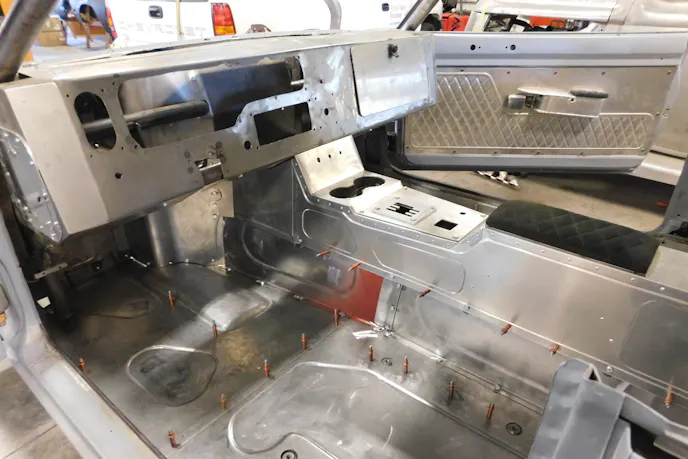
A Wilwood clutch/brake assembly with adjustable proportioning dial was employed, and the proportioning dial is mounted on top of the console. The shop also plumbed in an Allstar Performance brake pressure monitor so you can monitor front/rear brake pressure bias.
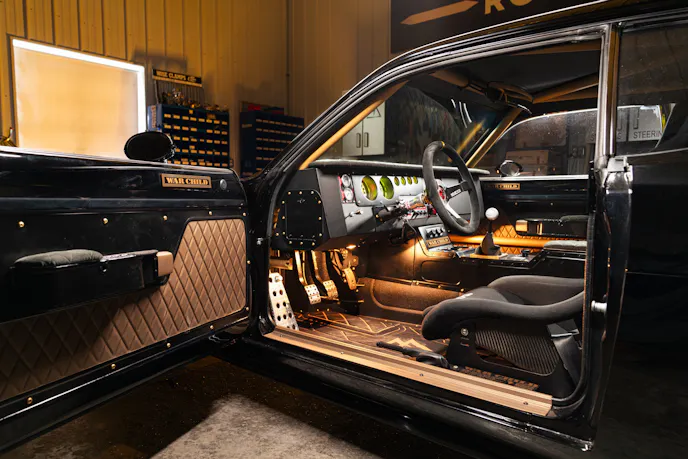
A Tilton mechanical throttle pedal links to a remote Hellcat throttle signal generator. Yes, even the “GO” pedal is out of the ordinary. Vintage Air heater/defroster unit keeps the occupants comfortable.
“We had to go inboard with the wiper motor system — we used a universal street rod-type electric motor and linkage assembly, said Fred. “That was a chore! It’s all hidden behind the dash.”
An American Autowire Highway 15 universal body wiring kit ensures the electrons all go where they’re supposed to. A Woodward steering column and quick release hub mates to a Sparco steering wheel, and a Motion Raceworks turn signal assembly guarantees there is no BMW turn-signal delete on this hot rod.
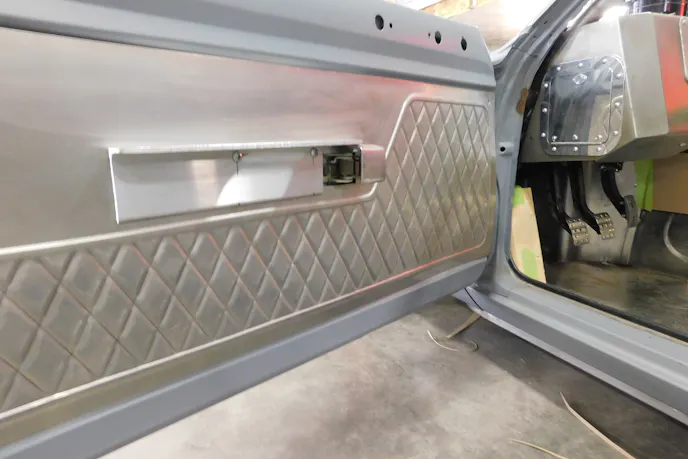
“My interior guru, Adam, fabricated aluminum door and interior quarter panels and bead-rolled them in the diamond pattern. Then we did a two-tone satin black and Burnt Bronze paint finish on them,” noted Fred.
Stock interior door handles painted Burnt Bronze were retained. There are custom aluminum armrests, fabricated similar to a Moroso valve cover, and padded in diamond stitched Alcantara. Everything else is also one off: the custom transmission tunnel and floors, aluminum center console and dash pads (all covered in diamond-stitched Alcantara).
“Then we finished off the floors in a marine flooring from Gator Step. They were able to replicate our diamond pattern and bronze/black coloring and integrate the “FF” shop logo in them,” Fred explained. It turned out awesome and integrated perfectly into the floors since they were 3D scanned.”
The full roll cage is coated in Cerakote and there’s a full OEM headliner. Sparco QRT-C (black carbon) racing buckets give the occupants a place to hang, while Schroth racing five-point harnesses hold them in place.
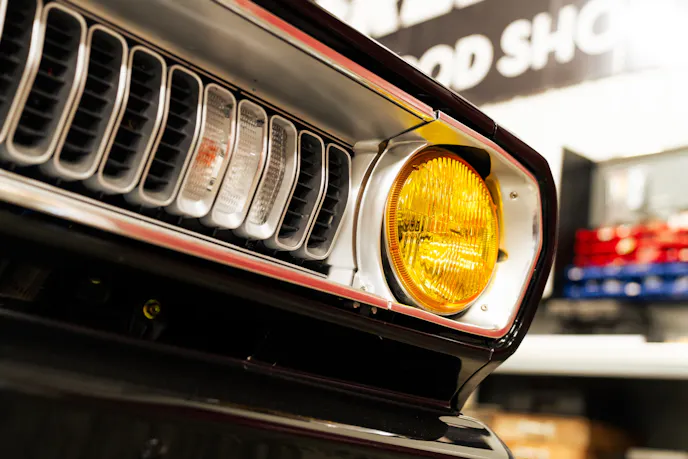
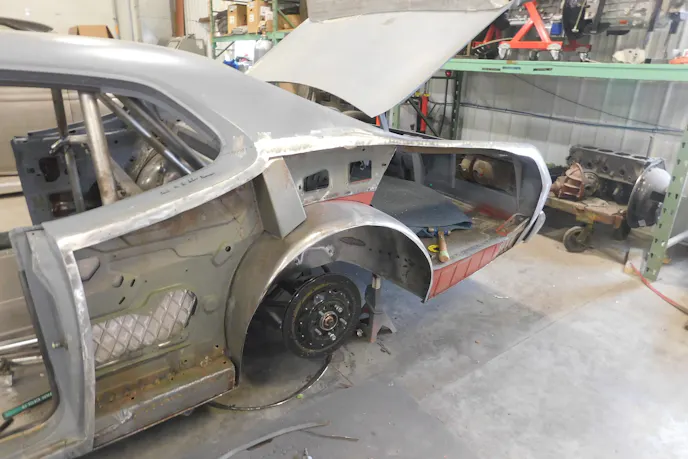
Then there is the body. From looking at the “before” photos, the Duster was not in bad shape. It had all the charm of the econo-car original. Many would have been happy to leave it alone, fix any imperfections, and re-spray it.
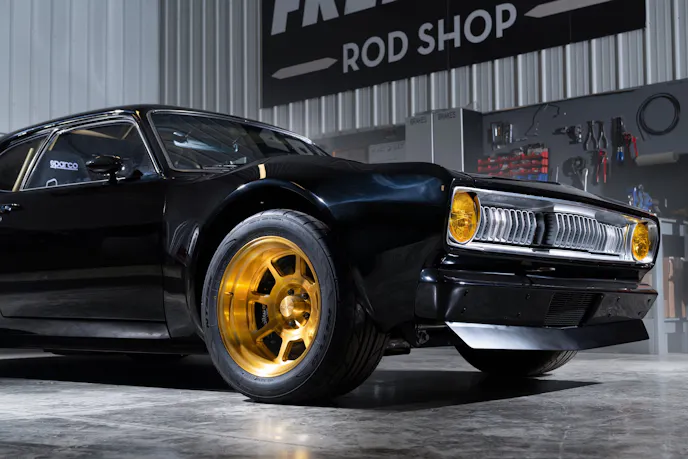
That was not going to happen. As noted up top, the car was meant to ape the Jim Cushman short-track late-model sportsman race car, which was turned into an AMT model kit. Let’s just say War Child was on the bonus plan. There was a lot of customization and fabrication to get those big fender flares. The front and rear spoilers were designed in house and the front piece directs air to the heat extractor through the hood for max cooling.
“Since the owner wanted modern drivability along with the option of using War Child at track days, etc. we used the Art Morrison chassis with the independent rear suspension that features fully adjustable coilover shocks for ride control based on driving experiences,” Fred told us. “The Hellcrate engine was kind of a no-brainer for power and reliability and the TREMEC Magnum T56 six-speed was a must for the kind of driving he wants to do.”
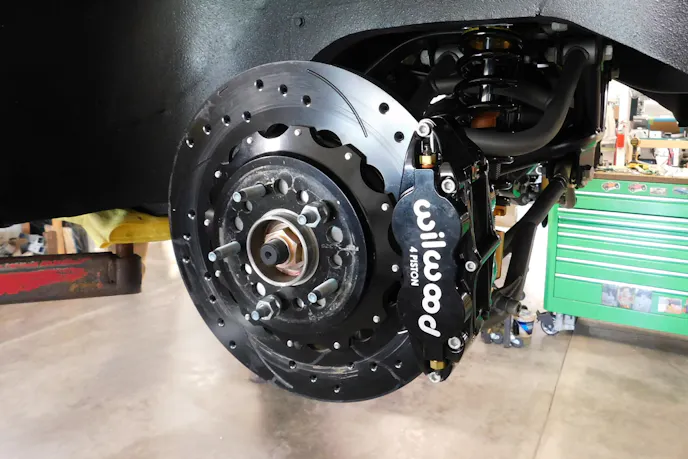
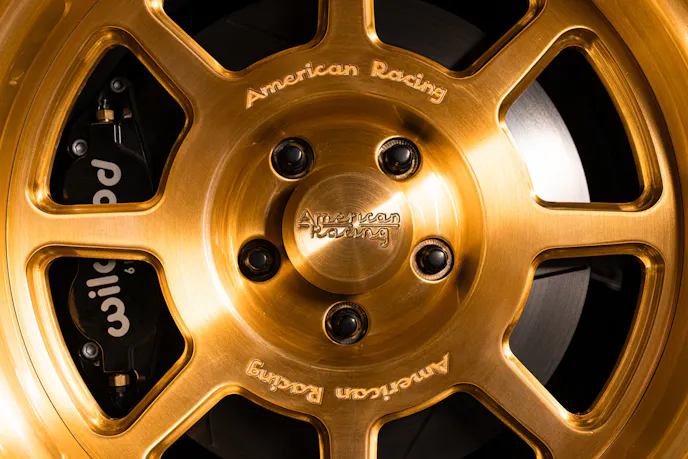
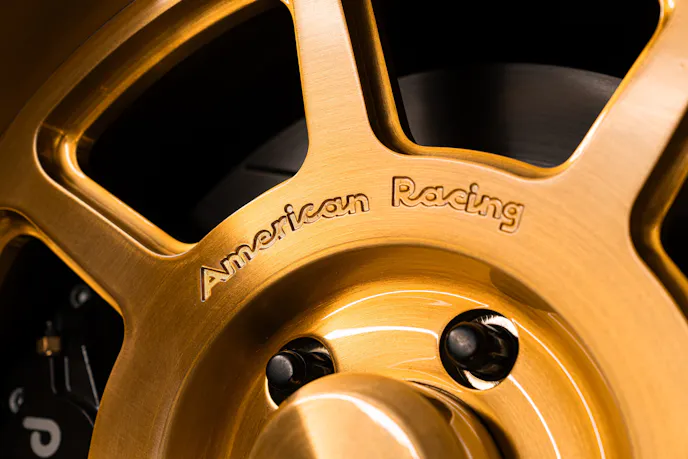
The wheels are 18×12 American Racing VF503s and the tires Nitto 555 G2s (315/40R18) at all four corners. Wilwood 14-inch rotors are behind them, with six piston calipers front and four pots in the rear. These brakes ensure repeated, safe stopping distances from high speeds.
And yes, the anonymous owner who commissioned the build drives it hard and often when he’s not racing.
“We built this for a gentlemen in Vermont who owns several Dodge dealerships, a big Mopar guy. He also races an ARCA-based NASCAR series in his area, so he’s a big motorsports guy,” Fred explained. “The vision was a collaboration between the owner and my team at the shop. The inspiration for the widebody flares came from the Jim Cushman Duster that was a kit car you could buy from Direct Connection in the ’70s. Most of the parts came from Petty Enterprises. It was a really cool kit from the day.”
You might also like
Homebuilt 1967 Cougar: The Sign Of The Cat & Sign Of The Times
The homebuilt Cougar had been a drag car and there was a gaping hole in the hood to accommodate the car’s previous tunnel ram intake.