
Oh, how the times have changed. In less than ten years, we “off brand” muscle car lovers have seen a massive surge in aftermarket and restoration-grade parts and equipment that only a short while earlier we would’ve never have though possible. Chalk it up to the virtual crapping out of the economy, many aftermarket suppliers were forced to either diversify their catalogs to reach out to a wider purchasing population, or learn to bail water a whole lot faster.
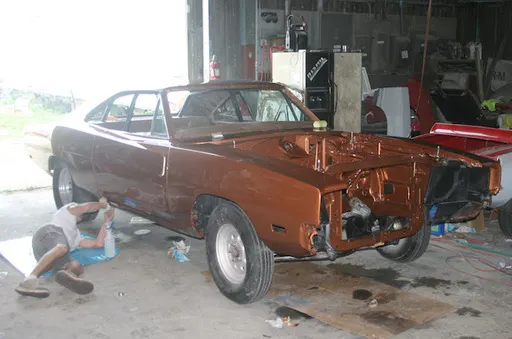
Thankfully, many chose the first option, welcoming in a whole new boon in classic car restoration and modification. What would’ve been a fool’s errand, today an AMC-loyalist can build a 500-horsepower 401 with little to no effort thanks to World Castings.
Looking on pumping some new life into your Oldsmobile 4-4-2’s interior? Legendary’s got you literally covered. Got a GTO? How about a GSX? What could’ve been a decade-long endeavor to find a Ram Air V hood can be ordered online in a matter of seconds.
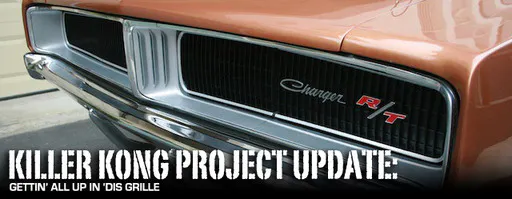
That’s why we’re a little sheepish how we went about restoring the grille for our ongoing project Mopar, “Killer Kong.” Only a few years earlier, finding replacement parts for a ’69 Dodge Charger’s grille required countless forum want ads, scouring page-after-page of eBay listings, and rifling through a lot of broken plastic and pitted and bent trim moldings. Thanks to companies like Year One and Classic Industries, all of that is pretty much gone.
Unfortunately, while the metal frames are available as well, much of the molded plastic is still hard to come by (don’t worry you impatient types, give it a couple of years and we’re sure to see a complete repopped grille). Considering this, we went about restoring Killer Kong’s grille the “old fashioned way,” which in the long run, actually saved us a whole lot of money (we broke even!) and came away with a really nice piece that we could be proud of.
Open Your Mouth
Our search started the same way we look for old cars: we started letting our fellow car buddies know that we were looking for spare Charger grille parts. It took a couple of months and a whole lot of wild geese to chase before we caught wind of a strange little fella who lived in a mobile home buried in the Los Angeles Mountains.
Surrounded by a phalanx of shipping containers packed to their ceilings in a variety of Chrysler-stamped quarter panels, doors, hoods, seats, center consoles, and most importantly grilles, the little man’s home was down a winding trail of loose gravel completely isolated from any visible civilization (and a cell phone signal).
Thinking the handful of ’69 Charger grilles were little more than junk taking up too much space in a wooden shed behind his double-wide trailer, we whisked away five-times as many grilles as we needed for the cost of one on eBay. Seeing their varying degrees of disrepair, we figured we could piece together one decent grille out of them, and sell off the rest.
After packing up the truck, we simply had to know how the hermit had come across so many salvaged Mopars that he could freely scavenge. He shrugged and nodded down the ravine saying, “There’s an old storage lot down the valley. There’s gotta be about a hundred of those Chargers sitting out there just baking under the sun.”
Contemplating the tale he told, we realized that the fabled Warner Brothers’ vehicle lot was rumored to be nearby and added up that the grilles we were driving home with were likely “lifted” from the Chargers left over from “The Dukes of Hazzard.” While we can’t prove it, we laughed at the idea of having a true blue General Lee grille in our Charger.
Taking Inventory
Reviewing our bounty, we realized that no individual grille was any “prized pig.” Each were in a different level of distress. 40-plus-year-old domestic plastic doesn’t age well, particularly when left out in the elements. The complex contours of the Dodge Charger’s grille didn’t help any, either.
The bottom lip that tucks beneath the front bumper ends in a spar at both ends. Almost all of these had been broken off. The corner eyebrows were almost all split, most all of the grilles were missing portions of their egg crate meshing, and several of the center louvers in the split grille were cracked in half. We had, from what we could assess, a lot of useless junk.
Needing to scrutinize everything a bit closer, we started disassembling all of the grilles, ranking each individual component from “best” to “worst.”
Hey Buddy, Get to Work
Amazingly, our own Charger’s metal frame was in the best condition of the five we had (probably because our project car was never jumped over Hazzard County’s Snake Creek). Starting there, we isolated the best center section, pair of headlamp doors, and left and right side. Then we poured over our eyebrow trim, which was in pretty sorry shape.
We started disassembling all of the grilles, ranking each individual component from “best” to “worst”We spirited away the trim to a local chrome shop for some needed straightening and buffing. Meanwhile, we went to work cleaning and scuffing the frame before we could paint it. While many see fantastic results with powder coating and frankly we’d recommend it if you can, we were on a tighter budget, only allowing us the spray bomb option.
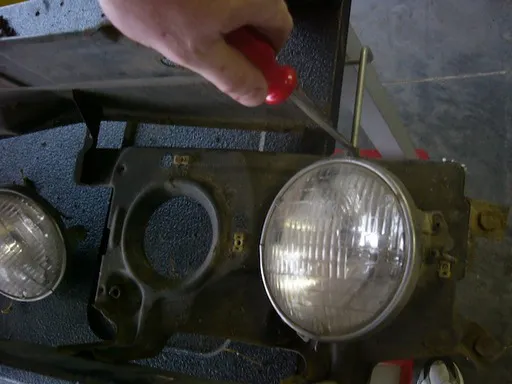
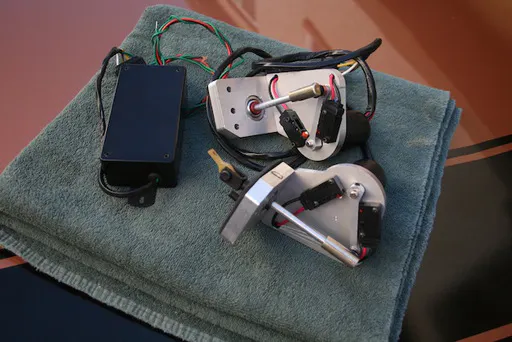
When fully assembled, the Dodge Chargers used a vacuum-operated hideaway headlight door actuator system. Activated by a pair of plunger-style canisters behind each headlight perch, we opted to forgo the old school vacuum system and employ an electric solenoid system, which wires directly to the headlight switch and activates the lights and the electric motors simultaneously. Yeah buddy, we’re moving into the 21st Century!
We’ve Got One Word For You: Plastics
The hardest part might not be repairing the original OE plastics, but it sure was the most time-consuming. Thankfully, much like cast or stamped metals, the molded plastics always want to return to their original shape and contour. This was used in our favor, as much of the split or cracked pieces only needed to be permanently held back in their favored location.
For instance, we had a long, jagged crack fracturing the bottom lip of our center section. Using the materials we had in our garage that particular Saturday morning, we decided to perform a little field triage and “splint” our cracks like a broken leg.
Starting with a pair of tin snips and some spare scraps of sheetmetal, we cut out long strips that would act as the bridge holding our fractures together. Mixing up some JB Weld, we first applied a conservative amount into the crack itself. Next, holding the crack closed, we applied a more liberal amount to the back – which would remain unseen to most – where we then pressed in our stint, using the little left to cover it up.
Holding the crack closed either by hand (a pair of wood clamps would’ve been better had we had them on hand), we waited just until the bonding agent had cured. When still a bit soft, we took a fresh razor blade and scraped off the excess JB Weld from the visible side of the newly sealed crack.
Wrapping a socket in sandpaper to get us the perfect radius, we started sanding the now fully-cured JB Weld. Starting with 60-grit and moving our way to a finer 220-grit, we were pleased with our “shade tree mechanic” repair job. We continued on, patching up cracks and filling in small holes where we could, the JB Weld making a fine substitute for more expensive plastic repair sealants we’ve seen on the shelves.
Putting Lipstick On Our Prized Pig
With our plastic components patched up and looking good, we moved on to the next step: paint. As we said before, we weren’t shooting for a concours restoration-grade repair job here, so we’ll let the Julius Steuers and Troy Trepaniers of the world do things their way. We wanted a nice, clean grille that looked good and was done so on the cheap.
We hustled over to the neighborhood hardware store and picked up some argent silver and semigloss black with a handful of different width sizes of painter’s tape. Finding it easier to paint each plastic piece individually, we started by coating everything in an adhesion promoter. This colorless spray helps bind paint to plastic and is a smart extra step to take.
Next, we went about painting all five parts (both headlight doors, the center section and sides) in black. After allowing plenty of time for the paint to dry, we masked off the egg crate grille portions and painted the silver trim and surrounds. We know, its difficult to wait for paint to dry, but don’t peel off your tape too soon or you’ll be repeating the process all over again.
…And All The Trimmings
With our plastics repaired and painted, it was time to unpack our newly straightened and polished brightwork. The whole eyebrow trim and center “I” piece total a seven piece set, not including the “Charger” and “R/T” emblems adorning the driver’s headlight door – both of which we picked up from Year One.
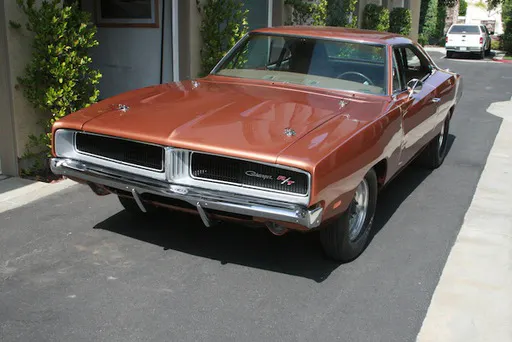 Using all the best original hardware we could glean from our original disassembly of the five grilles, we reassembled our refreshed grille and installed it in our ’69 Dodge Charger. Since our Charger wasn’t an original R/T from the factory, we waited until the last step to attach the red-and-black R/T emblem. Call us sentimental.
And what about our leftover grilles? Yeah, those babies went up on eBay as soon as we were done. Even selling what parts we thought we “junk,” we not only paid for our initial investment, but all the pocket cash we spent on buying materials to fix our one grille.
We’re still a ways away from wiring all of Killer Kong, so we’ll return to our grille to walk through how to properly wire our new Classic Industries’ electric headlight door system along with the rest of our Charger’s circulatory system. Until then, stay tuned!
You might also like
Sick Matching-Numbers Mopars Sold At Barrett-Jackson 2026 Las Vegas
Rare vintage Mopars dominated the Barrett-Jackson 2026 Las Vegas auction. Bidders fought over matching-numbers Cudas and Dodge Daytonas.