
Classic car enthusiasts across the Golden State finally have a reason to celebrate following a massive legislative victory for classic vehicle preservation. Leno’s Law recently secured a historic, bipartisan 49-4 vote to pass through the California Legislature, signaling a win for gearheads and restorers everywhere.
For decades, strict emissions testing forced many builders to leave their beloved projects sitting under car covers, simply because keeping them compliant proved too expensive. Now, this anticipated bill heads directly to the desk of Governor Gavin Newsom for final consideration.
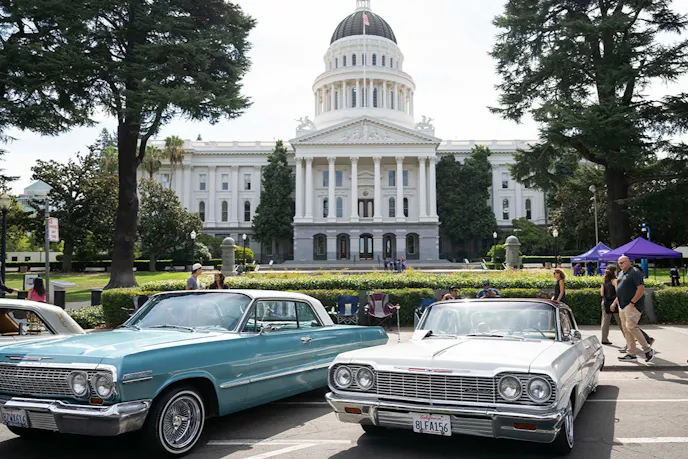
The legislation creates a strictly phased-in, collector-only pathway to smog check exemptions targeting vehicles manufactured between 1976 and 1985. The rollout begins on January 1, 2028, exempting qualifying classics built before the 1981 model year. From there, the exemption expands by one model year annually until hitting the 1986 cutoff in 2033.
To prevent abuse, owners must carry specialized collector car insurance or prove they drive the vehicle less than 1,000 miles per calendar year. SEMA CEO Mike Spagnola states, “This bipartisan victory is a product of California’s automotive community uniting to remind the state’s lawmakers of the cultural significance of our cars and trucks, and of our sacred charge to pass this shared heritage on to the next generation.”
Support for Leno’s Law united politicians, along with backing from the local lowrider community, who submitted over 1,700 letters championing the movement. The bill also attracted international attention from the FIA International Historical Commission, proving how globally recognized California car culture remains today.
Senator Dave Cortese authored the legislation, bringing much-needed relief to an aftermarket industry that supports 150,000 local jobs. Cortese notes, “California can protect clean air without erasing our automotive history.”
Seeing lawmakers actually recognize the difference between a daily commuter and a garage-kept weekend cruiser gives the entire automotive community hope. The sheer dedication shown by local car clubs and preservationists proves that the passion for turning wrenches remains alive and well.
As enthusiasts eagerly await the governor’s signature, Leno’s Law readies to protect the nostalgic machines that built American car culture, keeping those beautiful vintage rides on the highway where they belong.
You might also like
Drag Racing Legends To Appear At MCACN 2026
The numerous vehicles Butch Leal raced included a Ford Thunderbolt, Boss 429 Mustang, 427 Camaro, and Hemi Dusters, and a Firebird.