
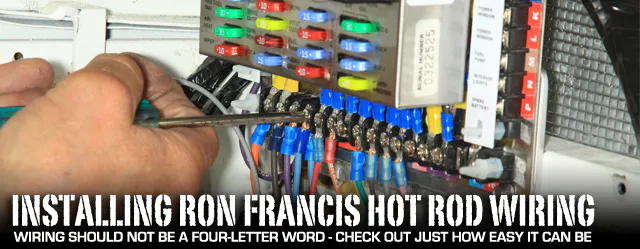
What makes automotive electrical systems so befuddling for a lot of us are the mysteries of electricity. You can’t really see it unless something arcs while making a connection or a component springs to life. But, you can certainly feel it if any part of your body suddenly becomes a conductor. Yet, it’s just not as complicated as it might seem.
Express Wiring System
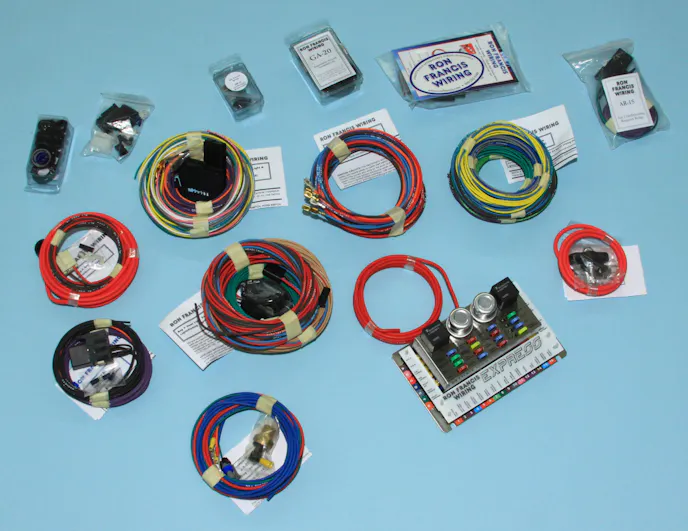
Express Wiring System (Part #XP-67) Includes:
- Multi-connection battery junction box in clearcoated stainless steel finish
- 18 Circuits on 16 Fuses
- Four select-a-circuits
- Faster installation with new design terminal block for easy access
- Cooling fan relay
- Color-coded wiring schematic
- Horn relay
- Turn signal & hazard warning flashers
- High-quality wiring and components
- Right-sized wiring and connectors
- Serialized for spot on technical support
If you’re replacing a factory musclecar electrical system, it can be as easy as a simple plug and play swap and pop job with many of the available reproduction wiring harnesses. However, when you’re the architect for a custom fabricated electrical system for a ’32 Ford roadster where you’re starting from scratch, it becomes more involved where you need a good understanding of basic automotive electricity and how it works so we turned to the pros at Ron Francis Wiring.
What makes the Ron Francis system unique is the diversity of what you can do with it combined with the added bonus of how easy it is to install. The Ron Francis Express Wiring System can be installed in nearly any vehicle from classic musclecars to street rods to off-road vehicles. Each Express Wiring System is designed for Detroit-based automobiles from Ford (XP-67), GM (XP-66), and Chrysler (XP-68).
Each of these Express systems has 18-20 circuits along with 16 fuses. The Multi-Connection battery junction box acts as the nerve center of the Express Wiring System. The battery power enters the junction box and that’s where the distribution begins. All you have to do is provide a little imagination and organization and you’re off to the races.
Each system includes high-quality, heavy-duty wire insulation (standard feature) that stands up to high temperatures and harmful elements like ozone and even fire. Each wire is clearly marked for proper installation. Switches, relays, and sockets are also of the highest quality. Each wiring system is serialized for quick identification and technical support.
Founded By Hot Rodders For Hot Rodders
Ron Francis Wiring consists of long-time seasoned hot rodders designing and engineering great electrical systems for fellow hot rodders taking the confusion out of wiring up a street rod. Scott Bowers, who owns Ron Francis Wiring, worked for Ron Francis Wiring for a decade before going out on his own and starting The Detail Zone, which manufacture stand-alone GM and Ford fuel injection wiring systems.
Both companies create extraordinary wiring systems, parts and accessories for hotrodders, which make them an unbeatable duo. When Bowers was presented with the opportunity to acquire Ron Francis Wiring, he jumped at the chance and quickly merged both companies under the same umbrella.
Getting There From Here
An automotive electrical system isn’t much different than your home’s plumbing system. With an electrical system, we are controlling the flow of electricity from and to a source such as a battery, much like we control the flow of water from a faucet. We either control flow from the battery to the accessory via the positive post or from accessory to negative ground. Control is achieved via on/off switches and resistors.
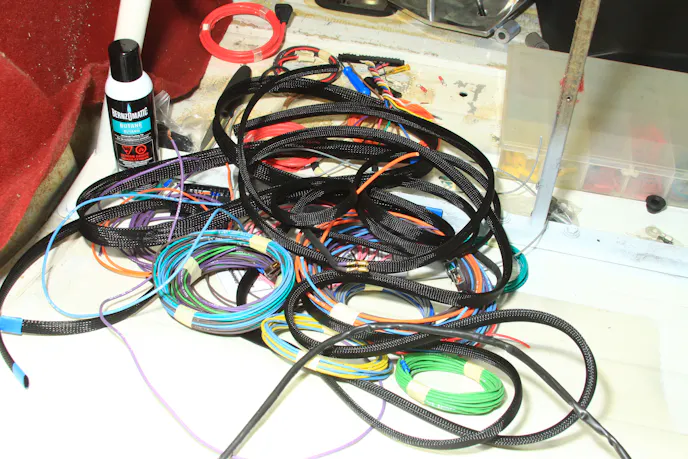
Resistors slow or “resist” the flow of electricity through a circuit like an instrument light dimmer or instruments. A resistor can be viewed the same as a water valve. Start closing the valve and you increase resistance to flow. Open the valve and your decrease resistance to flow.
The Ron Francis Express system is basically a hub and spoke system where battery power enters the aluminum multi-connection battery junction box where it is routed to each circuit. This is basic automotive electricity design engineered to safely do what an automotive electrical system should do. High electrical loads, such as cooling fan and horns, are handled via relays. Turn signal and hazard warning flashers are incorporated into the junction box.
Appropriately sized fuses are located for each circuit such as instrument and courtesy lights, cooling fan, horns, turn signals and hazards, taillights, climate control blower, sound system, windshield wipers, neutral safety switch, electric fuel pump, running lights, power windows and locks, brake pressure switch, and more. With the multi-connection battery junction box, there’s no need to add circuits and cumbersome wiring because Ron Francis Wiring has thought all of this through for you.
Installation – Getting It Right
It is an old cliché, but there are no unimportant parts in an electrical system. Your street rod’s electrical system should be protected like Fort Knox. All it takes is one act of carelessness to leave you on the roadside or frantically searching for a fire extinguisher.
There are as many approaches of installing electrical systems as there are enthusiasts and each of us has our own way of doing it. Electrical systems should be properly routed and cohesive in nature. Wiring should be wrapped and bundled in the interest of neatness, access, and safety.
Before you make the installation permanent, do a mock-up to give yourself a good idea of how the harness will be routed. Follow the shortest paths possible to keep resistance/voltage drop as low as possible to each destination. Route wiring to keep it out of harm’s way avoiding sharp edges and ragged paths where chaffing and short circuits to ground can occur. Never leave wiring unprotected no matter how protected it might seem.
What makes the Ron Francis Express system so worthwhile is the versatility of what you can do with it combined with how easy it is to install. -Phil Cocuzza, California Muscle Cars
Wiring routed through frame rails and body cavities may seem protected and out of the way. However, when wiring is unwrapped, you have only one line of defense in the wiring’s insulation. When insulation chaffs through and metal touches metal, you have an immediate short to ground. This is why all wiring must be wrapped, insulated, and protected. You can never be too careful.
Another concern is wire size (gauge). Although Ron Francis has given these systems bullet-proof research and development in creating a fully-functional system, only you know how much of an electrical load each circuit will actually carry. Wire size is determined by anticipated electrical load and distance the current has to travel.
The longer the path and higher the amperage, the larger the wire size needed. When wire size is too small for the load, resistance to current flow abounds and heat builds quickly. If you’re ever in doubt about wire sizing, it’s more safe to err on the side of one gauge too larger rather than too small.
Choosing the Correct Wire Size
How do you choose the right size wire for a given circuit? Ron Francis Wiring has done this for you with the Express Wiring System unless you’re planning an unusually heavy amperage load for a specific circuit. If the load is significant, you’ll want to add a separate dedicated circuit that’s either switched or live all the time with either a fuse or a circuit breaker for protection.
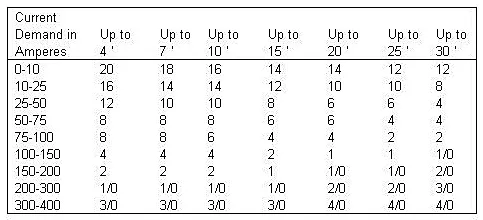 Proper wire size boils down to two major factors: wire length and amp draw. You’ll need to know what amperage draw will be for the given accessory, then how long the wire will be from source to destination. Look at “AWG” meaning American Wire Gauge or wire size. For most automotive circuits up to 20 amps, you can get by with 16 AWG wire if wire length is kept under 10 feet, which encompasses most motor vehicles. The lower the AWG number, the larger the wire. The AWG number is the actual wire size, not including the insulation.
If you’re in doubt about size and load, kick it up a notch and go with the larger 16 AWG size. Wire size also corresponds with connector size. Vinyl covered connectors are color coded based on wire size. Red is 22-18 AWG. Blue is 18-14 AWG. Yellow is 12-10 AWG. Heat shrink connectors are also color coded the same way. Although Quick Splice connectors are commonplace in repair shops and garages across the land, they are discouraged.
Take your time and do the job right with quality heavy-duty electrical connectors and unions offering a good solid connection. Failed connections happen via faulty installation, dirt, or corrosion. Corrosion is caused by moisture, dissimilar metals, and contamination.
The key to a professional crimp is having enough copper wire extended beyond the insulation, yet no wiring showing when it is inserted into the connector. If you’re doing a butt connector, you want 50/50 penetration where wire ends touch. Crimp tool should be dead center each side with a solid crimp.
Regardless of connector type, crimp should be dead center on the wire end with deep penetration. Don’t be afraid to give the wire a tug. If it comes out, your crimp isn’t what it could be. Try it again. It is suggested you use heat shrink at each of your connections to keep dirt and moisture out. Dirt and moisture lead to corrosion and poor continuity.
Circuit Protection – Installing the System
Circuit Protection is all about building an electrical system that is safe and reliable. This means fuses, circuit breakers, main power switching, and plenty of insulation. As you plan and build your hotrod’s electrical system, think of every potential pitfall. Don’t power up your street rod on the cheap – you want high quality components because it is money well spent.
You don’t want a headlight switch falling apart on your way home in the dark. Sockets that short out and start fires are counterproductive. And another thing – light bulbs. We’ve seen plenty of defective off-shore light bulbs that have shorted internally and fried wiring harnesses that were unprotected. Closely inspect new bulbs and make it routine to inspect older ones with time.
And while you’re thinking about circuit protection, you can never have too much of it. At your rod’s main power source, the battery, you should have a main on/off kill switch. When you park the vehicle, kill the power. This should virtually eliminate any chance of a vehicle fire than turns into a house fire.
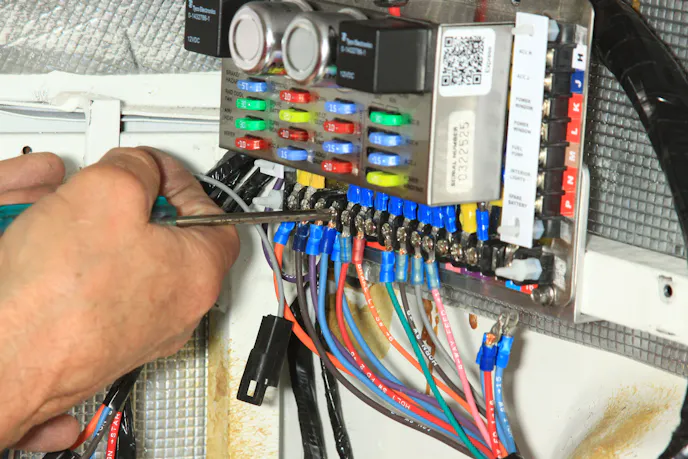 You should also have a fusible link that melts and opens the main circuit should a short occur anywhere in the system. Chrysler was always good about fusible links as main circuit protection and as a safety measure. Install one between your battery and the main power lead into your Ron Francis junction box.
Once you’ve established proper harness routing and examined every potential trouble spot, it is time to protect the wiring and route them to their destinations. You want as many lines of defense as possible when it comes to insulation. Electrical tape first, then braid wrap as your first line of defense against the elements and any potential chaff risks. When wiring transitions through body passages, use a rubber grommet. Bulkhead connectors make for easier service.
How Grounded Are You?
Once you have your Ron Francis Wiring Express system ran to appropriate circuits, it’s time for final mounting and clean up. Then comes final troubleshooting if connections were missed, crimps weren’t solid, bulbs burnt out – or in many cases – a bad ground leaves us hanging. Believe it or not, poor grounds are what leave us in a lurch more than anything else.
Weak or no grounds make headlights dim. They cause odd electrical gremlins that cannot be explained, wipers work at random, left turn signal flashes quicker than the right, stereo is on, then it is off – all sorts of fun stuff. You should have multiple ground leads between the body and chassis hidden out of sight. There should be at least two grounds between engine and body and engine and chassis. If you study new car design, you will see multiple ground leads throughout the vehicle. This is because microprocessors do not tolerate weak connections of any kind, including a poor ground.
Electric Speak Unraveled
Electron: A stable subatomic particle with a charge of negative electricity, found in all atoms and acting as the primary carrier of electricity. This is the most basic element of electricity. Electrons do all of the grunt work.
Voltage: This is the electrical pressure or the real “pop” behind electricity. Voltage is the push – most automotive electrical systems are 12-volt systems, although a lot of vintage applications are 6-volt. Some newer cars are going upwards of 18- and 24-volt systems.
Current: It is easy to get current mixed up with voltage, but voltage and current are not the same. Current is measured in amperes or “amps” which is how fast the electricity moves. The faster it moves through a wirer, the higher the amps.
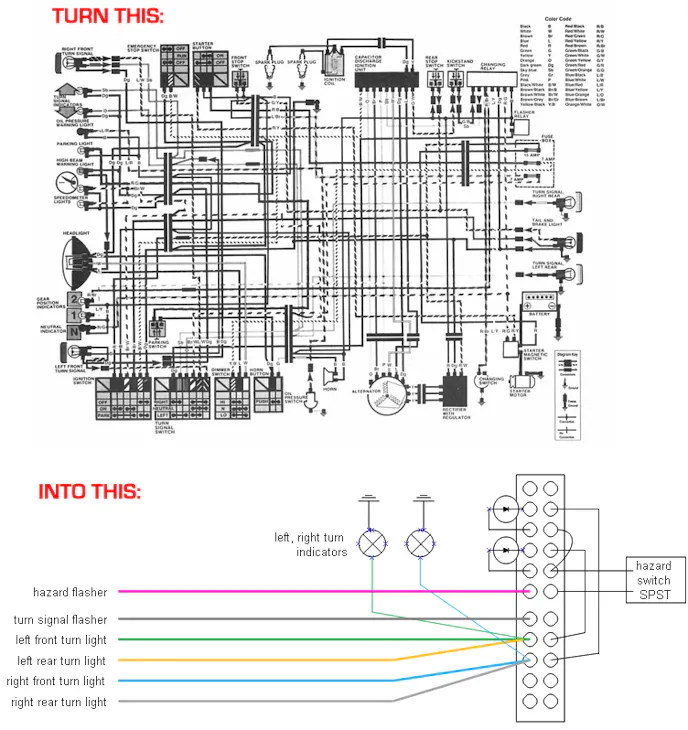
Resistance/Ohms: Think of resistance as four lanes of traffic being funneled down to two. Resistance is measured in ohms and is the actual resistance to the flow of electricity which in turn, causes heat. With most automotive applications, there is an acceptable amount of resistance. Unacceptable resistance comes from not having enough wire size to handle the load and corroded or dirty connections. For example, an instrument panel dimmer switch and a radio’s volume control are variable resistors.
Wattage: Automobile accessories all take a certain number of “watts” or drain to operate. Headlights consume the greatest wattage or perhaps a powerful subwoofer. When you have high consumption accessories such as discharge headlights or a powerful sound system, you need an electrical system that can keep up. This means proper sized wiring, relays, high-capacity switching, and a healthy charging system. Wattage is the measurement of Amperage x Voltage. A 20-amp circuit times 12 volts equals potentially 240 watts. That means the fuse blows or circuit breaker trips at 20+ amps. Most circuits are anywhere from 3 to 15 amps with fuses. When we get into higher amperage ratings, we generally go from fuses to circuit breakers. Headlights are sometimes circuit breaker protected where the circuit breaker cycles headlights off and on.
Direct Current versus Alternating Current: There’s a reason why we use alternating current (AC) at home and direct current (DC) in cars. Alternating current maintains its punch over great distances. Direct current is good for short distances and lower voltage applications. Alternating current reverses direction in its flow path. Direct current travels in a straight line. In automotive electrical systems, direct current flows from negative to positive. Negative “ground” is using the body/frame as a conductor instead of having two wires. With the body/frame as the ground, you eliminate 50-percent of the wiring.
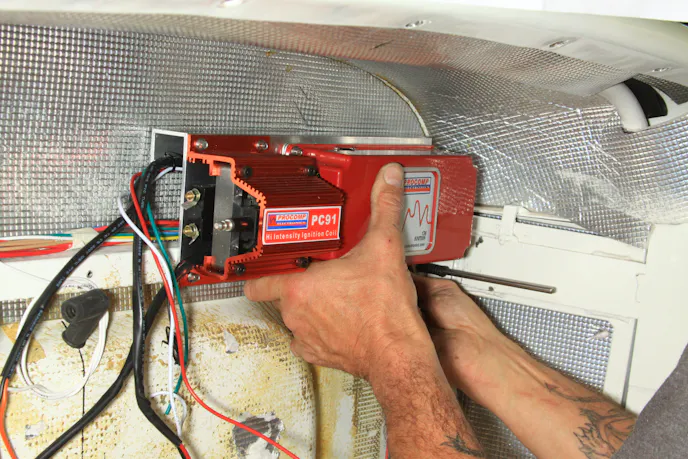
Success!
It doesn’t take a licensed electrician to install a good aftermarket automotive electrical system. Key is to take your time, pay close attention to what you are doing, and stay organized and follow the plan. Ron Francis Wiring takes the guess work out and quite literally holds your hand through the process with outstanding instructions, colorful schematic, and clearly marked and color coded wiring, you’d have to work really hard at screwing it up.
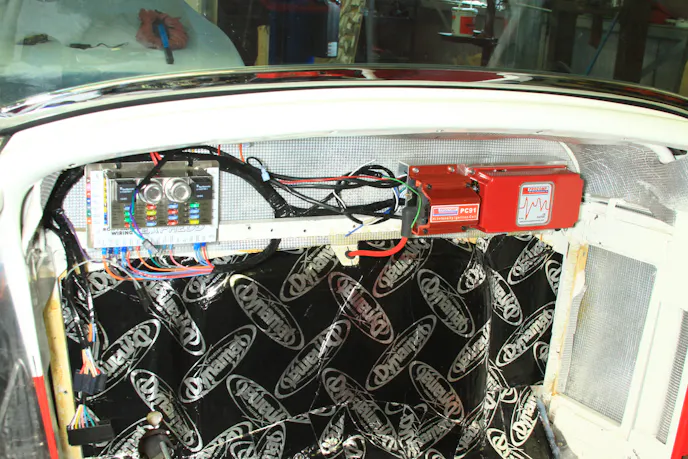
Take a common sense approach to your Ron Francis Express installation, test each circuit as it is completed, and enjoy a ready made system you didn’t have to build from scratch. Yet you can still show your buddies that you did it all in your home garage.
You might also like
1957 Chevy Bel Air: Blacktop Blistering Bad Boy
Finished in Tuxedo Black, this ’57 Chevy Bel Air has a stance that makes you look twice before you even notice what's under the hood.