
 It’s no secret that some of us around the Power Automedia offices are slightly obsessed with the Turbo Buicks of the 1980’s. They were stealthy, quick, and relatively quiet with only a hint of jet-like turbo sounds for the competition to encounter.
But 1984 wasn’t the first year for Buick to bolt a turbocharger to one of it’s models. They’ve been at it since 1976, attaching a hairdryer to the Buick Century Indy Pace Car, and again in 1978 when they launched the first turbocharged Regal Sport Coupe for production.
The very early cars were only producing 165hp at best with a 4-bbl carburetor, but Buick would continue to improve the 3.8L Turbo V6 throughout the ’80s. Eventually they ended up with an underrated 276hp in the ’87 GNX and a very underrated 250hp in the ’89 20th Anniversary Trans Am.
By 1983 the T-Type was pumping out 190hp, and although it provided the driver with adequate passing power it wasn’t a dragstrip terror by any possible measure. The engine would create a lot of knock when the throttle was to the floor for an extended period of time, resulting in poor performance and embarrassingly low quarter-mile timeslips.
However along the way many tuners would take the pre-’84 Turbo Regal and change it from something sort of half-baked, and into something truly interesting prior to GM incorporating the sequential fuel injection system.
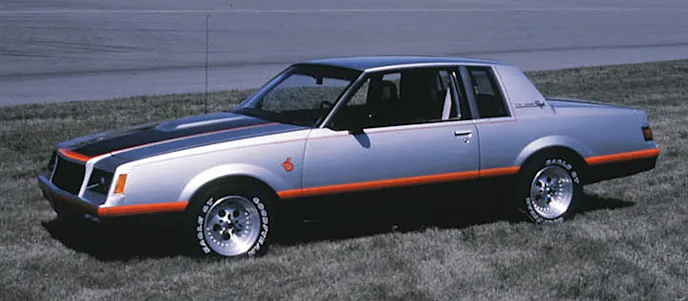
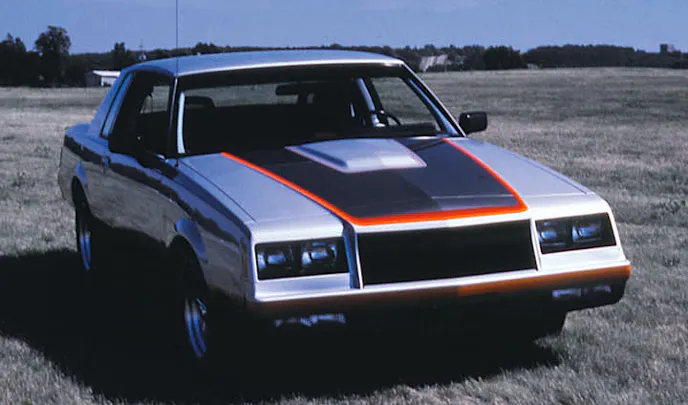
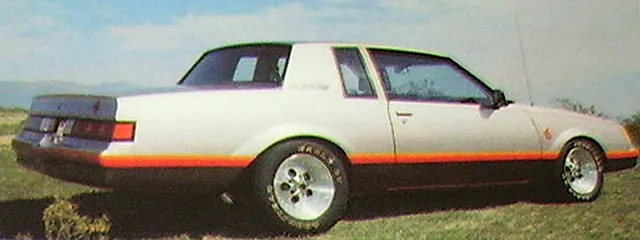
The ’83 T-Type that you’re looking at on this page was one of those cars that was modified during that time. It was built by famed car builder “Lil’ John” Buttera, featuring mainly cosmetic changes to the body, interior, and to the rolling stock.
The custom striping harkens back to just a couple of years earlier to the ’81 Buick Regal Indy 500 Pace Car. It might not be particularly fast, but it is a staple of Buick history, and it serves as a reminder of the way cars were built during the early ’80s. We’d like to thank our friends over at The Daily Drive for reminding us about this car, and we’ll continue to bring you more Turbo Regal stories in the future.
You might also like
Exclusive! BMR Suspension Buys Heidts, Chassis Engineering, Alston Racing
BMR said it will continue to expand its established lineup, and BMR and Heidts will collaborate closely to create exciting new products