
While there was plenty of parts bin sharing going on at the Big Three during the 1960s muscle car boom, none seemed more welcomed as the incorporation of the Rallye dashboard from the ’68 Dodge Charger to other Dodge and Plymouth B-Body offerings in 1969.
The aerospace-themed redesign of second generation Charger included a new dash that was far different than its predecessor, a matte black face trimmed in brilliant chrome surrounding full instrumentation akin to small private aircraft.
The Rallye dash was found only on the Charger in 1968, but was so praised by auto journalists and new owners alike, that it was later incorporated into the no-frills performance Super Bee and Road Runner, as well as the Coronet R/T and GTX in 1969 and 1970, from Dodge and Plymouth respectively.
Two dashboard frames were produced, one with small outlets for A/C and the other without. Besides the lower corners either sporting adjustable and directional vents or textured block off plates, and the center lower dash pad incorporating equally adjustable center vents, the two differed very little.
The top dash pad featured a slight relief for the heater and/or air conditioning control panel and was the same for either configurations, equally for the padded glove box door and smaller lower driver’s side pad.
Only Slightly Custom
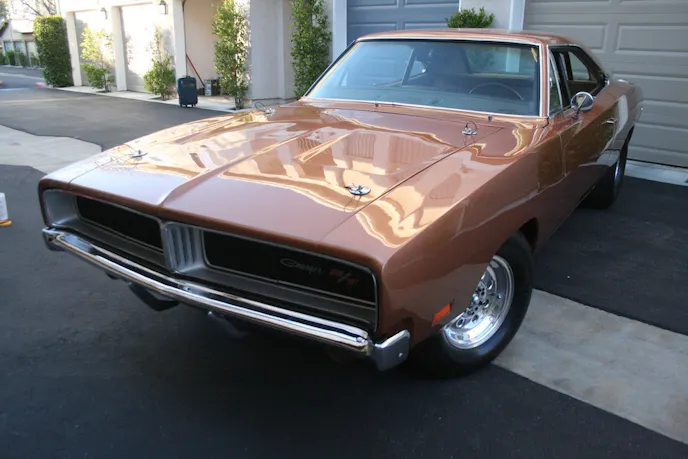
For Killer Kong, our on-going ’69 Dodge Charger R/T clone – “clone” being the key word here – we needed to dance around a couple issues.
Ideally, dashboard restoration should be done outside of the car, having need to remove the windshield and its trim and weatherstripping first, to access the screws holding the dash to the window frame.
By rebuilding the dash out of the car, we would be able to better repaint the frame, install our refurbished components and rewire everything before reinstalling the dashboard back in the car. Yet, we know most of you don’t do this either, so we wanted to “keep it real” so to speak. Also, we really don’t want to reinstall that windshield. It sucked the first time.
Since our Charger came as an A/C-equipped SE, but we’re not running the heavy and cumbersome unit, nor are we going to attempt to weld in patches and smooth them out while still in the car, we’re stuck with the lower openings. C’est la vie. There’s a couple other custom touches that we added that many might despise while others might really enjoy. Such is the spirit of hot rodding.
A Dirty, Dirty Mess
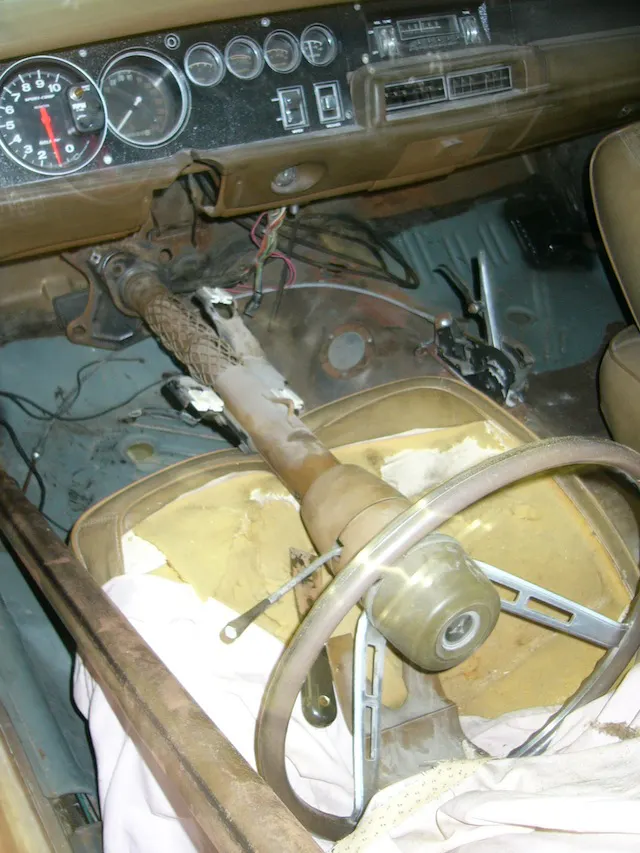
Our original dash was complete, which is a key point of interest when sourcing out a new project car. When a dashboard has been modified with parts store cheap-o gauges or an aftermarket radio, chances are they’ve really tampered with the wiring. And everybody knows that cleaning up other people’s messes is no fun. Replete with its AM radio and in-dash central speaker, our control panel was thankfully virgin.
Removing everything was first; the A/C vents, the upper and lower dash pads, the radio, the nearly-rotted-away cardboard glove box, gauge cluster, radio panel and upper glove box panel.
Gone too were the A/C control panel, ash tray and cigarette lighter, rear speaker control knob and under-dash map light. Each part was assessed, cleaned and separated into piles depending on which would need to be replaced, restored or sold off.
The wireloom was complete but ragged and aged. Blindly wrapping everything with black electrical tape might look aesthetically pleasing but it leaves much to be desired in the way of longevity. The tape’s adhesive had lost its bite and was slowly unraveling, like an old Hollywood monster mummy. Dust and age had coated everything, hampering connections and gumming up switches.
DTM Racing‘s Dan Weishaar instructed, “I use a small bowl filled with warm water and CLR. The stuff is meant for cleaning out corrosion in plumbing pipes, but works great for cleaning terminals and switches. I let [the terminals] soak in the stuff for a few minutes (or longer) until they come out looking brand-new.” Once clean and dried off with a rag, we also wiped down all the lines and surfaces before rewrapping most of the under-dash loom with fresh black electrical tape.
This Ain’t No Restoration
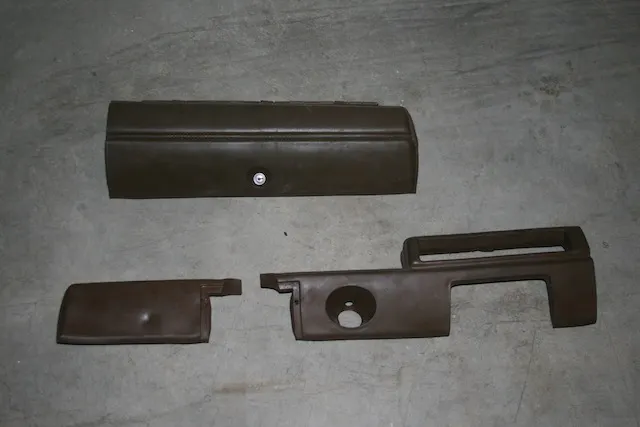
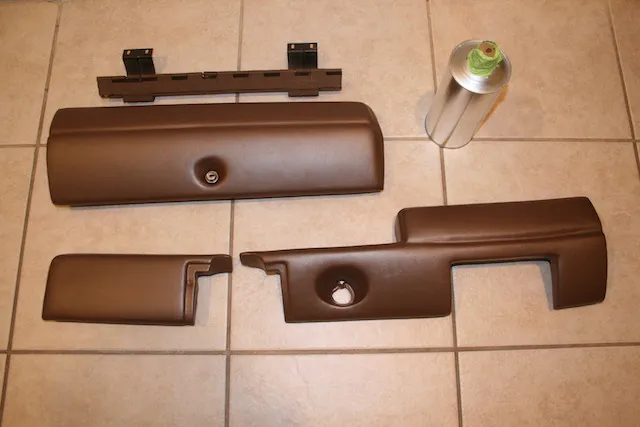
While these “before and after” images might convince you of Just Dashes’ talents at restoring our ages and misshapen lower dash pads, the real talent comes in Just Dashes ability to customize your dash’s look and appeal. Be it custom colors or textures, they can pretty much do it all.
We asked that Just Dashes simply match the color and pattern but to stealthily fill in the large hole for the center A/C vents. When we got our lower pads back, they even provided extra dye for safe keeping.
Our Kind of Padded Room
While we couldn’t patch over the lower A/C vents, we could eliminate the center vents. Amazingly enough, we failed to find any retailers selling replacement lower dash pads. They simply aren’t available just yet. That’s why we reached out to Just Dashes. When we first talked with Just Dashes’ Jason Tessler, we had to tease him that calling the company “Just Dashes” is a big fat lie.
In fact, Just Dashes specializes in restoring door panels, head and arm rests, and dash pads, as well as dashboard frames, gauges clusters, bezels and even speaker grilles, far more than “just dashes.” All parts are restored by trained craftsmen using specially-matched vinyl for the correct grain.
We shipped off our lower dash pads to Just Dashes, where they were examined and color-matched with their records of original factory materials and new, replacement materials. The original vinyl and foam were then stripped from the pad bases where new high-density, closed-cell foam was installed and hand shaped to match the original design.
Next, a coat of adhesive was sprayed over the foam and installed into Just Dashes’ Thermo Vacuum Forming machine. Inside, the parts are heated, making them soft and pliable so the vinyl can be vacuumed formed over the foam. The heated vinyl contours itself to the pad and is immediately cooled with a fine mist of water. Cool enough to work on, the excess vinyl is trimmed and glued down by hand.
It’s only after the vacuum molding process that the pad is hand-dyed in the exact factory color. This was how the original pads were colored too, so don’t panic. And the dye is extremely durable. Once completed, each part is hand examined and checked before being shipped back to us for installation.
Bare Bones And Basic
Besides removing the air conditioning, we also chose to ditch the radio completely. We’re big believers in listening to the music your engine is making, so we opted for a radio delete plate from Classic Industries. Believe it or not, Classic – the veritable “new kid on the block” when it comes to Mopar – was the only one who had one! Since we were replacing the radio plate, we went ahead and opted for their gauge bezel and passenger side plate as well.
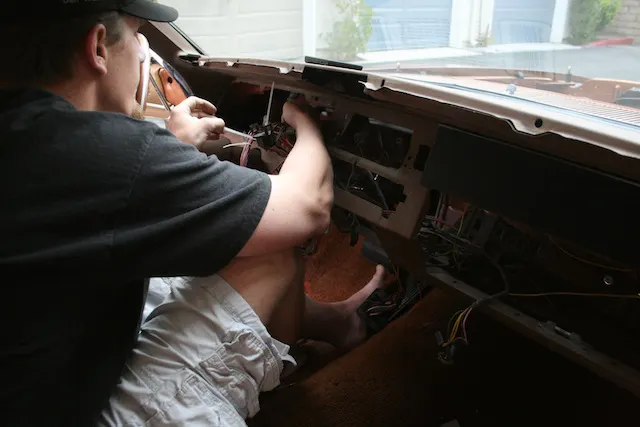
Before reassembling our dash, we needed to get our gauges right. Non-R/T equipped Chargers came with the full array of dials reading the vitals except for a tachometer. Instead, a large 5-inch clock sat in the space next to the speedometer.
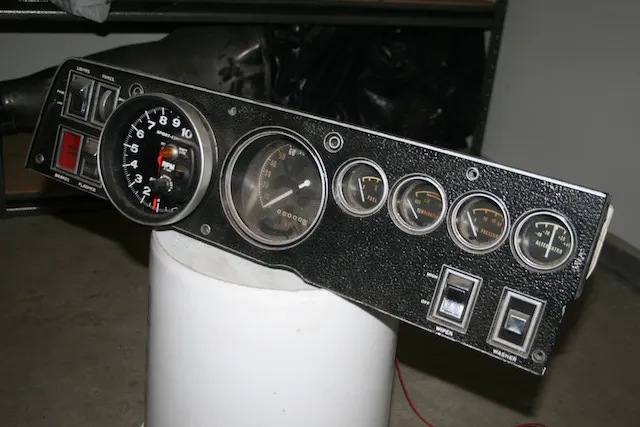
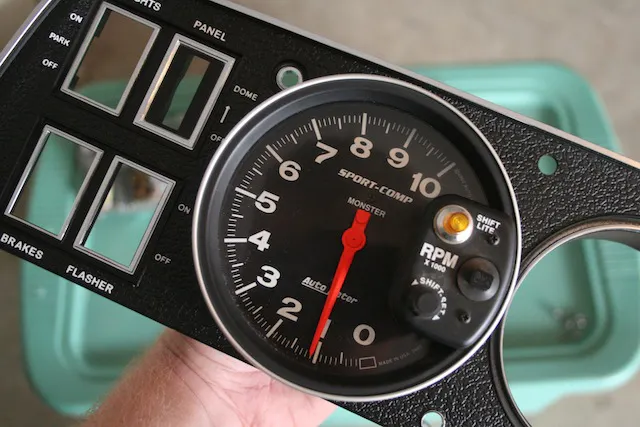
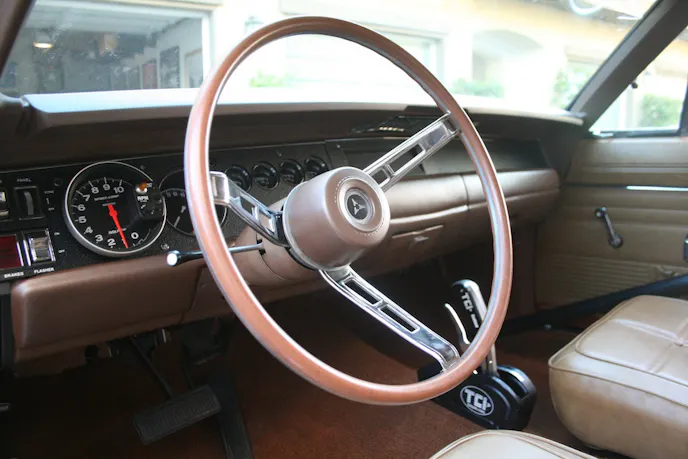
Since we’re drunk with illusions of drag racing this street machine, we opted to run an Auto Meter Sport Comp 5-inch monster tach with the incorporated shift light in lieu of the pricier-although-original Tic-Toc-Tach that R/Ts came with originally.
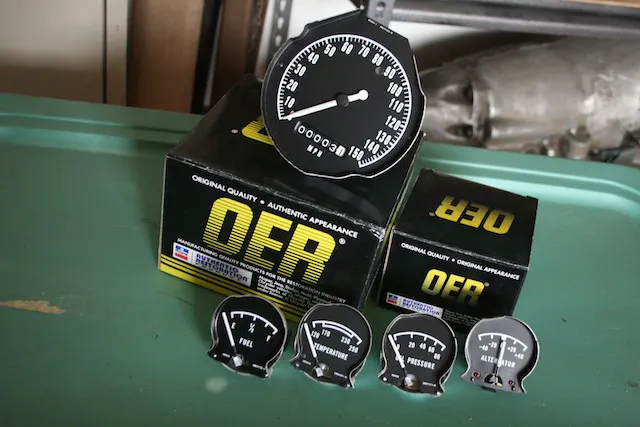
Surprisingly, we found that the Auto Meter tach fit the cluster almost perfectly, and required a bit of finagling to fab up a bracket to hold it to the factory gauge panel frame. We had shortened the original clear plastic gauge lens to accommodate the Auto Meter tach. For the rest of the gauges, including the speedo, water temp, altimeter, oil pressure, and fuel, we turned to Classic Industries for all of our gauge needs.
The original gauges’ faces had faded, and in a couple instances, had actually discolored. While there are plenty of shops providing gauge restoration services, we found it more affordable and timely to go with Classic Industries. Attaching our freshly cleaned and rewrapped loom to our new gauge terminals, our cluster was ready to slide back into place.
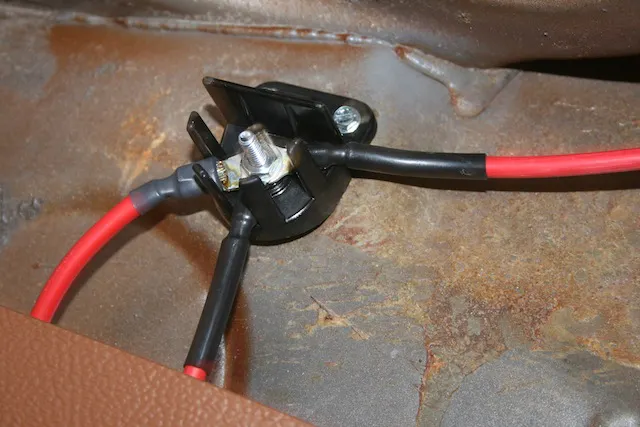
“The main two issues with stock Mopar wiring is that they run all the power through a blade-style bulkhead connector, then the ammeter,” explained Weisharr. “While these are barely adequate for the stock systems requiring 35-50 amps, with today’s modern electrics, we are seeing requirements of around 100 amps.”
Weishaar continued, “Passing such a large amount of voltage through a single blade connector is risky at best. After the bulkhead connector, the wiring goes to the ammeter. This stock gauge was never designed to handle all the current of higher output systems.
“Should this fail, it will begin to overheat under the dash and can lead to distortion, melting or even worse, under dash fire. NAPA still offers high-quality replacement stock-style connectors for the bulkhead, but if you are not to concerned about 100 point restoration, rewiring these cars to bypass these design flaws should be a priority to any Mopar owner.”
The Final Touch
Coming through in the 11th hour was Legendary Auto Interiors (yet again!) with a replacement dashpad. In fact, they rushed out their only existing prototype to help us meet our deadline. The trouble was that it was black.
Mike Saless, Legendary’s Sales Manager, gave us some easy steps to painting it, and since Just Dashes had provided us plenty of extra vinyl paint used for the lowers, we had everything we needed.
After dusting the black pad in several light passes of white, we used a gravity-fed paint gun to shoot the Just Dashes custom-mixed cafe brown vinyl paint in the same fashion.
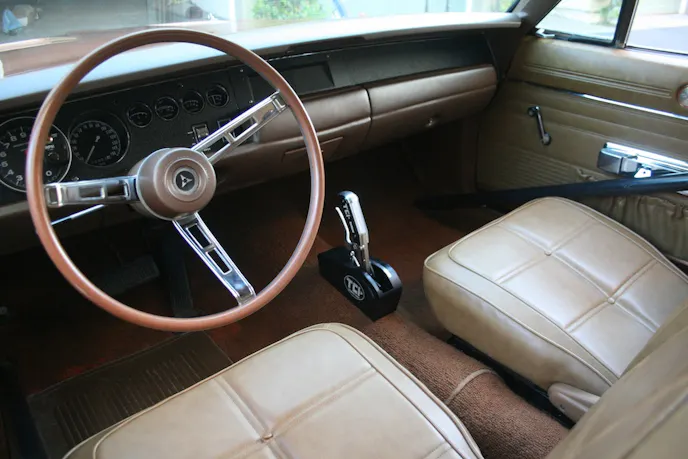
Letting it cure overnight, the new dashpad slid on and when bolted down and fitted to the A-pillar covers, our dashboard was complete!
While our Charger’s cabin looks all but completely buttoned up, we still have some bugs to shake out and some wires to chase before being street worthy, but we can finally close the book on Killer Kong‘s interior.
You might also like
Twin-Turbo 1966 Chevy Chevelle Built For The Road, Not A Trailer
The twin-turbo ’66 Chevelle was resurrected with a Chevrolet Performance LSX376-B8 crate engine upgraded with Texas Speed ported heads.