
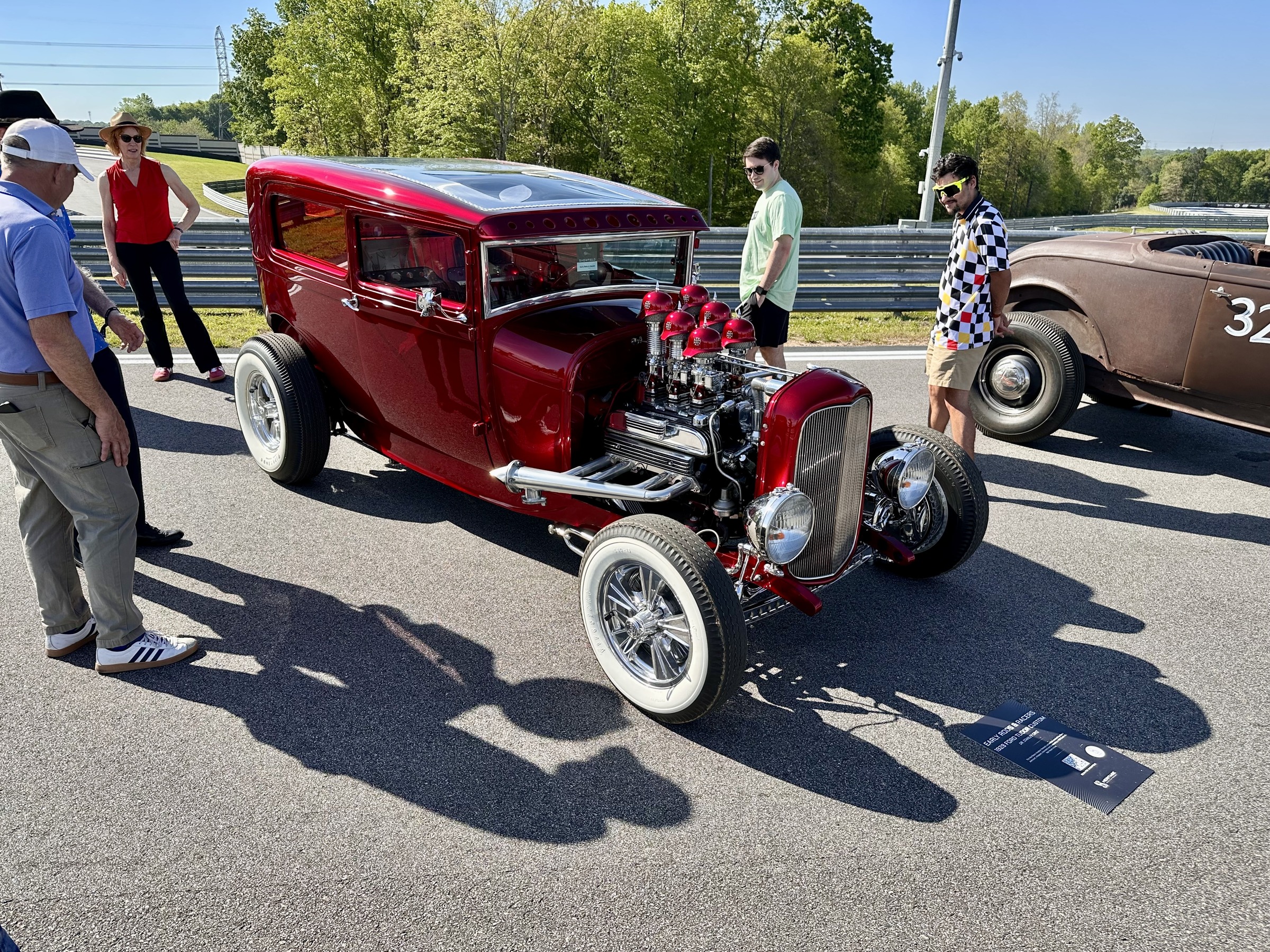
Imagine my delight when I saw a traditional hot rod at the Heritage Invitational Concours at Ten Tenths Motor Club. Don’t get me wrong, I can enjoy the finest vintage motoring events as well as anyone else, but I’ll always be a hot rodder at heart. You know, the kind of guy who shows up to a black tie wedding in jeans and cowboy boots. While I don’t make it to concours events that often, there is no denying the fact that gatherings like the Heritage Invitational, held right here in the Mecca of Motorsports, represent the best of the best. And that’s exactly what this 1928 Ford Tudor truly is.
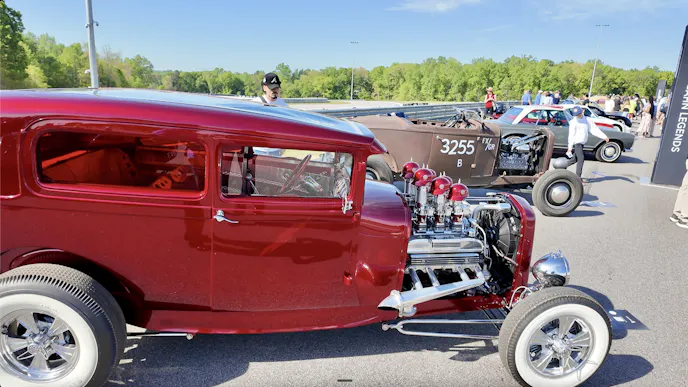
According to classic car collector Stan Cryz, who currently owns this gem, it was built in Saskatoon, Saskatchewan, Canada, by Owen Jeancart. If you don’t know that name, you should, since Jeancart is an accomplished fabricator and hot rod builder. If you couldn’t already tell, this particular Tudor is his tribute to the original Red Baron T-bucket.
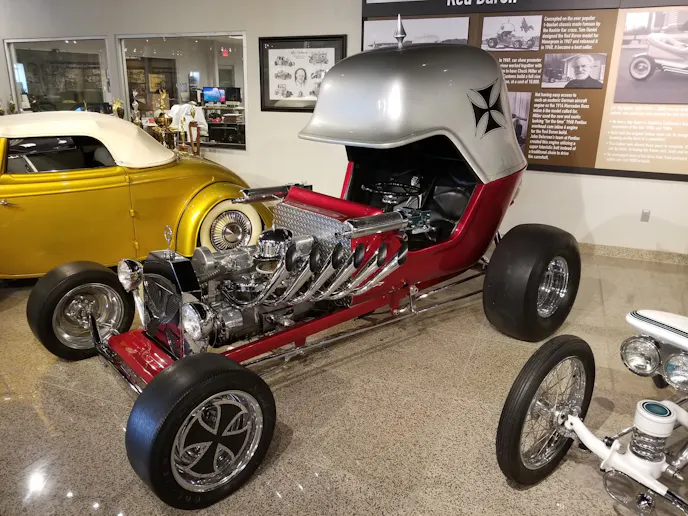
The Original Red Baron
Designed by Tom Daniel and built by Chuck Miller, two more names every hot rodder needs to know, the original Red Baron was one of several outrageous customs that hit the scene in the 1960s. The car’s charmingly sinister theme was inspired by California surfers adopting the practice of wearing German helmets from World War I. Its purpose was to introduce a new kit for the Monogram modeling company. The Red Baron model kit was a raging success, with more than 2 million units sold, and that’s before it hit the Hot Wheels line. Today, the Red Baron is displayed at the Museum of American Speed in Lincoln, Nebraska.
When Better Engines Are Built, Buick Will Build Them
The first thing you probably noticed about this awesome Ford is that it features big Buick power. In traditional hot rod fashion, the car sports 425 cubic inches of glorious Buick Nailhead V8. Hot rodders prize the Nailhead for essentially the same reason muscle car guys prize the 455: lots of torque. Unlike smaller Ford and Chevy blocks of the era, which needed to be revved, the nailhead made usable power from stoplight to stoplight.
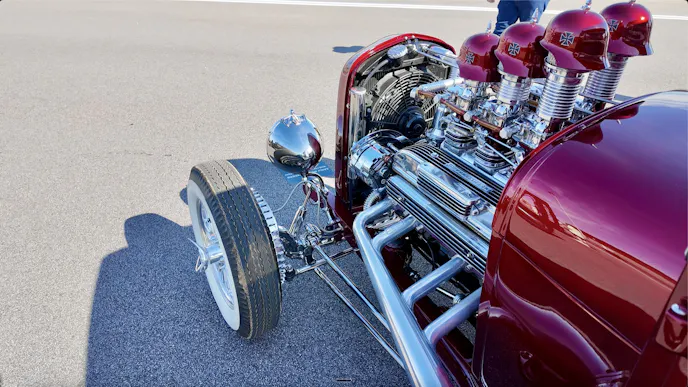
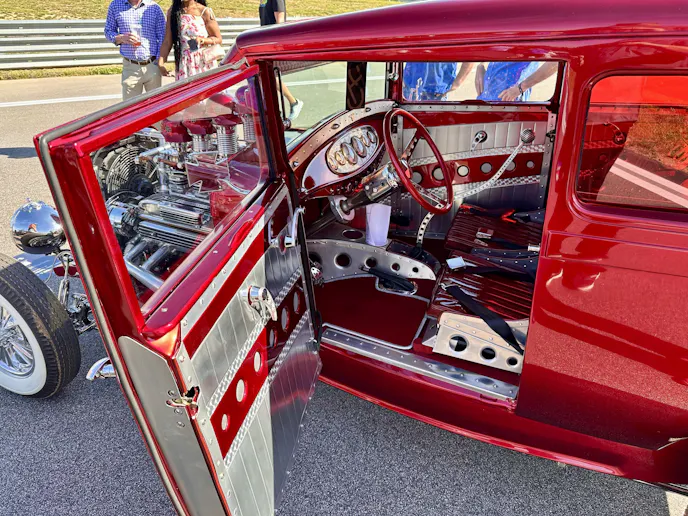
Obviously, this Tudor’s 425 is built a bit nicer than most you’ll see, sporting a roster of polished and painted components that complement a modern distributor, a modern alternator, and a modern electric fan. Lake-style headers are a must for a build like this, to both look the part and sound the part. Helmet-style caps on the car’s six carburetors are an obvious nod to the original Red Baron showcar.
29 Plus 31
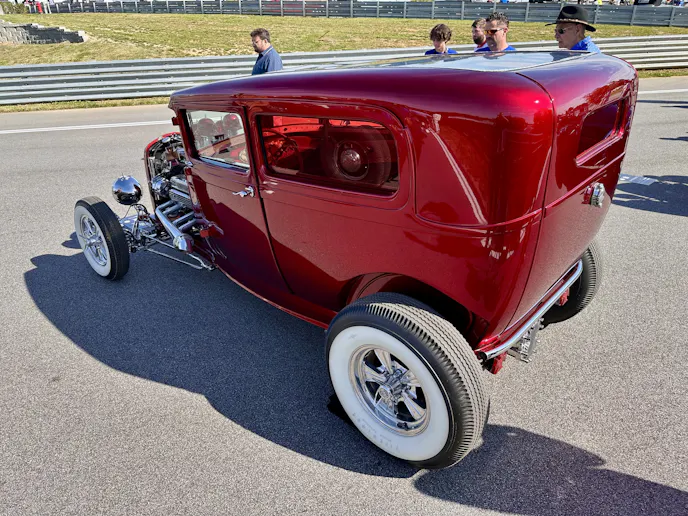
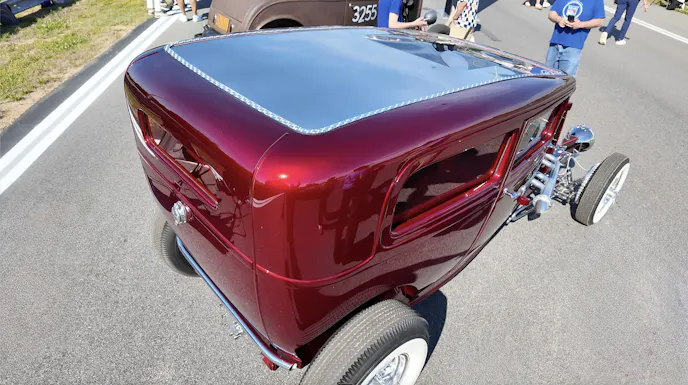
According to Stan, the Ford’s raked look, a nod to both traditional hot rodding and the original Red Baron T-bucket, is achieved through pairing a 1929 Model A chassis with a 1931 Model A body. That’s a somewhat common practice in the world of hot rodding, but it requires planning and skill. Of course, there’s also a lot of suspension trickery that aids the transition, like hairpins, a dropped front axle, adjustable coilovers, and modern shocks. A quick change rearend simplifies cruising while big Buick drums amp up stopping power and keep things looking traditional. The car is really an exercise in details that, as Stan reminds us, was accumulated over many years of the builder gathering and collecting parts.
Speaking Of Details
A fitting tribute to the Red Baron, this classic is intricately stylish. There’s a sweet combination of silver and Candy Apple Red paint that’s highlighted by silver leafing. The glass reflects retro vibes through red, mirrored tint that would look right at home on something as outrageous as a gasser. Cool touches abound, like Radir Tri-Ribb wheels, an “Old Skool” tag topper, and small skeletons hanging onto polished headlights for dear life. 48 iron crosses are present throughout the build, from frame to taillights, with some of the most prominent being the car’s mirrors. The iron cross, of course, being the symbol emblazoned on the scarlet plane of ace fighter pilot Manfred Richthofen–the original Red Baron.
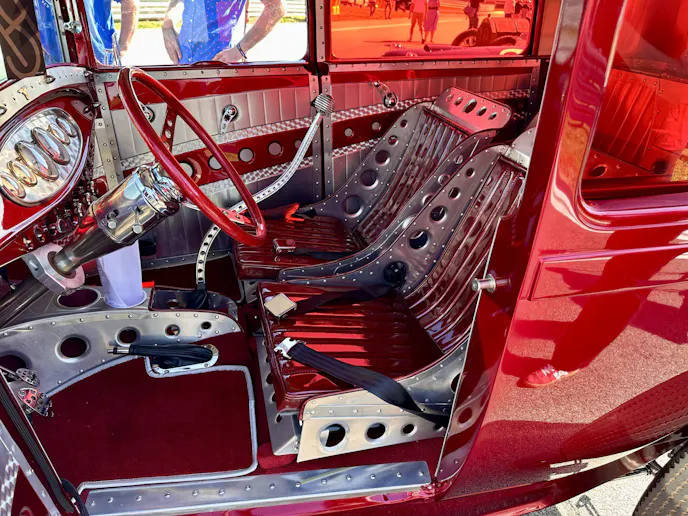
The inside of this Ford is, in this author’s opinion, one of the most beautiful collections of painted, turned, and embossed metal ever created. Intricate bomber seats wear the kind of upholstery you might find in a cool, 1950s diner. The only real premium aspect of the cockpit is plush carpet, which guides silver piping around spoon-style pedals and a custom console that’s topped by a Lowbrow shifter. The driver spins a simple hot rod steering wheel around a modern, tilting column, and there are even iron crosses artfully integrated into the car’s door and window handles.
The Drive To Appeal
Cryz says the car is loud, thirsty, and challenging to drive, but totally worth the time and effort. He says that, while it takes time to adjust to the car’s cramped pedal box and long shifter, it’s a guaranteed way to get big attention. That attention seems to run the gamut from people excitedly crowding around the car to admire it to people casually turning their heads and giving a thumbs up as it thunders by. That sort of attention and reaction is exactly why hot rodding continues to endure generation after generation.
The biggest problem is that I live in a town with like 400 people, and I went to the post office one afternoon. When I came back, I couldn’t see the car. There were so many people standing around.” — Stan Cryz
Handcrafted with precision and passion, this Tudor is a rolling testament to old-school engineering and the creativity of its builder. Every iron cross, every piece of hand-fabricated metal, every carefully selected component contributes to a classic that feels more like rolling artwork than transportation. The car is loud, thirsty, a little unruly, and impossible to ignore–exactly the kind of energy every concours event needs.
You might also like
Grabber Orange Boss 429 Mustang To Sell This Weekend In Vegas
The exterior is finished in Grabber Orange, one of 68 so finished, but it is one of only seven in this hue with a white interior.