
Remember the first time you laid eyes on a red hot, first-gen Chevy Camaro? Maybe you saw it sitting in your neighbor’s driveway. Maybe you heard it rumbling through the high school parking lot. Or maybe you drooled over it on the cover of an old issue of Super Chevy.
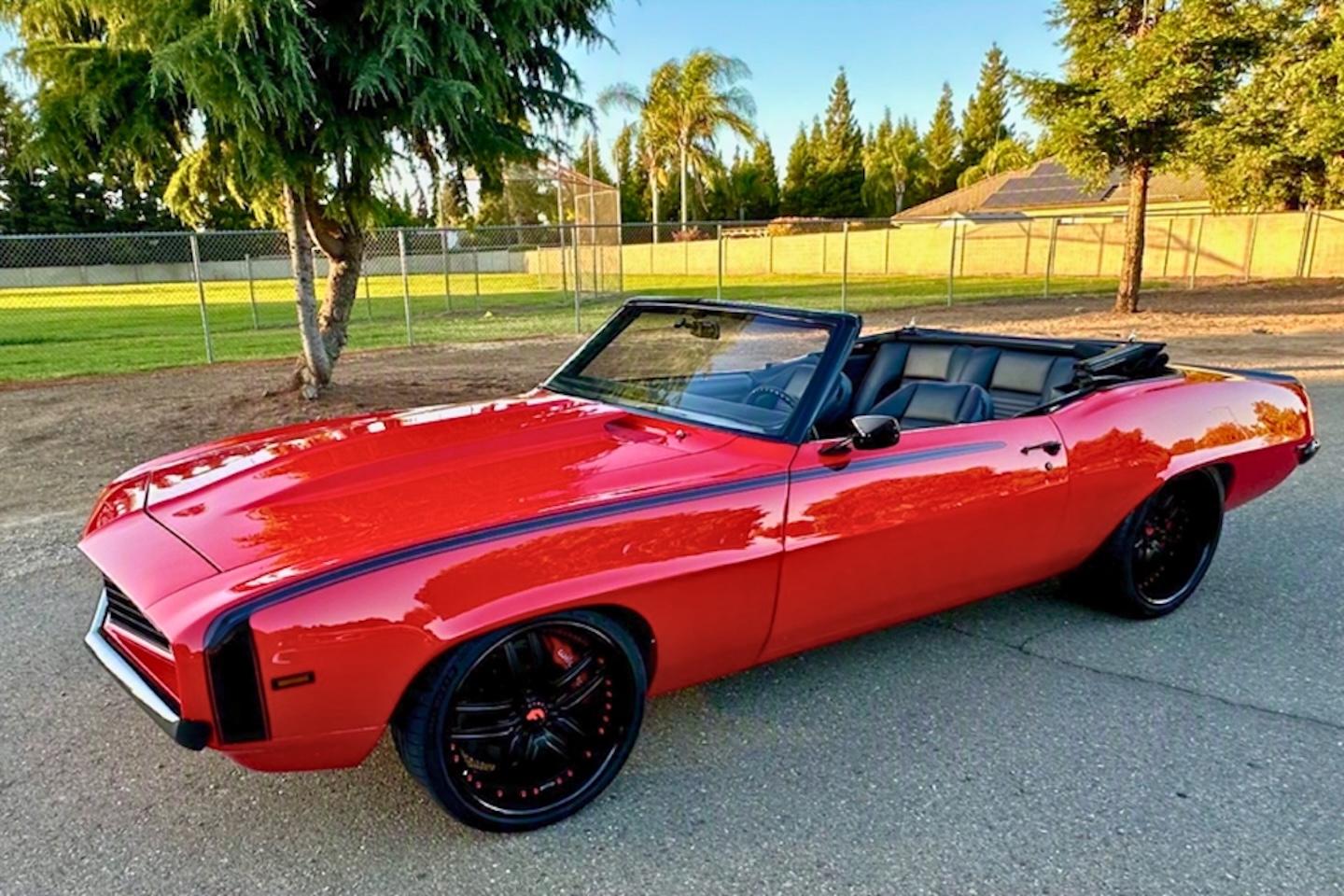
For Todd M., that unforgettable first-gen Camaro belonged to his brother-in-law. Riding shotgun in that iconic pony car didn’t just create memories for Todd, it planted a seed that never stopped growing. Decades later, he’s behind the wheel of his own, but this 1969 Chevy Camaro is something entirely different.
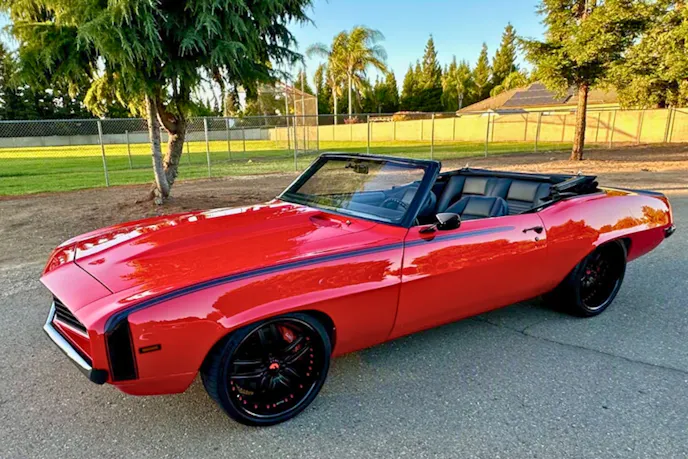
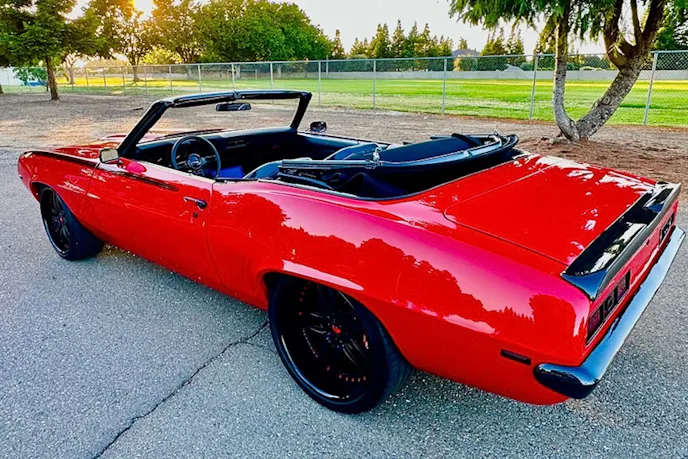
As a teenager, Todd worked in a body shop where Camaros were common. Working around Camaros only deepened his appreciation for the nameplate. His working experience also gave him regular exposure to Ferraris and Porsches, which broadened his idea of what a performance car could be. Ultimately those Euro imports shaped his vision when it came to building his own version of a dream Camaro.
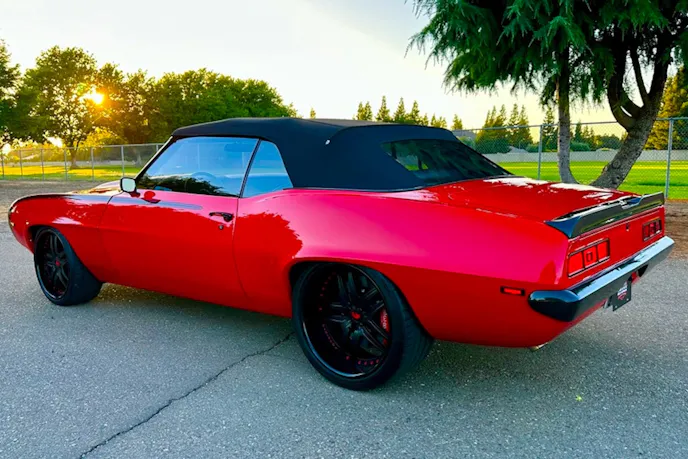
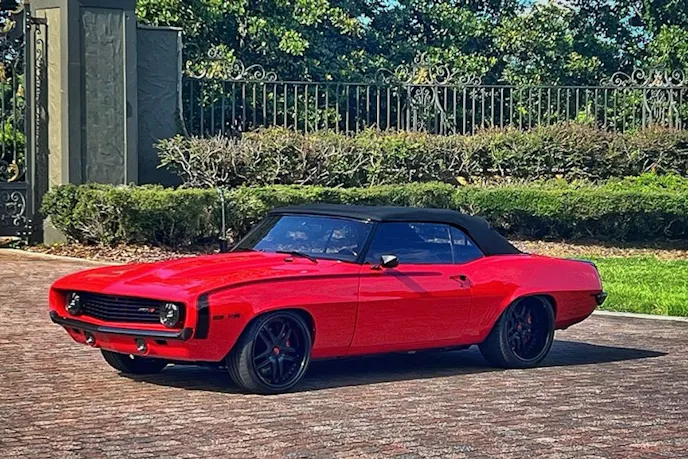
In 2020, Todd learned of a 1969 Camaro convertible that someone had begun restoring but was forced to sell before the project progressed very far.
“There had been some initial work on it, but not much,” Todd recalled. “It was a pretty good opportunity, so I ended up buying it. It was really just a shell. It had no motor, no dash, and no interior. It was just metal and a VIN number. We took it from there, ripped it apart and started fresh.”
The completed driveline uses a shortened Quick Performance nine-inch rearend with a 3.50:1 gears. An equally capable fuel system consisting of a Rick’s Stainless tank, dual Aeromotive 340 pumps and a VaporWorx dual-controller was included.
Roadblocks Ahead
After stripping the Camaro, Todd and his friend Ceaser mapped out the build, but COVID had changed things. Parts became difficult to source, and the project slowed to a crawl.
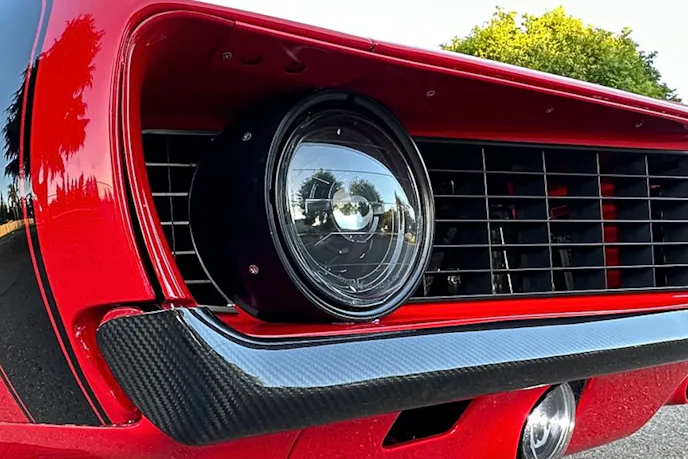
“Really for the first couple of years, we didn’t get a whole lot done unless it was stuff that Ceaser already had,” Todd said. “Ceaser was the one that had found the Camaro. He was building it for me, and he owned the motor that is in it now.”
The engine Ceaser had was an LS3 crate with no miles. He had originally gotten it for his own project. He offered it to Todd.
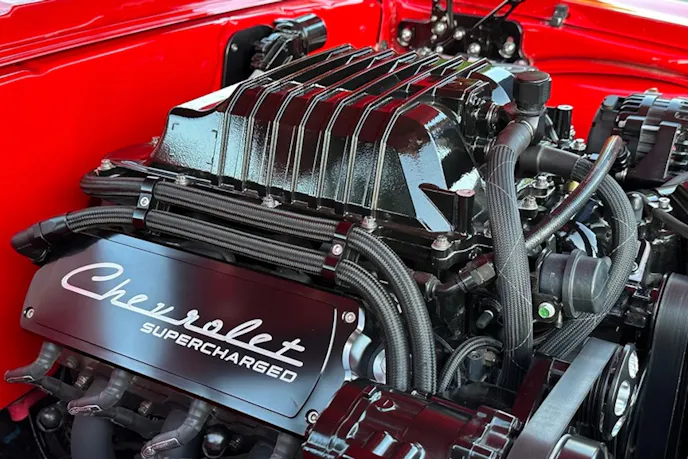
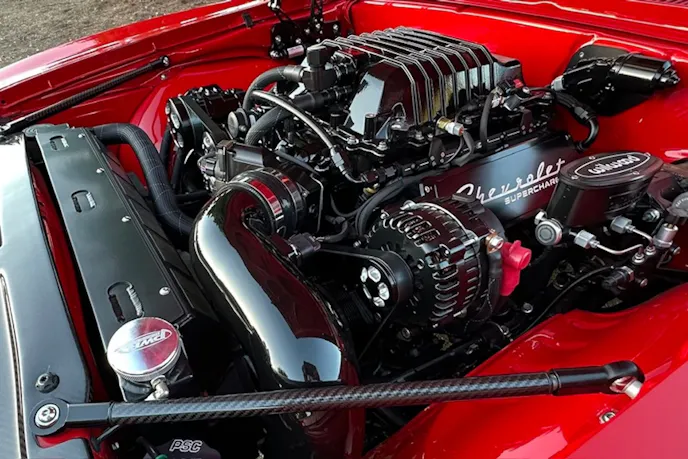
“He had already put a cam in it and done a lot of mods to it and that was exactly what I wanted — to use that LS3 and put an LSA supercharger on it,” said Todd. “It is essentially like a newer model ZL1 — it is the ZL1 on steroids.”
The blower was ported by Kong Performance, while the engine received a BTR Stage 2 PDS camshaft, Nick Williams 103mm throttle body, ARP hardware throughout, and numerous supporting modifications. The goal wasn’t simply more horsepower. Todd wanted modern high-performance wrapped in first-generation Camaro sheetmetal.
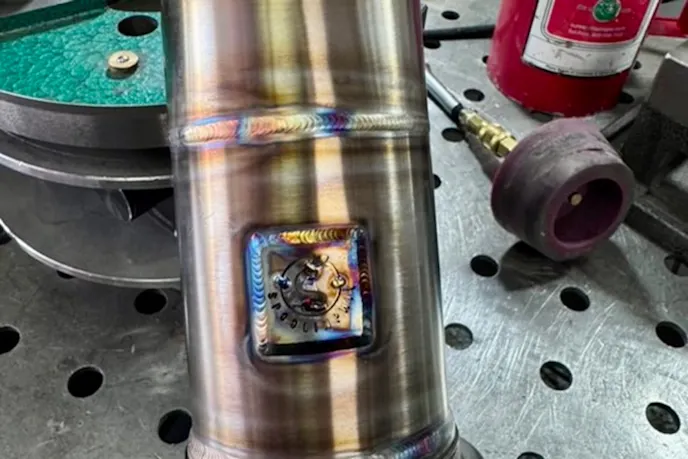
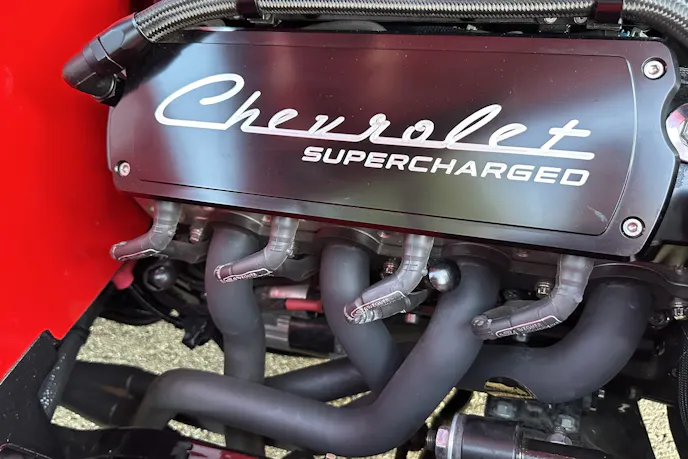
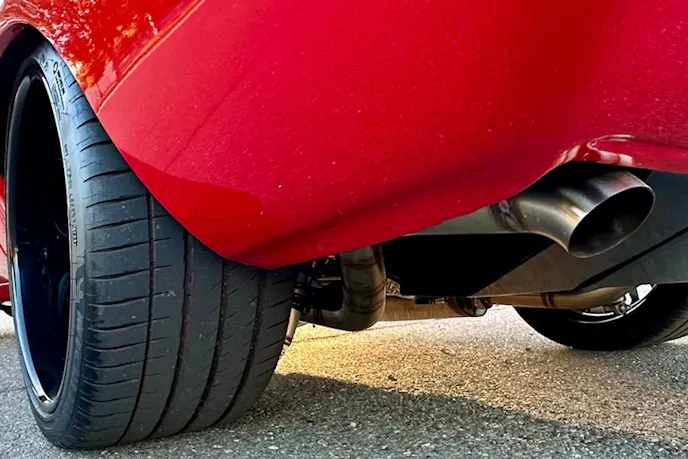
Spoolin Phil Performance fabricated a hand-cut, hand-welded three-inch stainless exhaust system with an X-pipe and MagnaFlow muffs. Todd described the exhaust craftsmanship as artwork, noting that the system incorporated the builder’s signature welded into the finished exhaust.
“It’s just the way that I wanted it. When the car is running, it is super deep and mellow, but it definitely has a lope to it,” Todd explained. “It sounds mild and subdued at idle, but when you really mash on the pedal, it becomes violent.”
Strength Behind the Camaro’s Power
Making big horsepower is one thing. Building a driveline capable of surviving it is another. Todd wanted a combo where nothing behind the engine could become the weak link. A new 4L80E automatic transmission was sourced from FH Dailey Chevrolet. Chosen for its proven durability, the heavy-duty transmission came paired with a matching torque converter and was built to handle everything Todd planned to throw at it.
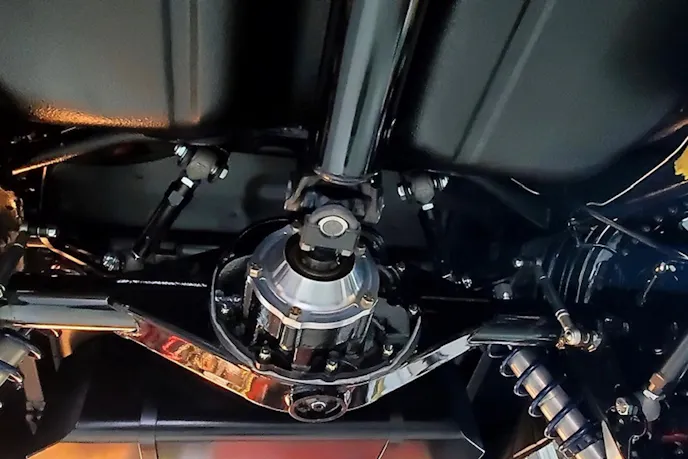
“It was the one they were producing for the Corvettes and Camaros for excessive horsepower,” Todd said. “We just had to get everything measured and get the right driveshaft for it.”
The completed driveline uses a shortened Quick Performance nine-inch rear with a 3.50:1 gears. An equally capable fuel system consisting of a Rick’s Stainless tank, dual Aeromotive 340 pumps and a VaporWorx dual-controller was included.
“Everything else we did just followed that high-performance model,” added Todd.
Performance Under Power
The goal wasn’t simply to build a Camaro that accelerated hard — it was to make sure it cornered, stopped and drove like a modern performance car. So, the Camaro was reworked from the frame up. Being a droptop version of the Chevy’s iconic muscle car built on the F-body added some extra obstacles.
”A lot of people mini-tubbed the gen-one Camaros to put larger wheels and tires under ‘em for higher traction, and that is what I wanted,” said Todd. “But it is very difficult to do on a convertible so that took a lot of fabrication.”
The Camaro’s chassis features RideTech suspension throughout with coilovers, adjustable control arms, and subframe connectors.
“It has four-link RideTech suspension all the way around and a Borgeson steering box with ProForged steering components,” added Todd.
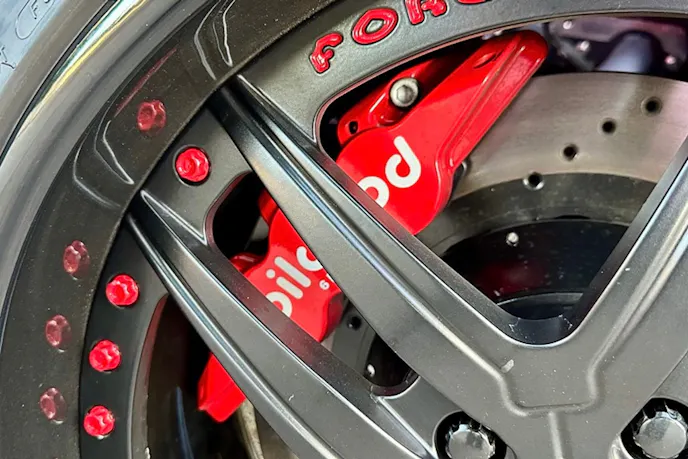
The OG Chevy now wears Michelin Pilot Sports that wrap around hand-forged two-piece wheels from Forgiato – 20×11 rears and 19×8.5 fronts. Wider wells for more rubber under the car gave the blown Camaro the grip needed to put its power down from a dig or a rolling start.
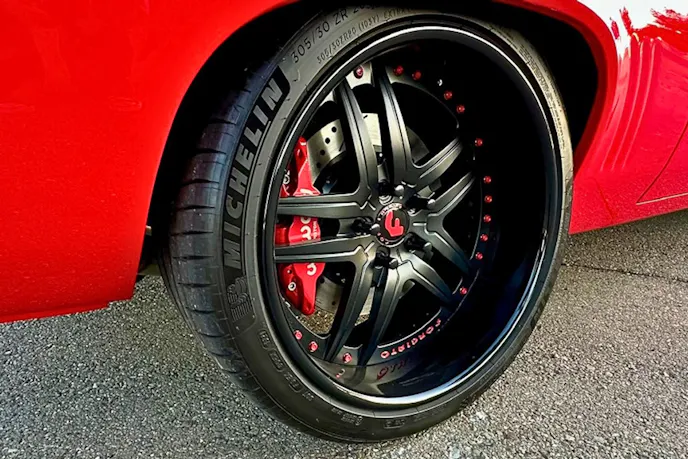
“I picked the wheel design, and then Forgiato married the specs with how much room there was around the brakes and how much room around the wheel well and what size tires we had wanted to ride,” Todd explained. “The tires are a really a soft rubber, high-end summer tires, so they’re super wide and sticky. They grab good.”
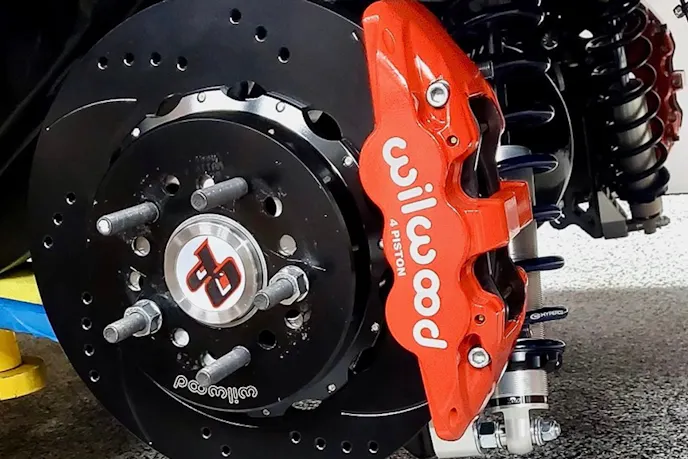
Massive Wilwood Aero Series brakes with 15-inch six-piston fronts and 14-inch four-piston rears are plumbed with hand-built stainless brake lines to provide stopping power.
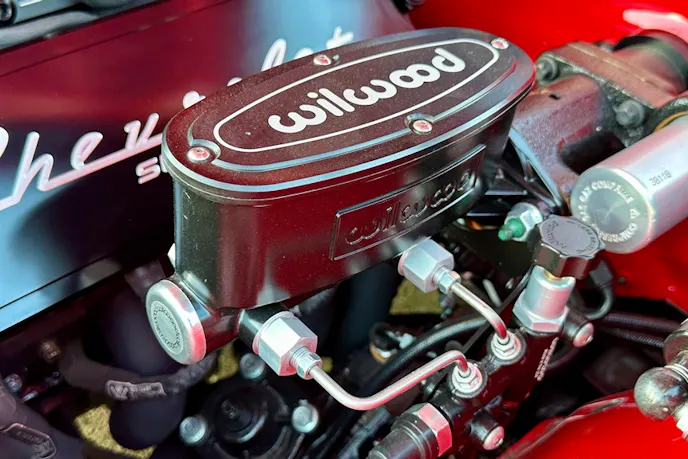
“Really it is the strongest brakes you can put under that and still get the wheels around it,” Todd said.
Import Inspo For The Camaro
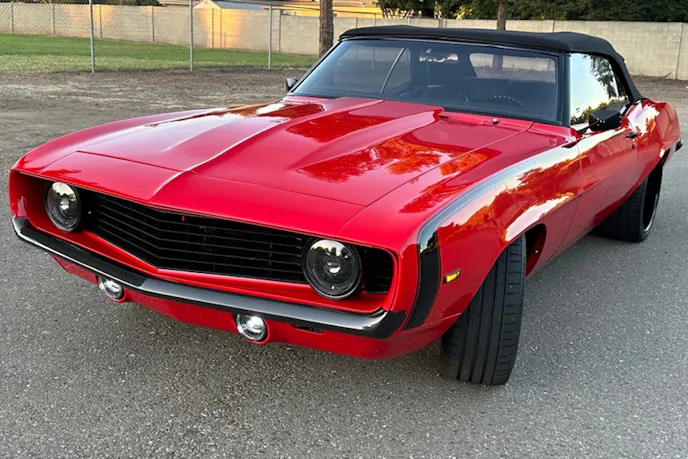
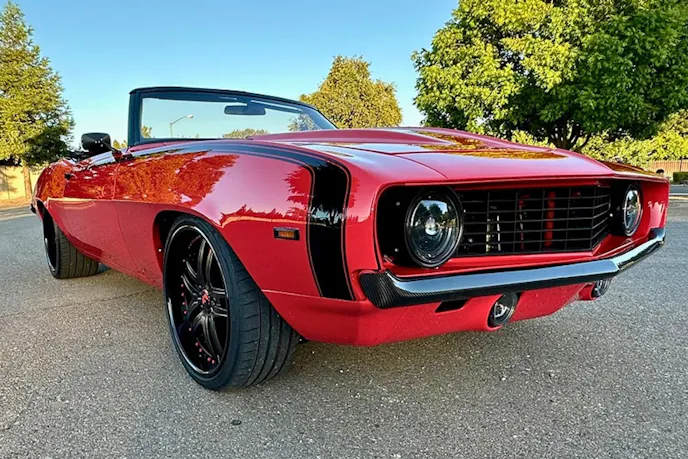
Rather than restoring the ’69 Chevy to factory spec, Todd’s dream Camaro was a modern interpretation that was rooted in the Rosso Corsa Ferraris he admired while working in the body shop. He chose a rich Ferrari red to match its look. The bodywork, metal fab and paint were completed by TM Classic Restoration.
“The red was purely my taste; I love red cars,” he shared. “It was coated with a wrap — PPF on the bottom. It’s totally invisible and you cannot tell where the break is.”
Todd believes the murdered-out look isn’t just for moderns. He eliminated virtually every piece of chrome.
“I am one of those people who is pretty adverse to chrome,” he stated. “It seems kind of rare to see an older car done that way, especially when people get caught up in keeping everything original.”
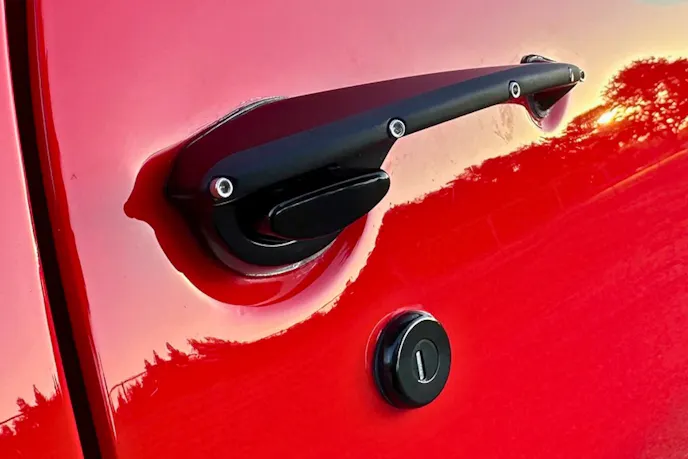
Carbon fiber was used extensively throughout the exterior, including the front and rear bumpers, front splitter, and rear spoiler. Ringbrothers billet door handles and mirrors were finished in anodized black to reinforce the stealth-inspired theme.
“I like the look of exposed carbon fiber, so it’s not painted,” Todd said. “The parts are just raw carbon fiber, so you can see the fibers through the piece.”
The core support and front inner fender structures are also finished in exposed carbon fiber, tying the engine compartment into the rest of the car’s design.
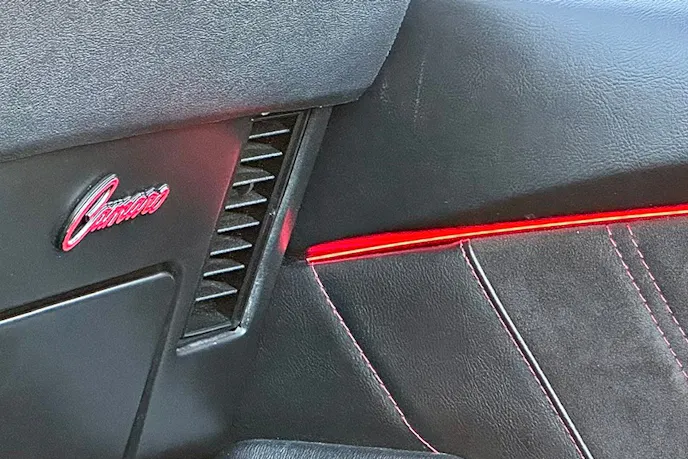
The interior follows the same philosophy as the exterior – classic gen-one Camaro styling blended with modern technology that doesn’t feel out of place.
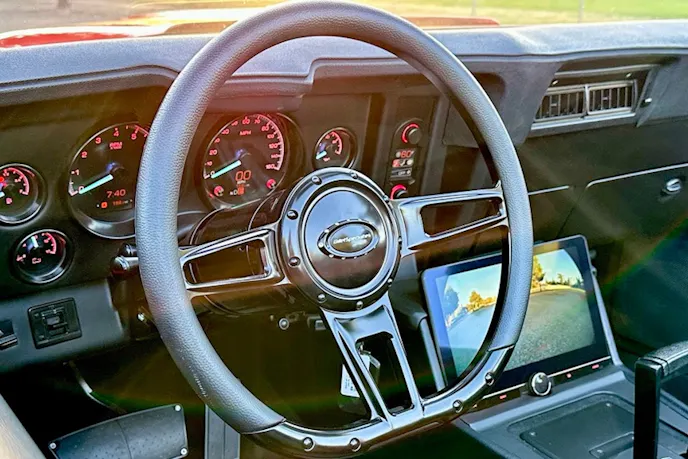
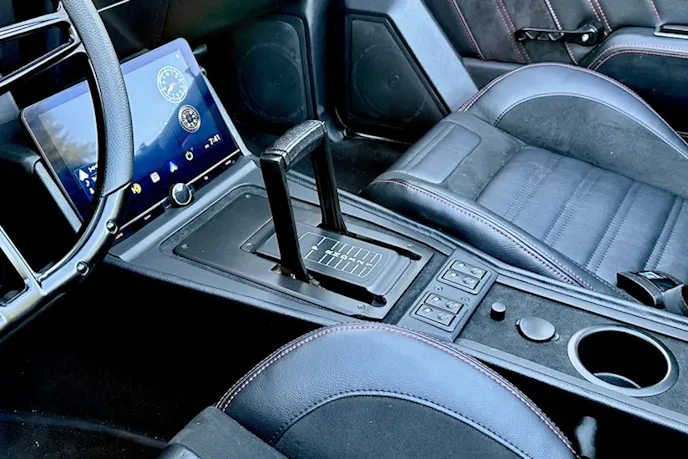
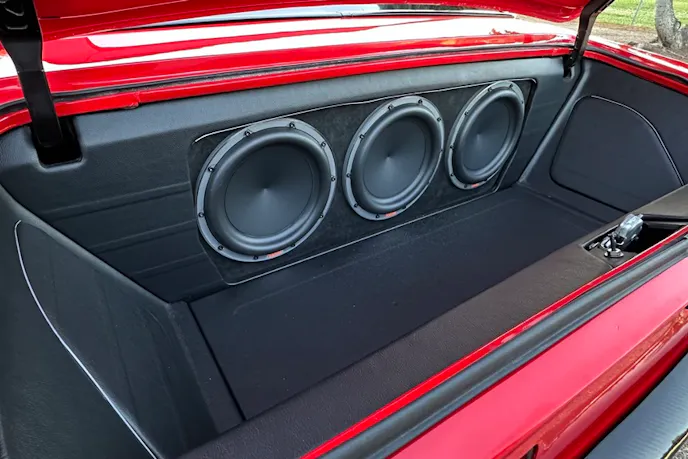
Junior’s Car Stereo fabricated a custom center console around an integrated 14-inch display with wireless Apple CarPlay and custom speaker enclosures.
“For the console, they 3D printed a see-through plate that has the gear selectors in it, so you can see the light that shoots up through it,” Todd said. “It is black Alcantara in between pieces of aluminum and leather. There is nothing out there like it.
“The screen looks like it was made to be that way instead of the 8-track/radio that was stuffed in the dash. It was just a ton of painstaking work to keep it all blacked out with ultra-modern touches that can still look classic.”
That same attention to detail extends throughout the cabin. TMI seating, Dakota Digital HDX gauges, Vintage Air climate control and hand-formed Porsche carpeting by Broadway Restoration modernize the interior without sacrificing its distinctive Camaro identity.
The Camaro cabin also features a Compustar Pro T13 remote start system with power locks and DroneMobile GPS capability installed by Woody’s Audio & Tint. Extensive hand-crafted blackout detailing by Gabe at Creative RestoMods completed the cockpit. Even the factory shifter received blackout treatment.
“I always loved the factory staple shifters because they are just part of the DNA of the car, but I can’t stand the chrome,” Todd said. “I had never seen one that was black though. Gabe took it apart and started from scratch – powder-coating every piece of it black, so it looks like it came from the factory that way – but it didn’t.”
Todd took delivery of his Camaro less than four weeks ago. Most of the time he has spent in it has been in break-in miles, but he has had the chance to open it up a little.
“It has such an enormous amount of power, especially for being that light of a car as a convertible,” he said. “I have driven a lot of fast cars in my life, and it is just something different as a throwback to an old car with a mix of modern power. It is confined but it becomes very aggressive when you want it to be.”
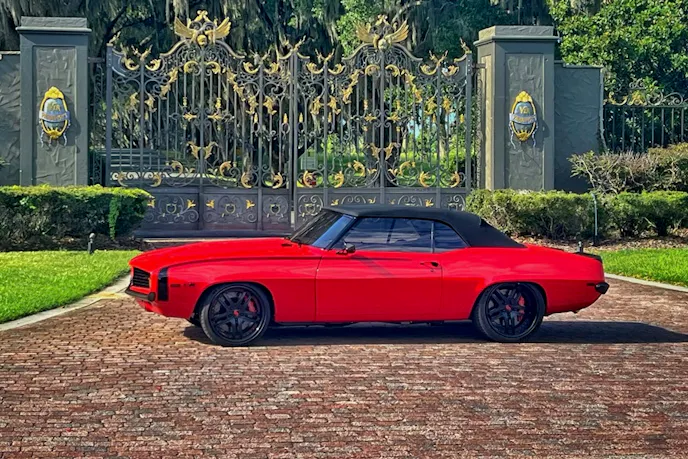
For Todd, his brother-in-law’s Camaro was everything a late-’60s muscle car should be. Back in high school, Todd dreamed of owning the red-hot first-generation Camaro he admired from the passenger seat. Decades later, he didn’t build the car his teenage-self wanted. He built the one his adult-self envisioned. Sometimes dreams take longer than expected and sometimes they turn out even better than planned.
You might also like
Project F-Zilla Cab Prep: Heat And Sound With Help From DEI
.. we left the most of the cab in its factory green paint. The rest will be covered by DEI products, including ATAC primer and sealer.