The Charger has been around for 60 years, and during its time, this nameplate has been at the center of the Dodge brand — and controversy. Enter the 2026 Charger Scat Pack Plus, perhaps the most controversial Charger of them all.
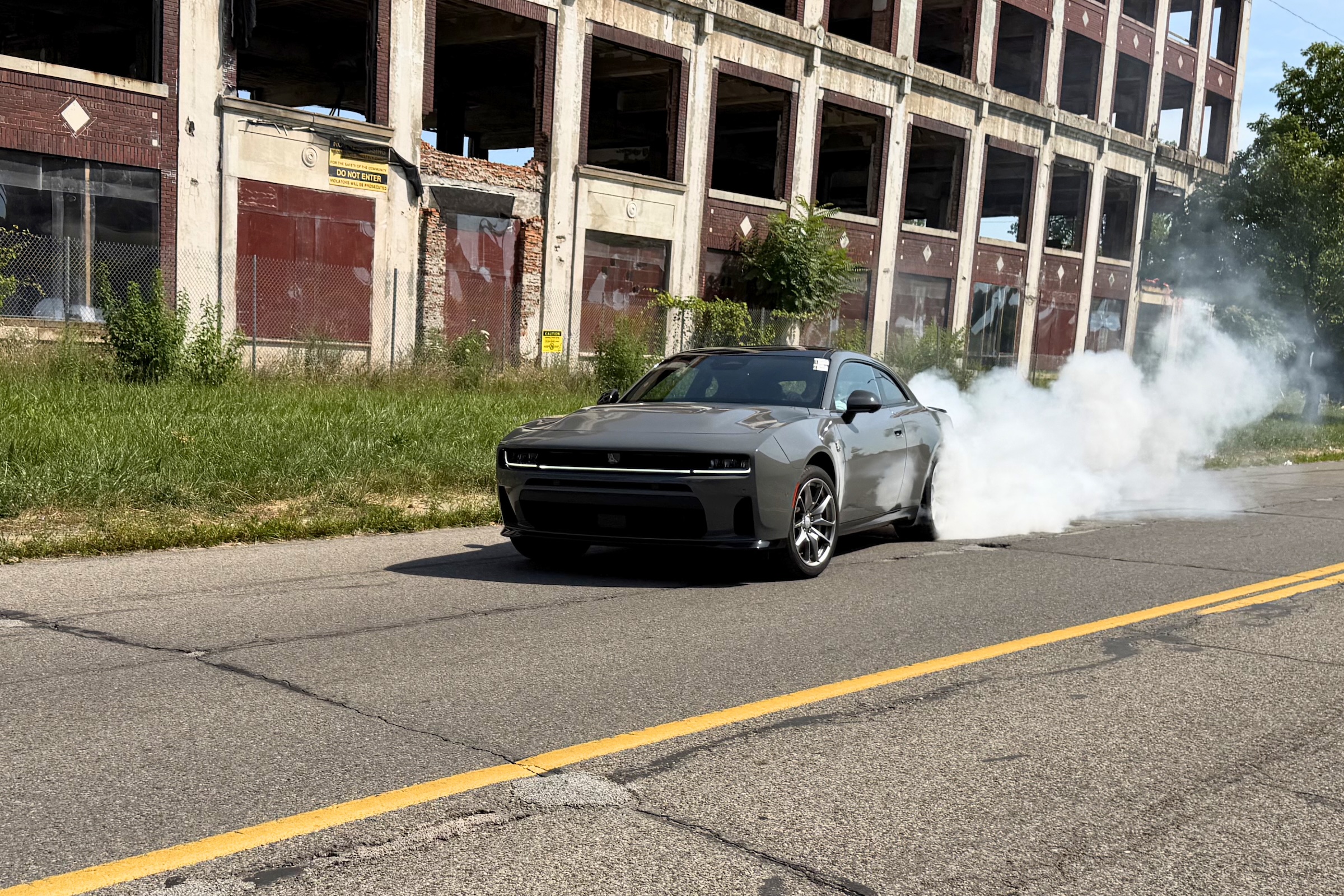
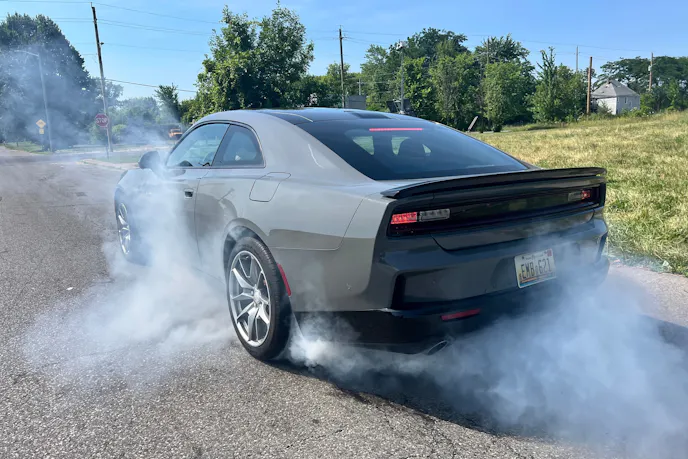
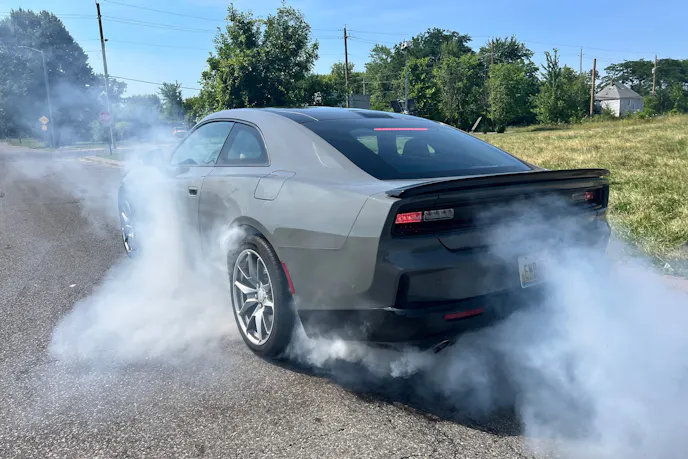
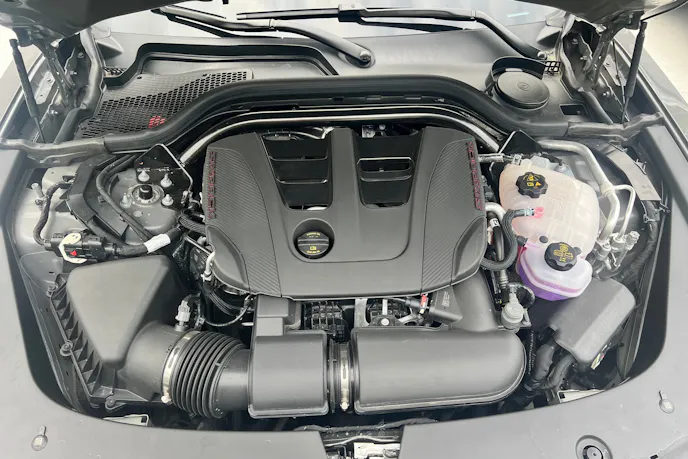
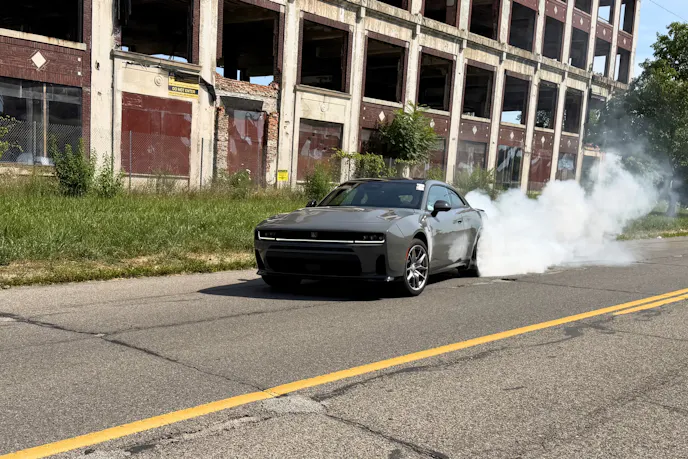
Twin-turbo inline six makes 30 psi of boost and it is hard on tires. (Photo by David Hakim)
The Gen-I model had great styling features, but also wore a controversial fastback roofline that made it a love-it-or-hate-it proposition. The Gen-II (1968-’70) has been a part of American pop culture on the big and small screens: Bullitt, Dirty Mary Crazy Larry, The Dukes of Hazzard, and Fast ‘N Furious. The Charger has been recklessly flung around NASCAR super speedways, back country roads, and the mean streets of major cities. And it has been the Charger nameplate that has created most of the uproar in the Mopar community if the design and engine options are not to the liking of rabid Mopar enthusiasts.
Controversial since Day One, the Charger has inspired opinions and strong feelings. This ’66-67 popped up in our test car’s passenger-side mirror. (Photos by David Hakim)
Back In Time
To add context, we need to go back to 1975 when the Charger became a personal luxury boat to compete with the Chevy Monte Carlo, Ford Thunderbird, and Pontiac Grand Prix. When the early ’80s rolled around during Chrysler’s post-bankruptcy era, the Charger was a front-wheel-drive, four-cylinder, three-door hatchback econobox. Again, there was revolt, and many Dodge diehards went out and bought new 5.0 Mustangs, IROC Camaros, and Buick Grand Nationals. They felt that unless it turned the rear wheels, it was not a muscle car — even if they were Shelby models.
It would take the so-called “merger of equals” during the Daimler Chrysler era to have the Charger name reappear in 2006 as a V8-powered machine on a RWD platform. As the Charger evolved, and horsepower numbers got close to 800 from the available 6.2L Hellcat Redeye HEMI, there was still pushback and even resentment from the Mopar faithful as the Charger had four doors and apparently that’s sacrilegious to these fans.
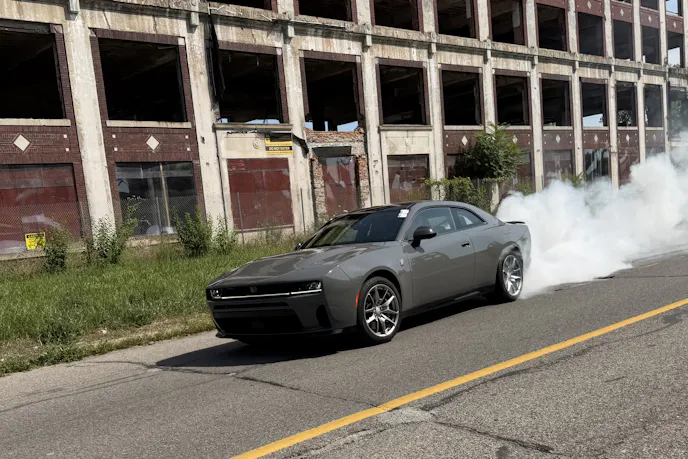
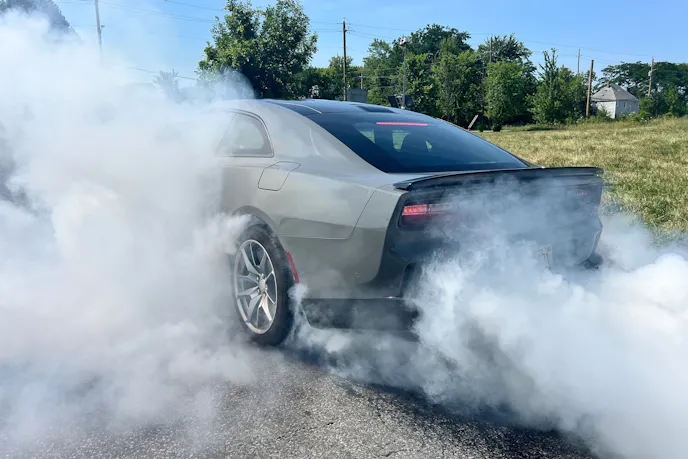
Rear-drive burnouts still make us feel good. (Photos by David Hakim)
Now the Charger is back, again. The 2026 model is available in both two- and four-door versions and is wrapped in sexy, curvy sheetmetal with styling inspired by the 1968 model. But once again, the community is not happy.
Where’s My HEMI?
Why, you ask?
The 2026 Charger R/T and Scat Pack models are devoid of any V8 option (HEMI or otherwise) but use a 3.0L High-Output inline six-cylinder for power. It makes an impressive 550 horsepower. Dubbed the ”SIX PACK,” Dodge has brought back the SIXPACK name that was first introduced in the 1969.5 Super Bee. After the failed launch and the 2025 Charger Daytona EV that got no traction from the public or dealers, Dodge quickly regrouped and took the Hurricane that was powering Ram pickups and adopted it for use in the Charger.
It was apparent early that hardcore Mopar fans wanted an internal combustion engine that drank gas and made intoxicating exhaust noises.
It was apparent early that hardcore Mopar fans wanted an internal combustion engine that drank gas and made intoxicating exhaust noises. While both the power number and times were impressive on the Charger Daytona EV, the Dodge customer is very unlike a Tesla Plaid buyer. It also didn’t help that the Charger Daytona EV emitted fake, synthesized exhaust tones from speakers that sounding like cats fighting in an alley.
Dodge’s “Brotherhood of Muscle” wants it to be authentic and real; the EV Charger just never resonated with this bunch who have been fed Hellcats and Demons for almost a decade. And while the 2026 Charger is very modern, Dodge still draws on its illustrious muscle car past with names like SCAT PACK, SIX PACK, and R/T, and they can be seen on the front fenders and hood.
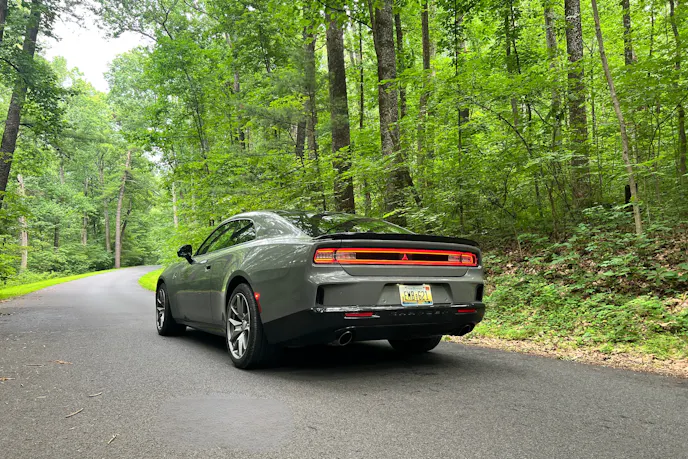
Lots of companies are successful with twin-turbo inline sixes, but will a group raised on V8s accept the change? (Photo by David Hakim)
So here are some numbers on the new (H.O) Turbo High Output 3.0L Inline Six Cylinder. It makes 550 horsepower and 531 lb.-ft. of torque. The power comes from Twin Garrett GT2054 turbochargers sized at 54mm. These puppies spin up fast to like 185,000 rpm with virtually no lag due to the low inertia and 30 psi. Counter-rotating turbos that balance airflow dynamics and improve engine efficiency, airflow dynamics, improving throttle response and increasing overall engine efficiency. The SIXPACK H.O., which pushes more air into the combustion chamber, delivers more horsepower and torque. The 3.0L H.O. inline six has 9.5:1 compression and requires at least 91 octane to reach that magic 550 horsepower mark.
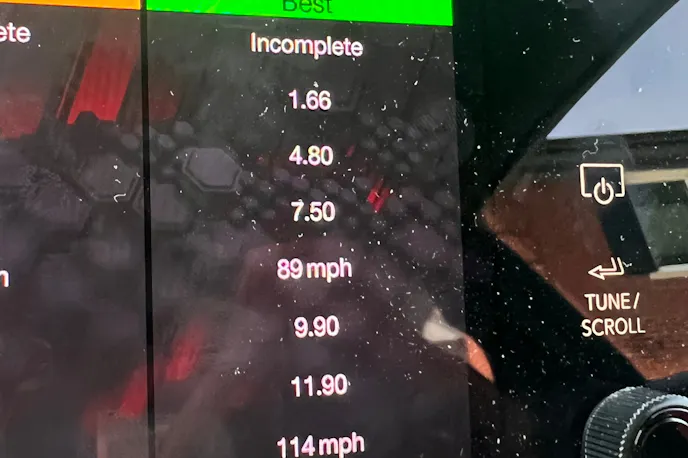
With numbers like that, it can propel the Charger Scat Pack Plus down the quarter mile in low 12s and even high 11s despite its near 5000-pound weight. We did our unofficial drag test in 11.90 seconds at 114 mph as recorded on the Charger’s Performance Pages within the infotainment center. Not quite as accurate as an ET slip, it still backed-up Dodge’s official ET numbers. Remember, this thing weighs in close to 5,000-pounds.
The new Charger is no joke and influencers are going 8s with upgraded turbos on the Hurricane six. The potential is there for 1,000 streetable horsepower. (Photos by David Hakim)
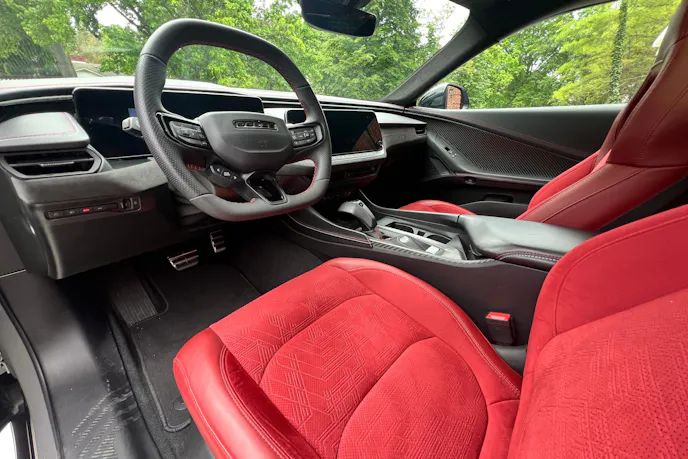
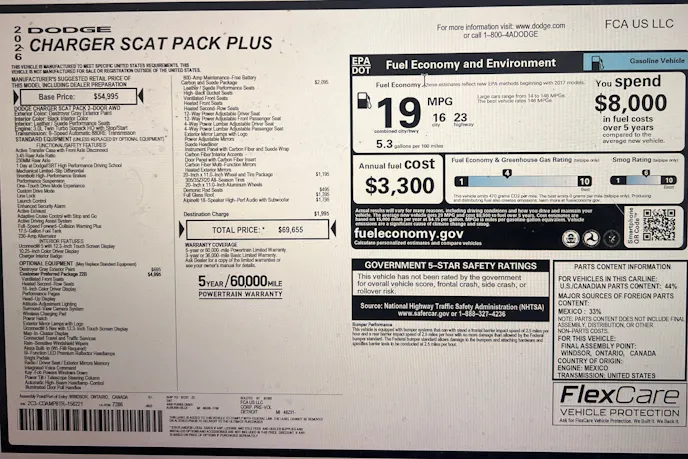
Speaking of numbers, our Scat Pack Plus has a base price of $54,995, which is about the average price of a new car today. Where things went haywire is when you added in the high-dollar options (Customer Preferred Package 22B at $4,995, Carbon & Suede Package at $2,095 and a couple of others). That brought out test vehicle to a staggering $69,655 with destination.
While all 2026 Chargers come AWD, they can quickly be configured to send all that power to the rear by a simple tap on the infotainment center’s touch screen. In RWD configuration, you can access the Line Lock feature, which allows you to do your best Funny Car burnouts while shredding the optional fat Goodyear All-Season Tires measuring 305/35ZR20 riding on stylish 20×11 aluminum wheels that fill the Charger’s wheelwells very nicely.
When pushed to the limit, the SIXPACK Hurricane makes great noises at redline with its dual-mode exhaust. A commanding bark shouts between the millisecond gear changes from its eight-speed automatic. But at idle, the exhaust tone is more subdued and even burbly, something that’s common on the current crop of six-cylinder powerplants.
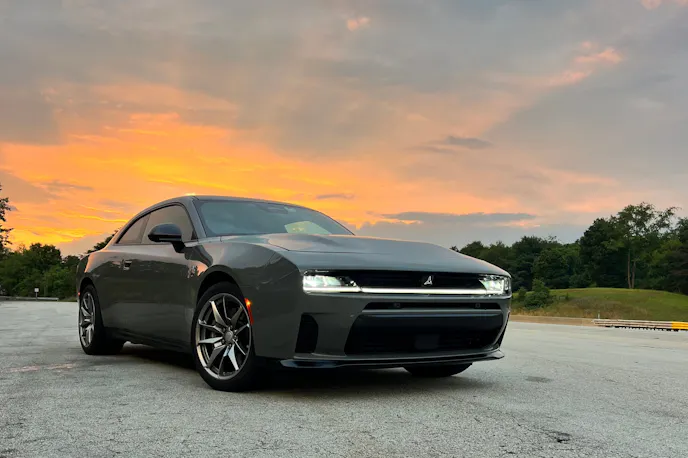
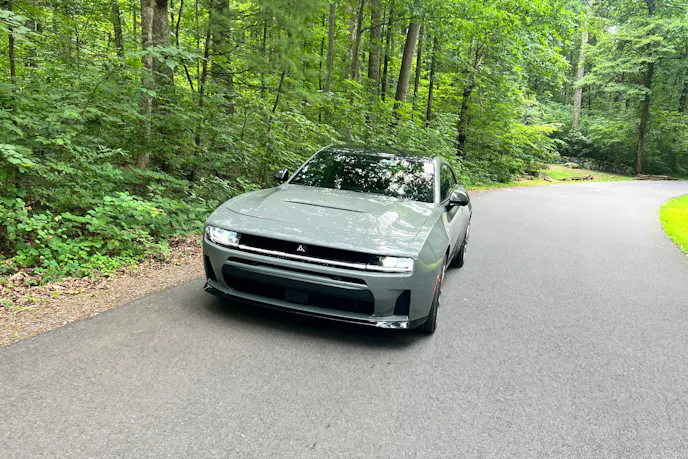
It’s available as a proper two-door or a more practical four-door. If they called the Hurricane engine a HEMI, would it make you feel better or does it need bent-eight power to be legit? (Photos by David Hakim)
While the 2026 Charger R/T gets the Standard Output (S.O.) 3.0L Hurricane Inline Six that’s rated at 420 horsepower and 468 lb-ft. of torque, we suggest getting the H.O. version. Both versions are built around a deep skirt cast aluminum block and high-flow aluminum cylinder head, while the S.O. version can live on 87-octane fuel.
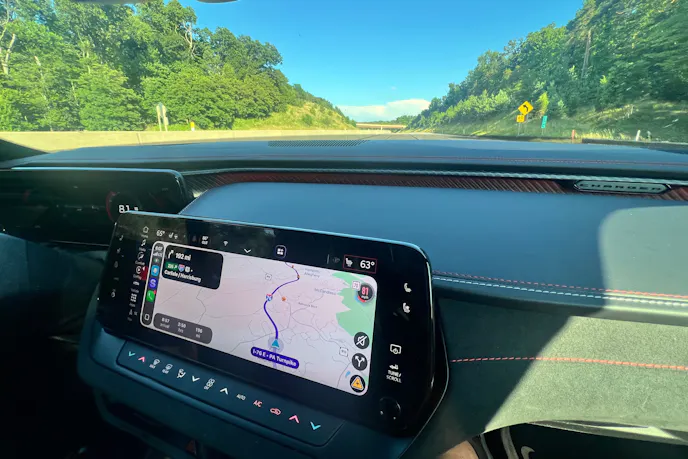
Despite the 2026 Charger Scat Pack’s impressive numbers and the fact its performance is on par with a prior-generation 394/6.4L HEMI Scat Pack Chargers and Challengers, the Dodge muscle car fanatics are still lukewarm to it. On our recent trip to the Carlisle Chrysler Nationals, the mecca for all things Mopar, our Charger Scat Pack drew some attention from the attendees. The boomer crowd was skeptical about the car as they peppered us with questions like “When’s Dodge going to put a “proper engine” in it?”
However, the under-50 crowd really dug the looks and the inline six. The younger generation grew up with turbos just like the old guys grew up with “3/4 Race Cams” (whatever those were) and cheater slicks.
The 2026 Charger Scat Pack represents the future of Dodge with a nod to the past, so embrace how many cylinders are under the hood or you may be left behind.