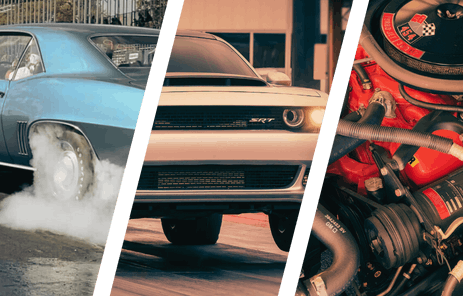

Howards Cams builds two small-block Chevy camshafts that share almost every number on the spec sheet. Yet they behave differently once they’re running in an engine. The Hydraulic Flat Tappet Big Mama Rattler and the Hydraulic Roller Big Mama Rattler are both cut for 1955 to 1998 Chevy small-blocks. Both fit 262 to 400 cubic-inch engines. Both list the same rpm range, the same duration at .050-inch, and the same lobe separation angle. So why does one hit harder than the other? The answer comes down to a single spec, valve lift, and it explains a lot about how these two grinds fit different builds.
Flat-Tappet Small-Block Chevy Camshaft Specs
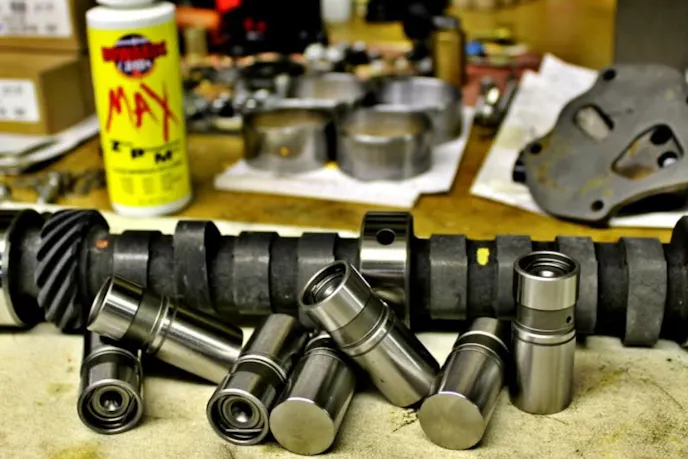
The hydraulic flat-tappet Big Mama Rattler (CL118041-09) fits 1955 to 1998 Chevy small-blocks in the 262 to 400 cubic-inch range. Intake valve lift comes in at .488-inch, and exhaust lift lands at .480-inch. The advertised duration runs 289 degrees intake and 297 degrees exhaust. Duration at .050-inch tappet lift is the number that matters most for idle quality and drivability. It measures a 235-degree intake and a 243-degree exhaust. The lobe separation angle sits at 109 degrees, with an intake centerline of 103 degrees. Howard’s recommends at least 9.0:1 compression and a stall converter of 2,500 rpm or higher. It lists the idle character as lopey, for street or street/strip use.
Roller Small-Block Chevy Camshaft Specs
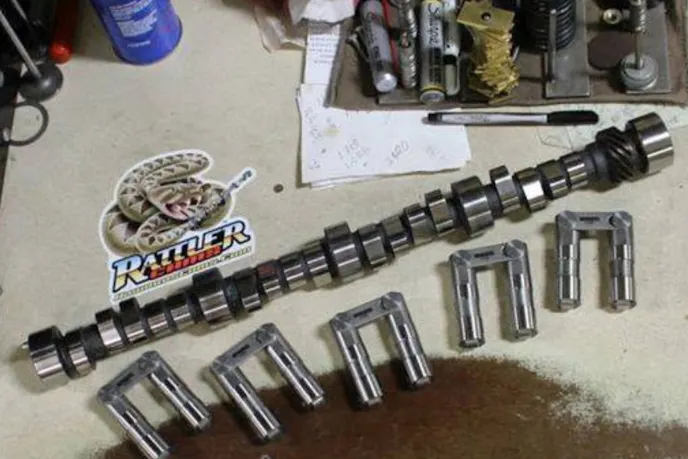
The hydraulic-roller version of the Big Mama Rattler (CL118045-09) is a retrofit design. It fits the same 1955 to 1998 Chevy 262 to 400 cubic-inch small-blocks. Here, intake and exhaust valve lift match at .530-inch each, a noticeable jump compared to the flat-tappet grind. The advertised duration comes in slightly shorter, at 288 degrees intake and 296 degrees exhaust. Duration at .050-inch, however, is identical to the flat-tappet cam: 235 degrees intake and 243 degrees exhaust. The lobe separation angle and intake centerline match too, at 109 and 103 degrees. Compression and stall converter requirements mirror the flat-tappet spec at 9.0:1 or higher and 2,500 rpm or more. Howards lists the same lopey idle for street or street/strip use.
Same Timing, Different Lift: How This Small-Block Chevy Camshaft Pair Compares
Duration at .050-inch, lobe separation, intake centerline, and the recommended rpm range are all identical between these two cams. That means the timing events are essentially the same on both grinds. In other words, the valves open and close at nearly the same points relative to piston position. So what changes? It’s how far the valve opens during that window, and that comes down to the lifter riding on the lobe.
A flat-tappet lifter does not actually run flat. It carries a slight crown, and Howard’s grinds the cam lobe with a mild taper. That taper makes the lifter spin as it rides across the lobe surface. Because of that sliding contact, Howards has to limit how aggressively it shapes the opening and closing ramps. Push it too far, and the lifter edge would start scraping into the lobe.
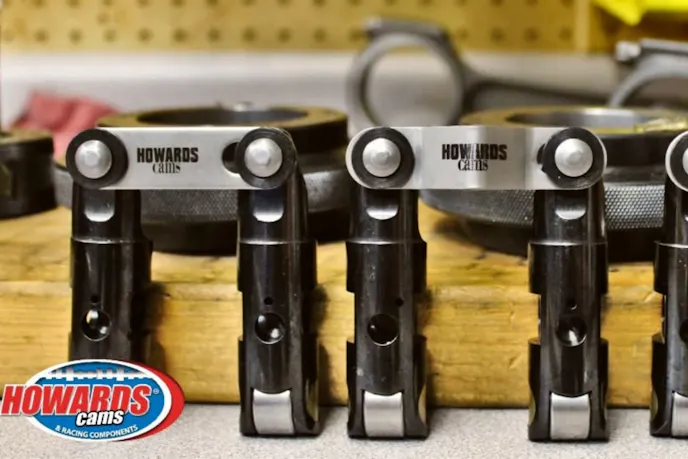
A hydraulic-roller lifter solves that problem with a wheel that rides on a needle-bearing axle instead of sliding across the lobe. Without that friction limit, Howard’s can grind the lobe with steeper acceleration ramps. Those ramps open the valve faster and hold it open longer within the same duration window. That is exactly how Howards reaches .530-inch of lift on the roller cam versus .488/.480-inch on the flat-tappet version, without changing duration at .050-inch at all. In short, yes: being a roller cam is what allows the higher lift number.
Will One Camshaft Idle Lopier Than The Other?
No, and here’s why. Idle quality and that classic lopey cadence come mainly from duration at .050-inch and lobe separation angle. Both specs are identical between these two cams. That means neither grind should sound noticeably different at idle. The extra lift on the roller cam shows up somewhere else: in how quickly the valve gets out of the way and how much cylinder filling happens once it’s open. It doesn’t show up as an idle stumble or shake.
Horsepower And Valvetrain Differences
More lift generally means more airflow potential once rpm builds. So the roller camshaft has an edge in peak horsepower and torque production over the flat-tappet version. That assumes the rest of the valvetrain, including springs and rocker ratio, can support the added lift. Both cams share the same duration at .050-inch and the same rpm range. Because of that, the power gain should show up mainly in how hard the engine pulls through the middle and top of the rpm band, not in where the power comes on.
That additional lift and the more aggressive ramp design also put more stress on valve springs, pushrods, and rocker arms. Builders should pair a roller build with springs that can handle the higher lift. Roller lifters reduce friction against the cam lobe itself. That’s easier on the camshaft over the life of the engine, and it typically holds up better under sustained high spring pressure than a flat-tappet setup. Flat-tappet lifters, by contrast, rely on constant spinning and sliding to distribute wear evenly. That works well within its lift and spring pressure limits. But it leaves less margin for error if oil quality or break-in technique falls short.
Flat-Tappet And Roller Camshaft Break-In Procedures
Flat-tappet break-in is the more demanding of the two. New lifters have to run alongside a new cam. Builders coat them with the supplied moly lube, then bring the engine straight to around 2,500 rpm for the first 10-15 minutes. That high-rpm hold lets the lifter face mate to the lobe before the engine drops to a normal idle. Hydraulic-roller cams skip that lifter-to-lobe mating process entirely, since the roller wheel isn’t wearing into the lobe surface. As a result, break-in is comparatively simple. It’s typically just a standard oil-and-filter change plus a normal warm-up, per the Howards instructions.
Which Small-Block Chevy Camshaft Fits Your Build
The flat-tappet Big Mama Rattler suits a budget-conscious small-block build. It also works well for a period-correct restoration or an engine that already runs a flat-tappet valvetrain. It delivers strong street manners without the added cost of roller lifters and a compatible block. It’s also a practical choice for a daily-driven street car or a weekend cruiser, where peak power matters less than a proven, affordable combination with an easygoing idle.
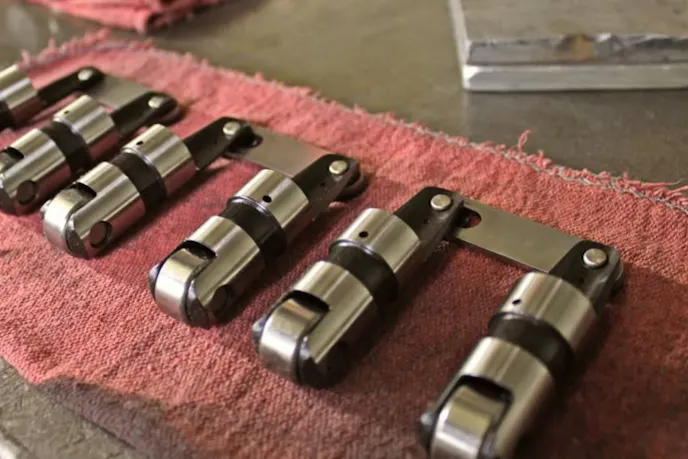
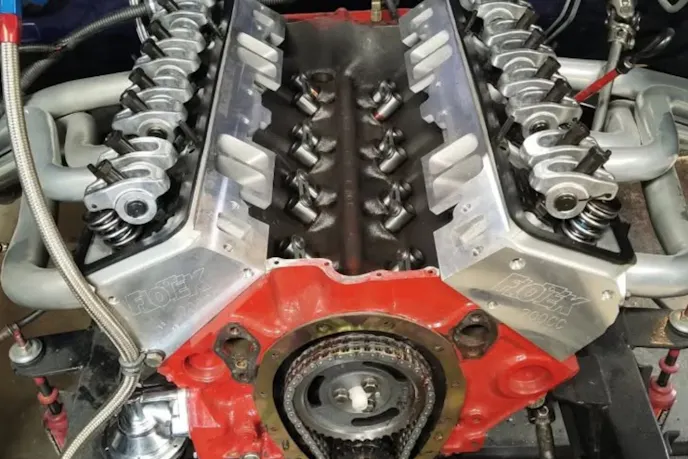
The hydraulic-roller version makes more sense for a fresh build or a rebuild where the block is already set up for roller lifters. It’s the better pick when the goal is to extract more power from the same rpm range and duration figures. The roller design cuts down on lifter-to-lobe friction and skips the demanding flat-tappet break-in window. Because of that, it’s also a good fit for builders who want one less variable to manage during initial startup, provided the budget accounts for roller lifters and any needed block modifications.
What This Small-Block Chevy Camshaft Comparison Means For Your Build
These two cams prove that matching specs on paper doesn’t guarantee matching results at the crank. Howard’s offers both versions so builders can choose the valvetrain type that fits their engine and budget. Neither choice sacrifices the rpm range, idle character, or cam timing that make the Big Mama Rattler a proven street performer. Whether the goal is an affordable flat-tappet build or a roller setup ready for more lift, this small-block Chevy camshaft pair shows Howard’s has engineered both grinds to deliver on their intended combination.
You might also like
Drag Racing Legends To Appear At MCACN 2026
The numerous vehicles Butch Leal raced included a Ford Thunderbolt, Boss 429 Mustang, 427 Camaro, and Hemi Dusters, and a Firebird.