
Building ultra-durable V8 engines requires smart blueprints and a clean assembly line, but Ford demands aggressive testing from its engineering teams. Ford takes a violent approach to mechanical perfection by pushing its hardware to the absolute limit on the race track. The automaker intentionally punishes 5.0-liter race engines with hours of wide-open throttle, extreme heat, and severe vibrations. This intentional torture test forces individual parts to fail under extreme pressure.
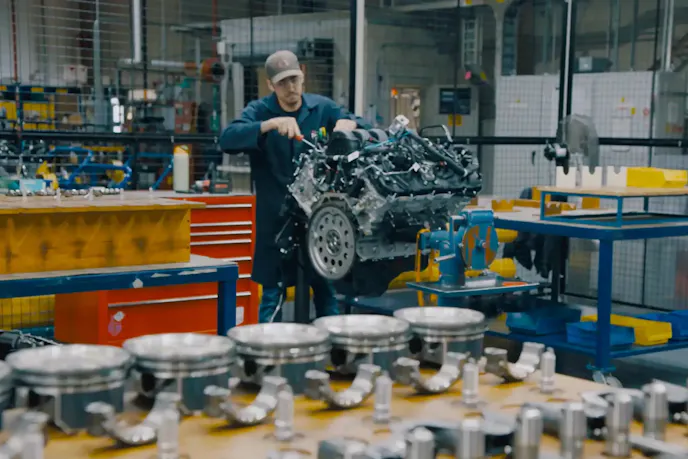
Mechanics at the Essex Engine Plant tear down these heavily stressed test units every single day. They hunt for mechanical vulnerabilities deep inside the engine block. Ford Racing engineers and pit crews monitor real-time telemetry data while the cars run hot on the track. They pass this valuable data directly to Product Development engineers. The development team uses the telemetry to design stronger replacement parts based entirely on the track failures.
This brutal track abuse exposed some weaknesses in the camshaft drive. To solve it, Ford engineers developed a stronger replacement and applied this mechanical upgrade directly to the production 5.0-liter Coyote V8. These continuous improvements guarantee that everyday drivers receive ultra-durable V8 engines straight from the factory. Charles Poon, Ford Vice President of Vehicle Hardware and Software Engineering, explained the unusual testing mentality. Poon said, “This requires us to look at failure differently. We now celebrate internal test failures.”
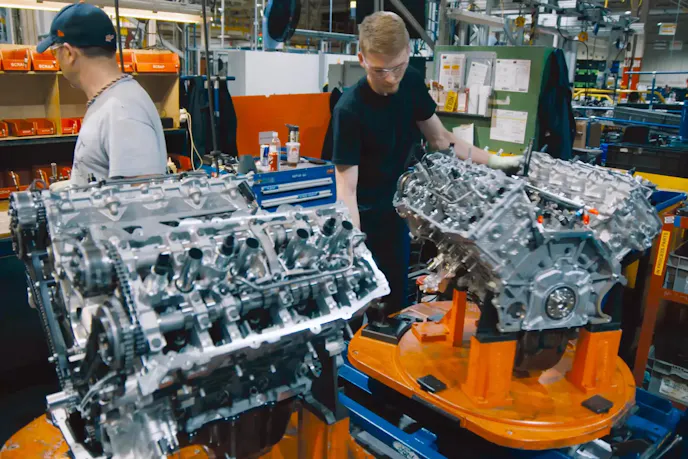
A broken race engine translates to a highly reliable street vehicle. Poon noted, “The more issues we identify during testing, the lower the chance of our customers experiencing them.” Buyers who tow heavy equipment to a job site with an F-150 truck or chase lap times in a Mustang Dark Horse sports car reap the direct benefits of this extreme testing protocol.

The engineering team at Ford always searches for new ways to stress-test vehicle powertrains to validate their mathematical design models against harsh physical conditions. Finding these mechanical breaking points gives the manufacturing side a clear target to hit for future component upgrades. Buyers expect top-tier reliability when they turn the key, and this aggressive testing cycle produces the ultra-durable V8 engines that keep classic American muscle dominating the highway.
You might also like
Governor Newsom Has Leno's Law Signed To Protect Classic Cars
Governor Newsom officially had Leno's Law signed in Burbank. The statute exempts qualifying collector cars from biennial smog tests.