
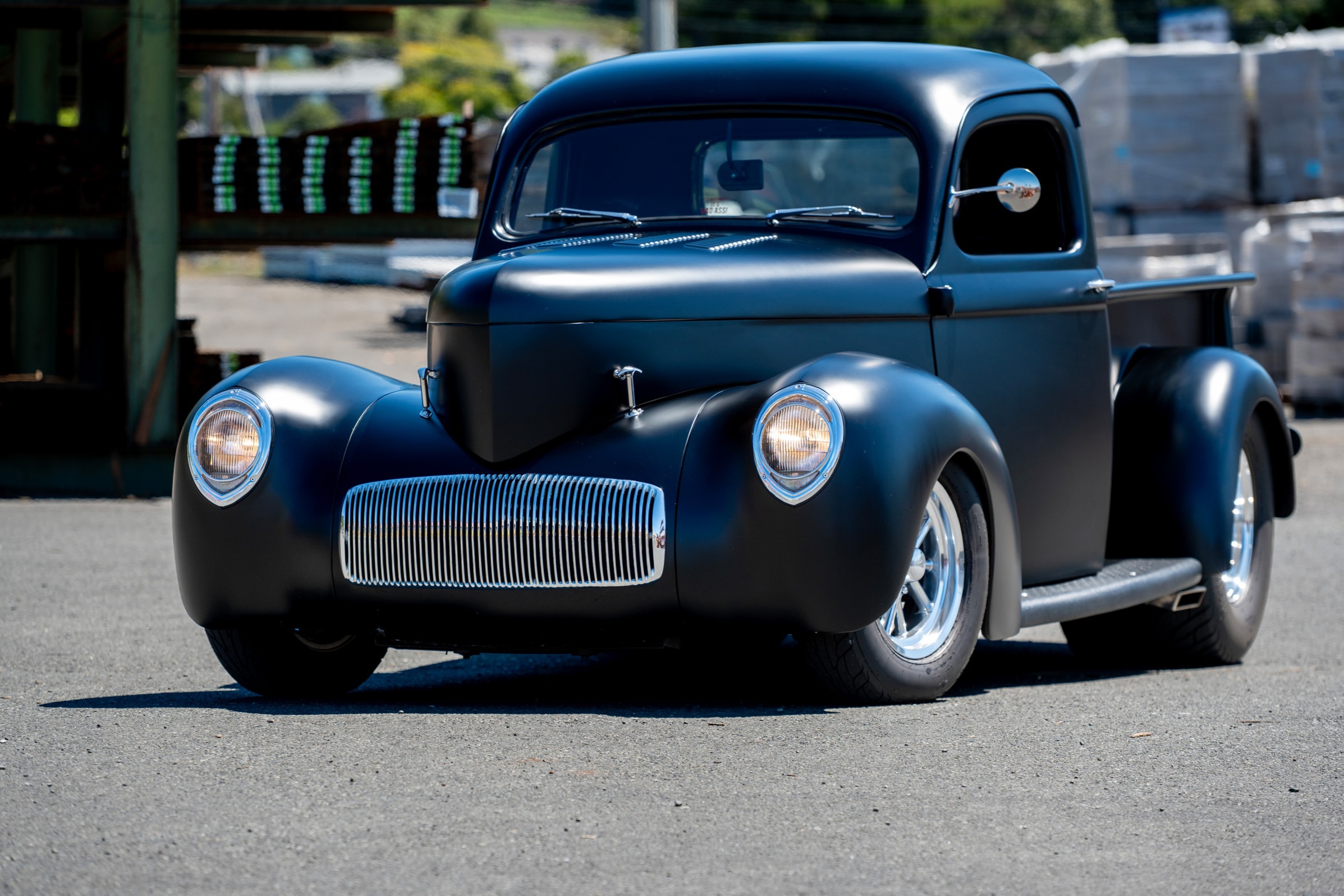
A couple years ago when Michael Wilson spilled the beans to his close hot-rodding friends he was going to finally tackle turning the old Willys pickup he’d had sitting in storage for 20 years into a pro streeted with a big-block Chevy, one buddy said it’d be a widow maker. That brought a lot of chuckles.
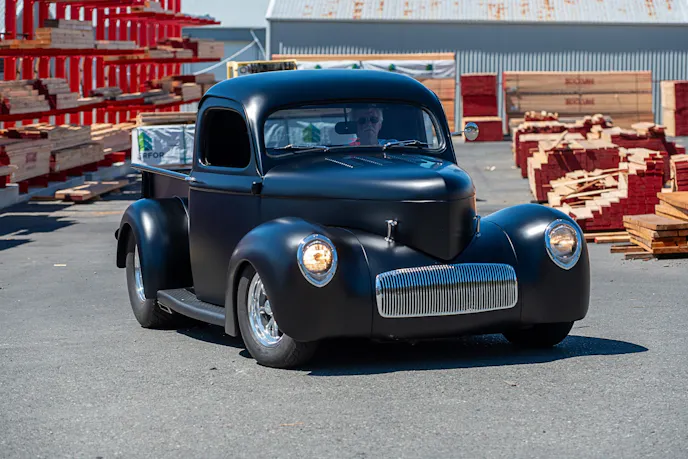
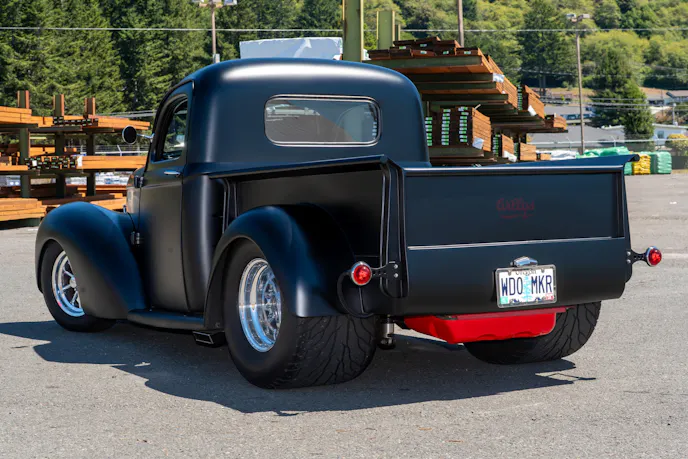
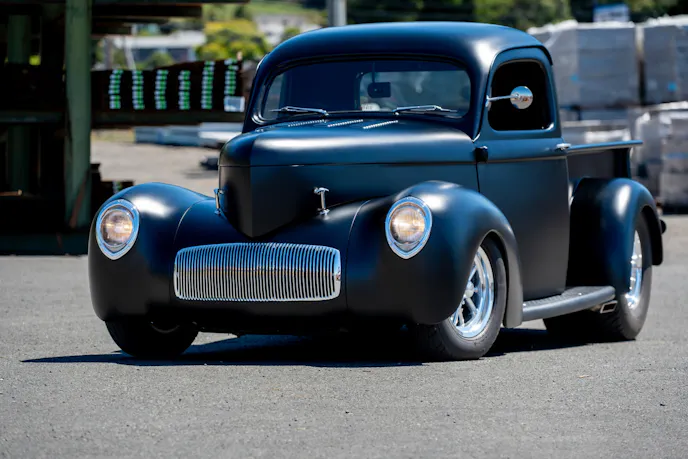
True to his word, 14 months later Michael hit the streets in his pavement-hugging, chest-throbbing, 425-hp, flat-black ’41 with the license plate “WDO MKR.” The steel-bodied ride is always a head-turner at car shows around coastal southern Oregon.
We love Willys street rods here at StreetMuscleMag.com. After you read this story, check out this coupe we featured recently.
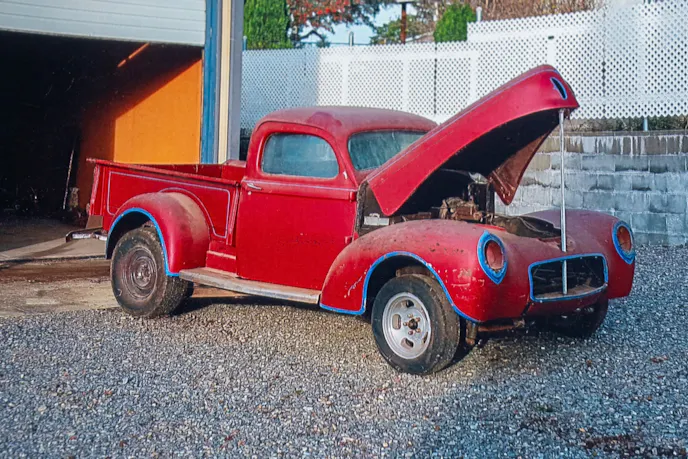
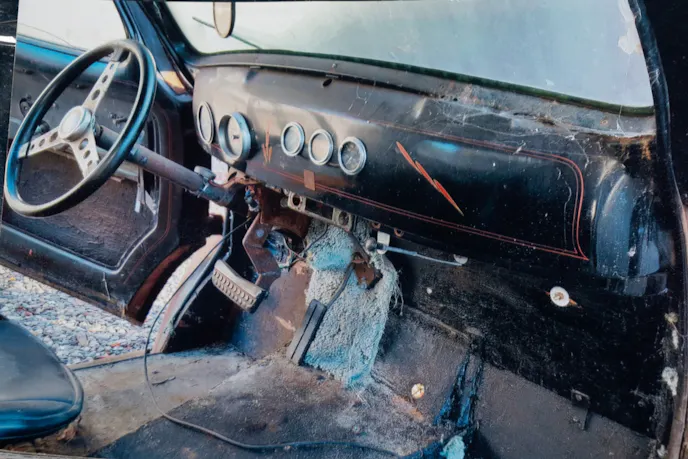
This is Michael Wilson’s ’41 barn-find when he bought it back in 1995 and then kept in storage for more than 20 years.
Setting The Stage
“I always loved the look of the Willys pickup even as a kid,” says Michael, “They are special. Most people don’t even know Willys-Overland Motors built pickups, or that they only made the Willys Americar brand in 1941 and 1942. All were based on the coupe chassis with a 63hp Go-Devil four-banger and three-speed manual. This was really entry-level pre-war pickup.”
When I accidentally came across this one, I knew someday it would be fun to drive around in pro-street style. Now that dream is reality. It’s like sitting in a go-cart. The cab is tiny and the sound of the big-block turns heads. Love it!” — owner Michael Wilson
Michael’s pickup sits atop a customized Art Morrison chassis with a four-link rear and dropped fixed front suspension with Mustang II steering and disc brakes. A Strange Ford 9-inch sits under the rear. Simple, but functional.
Getting there is a study in both old school simplicity and attention to detail as this retired millwright explained the journey from dilapidated barn find to a hot rod conversation piece.
Fitting It In
Michael started the build by taking his barn-find across town to West Coast Custom Paint & Restorations in Brookings, where it was completely disassembled and evaluated. The stock frame and drivetrain was set aside and replaced with a custom, 4-link 103-inch Art Morrison Enterprises chassis that had the rails widened two-inches up front to accommodate dropping the Chevy big-block as low as possible in the Willys’ little engine bay.
The chassis runs Strange coilovers, two-inch drop spindles in front, outfitted with all the front and rear suspension hardware, Mustang II rack-and-pinion steering and disc brakes.
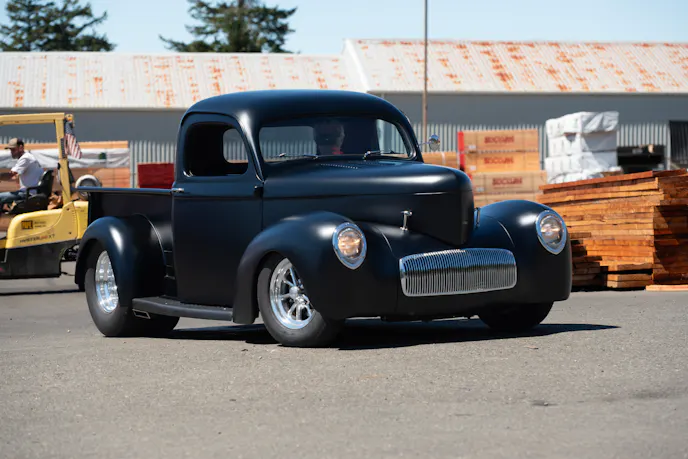
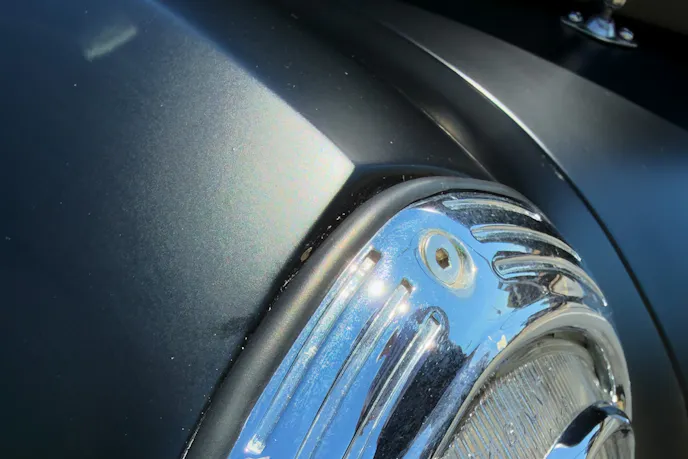
While the chassis was being built, Michael spent all Winter and Spring working on the steel body. “We spent many hours sanding, smoothing, priming, louvering the hood, and making some minor metal repairs before the first coat of Ebony flat black was laid on it,” recounts Michael. “Then we turned to the bed. We chopped 10-inches from the rear, plugged the stake pockets, welded up the tailgate, put in the tubs, extended the fenders 2.5 inches on each side, and cut an access panel on the driver’s side rear bed floor so we could fill the fuel tank from there instead of having a filler on the outside.”
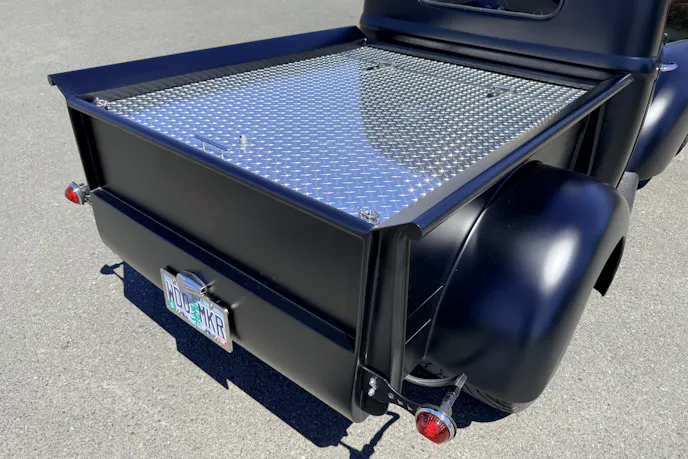
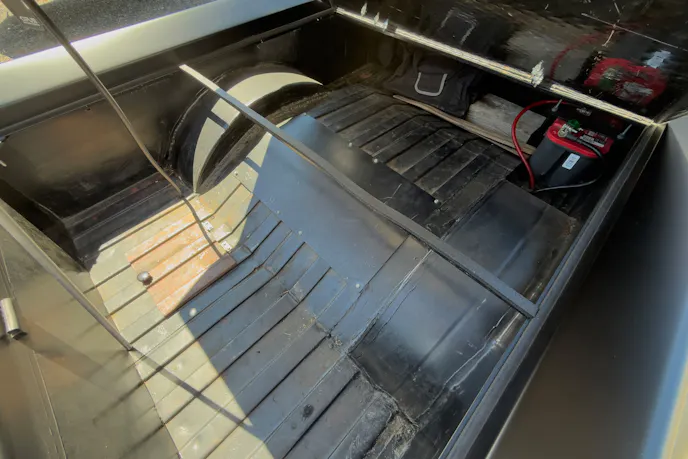
Michael turned to a sheet of polished diamond plate, with old school gate hinges, to cover the stock steel bed where he keeps his cleaning and car show items secure.
Big-Block Muscle
Michael’s goal was to have a hot-rod pickup that he could drive to car shows and enjoy cruising along the southern Oregon coast when the weather was nice. He wanted power, all the while keeping things inexpensive and simple.
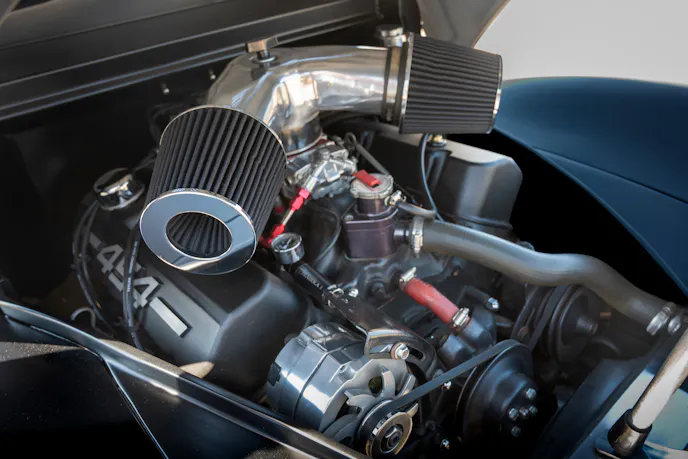
That lead him to slipping in a mildly built ’76 BBC that Drummond Automotive Machining in Creswell, Oregon, warmed up by boring it .030-over, balancing the crank, putting in a vintage Racer Brown cam with .510 lift, 226-dgree duration, and installing new electronics and a performance valvetrain.
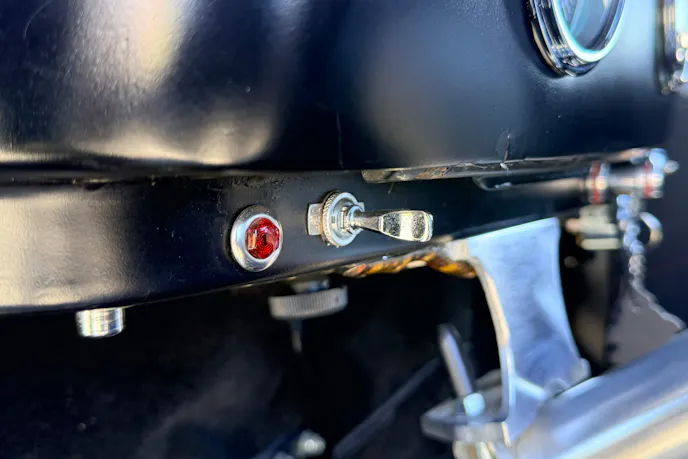
Horsepower is not an issue under Michael’s ’41 Willys pickup. The now-460 cubic-inch mill makes 425hp and 435 lb-ft torque with an old school Holley four-barrel doing the feeding. To that was added a ’70 Vette intake topped with a Super Stock 780 cfm Holley QFT four-barrel. The exhaust is handled by 1-3/4-inch Hedman shorty headers muffled by twin Black Widow mufflers with electric cutouts controlled by a toggle on the dash.
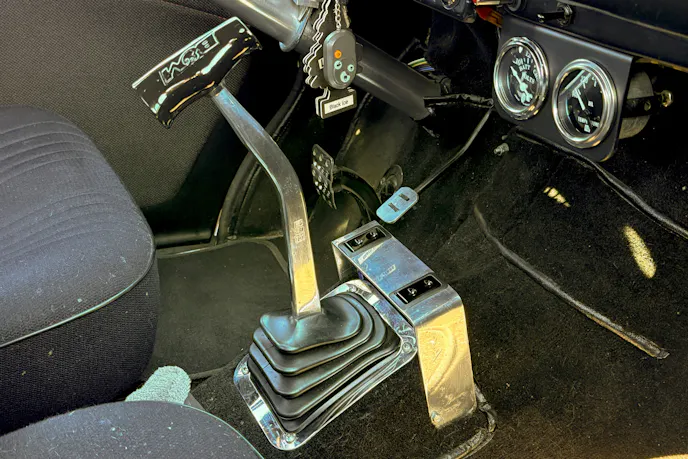
The end result is channeled through a 10.75-inch lock-up 1,800rpm-stall torque converter and B&M Unimatic shifter for the beefed-up late ‘80s 700R4 automatic.
Getting That Meaty Look
Keeping simple in mind, for the rear Michael opted for Morrison to fit the chassis with a 4-link coil-over set up for the Strange Engineering Ford 9-inch running 3.50 gears, 31-spline axles and a limited-slip. Stopping power comes from Wilwood discs at all four corners.
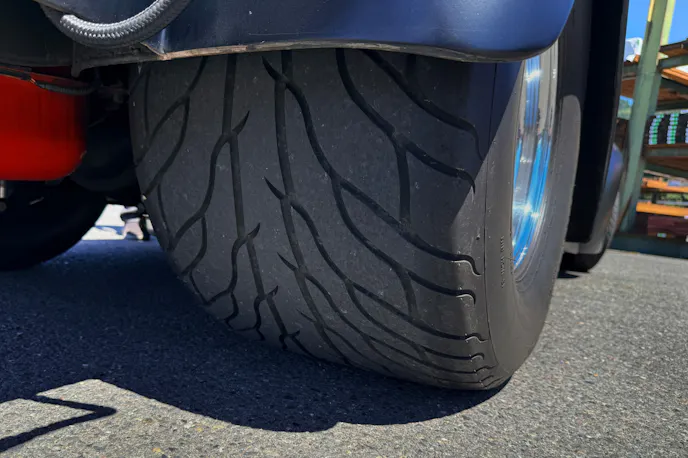
Traction and that special look come from running fat 18-inch-wide Mickey Thompson meats mounted on Center Line deep dish chromes.
No vintage pro-street pickup is worth its salt unless it’s running fat meats under the tubs. “I put on the fattest tires available,” says Michael grinning from ear to ear. He chose 31x18R15 Mickey Thompson Sportsman S/R radials in the rear mounted on 14×15-inch Ultralite Center Lines. Up front are complimentary 26x6R15s on gasser-style 6×15-inch Rocket Racing Wheels.
One thing many forget is the interior of a Willys pickup is small. Really small. Michael’s reference to driving it “being like sitting in a go-kart” is an accurate description. Making the cab space even tighter, Michael says they had to move the firewall back a “couple inches to accommodate the big block and custom aluminum radiator.”
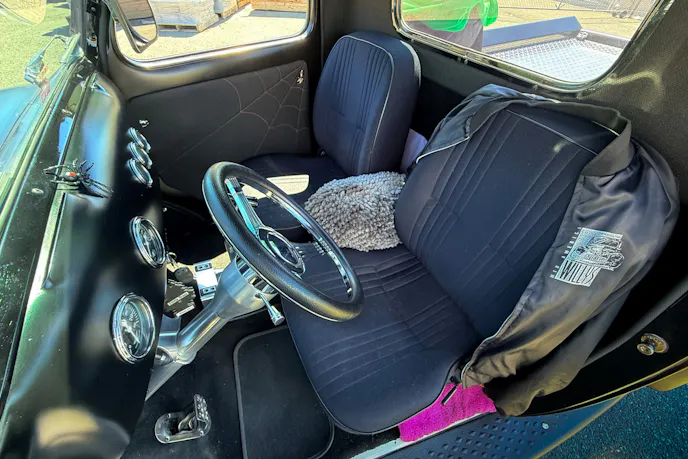
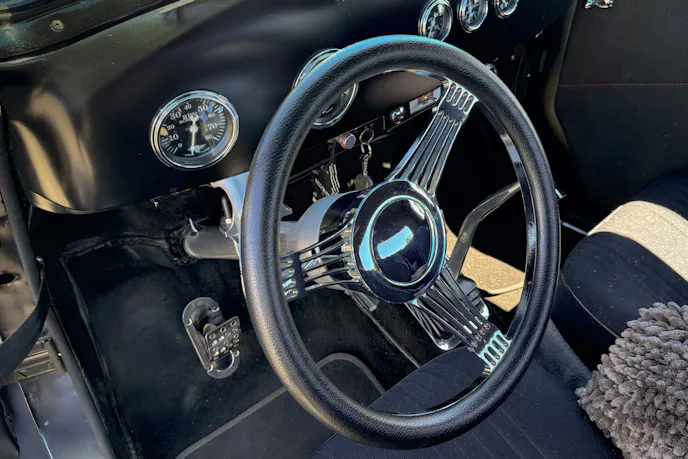
It’s function first inside the cab of Michael’s ’41 Willys pickup. Procar buckets, and a handbuilt dash with Stewart Warner instrumentation and toggle swtiches handle all of his driving needs. So when it came to seats, Procar’s Lowback 1400 series, in black velour, were the best choice. Comfortable, yet small profile.
Michael fabricated a metal replica of the stock dash and used Stewart Warner gauges to keep tabs on all the important items. He also added LED lights under the dash, numerous toggle switches for the turn signals, high/low-beam headlights, overdrive, and interior fan. The electric windows and door poppers are also controlled by switches on the dash.
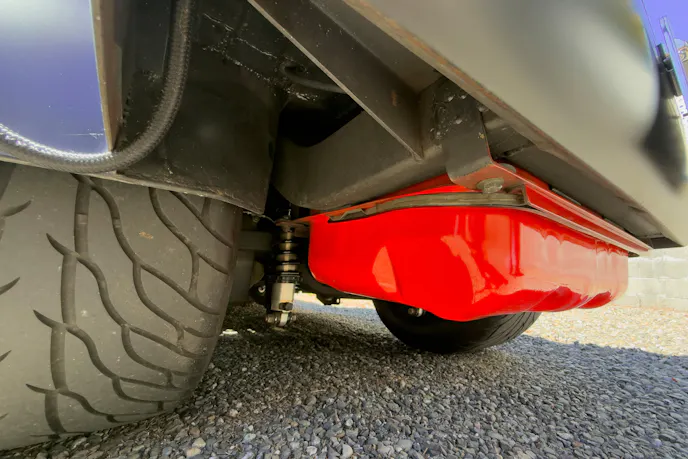
The owner says “the red gas tank and red LED light bar hidden under the rear of the bed, serve as a ‘third brake light’ at night.” There’s also a toggle switch that turns on the red LED lightbar hidden across the underside of the bed of Michael’s pickup that light up the red 26-gallon fuel tank. The red glow can be seen blocks away from anyone following at night.
Michael Wilson’s ’41 Willys pickup doesn’t sport a blower towering above the hood, nor is there stainless steel, chrome, or other fancy bling on the interior like the majority of pro street rides of this era. It’s just a nicely done, functional tribute to every workingman’s “pre-war” pickup turned hot rod.
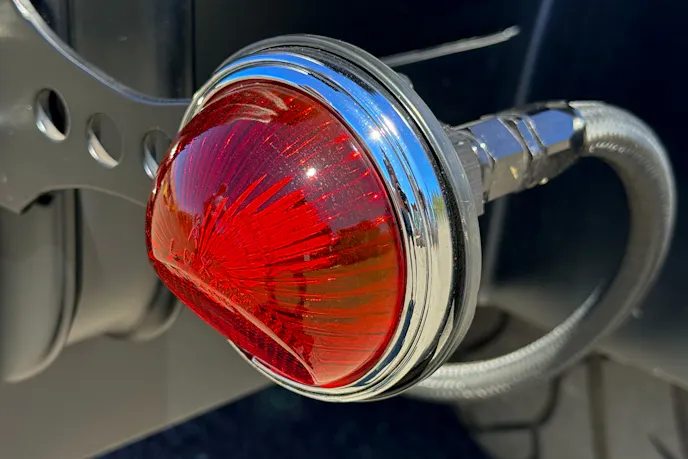
In the theme of keeping things simple, Michael used diamond plate sheet to cover the bed and taillight wiring run through braided fuel line hose. Underneath remains the original steel floor of his ’41 Willys.
“What I’d say to anyone inclined of taking a similar path in building their own Willys pickup is think everything out clearly before you begin. Keep it simple. Take your time,” advises the proud owner. “I love tinkering and there’re still a few little things I’ll be changing down the road to make it better.”
You might also like
500-Horse 1962 Bel Air Runs Like A Beast, Looks Like A Beauty
This spectacular ’62 Bel Air is a long way from bargain-bin transportation, which is how it started life. Under the hood is a fully built 383