
The year was 1969. It was the height of the muscle car era, unleashing such icons as Pontiac’s Firebird Trans Am and the GTO Judge. Dodge and Plymouth went full send with the 440 Six-Pack cars, wearing fiberglass lift-off hoods and air-gulping scoops large enough to ingest a small airplane. In the house of Chevrolet, the high-performance Camaro ZL1 arrived stuffed with the all-aluminum 427. Muscle may have been the flex in ‘69, but Chevy’s truck camp was making headlines of its own, including the launch of the K5 Blazer. And while the second-gen C10 was already past its freshman year, 1969 marked the truck’s restyling and a new option tucked under the hood — the 350 cubic-inch small-block V-8.
Straight away drivers dug on the C10. Chevy cranked out nearly 400,000 of them for 1969 alone. But what has happened in the half-century since has turned its early popularity into something more like an obsession.
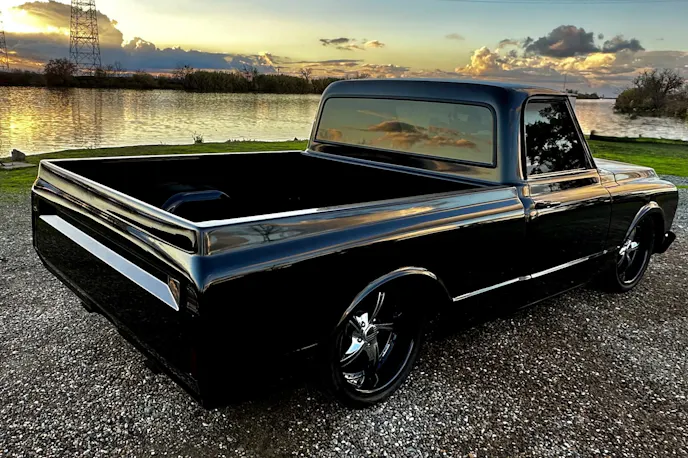
Somewhere along the way, Chevrolet’s C10 went from America’s pickup to one of the custom truck world’s GOATs. Slammed, shaved, frenched, chopped, swapped, dropped — the sky’s the limit. An owner’s bankroll … maybe not so much.
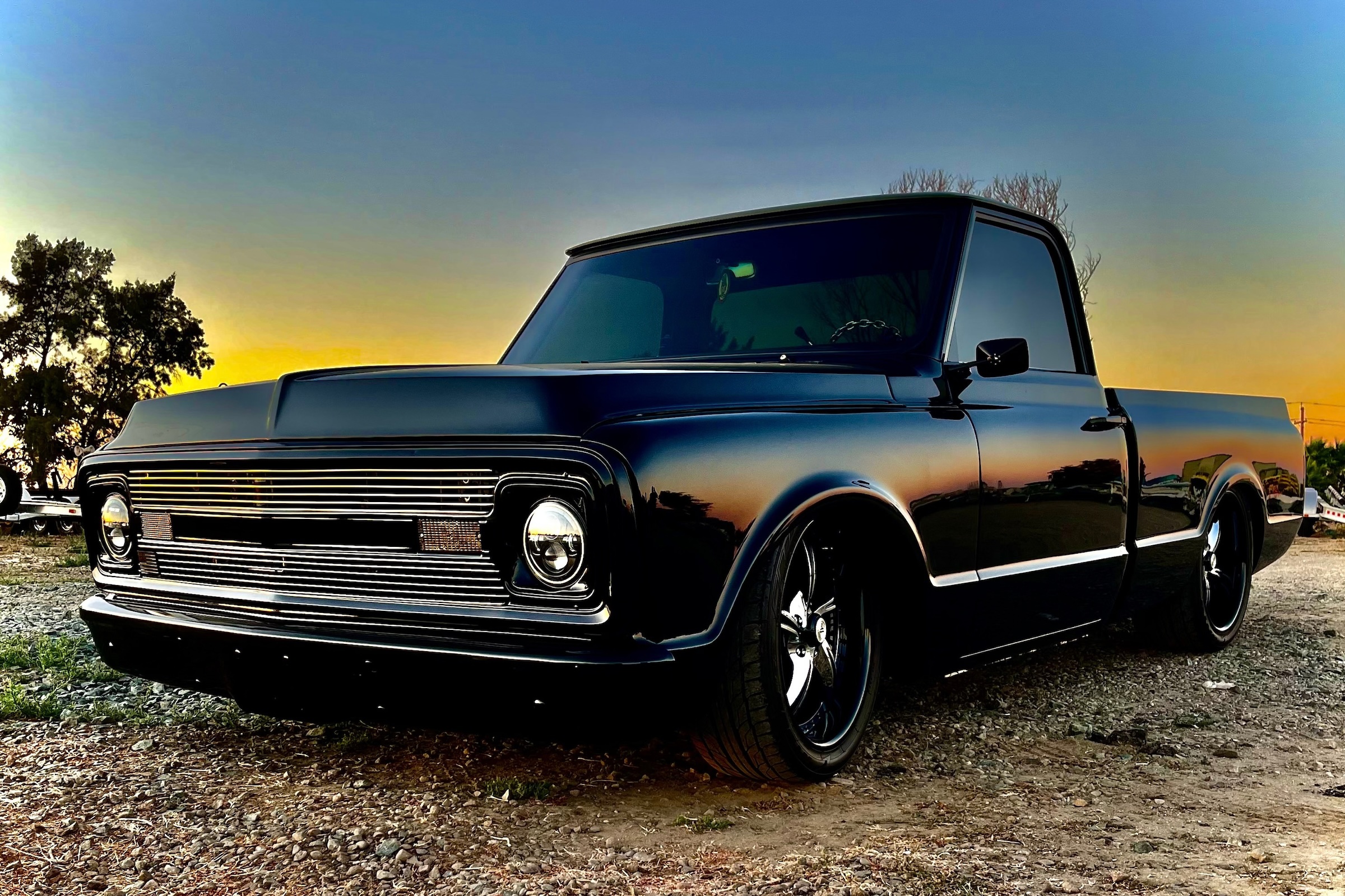
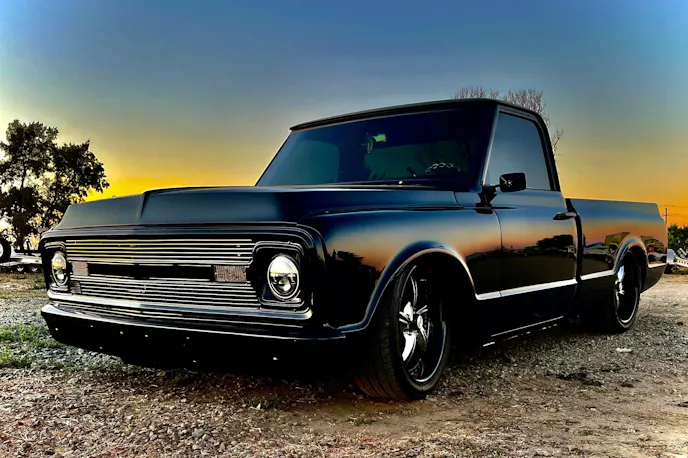
As for this particular 1969 Chevy C10, the “resto-mod your way” mentality runs deep. Born at the Fremont, California, assembly plant, it emerged from a rotisserie rebuild with not much OG remaining, however, a few things still tip their hat to the model year.
No LS Required
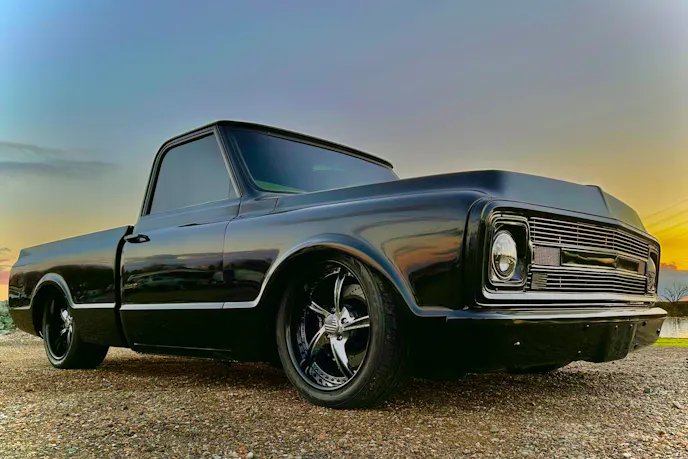
The once-factory pickup now sits notched, bagged, and drenched in House of Kolor Jet Black. When a fabbed foot-latch pops the hood, one seemingly obligatory swap is noticeably MIA. Because as this girl truck owner sees it … not every C10 needs an LS.
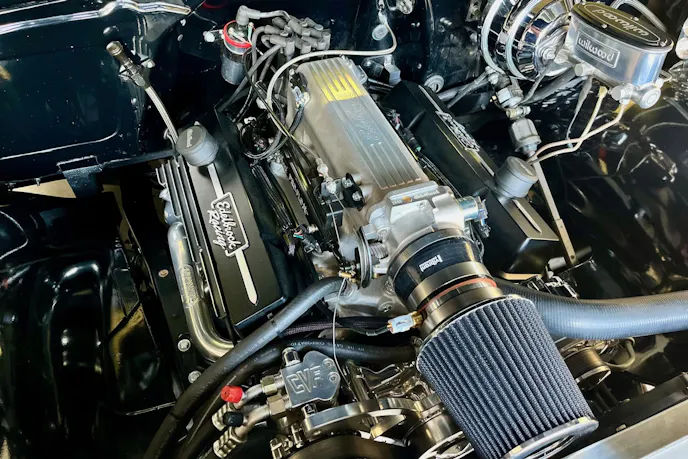
In one of its few nods to old school, this C10 skips the LS playbook and puts an Edelbrock Racing-built 350 small-block to work. The cubes may be the same, but the optional 1969 350’s documented 255 horsepower has been left in the rearview.
Somewhere along the way, Chevrolet’s C10 went from America’s pickup to one of the custom truck world’s GOATs. Slammed, shaved, frenched, chopped, swapped, dropped — the sky’s the limit.
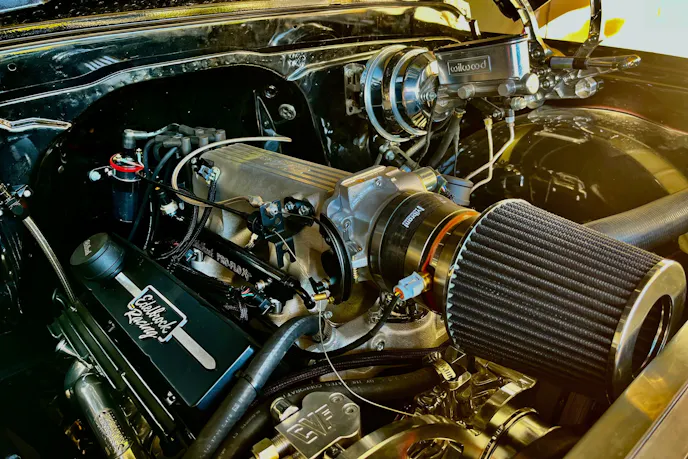
Today, the C10’s 350 comes with E-Tec aluminum heads and a little chop courtesy of Edelbrock’s high-performance Rollin’ Thunder cam. The block is topped by an Edelbrock Pro-Flo 4XT EFI with dedicated fuel rails and individual injectors. There’s additional naturally aspirated power on tap, but for now, this C10 is dialed to roughly 400 hp.
Exhale starts through Cerakote-dipped Hedman Hedders, moves through three-inch tube to Black Widow Neighborhaters, and exits through dual black Wesdon rectangular tips.
Highway cruisin’ called for another gear, so the original tranny gave way to a GM 700R4 four-speed automatic overdrive. It is backed by a custom-built D&P Racing Products torque converter.
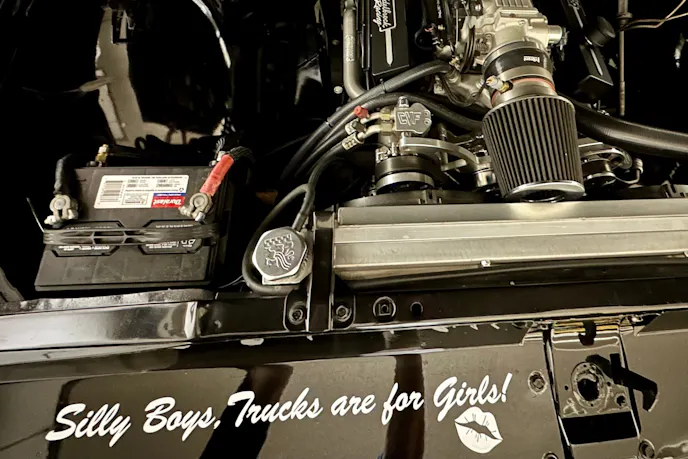
Old-school small-block. Not-so-old-school electrical. A Powermaster Performance Ultra Torque High Speed Starter gets the new 350 spinning, while American Autowire carries the juice from heads to tails.
Engine Bay: Billet & Backup
The engine gets its share of billet with CVF Racing pulleys, a purpose-built radiator and a set of Ringbrothers hood hinges. Filling the factory hood-latch area is a C10 core support panel that cleans up the bay, then uses the newfound real estate to fire a shot from under the hood.
Those Ringbrothers hinges proved they were more than engine bay jewelry when the hood blew open while en route to an event. According to the owner, they took the brunt and saved the day. Superhero hinges, anyone? Following that adventure, a locking foot-operated latch tucked below the front bumper added some extra insurance.
No Exterior Chrome, No Apologies
The body was stripped to bare metal before coming back dressed in black. And the paint was only the beginning. The customized blackout, billet-edged grille is bookended by black-housing Oracle LED headlights. Gloss black powder coat covers the front bumper, knocking out the biggest chunk of factory chrome, with the treatment continuing through the inner fenderwells and door handles.
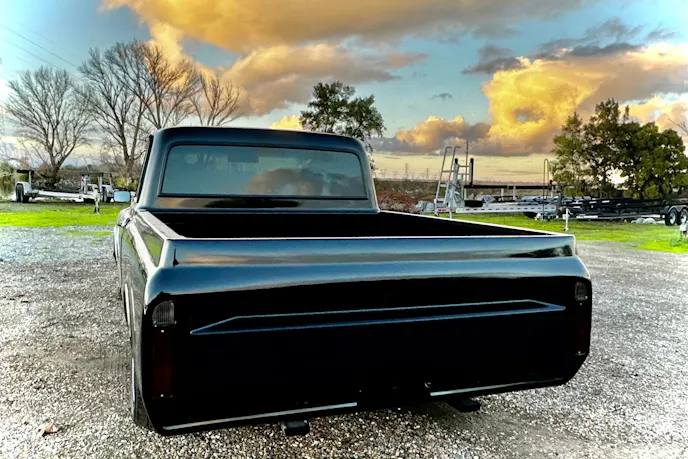
Moving down the length of the Fleetside, the delete continues with shaved locks, trim, bezels and side marker lights. Flat-black Billet Rides mirrors now sit in place of the originals. The original fuel filler remains – sans tank – as a nostalgic touch, while a rear-bed fuel cell feeds the 350 through stainless hard lines and AN fittings.
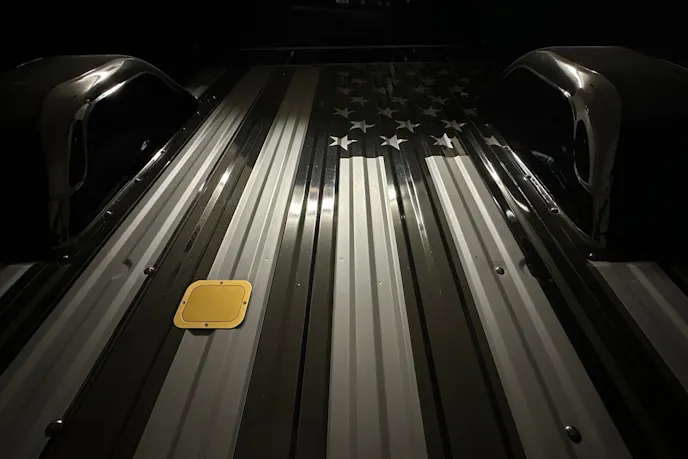
The one-off bed wears a roll pan, and the tailgate was welded shut and smoothed for a seamless finish. Smoked tails flank the now-solid rear, and a full-bed flag in battleship gray over House of Kolor Jet Black was stretched across the ribbed-steel floor.
Drop, Stop & Roll: Building The C10 Chassis
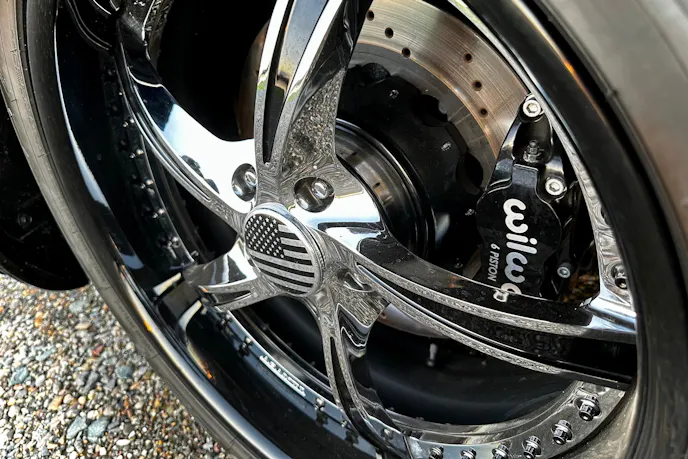
Power up meant stock brakes out. A four-corner Wilwood conversion with drilled rotors, six-piston calipers up front and four-piston rears was the answer. CPP drop spindles get the C10 closer to the asphalt, while an E-Stopp electric e-brake puts the parking brake on a button.
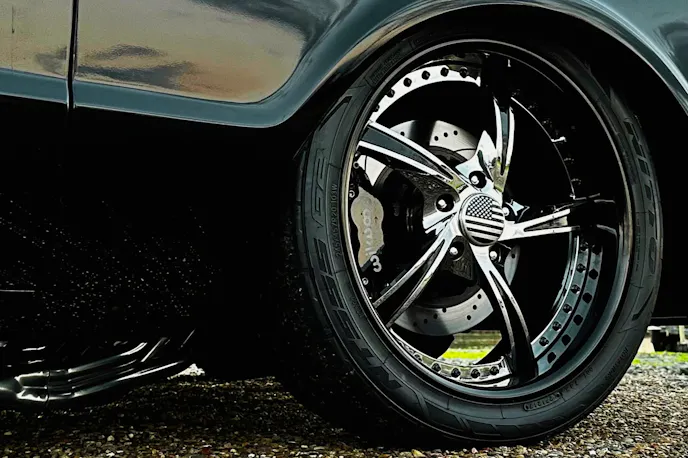
The frame was C-notched to make room for the drop. A VIAIR air ride system paired with Bluetooth Air Lift 3P management controls the stance from cruising height to aired-out at the tap of a screen. Forty-series tires wrap two-piece custom Asanti wheels, pairing gloss black barrels with billet faces and custom center caps.
C10 Cab After Dark
New tinted glass carries the midnight theme into the truck’s cab, where the factory wing windows got the boot in favor of one-piece door glass. Inside is where the mood shifts to comfort, tech and a hint of flash.
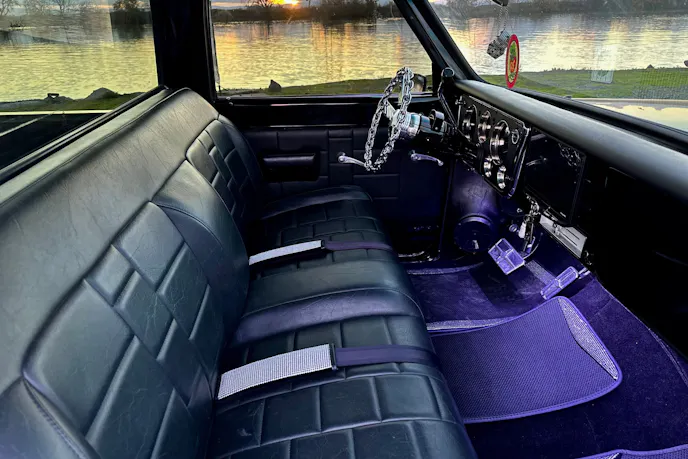
The House of Kolor darkness stretches into the cabin, where a quick glance at the dash could fool you into thinking it’s still 1969. Power it up and the digital glow of the Ididit gauges and ambient LEDs give a different vibe.
Vintage Air keeps things cool, while power locks, power steering and a tilt column bring the ’69 into this century. A 12-inch Bluetooth Stinger touchscreen anchors the audio, backed by Rockford Fosgate amps, subs and speakers.
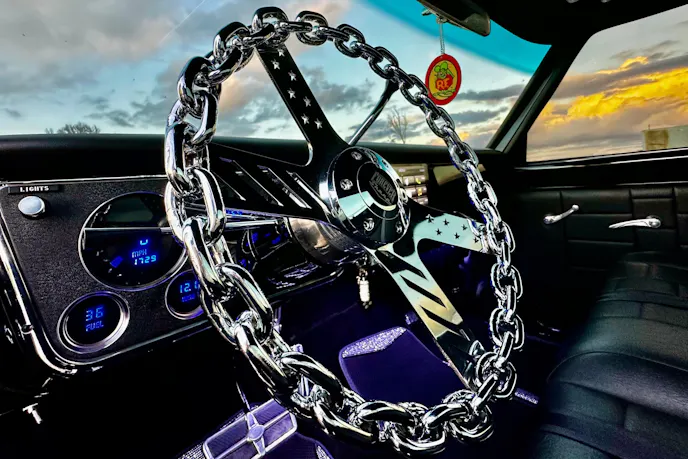
The bench is another nod to the C10’s roots, modernized in battleship gray leather with a custom block-stitch pattern. Matching panels are inset into the Jet Black doors. Matching panels are inset into the Jet Black doors. A Forever Sharp Stars and Stripes billet chain steering wheel puts some shine front and center. And a touch of bling finishes with some #girltruck attitude.
You might also like
Vacuum Secondaries Vs. Mechanical Secondaries: Which One?
The secondary system matters more than most people think. Here's how to match vacuum or mechanical secondaries to the build.