
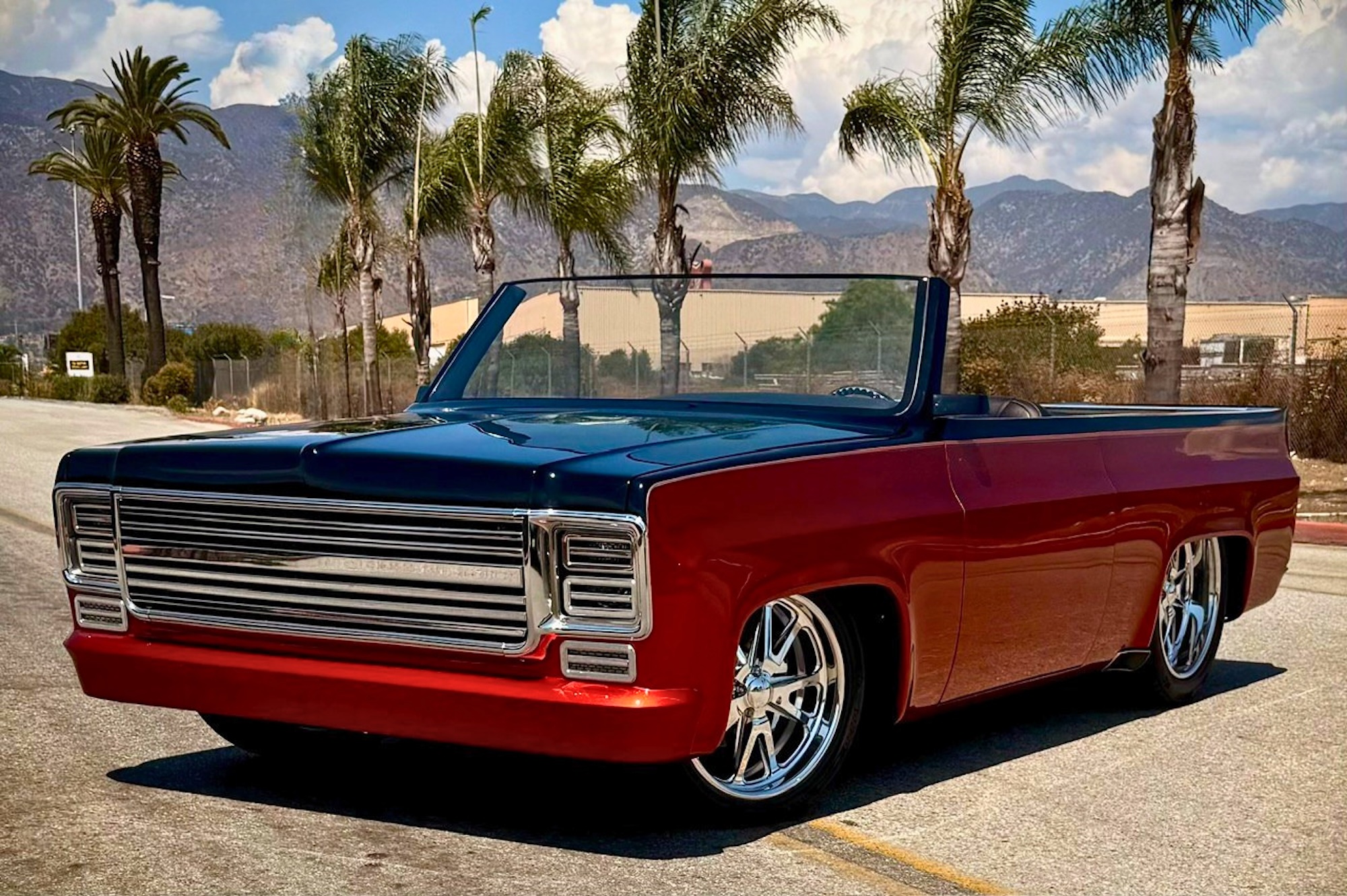
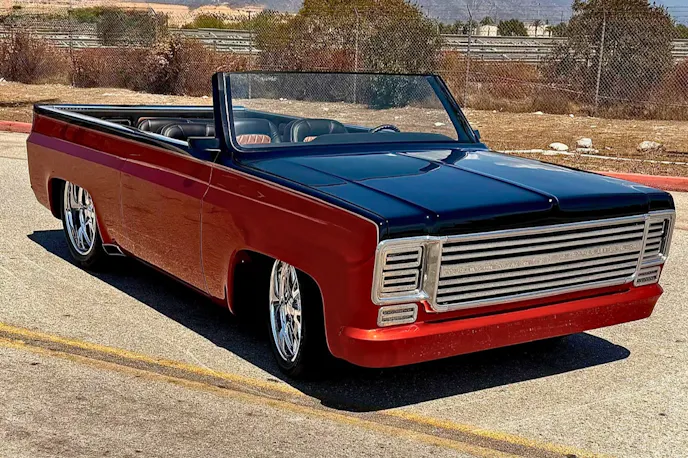
It began as a 1976 Chevy K5 Blazer redo. A lightbulb moment, a cut-off wheel, and four years of hand-fab re-engineering transformed Ken Hinge’s Arizona work truck project into a one-off custom K5 by JV Enterprises.
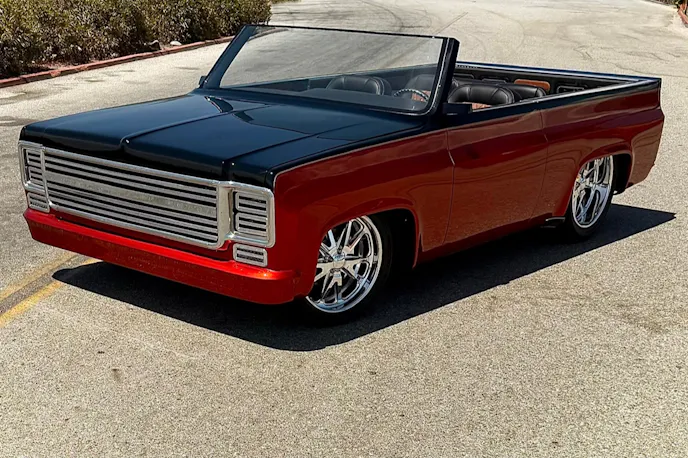
“I was just going to clean it up, paint it, and put a new engine and drivetrain in it so I could drive it back and forth to work,” Hinge recalled. “Somewhere along the line we decided to cut the cab off, and when that happened, we knew it was headed in a completely different direction. From there, everything just started escalating.”
Cutting Up A K5
Little of the original K5 sheetmetal escaped change. A windshield chop, full shave, and rolled rear pan were only the beginning of the ’76 Blazer’s body mods.
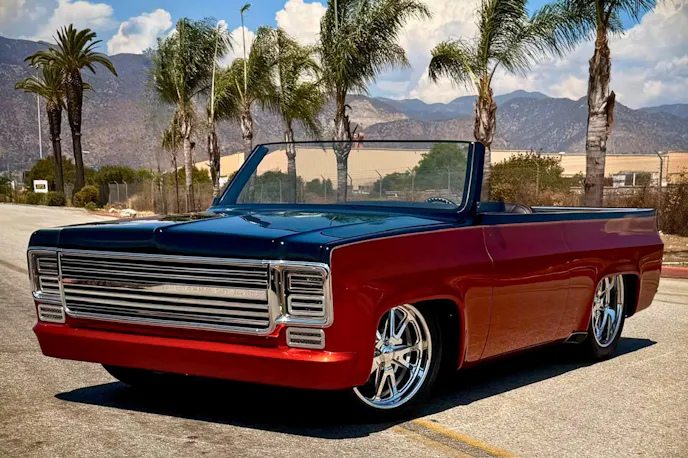
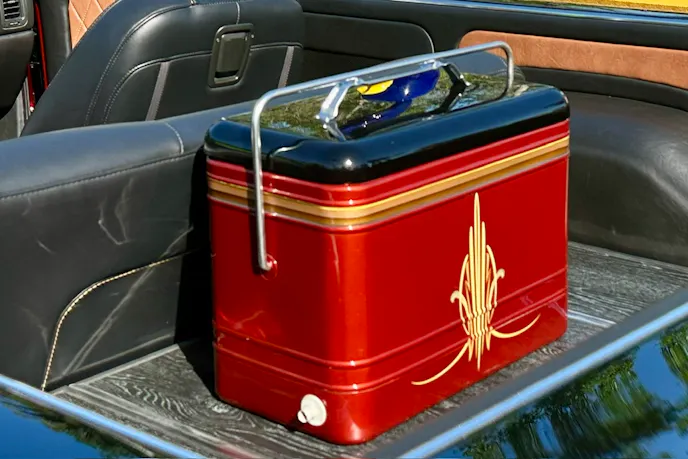
Rather than holding onto the removable fiberglass cap over the rear seats and cargo area, Hinge opted for a full and permanent open-top flex and complete cab roof delete. That resulted in all-new geometric challenges that spread throughout the vehicle.
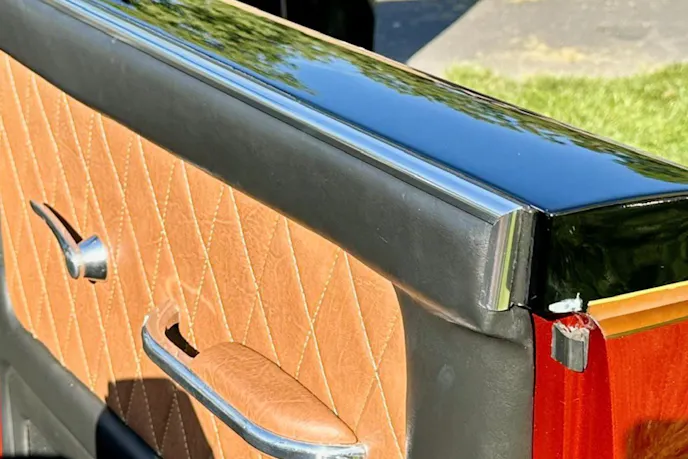
“We had to cut the window frame off and mold it to the A-pillars, which of course created problems for the door,” said Hinge. “It’s five and half-inches off of the A-pillars. We had to cut it to get the fender and the door to go underneath the A-pillar. Then we took all the windows out. If you look at a stock Blazer, it steps down an ½-inch, all the way around the roof, so we had to cap that and mold it in.
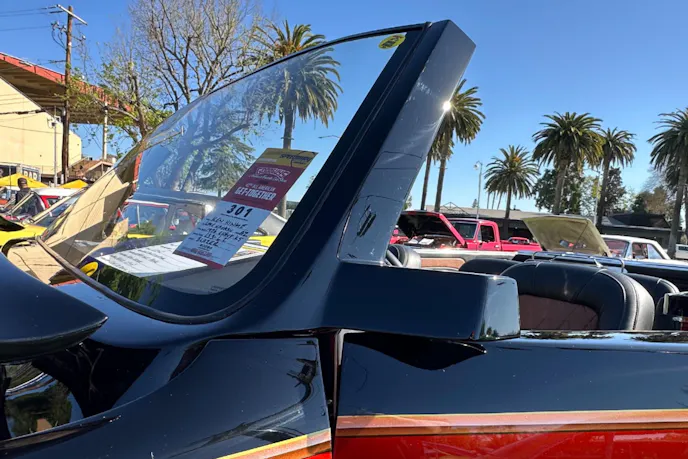
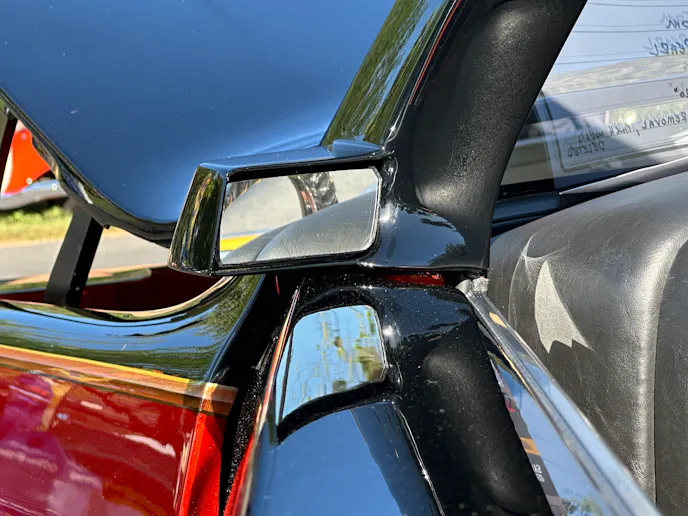
“The windshield was quite a fiasco. Three windshields broke before we finally got one to work, because the steel trim kept binding the glass and breaking it.”
Structure Intact; Fab Continues
The much-modded K5 forward faces with a handmade billet grill with hand-shaped and machined solid aluminum bars and hideaway headlights. Those nasty fly-away hood stories on the old school trucks weren’t going to happen here. An electric hood latch and safety device were installed. The bumpers were remade.
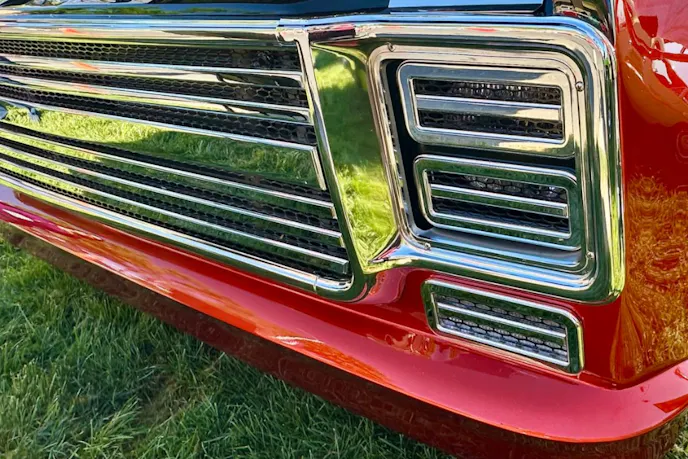
And just to be clear, Hinge didn’t lean on aftermarket production bolt-ons for his Blazer. Crafting contours, reshaping and molding added hours of fab to the project.
“We went through six bumpers, three for the front and three for the rear,” explained Hinge. “We had to slice and dice to get ‘em where we wanted and then mold ‘em to the truck.”
In the end, the front bumper was forged from a ’60 Ford and the rear donor was a ’70 Chevy.
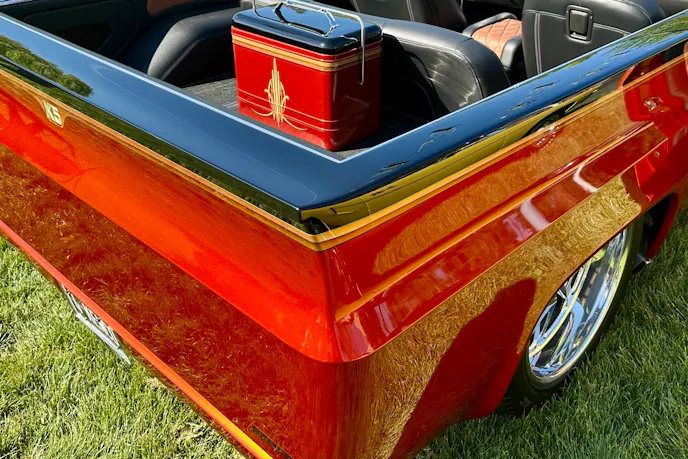
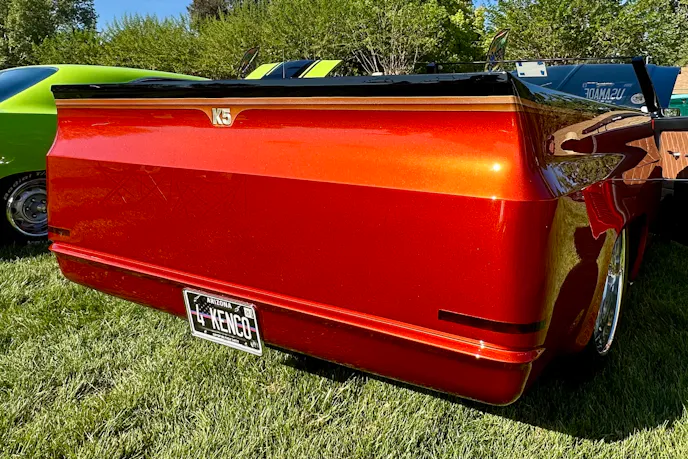
The mods mounted as each change required more fabrication to unify the K5 into a single flowing showpiece as the from-scratch-craft continued to the rear. Reworked fenders, an enclosed gate, and flush-mount LED tails were added, while the hand-sculpted spoiler demanded pain-staking attention to avoid even minor imperfections.
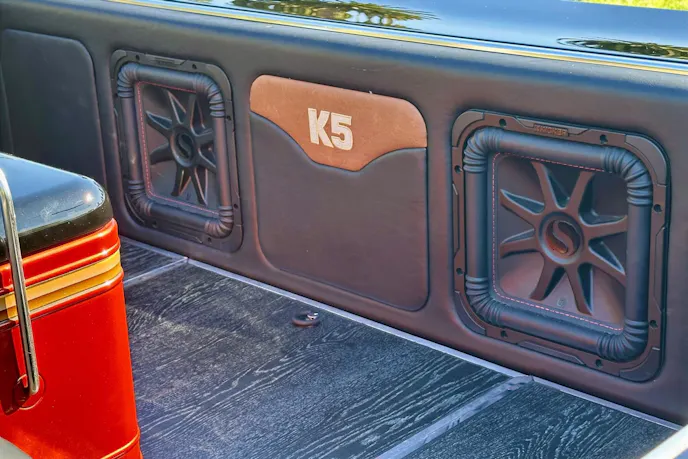
“The hardest part was the matching the body line — that goes all the way around,” he said. “It took a long time to get that perfectly straight and I had to close in the tailgate and that gave me a spot to put the subwoofers.”
Overall, extensive exterior sheetmetal mods enveloped the entire Blazer body. Not all mods were immediately visible, but all were focused on a final reveal to make the new “Blazin’ Phoenix” cohesive from every angle.
“Underneath all GMs, they have what’s called a pinch weld, where they weld together the inner body and the outer body,” Hinge explained. “When we did the exhaust system, I wanted the bottom to match the bottom of the body, which made the pinch weld stick out like a sore thumb. So, we had to cut off all the pinch welds and stitch it back together, so it was all smooth underneath.”
The final exterior color combo chosen was Jet Black over Amber Fire Pearl.
LS Crate Power
Originally, this K5 decodes to tell us it rolled out of production at the Flint, Michigan, plant, powered by the optional 400 cubic-inch V8. Equipped with the Gen I small-block topped with a Rochester Quadrajet four-barrel carb from the smog era, the OG Blazer’s horsepower was rated at 17, with 290 lb-ft of torque.
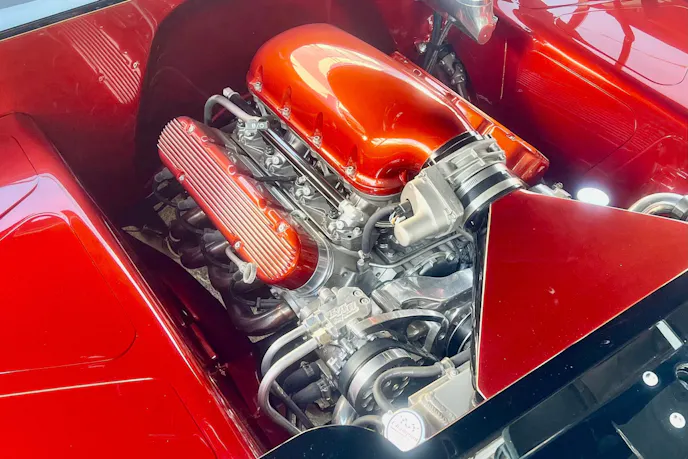
Hinge boosted his K5 power with a packaged LS3 crate. The General Motors 6.2-liter Gen IV small-block features an aluminum block mounted with aluminum heads.
”I went with a crate, because I always go new,” he said. “I could probably go to a junkyard and get a nice LS motor, but then you’ve got to rebuild it and everything and you never know what you got ‘til you got in the car. Plus, they stopped building the LS like 10 years ago, but they were typically in Denalis and Corvettes. The Corvette’s are probably the safest because people drive those the least. If you go to the Denalis, they’ve been rode hard.”
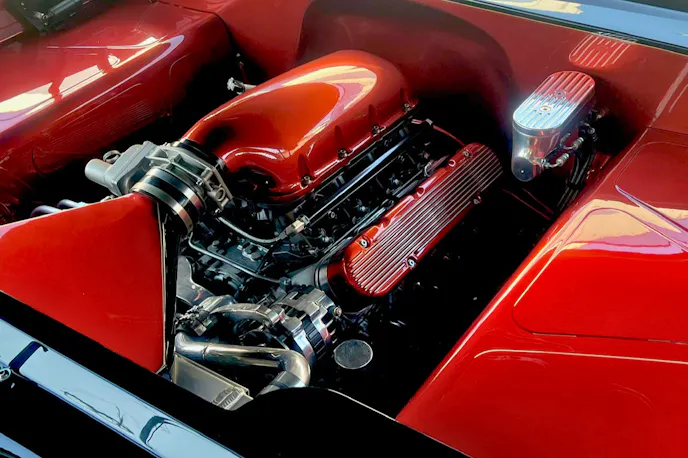
Dropped into a color-matched engine bay, the compartment was enhanced with bead-rolled inner panels and a smoothed firewall.
The 376 cubic-inch crate engine came paired with a 6L80E six-speed automatic transmission. An electric fan with an aluminum three-pass radiator controls cooling. And, a polished serpentine accessory drives the pulleys.
The induction system pairs a hand-fabbed “mail slot” cold air box and a carbon fiber tunnel ram intake. The engine exhale runs through mandrel-bent stainless headers to dual three-inch mufflers with contoured side exits.
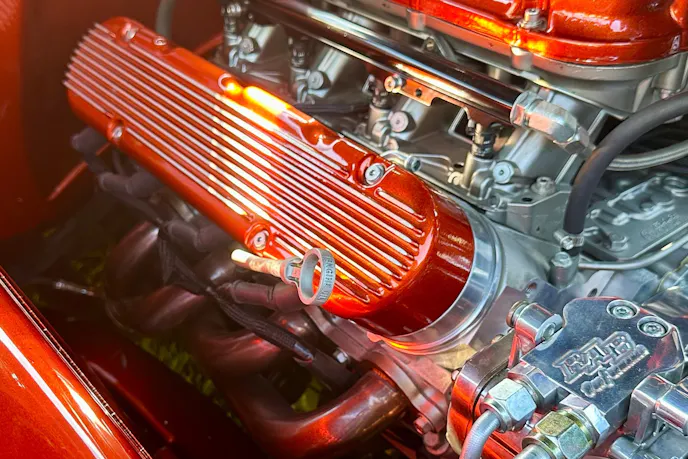
“I wanted to keep it a nice, simple driver, which is why I went this way and there is no blower on there,” Hinge explained. “I didn’t want all that noise. It’s all naturally-aspirated, so the whole thing really quiets down. It runs really smooth at about 80, 85, 90 mph.”
The final dyno specs came in at 524 horsepower and 501 lb-ft of torque. Currently the break-in miles are still in progress.
“I only got a couple hundred (miles) on it now,” Hinge stated. “I’m not driving it that much yet, because I’m showing it all this year. But by next year it’s going to be driven. Hopefully by the end of this year, I’ll have enough to get the 500 miles on it.”
Creating Frame
The hand-modded body was set on a hand-built frame with 2-x6-inch main rails and a 2-x4-inch back half.
“I needed to modify this whole front clip in order to get the motor the way I wanted it and we C-notched it, to get over the rearend,” described Hinge. “That gave us the ability to bring the seats down, so that it’s the same elevation as it is — very clean.”
An independent front suspension coilover power rack was combined with an independent rear suspension with inboard brakes. It uses a Ford 9-inch.
“It has a polished aluminum Kugel setup with 3.75 gears,” he added. “When we have it up on blocks or up on a lift, you can really see the custom work from underneath, the framework.”
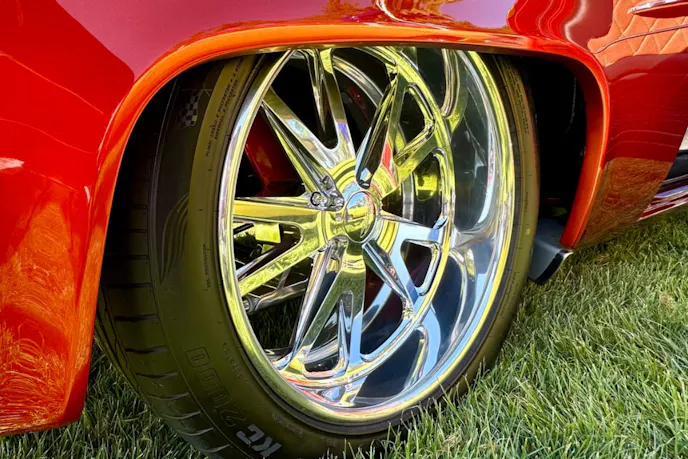
Discs are 13-inches with six-piston fronts and four-piston rears. Lexani’s in 20×8.5 and 22×10.5 are wrapped in 265/40ZR20s and 305/45ZR22s from GTX.
Silverado / Rolls-Royce Interior Injection
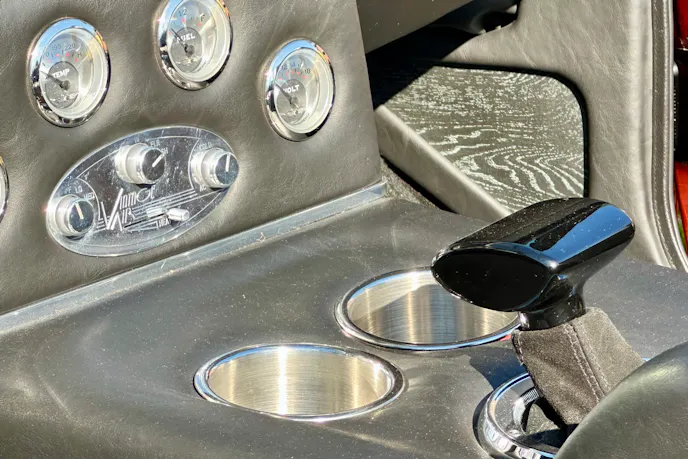
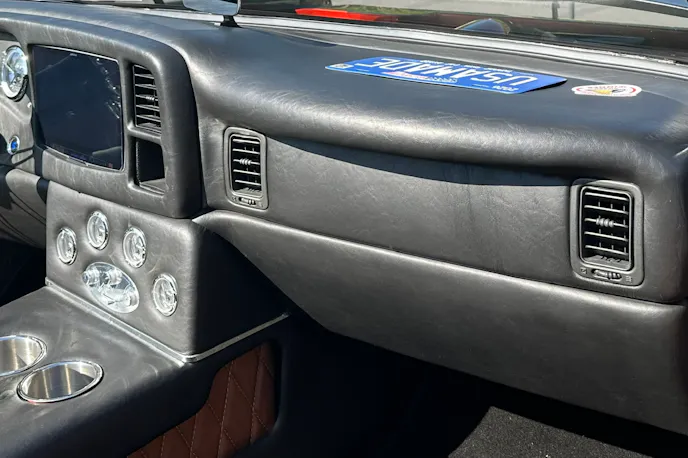
The interior was based on Rolls Royce black carpet and black oak wood. Black and saddle leather was accented by diamond inserts. A 2004 Silverado volunteered its dash.
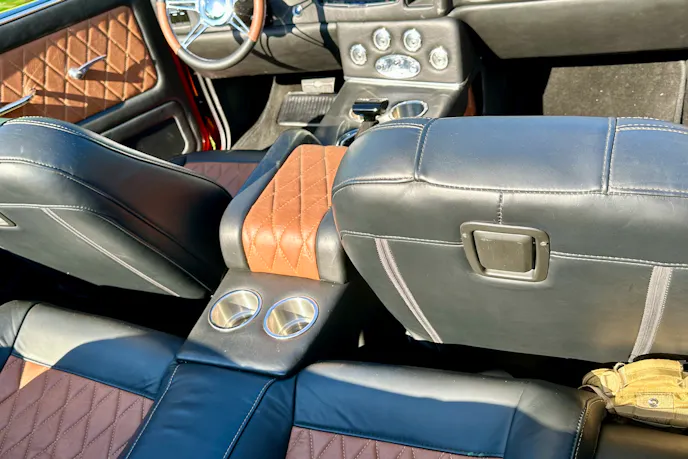
“The reason I went with that is because on the original Silverados, they have all the mechanisms for the heater and everything in there, and I needed that spot to be able to recess the monitor,” he explained
Custom-crafted side panels and a center console completed the foundation. A seven-piece All American gauge setup and 11-inch touch screen display the data.
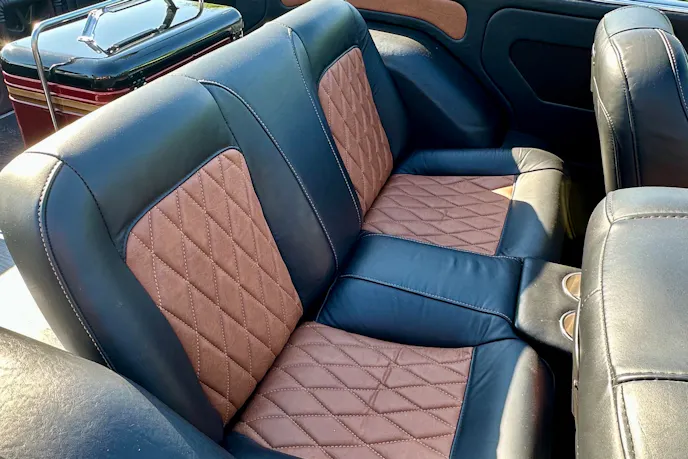
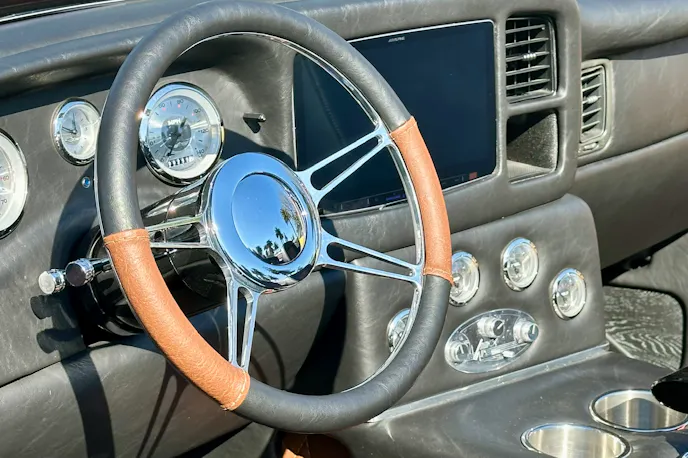
“It controls everything, including GPS, stereo and stuff,” he said. “We’ve got eight 8x9s, and two 10x10s, and subwoofers with 3,000 watts of power with two sets of batteries.”
In 1976, the Blazer was not mixed with cars like a Rolls. They weren’t adorned with that much audio power, let alone horsepower, but in the end, Hinges ’76 that went from work truck to show truck, the build that just started escalating, culminated just as he wished.
The car show community agreed. The Blazer earned the Meguiar’s Magnificent Masterpiece award at a 2026 Goodguys event, while also securing a spot among the 11 national finalists for the ARP Fasteners World’s Most Beautiful Truck honor at the Grand National Truck Show. For Hinge, however, the recognition was simply confirmation that his escalating vision had been realized.
“When we made that turn, we knew we were not going to scrimp on anything,” he recalled. “We knew everything’s going to be custom, everything’s going to be done as best as possible and it came out really beautiful.”
You might also like
Project F-Zilla Cab Prep: Heat And Sound With Help From DEI
.. we left the most of the cab in its factory green paint. The rest will be covered by DEI products, including ATAC primer and sealer.