
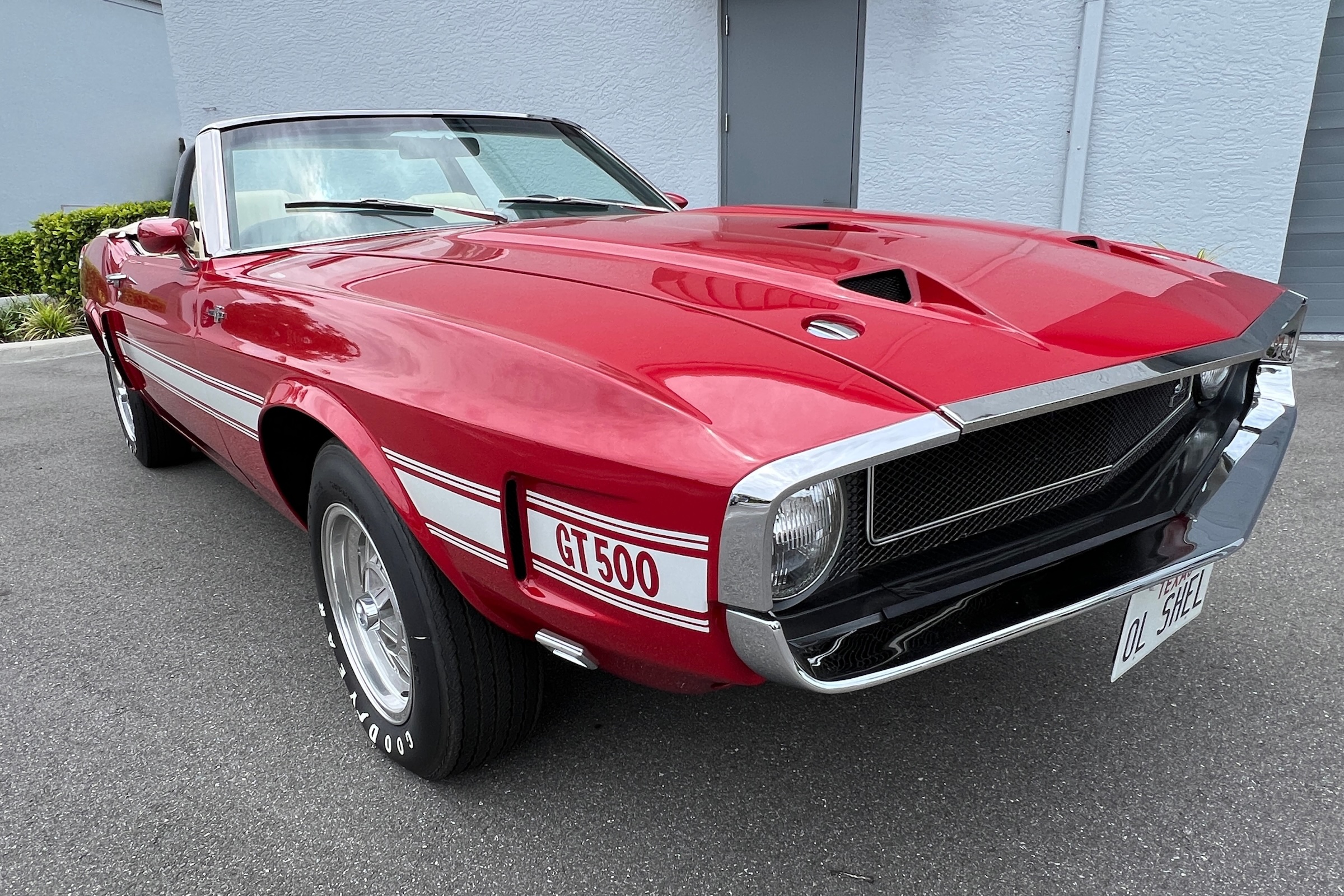
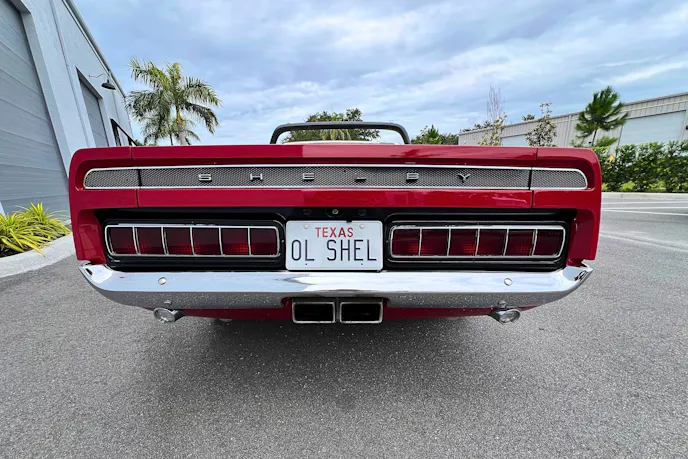
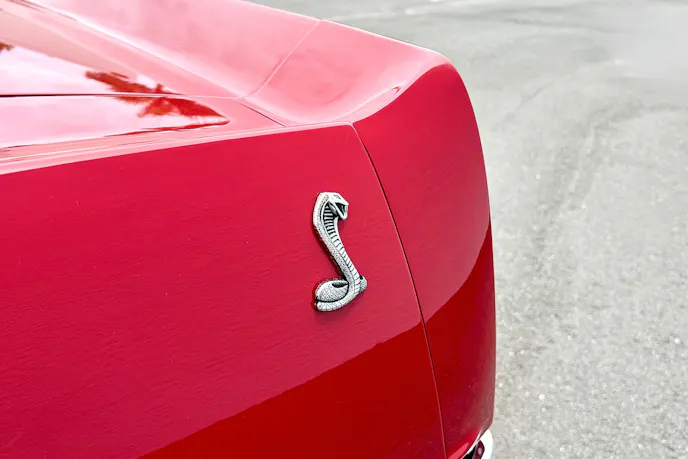
Carroll Shelby’s best known for that hybrid British roadster with the Ford engines under the bonnet. For winning LeMans. There was also the line of specialty Mustangs that bore his name, amazing automobiles that kept his name at the forefront of most enthusiasts’ brains. The ’69 Shelby GT Mustangs don’t get as much attention as his ‘65-67 cars, but this 1969 GT500 should: Carroll purchased it new, owned it for 39 years, and personalized it himself.
The car you see here, known as “Ol’ Shel,” is currently owned by Ryan Snyder. He’s amassed himself a sizeable collection of muscle cars, mostly Camaros, but he loves Fords and Mopars, too. This 1969 GT500 holds special meaning for him because of the direct connection to Shelby himself.
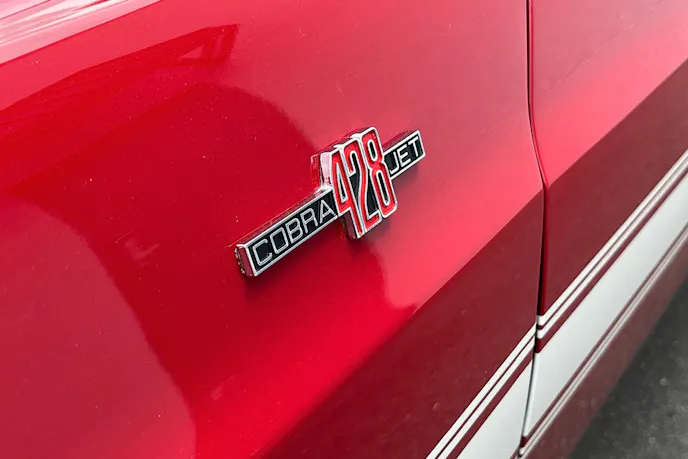
Shelby was not a hands-off owner. When it came time to rebuild the 428 Cobra Jet in the late ’70s/early ’80s, Carroll did the work.
Shelby Modified By Carroll Shelby
This GT500 looks nothing like it did when it rolled off the line. Changes started before Carroll even took possession.
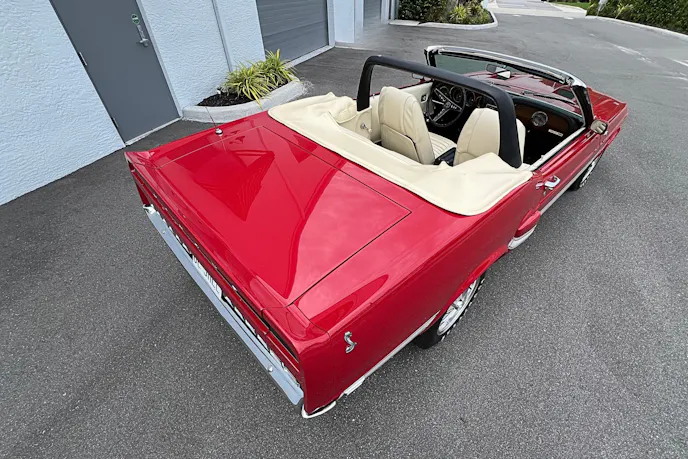
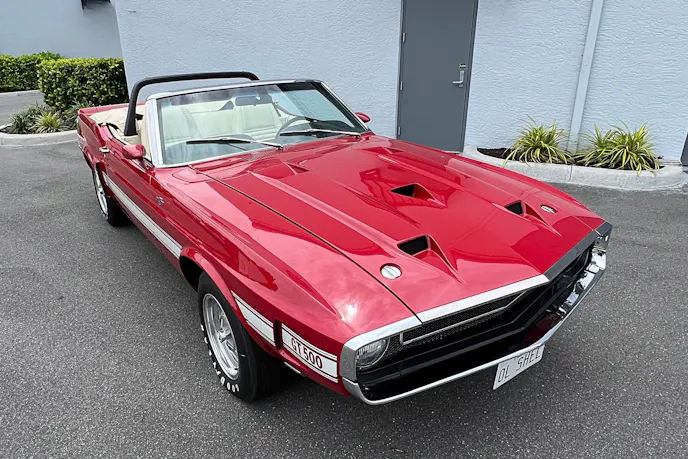
“He wanted a red convertible. This was towards the tail-end of production in ‘69, and none were available, so this was pulled from the Shelby pull — this was a triple white car,” explained Ryan. “He sent it back back through Shelby and had it painted the Candy Apple Red you see here.”
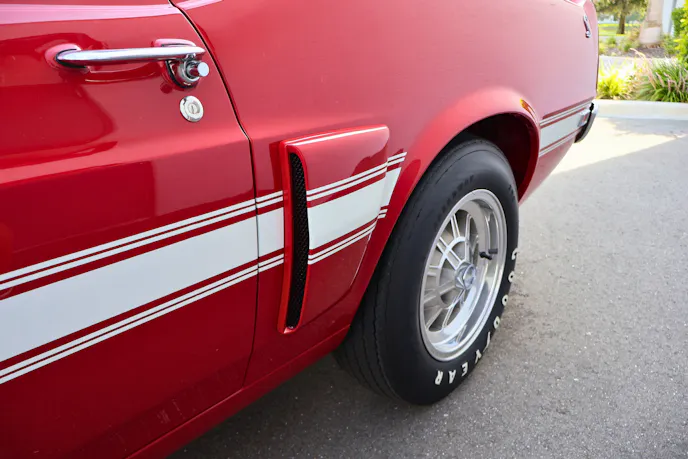
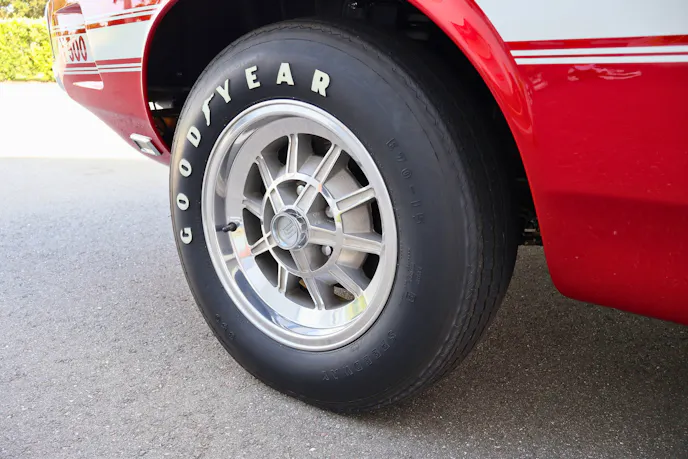
Those with keen eyes will notice that it has incorrect wheels — these are the late-intro ’67 and all-of-’68 10-spokes. But as the story goes, Shelby did not care for the new five-spoke design that came on the car from the factory, so he substituted these instead.
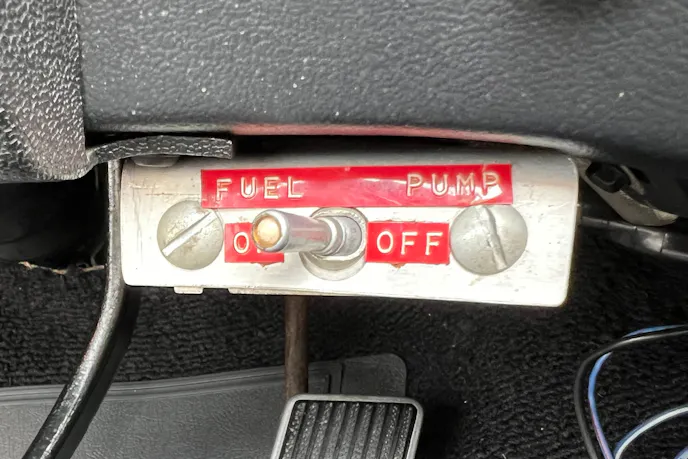
Other modifications? Legend has it that he was driving around his Texas ranch one day and ran out of fuel. To ensure he could get every last drop in the future, he added an electric fuel pump and ran it with a switch he pulled from a Shelby Daytona coupe. The switch is mounted under the driver’s side dash to this day.
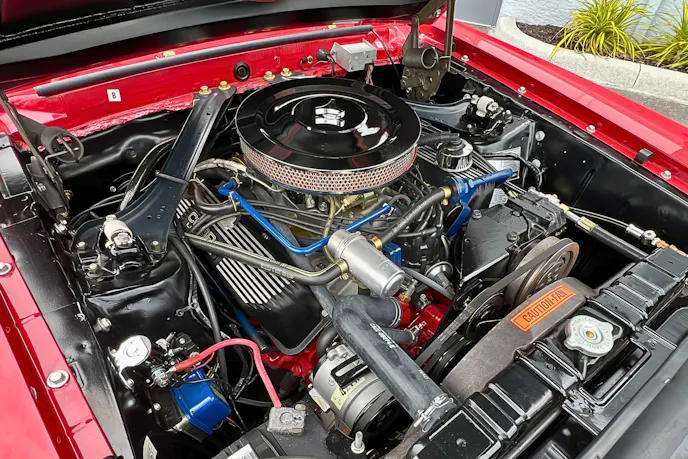
Shelby was not a hands-off owner. When it came time to rebuild the 428 Cobra Jet in the late ’70s/early ’80s, he handled that task himself. It went back together stock, according to Ryan, but Shelby added Cobra LeMans valve covers, a chrome air cleaner, and a deep-sump Cobra oil pan. It was at this point, Carroll — perhaps as a middle finger to Ford, which had ended his deal by this time — painted the engine’s long-block red. Of course, he could have just wanted the FE to match the paint, but knowing Shelby, we have to give more credence to the first theory.
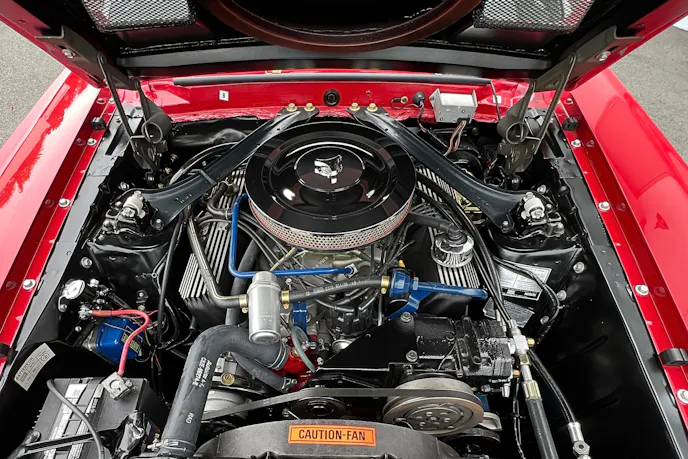
The 428 mates to a stock C-6 automatic and 9-inch rear.
Options To Keep You Happy
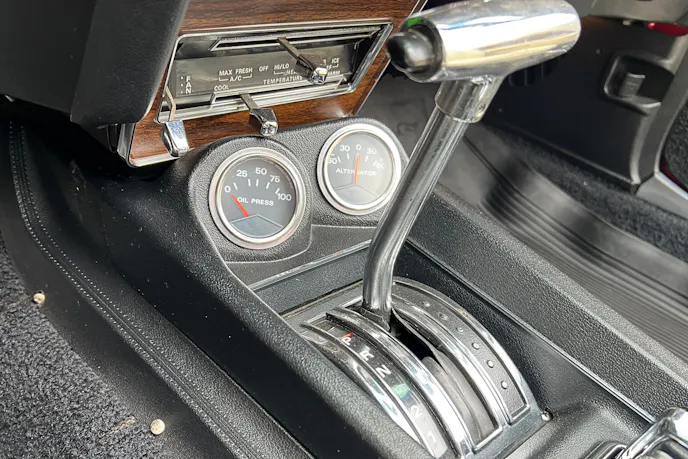
Besides the Cougar console-mounted automatic, which was standard on the ’69 GT500, this example was equipped with such niceties as air conditioning and AM-FM stereo. Shelby Mustangs were supposed to come with a wooden T-handle shifter with the C-6, but some did not. All signs indicate this was one of the cars that came with the chrome Mustang piece.
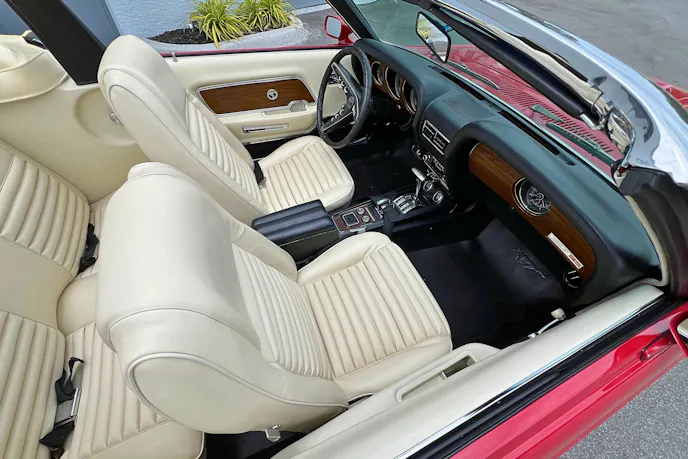
The steering wheel was covered with one of those ubiquitous ’70s aftermarket wraps that could be found in any parts stores and it remains part of the car. At some point in its history, Shelby autographed the passenger side of the instrument panel, something he did to raise money for his charity foundation for children.
The Shelby convertibles provided a bit of an issue for Ford in 1969. The SportsRoof models all got the Mach 1’s suspension upgrades and Deluxe interior. The convertibles had to have these items added.
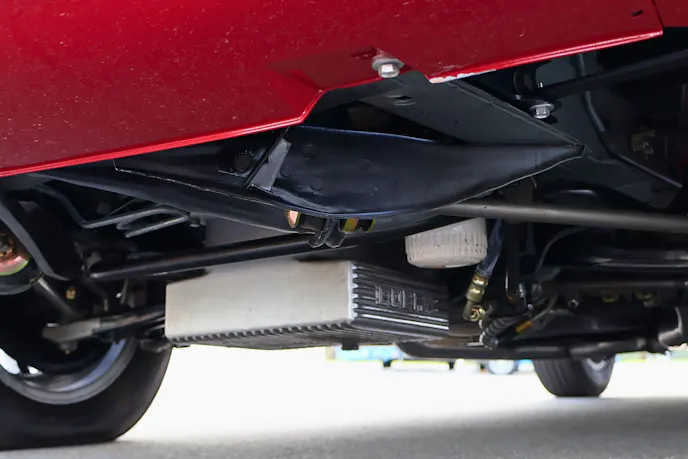
Also, the functional rear brake scoops were mounted in a different location than those of the SportsRoof. Because of the power top mechanisms, the scoops were mounted lower on the body — an ideal location, frankly — while those on the fastbacks were mounted where the faux air inlets would have been in ’69.
A Body Unlike Any Other
The ’69 Shelby Mustangs looked unlike any other Ford ponycar that came before. The front fenders and hood were fiberglass and the headlights and grille were unique to these cars. Remember, ’69 was the year the Mustang got four headlights. Shelbys received two in an oval fascia surrounded by a wide chrome band.
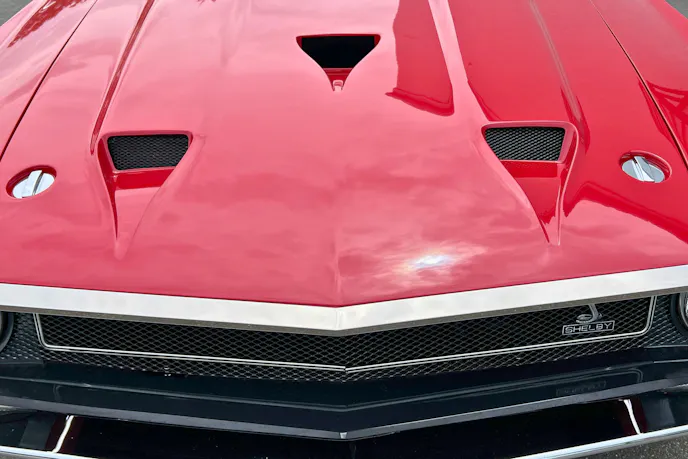
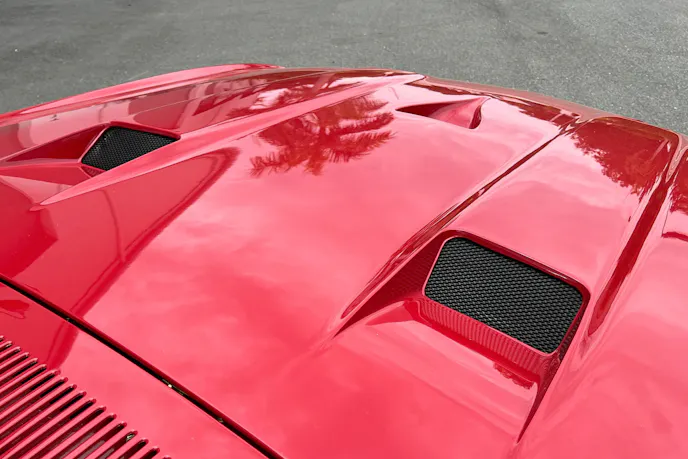
The hood has five NACA (or NASA if you prefer) ducts, one that fed cold air to the carburetor and two that allowed heat to escape from under the engine compartment. The fenders had functional scoops, but they really didn’t feed air to the brakes. According to Ryan, at some point in the ’80s, the hood pins started becoming a problem for Shelby because of his arthritis, so he had the pin parts removed and the twist-locks epoxied to the hood.
In the rear, the ’68 Shelby’s Thunderbird taillights were again employed and a more aggressive, integrated rear spoiler flowed upwards. The dual exhaust outlets exited through the center of the rear fascia, causing the rear license plate to be relocated between the taillight. This necessitated hiding the fuel fill behind the plate. Thanks to sparks that could exit those sporty pipes, a non-vented fuel cap had to be added (a running change after production began).
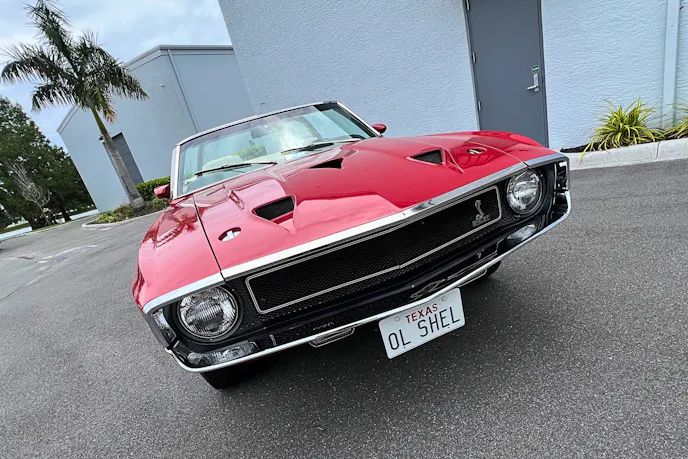
Ryan has owned the car now for four years. He has amassed a special collection of muscle cars, but this one remains one of the most special.
“Shelby owned a lot of cars, a lot of Shelby cars, over the course of his lifetime, so in any given year you’ll see five or 10 cars at auction that are being promoted as Carroll Shelby-owned,” Ryan told us. “This doesn’t really carry a lot of weight in the collector car world, but this particular auction house had listed this one as a Shelby-owned Shelby and didn’t really say anything else about the history of the car. This one here he had owned for 39 years, and this one had a real rich history during his ownership.”
You might also like
Rare 1-of-35 Race Hemi And 413 Ramcharger Dart Street Mopars
You might say Lee is a Mopar guy. In his collection are these two, a ’69 Hemi Road Runner, a ’70 Hemicuda, and 19,000-mile Superbird.