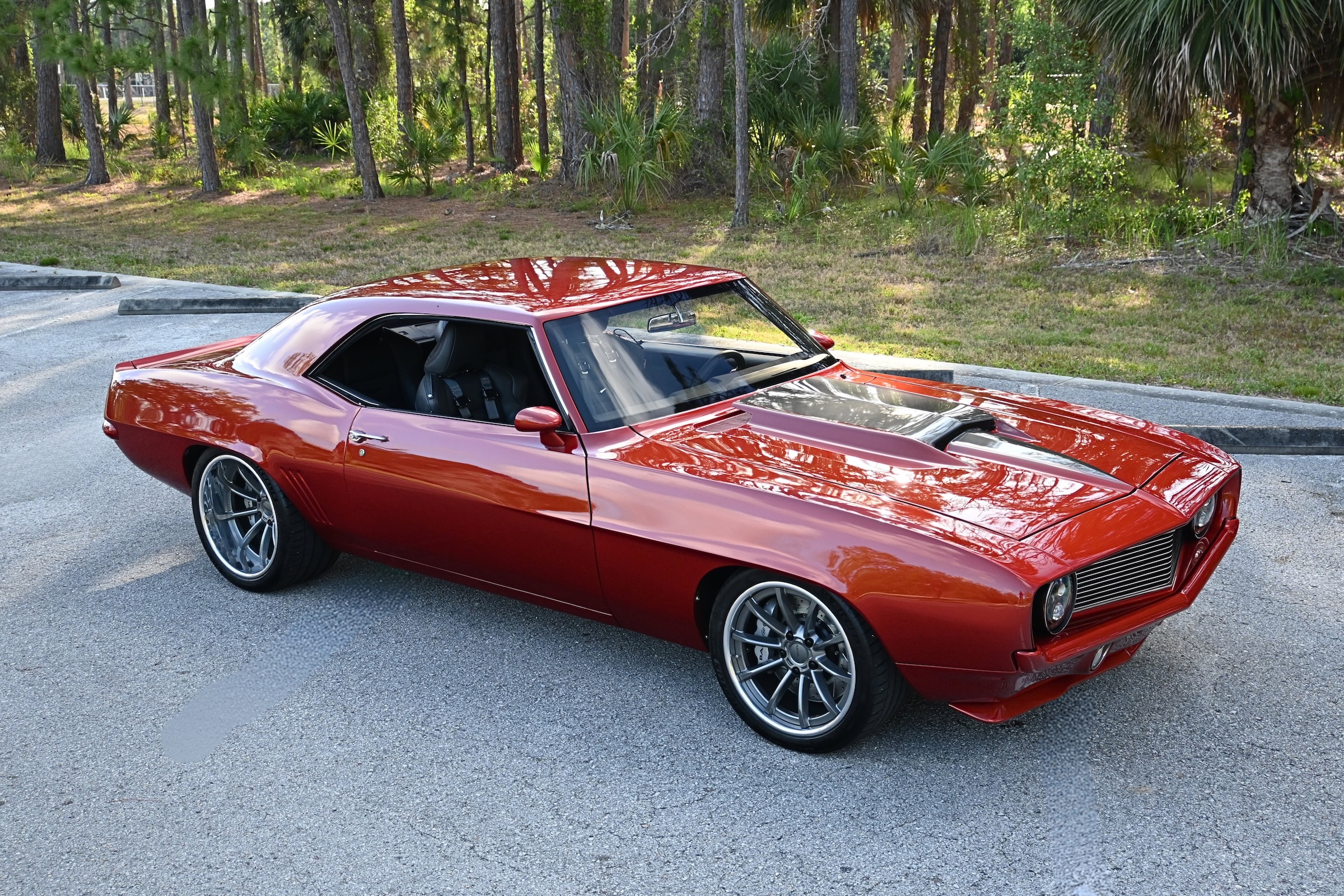
Brian Kinports is a long-time BMW collector who owns a 1949 321 sedan that might be the only one in the United States. But he’s always desired a 1969 Camaro, especially since riding in a friend’s car years ago. The long journey to fulfill that dream began 12 years ago when the Florida resident bought a bare-bones rolling body online.
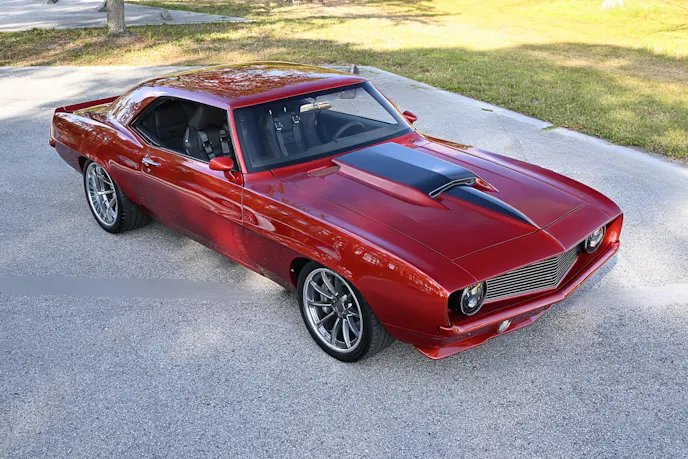
Brian says he wanted to build the car himself, only outsourcing paint and body work as well as upholstery.
With life, work and waiting for the outsourced tasks to be completed, the project assumed a life of its own. The donor car’s history was non-existent, with no information on model, powertrain, options, etc., other than it was a manual transmission car with a floor shift.
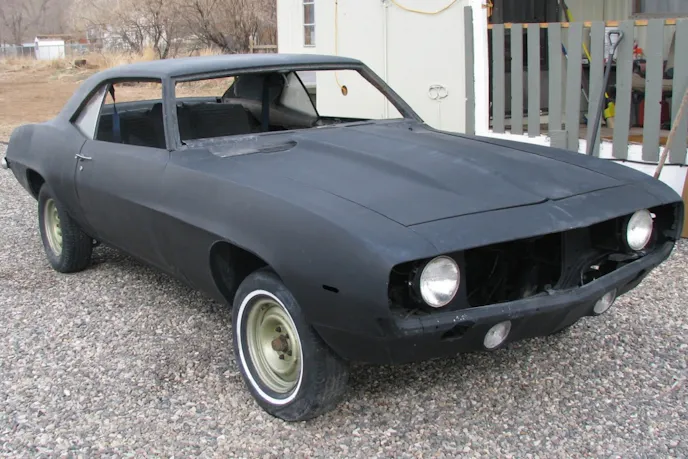
The goal: A modern pro-touring performer in a classic Camaro body.
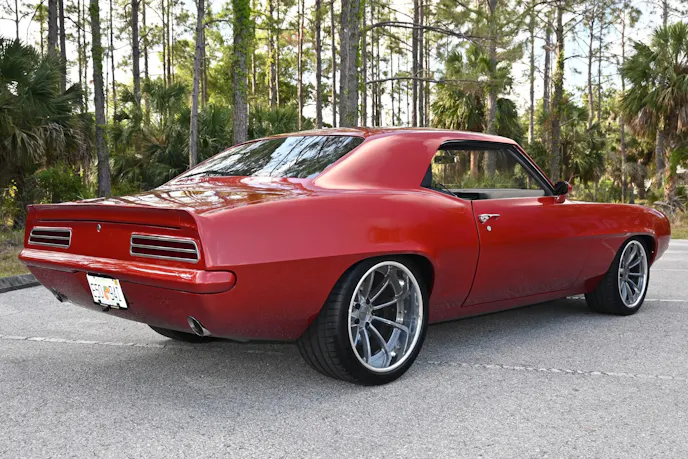
Rolling Work Of Art
Starting with the body, Brian turned to friend Steve Gregory to handle the metal restoration and numerous modifications. After basic changes — deleted side marker lights, original trim pieces, etc. — Steve tackled the hard work. The drip rails were eliminated. A custom three-piece metal rear spoiler was molded into the body. The rear valance was extended with cutouts for the exhaust tips. The rear quarters behind the wheels were lengthened vertically to match the modified rear valance. The rear bumper was tucked closer to the body.
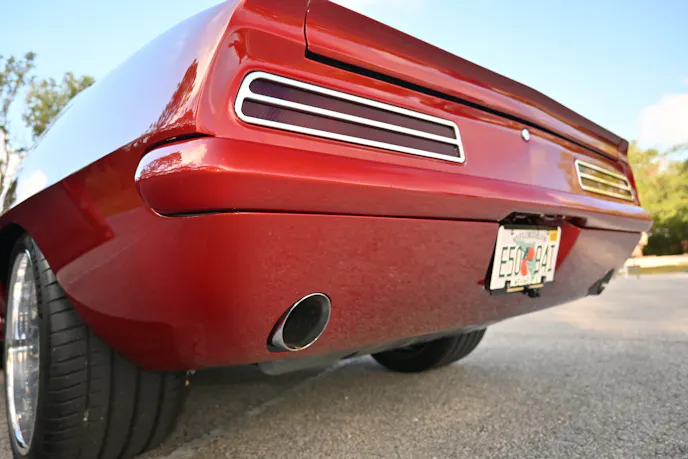
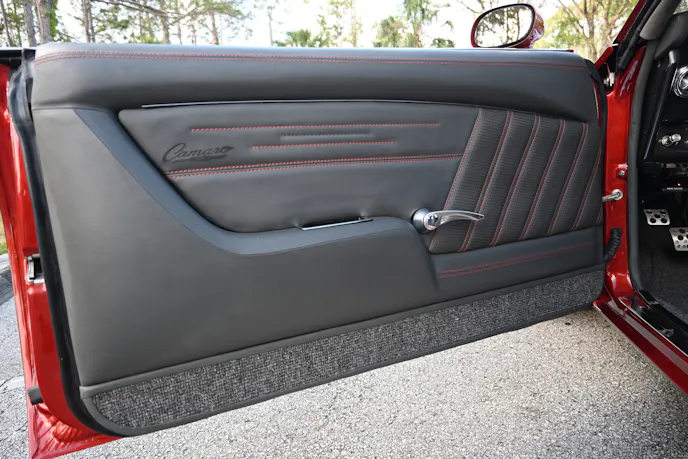
The firewall was smoothed and rear minitubs were installed. Second-generation Camaro exterior mirrors replaced the stock units. Polished billet door handles from Fesler were added. Hood and trunk hinges came from Eddie Motorsports.
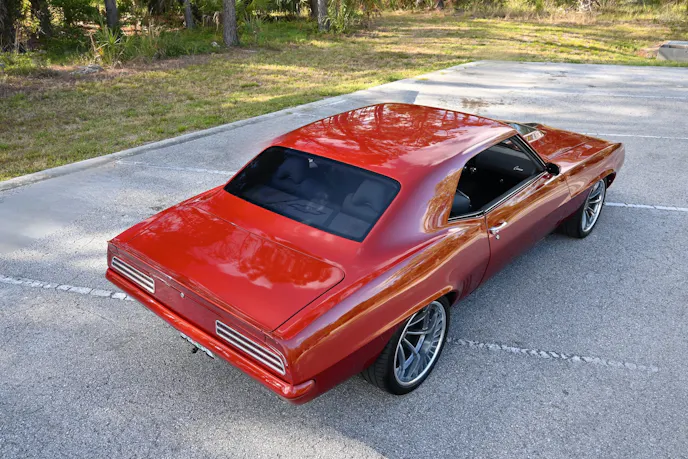
The windshield and rear glass were flush fit. With that conversion, the hood and upper corners of the fenders were extended slightly to cover the gap where the lower window trim was deleted. The cowl induction hood that came with the car was replaced with an aftermarket Stinger-style hood. A custom grille insert and front spoiler were added. Exterior LED lights were installed, including Eddie Motorsports rear lenses.
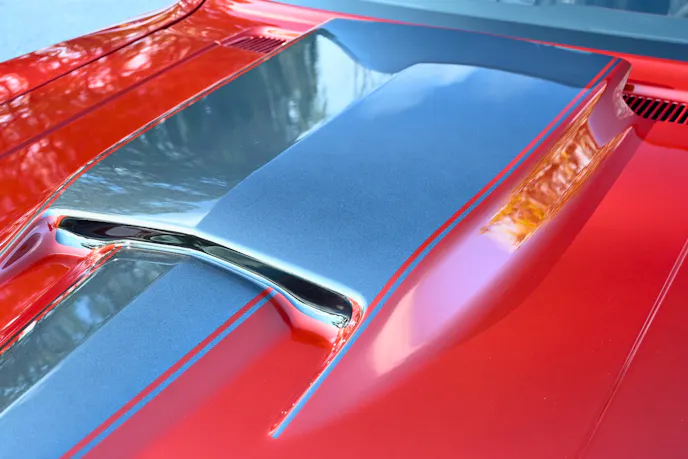
Once the body work was done, Steve Gregory applied the Dupont/Nason Sakhir Orange paint.
Putting The “Pro” In “Pro Touring”
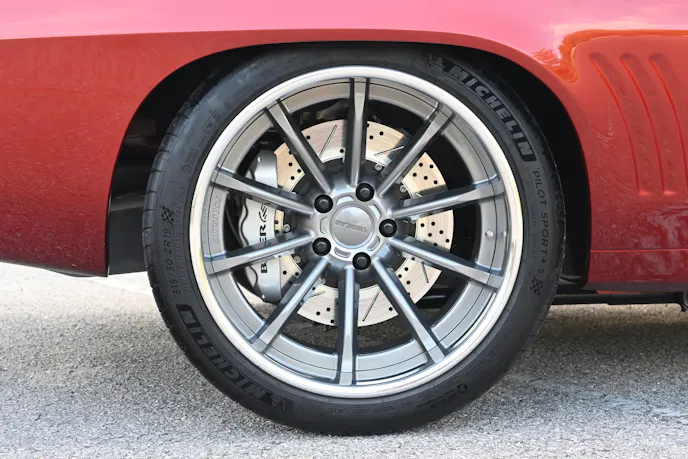
The stock front suspension pieces were replaced with a Speedtech pro touring front subframe that features AFX two-inch drop spindles and Viking double-adjustable coilover shocks, tubular upper and lower control arms and a 1.25-inch front sway bar.
In the rear a Speedtech rear torque subframe unit features Viking shocks and a panhard bar. Baer six-piston calipers are attached to 14-inch, slotted and drilled two-piece rotors front and rear. Michelin Pilot Sports 4S tires (262/35 in front, 315/30 in the rear) fit Forgeline ML3C wheels (18×9 in front, 19/11.5 in back).
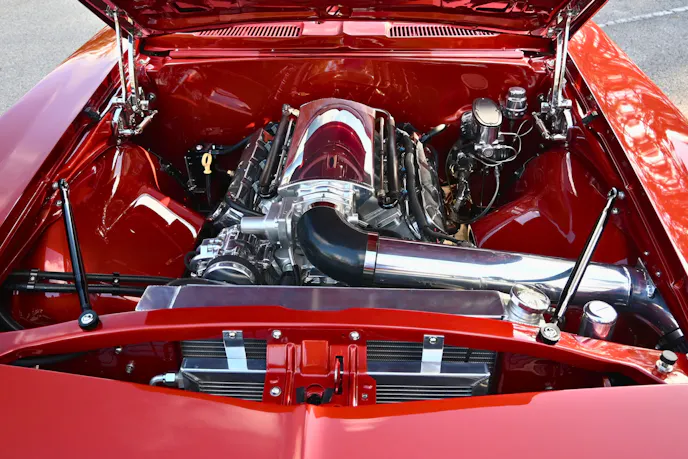
Power comes from an LS3 Chevrolet Performance 6.2-liter V8 that produces 525 horsepower and 486 foot-pounds of torque. A polished aluminum intake manifold from Precision Metalcraft sits between polished valve covers. The coils were relocated to clean up the top of the engine.
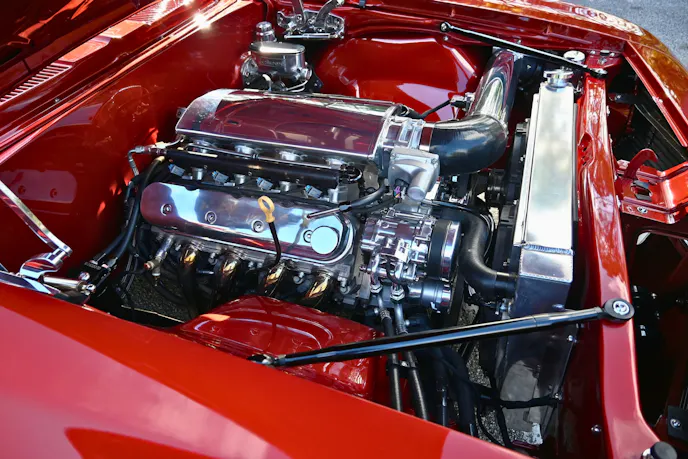
A PRC aluminum radiator with dual fans maintains the engine temperature while a Vintage Air Front Runner system keeps the accessories turning. Stainless Works headers direct exhaust waste through custom three-inch polished stainless steel pipes and Borla XPS mufflers.
A Hurst shifter controls the Tremec Magnum six-speed manual transmission that is connected to the Ford nine-inch rear end by a custom aluminum driveshaft. Fuel is stored in a Tanks Inc. unit with an EFI high-pressure pump that utilizes custom stainless fuel lines to feed the black billet fuel rails.
Perfecting The Cockpit
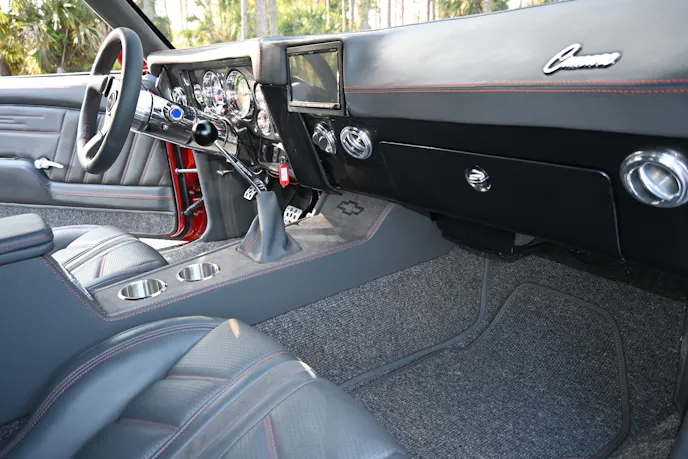
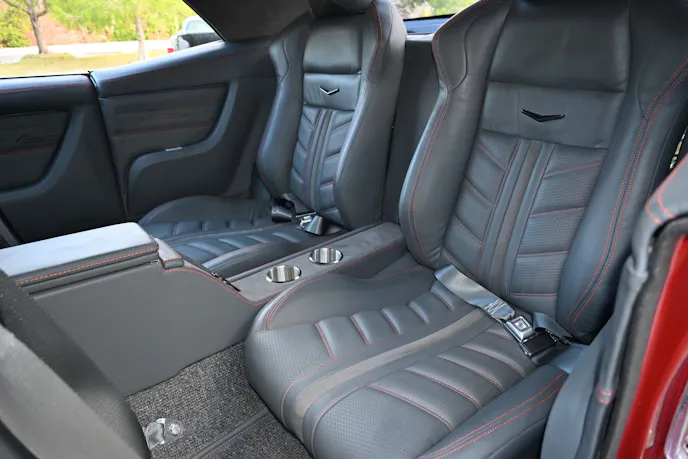
Brian turned to the team at Swift Stitch in Inverness, Florida, to convert the classic Camaro interior into a modern performance-oriented space for four passengers. A full-length custom console separates four Scion FRS bucket seats as well as custom formed door and rear panels. The gray leather and suede work includes pleats and perforations as well as stitching and underlays in orange that match the exterior color.
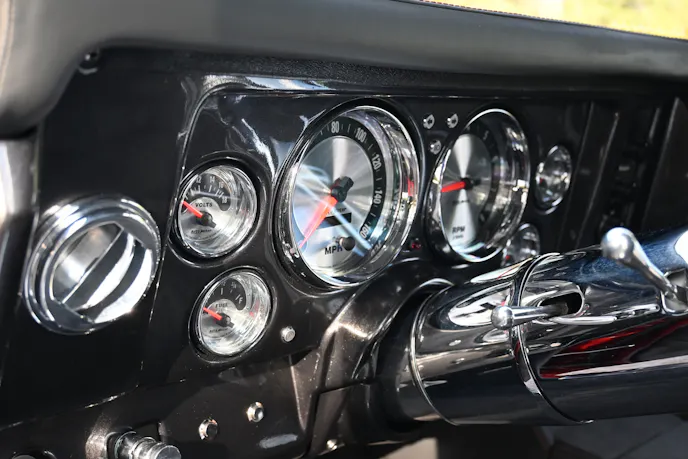
The console features front and rear cup holders (a truly modern necessity) as well as power window switches. The custom dash holds Auto Meter Muscle Car Series gauges as well as a center-mounted screen that controls the sound system. The Kenwood double DIN stereo includes a navigation system, a 10-inch subwoofer, six-inch Shop LLC kick panel speakers and a Shop LLC rear package tray and 6×9-inch speakers.
The smoothed floor is covered with square-weave carpet. The one-piece headliner was supplied by TMI. A Flaming River polished stainless steel tilt column if topped by a Detroit Speed wheel covered in gray suede. The Vintage Air AC system includes billet vents. Stock pedals are covered in pieces from Modo Innovations.
An American Autowire Highway 22 system connects the electrical components, including power windows, power door locks, power trunk release and a push-button start/stop system. The battery was relocated to the trunk and as much as possible of the wiring, computer, fuse and relays was hidden. Custom trunk panels are on the schedule for a future upgrade.
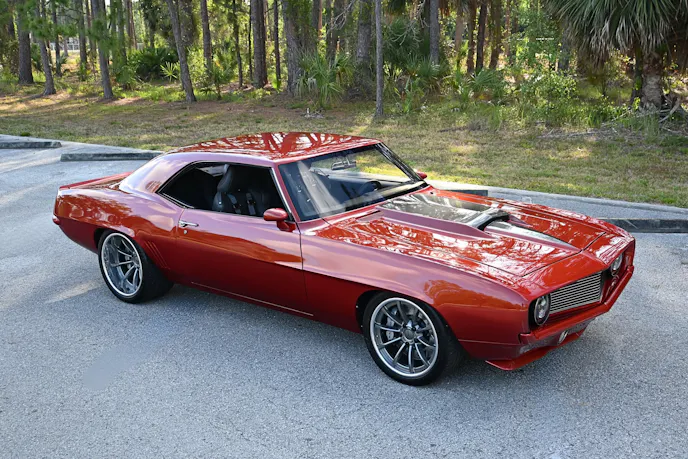
This incredible 12-year build has finally given Brian the first-gen F-body he dreamed of.
You might also like
The 2027 Scottsdale Auction Grows To Nine Full Days
Barrett-Jackson expanded the 2027 Scottsdale Auction to run nine days. Over 2,000 collector vehicles will cross the block in Arizona.