

Have you ever stared at your crowded engine bay during a major cooling upgrade and wondered about the exact mechanical differences between a flush-mount vs drop-in-mount electric fan?
Selecting the right mounting configuration directly determines how well your cooling system manages high coolant temperatures under heavy throttle. Experienced automotive builders recognize that physical fitment matters just as much as raw airflow numbers when routing incoming air through cramped spaces.
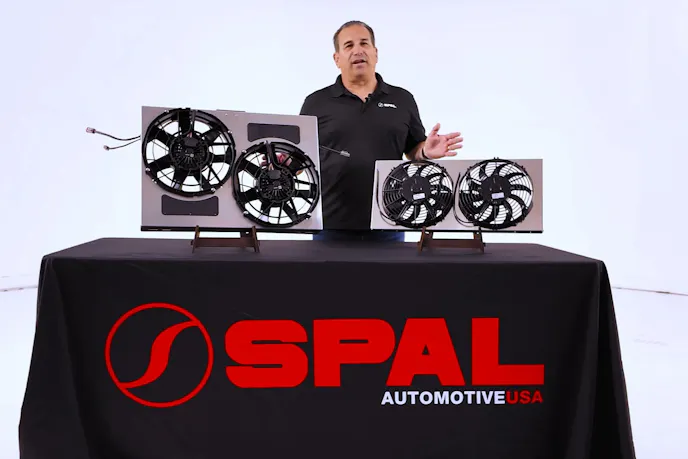
Builders must evaluate some baseline measurements to prevent costly clearance mistakes when tackling an engine project.
Tom Longo of SPAL USA notes, “When we are looking to buy an electric fan, we are often considering the CFM rating, the diameter, and of course the depth, which is how much room there is between the radiator core and the closest engine component.” Beyond basic dimensions, deciding how that unit physically fastens against the aluminum core shapes the entire installation workflow.
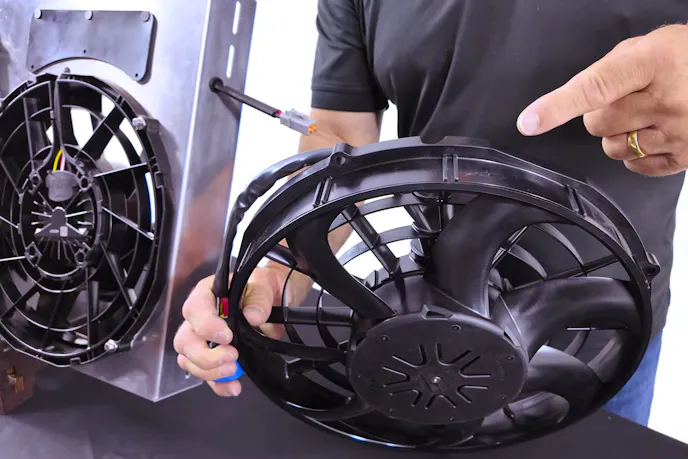
When comparing a flush-mount vs drop-in-mount setup, fabricators frequently choose a flush design when dealing with minimal clearance between water pump pulleys and radiator fins because it simplifies the installation process.
Longo explains, “A flush mount fan is designed to mount flush onto the radiator or ultimately flush on a fan shroud. The key here is that it doesn’t require a shroud.” Alternatively, recessed designs integrate straight into fabricated brackets. Longo adds, “A drop in fan specifically designed to drop into a metal or plastic fan shroud.”
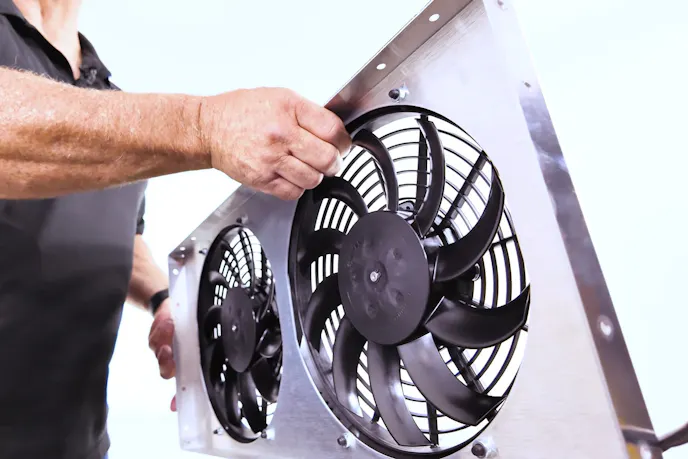
Pulling cold air across the entire surface of the radiator core, a shroud dramatically improves the overall cooling performance of any electric fan setup.
Both configurations handle extreme engine heat with tremendous reliability, so your choice simply depends on your available space, personal fabrication skills, and aesthetic goals for the engine bay.
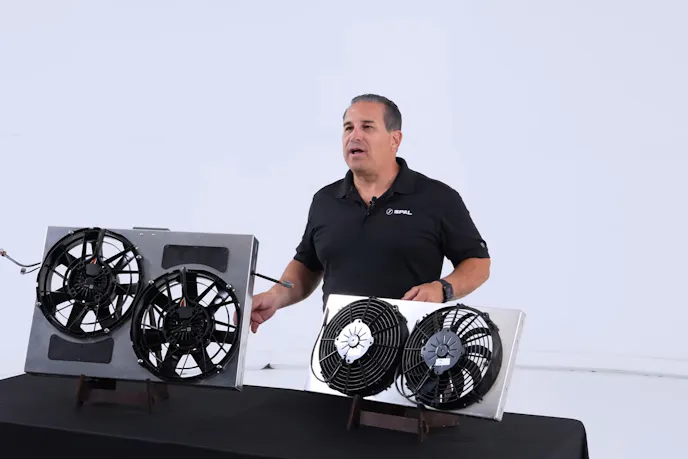
Both styles push plenty of air to keep temps down under heavy load, so deciding between a flush-mount vs drop-in-mount really just comes down to your available space and how you want the finished engine bay to look.
If you are gearing up for a cooling system overhaul, grab a tape measure, figure out your clearances, and then jump over to the SPAL USA website to check out their full lineup before tearing into the front end of your project car.
You might also like
500-Horse 1962 Bel Air Runs Like A Beast, Looks Like A Beauty
This spectacular ’62 Bel Air is a long way from bargain-bin transportation, which is how it started life. Under the hood is a fully built 383