
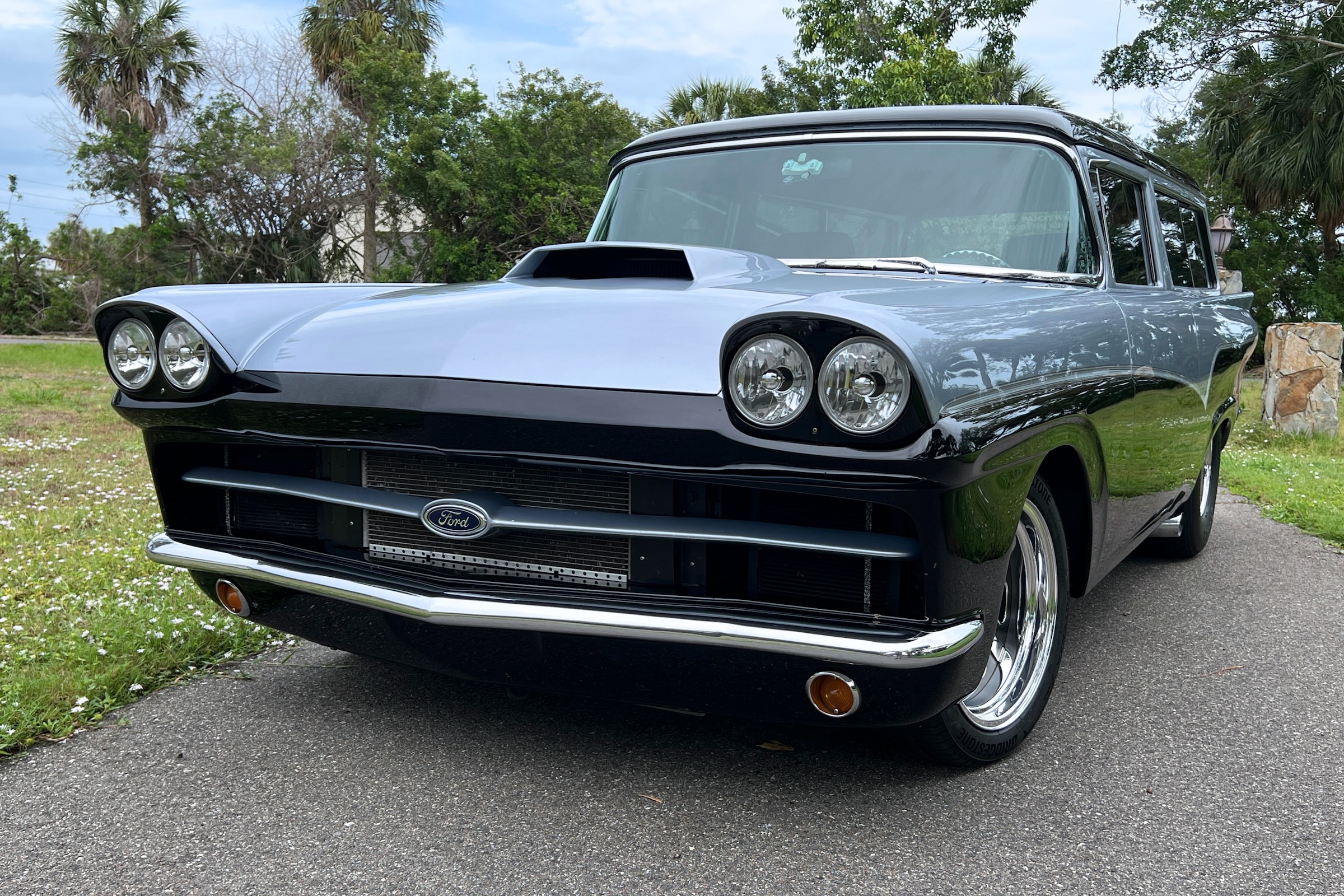
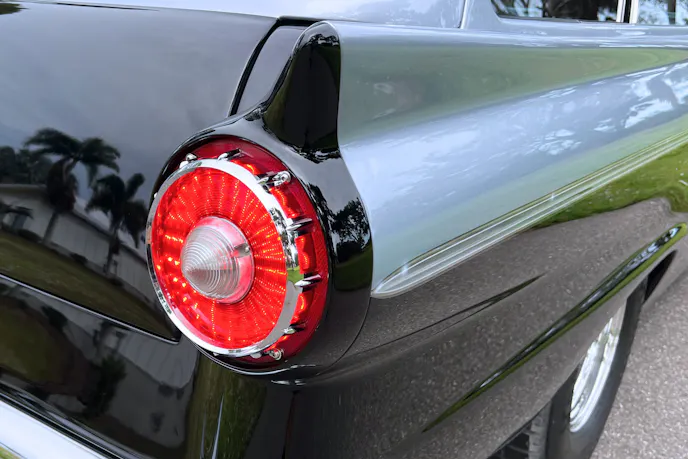
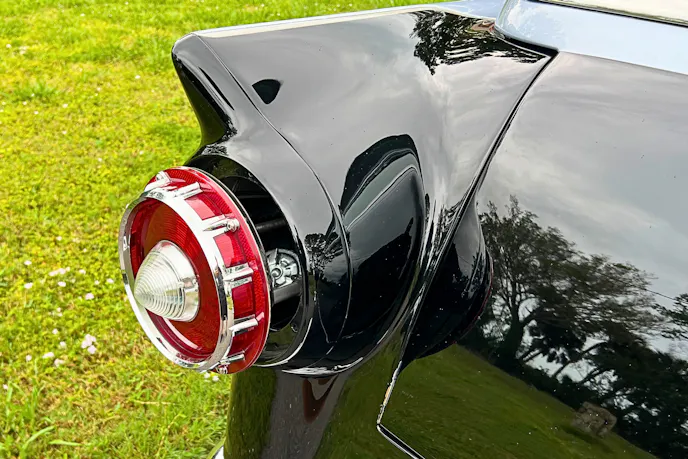
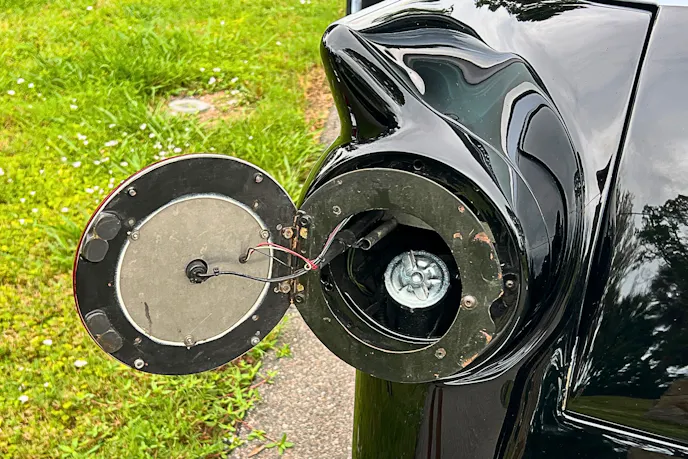
Certain cars have a way of drawing attention, whether it is their unusual nature, rumbling engine or custom bodywork. This ’57 Ford Ranch Wagon checks off all those boxes — and then some. Everything about it has been modified, from the unusual headlight configuration to the tip of the taillights, one of which now hides the fuel filler.
We first encountered this ’57 Ford Ranch Wagon at a popular Cars & Coffee in Southwest Florida. It’s not every day that you come across a ’57 Ranch Wagon, even though Ford produced 60,486 of these two-door cargo haulers. Let’s face it: How many of them survived past 1970? But we definitely dig wagons and the older the better.
Based on the nose, I thought it was a ’58. But then I talked to the owner and he revealed it was all ’57. Then I looked under the hood and I knew that was no Y-block staring back at me. It is a 588-inch all-aluminum 385-series Ford big-block that makes about 840 horsepower.
Body Building
Allen Pearson started this project many years ago when he was still living in California — 1996 to be specific. At the time, smog laws there favored pre-’66 vehicles, and he knew this was going to be a rather radical build. He didn’t want to be encumbered by bureaucracy. Plus, he really liked the lines of the ’57 Ranch Wagon. He is a self-professed “Ford bigot” and decided to do a wagon — back before that was cool.
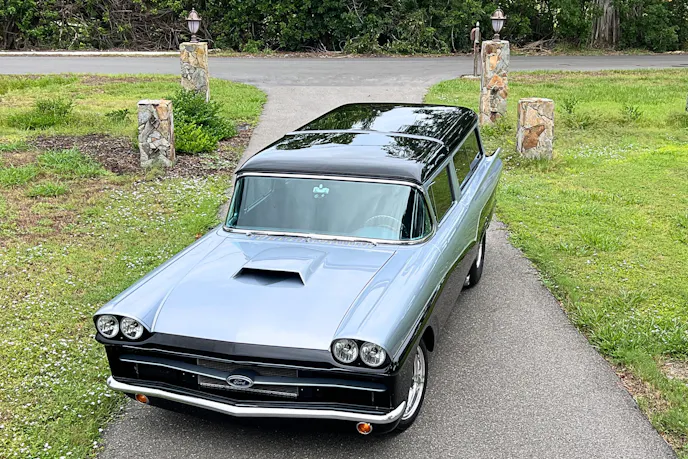
The number one thing people mention when it comes to his longroof is “the ’58 front clip” he put on it. Except it isn’t. The front is a completely modified ’57 nose, the same one the car was born with. The fenders are ’57, as are the headlight buckets, but lights are ’58-style modified to fit in the upper header.
Those are ’57 fenders all the way to the headlight bezels. They are ’58 lights in a completely modified upper header, with a ’65 Mustang lower header, a ’66 Impala upper bumper bar and a custom grille bar,” — owner Allen Pearson
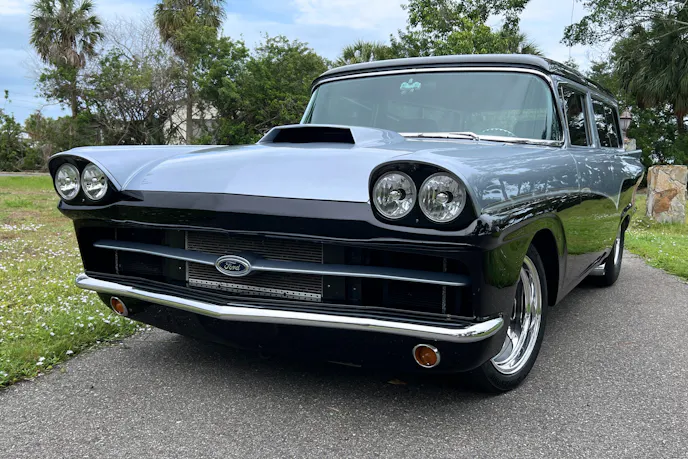
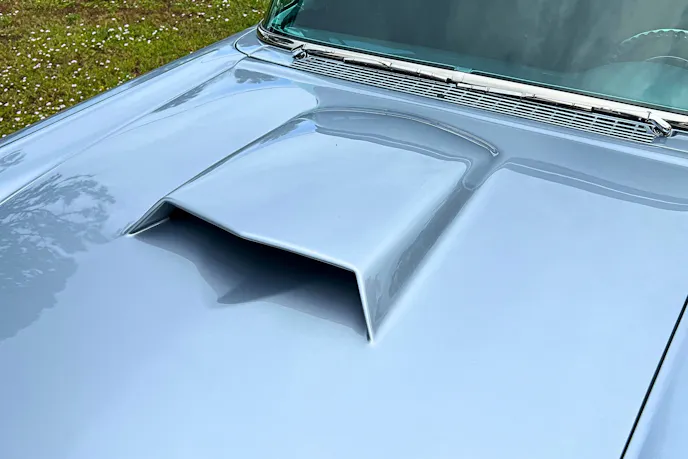
The hood scoop is off a Ford Ranchero GT (it’s smaller than the Boss 429 unit) and it is functional. The airbrush work down the sides is styled off the ’57 Ranchero’s stainless trim.
Of course, before he got that far, Allen had the body dipped and that opened a whole can of worms. There were holes everywhere from previous repair work.
“It was pretty rough,” he says. “We ended up welding all the holes up. I have a completely finished set of ’57 stainless, but I couldn’t bring myself to drill all the holes only to get leaves and stuff stuck behind the moldings, so we went this route and I am happy with this.”
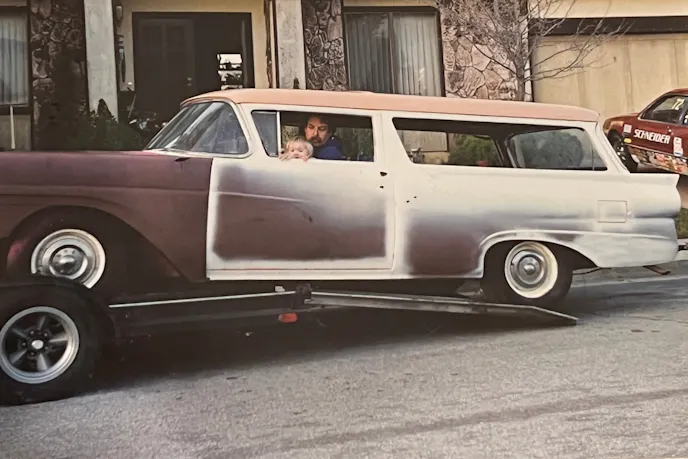
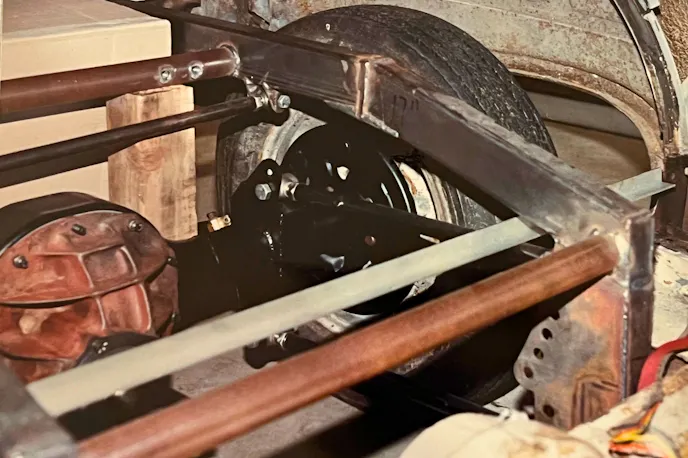
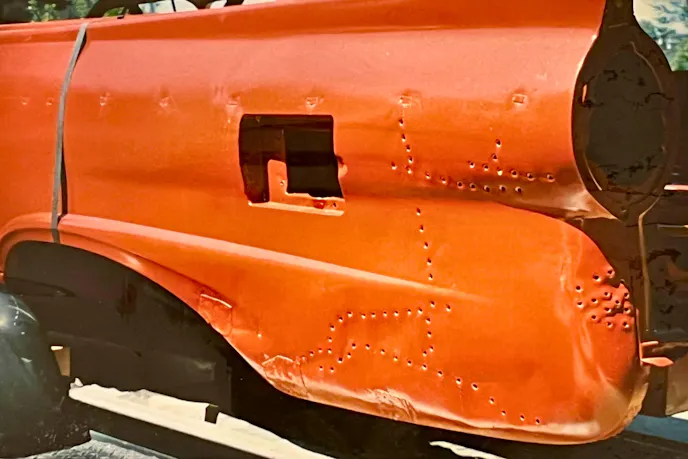
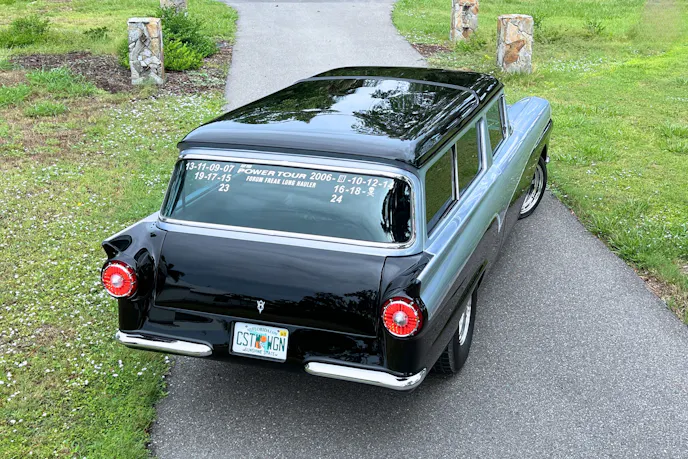
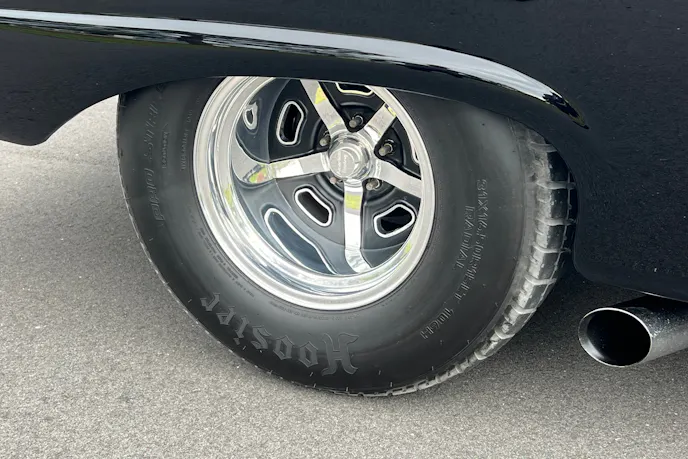
The rear wheelwells were stretched forward about three inches, which allows him to run a 31-inch tall (and much wider) tire. The gas filler door is gone, moved behind the left rear taillight, which pops out with the push of a button and swings open to reveal the fuel filler neck. The side windows are now power.
Even the tailgate has been completely altered. From the factory, it is a clamshell-style set-up. Allen welded the bottom part of the tailgate to the top, so it became a hatchback-style opening. The bumpers are also modified ’66 Impala upper bumper pieces.
The first paint job after all this bodywork looked good, but a chance encounter with a deer in Pennsylvania, necessitated repairs to the passenger-side door and front fender. That is when things got surreal. Jarrod Slate of Realistic Auto Restorations (St. Petersburg, Florida) was charged with repairing the body and paint, but when he started blowing the dust off, the paint came off with it — in sheets! That meant repainting the entire vehicle, which he did (and it has held up quite well. After Jarrod laid down the color, co-worker Jason Trimbach did air brushing for the “stainless.”
Interior Gets Major Changes
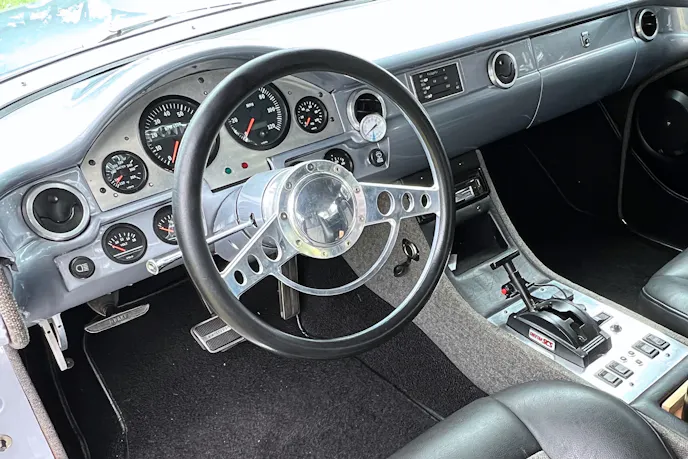
There’s no possible way a car with such slick body alterations could survive with a stock ’57 Ford interior. On the plus side, for this year the entire dash unbolts and can be removed, reworked, and put back in, which is what Allen did.
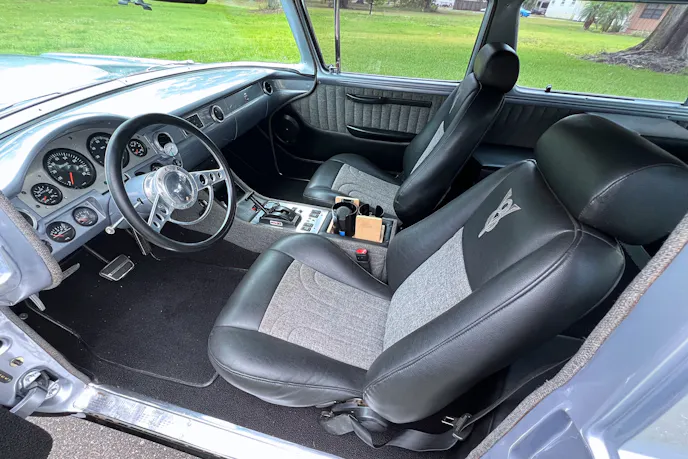
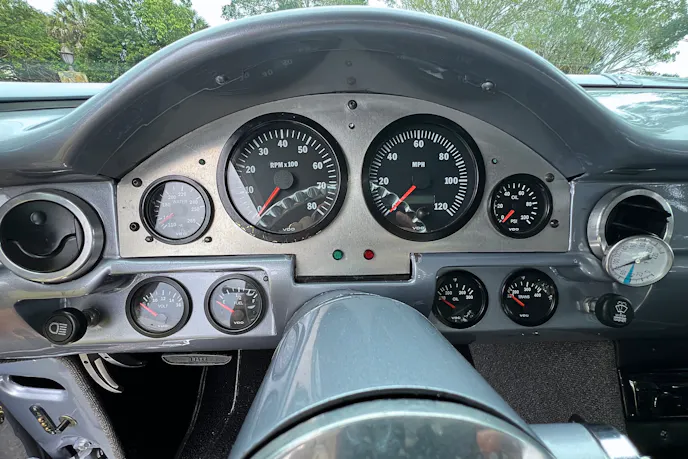
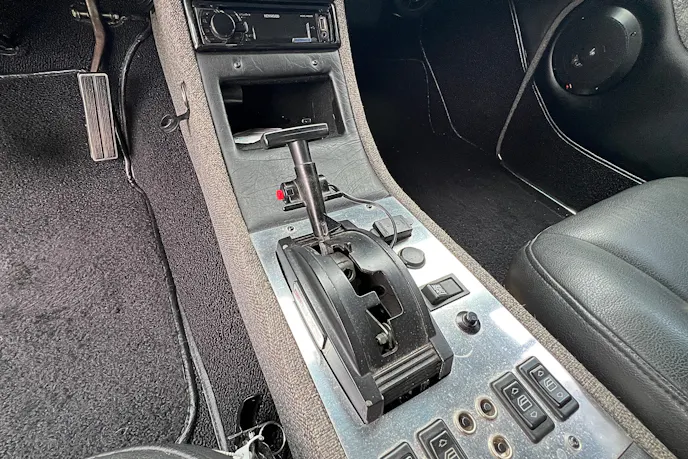
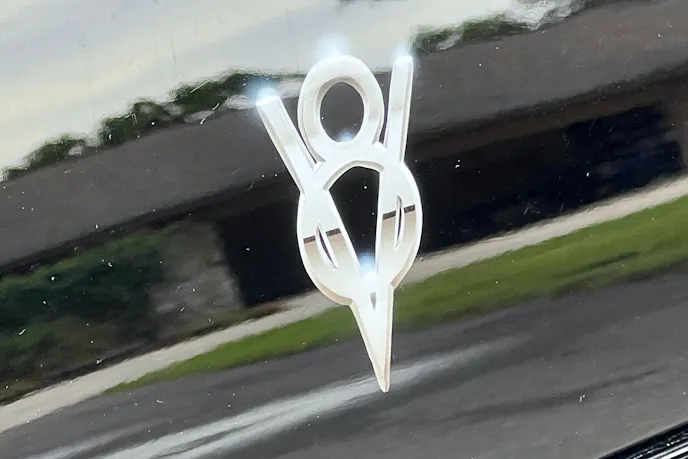
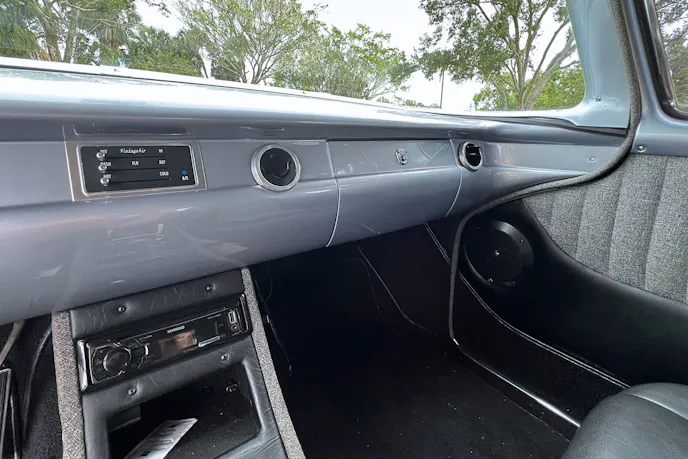
The speaker hole has been filled. The upper gauge panel is just a flat piece of aluminum with VDO Cockpit series dials. The console is handmade by the owner and has been through a couple of different iterations over the years. Power windows, Vintage Air climate control and a Kenwood head unit with two Rockford Foasgate amps and speakers were added. Seats are out of an ’96 Mustang and were recovered with custom fabric and V8 embroidery.
The rear seat was deleted and the base floor of the wagon in the back where the hatch opens was raised. When the spare tire well was removed, that gave him room to add space for a floor jack, tool, the four-link suspension and larger-than-stock fuel tank.
Under The Forward Opening Hood
The ’57 Ranch had an absolute beast under the forward-opening hood. The aftermarket aluminum block from Carroll Carter’s C&C Motorsports allowed Allen to build a lot more cubes than that factory 385-series iron block is capable of. But this has not come without issue.
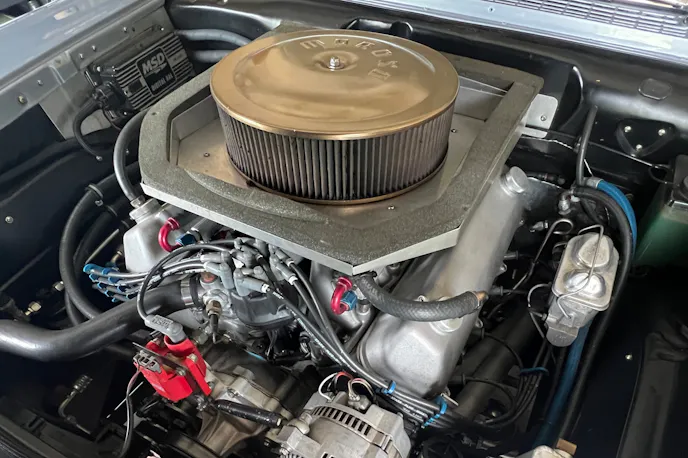
“All the aftermarket aluminum blocks for 385-series come with roller cam bearings. Regardless of what people say, if you really drive your car, roller cam bearings are not good on the street,” says Allen. “When we blew it up the last time, I had to send the block to New Jersey to have cast iron sleeves made for the cam journals to neck it back down to where I could run Babbitt bearings.”
To achieve these cubic inches, the bore 4.560 with a 4.50-inch stroke. Cylinder heads are Jon Kaase P-51s. Fuel injection is from Holley EFI, an HP multi-port setup.
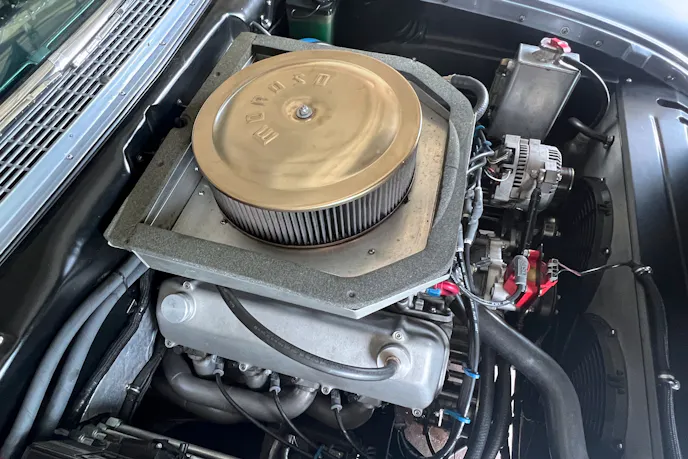
The transmission is a C6 with a low gearset and a Gear Vendors overdrive. Power goes to the ’57 Ranch’s original 9-inch rear (remember, ’57 was the first year for the fabled 9-inch) with 3.89 gears. It’s been shortened and braced and set up with a four-link.
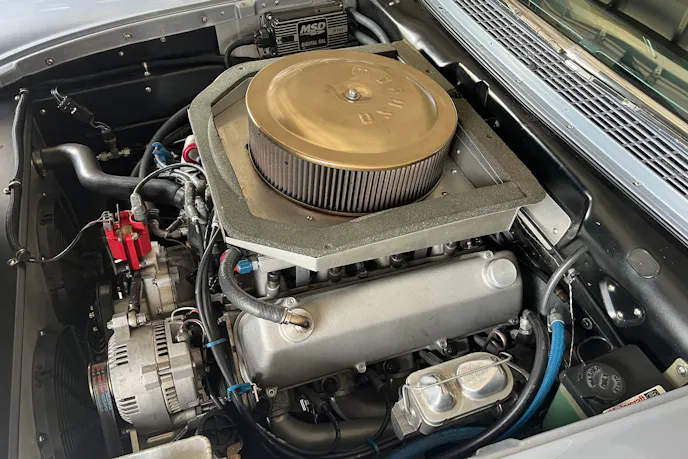
“My favorite part of the car is driving it,” reveals Allen, who isn’t afraid of putting thousands of miles on it, distracted drivers and abysmal fuel economy be damned. “We have 130,000 miles on it since we built it. It’s been on 16 Power Tours, it’s been to Hot August Nights, Pikes Peak, it’s been to Yellowstone, it’s been to the Badlands of South Dakota a couple of times.”
Totally Custom Chassis
While it is easy enough to find a full custom frame for just about anything, that was not the case when this build was conceived. Allen went with an Art Morrison Enterprises “bikini clip” up front for improved driveability. It was the AME IFS Deluxe, which had Mustang II geometry with tubular upper and lower control arms.
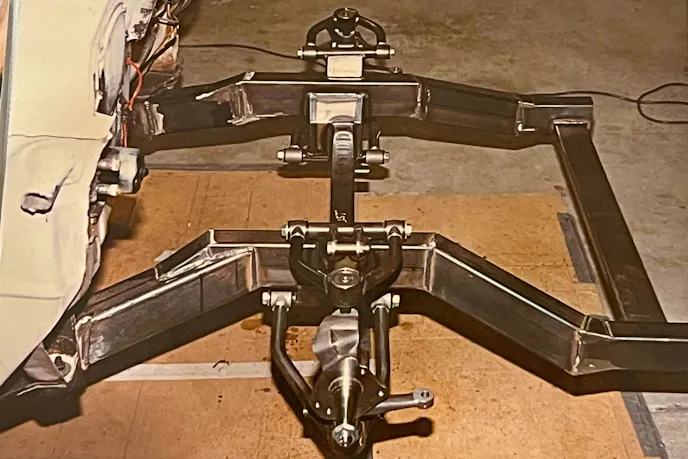
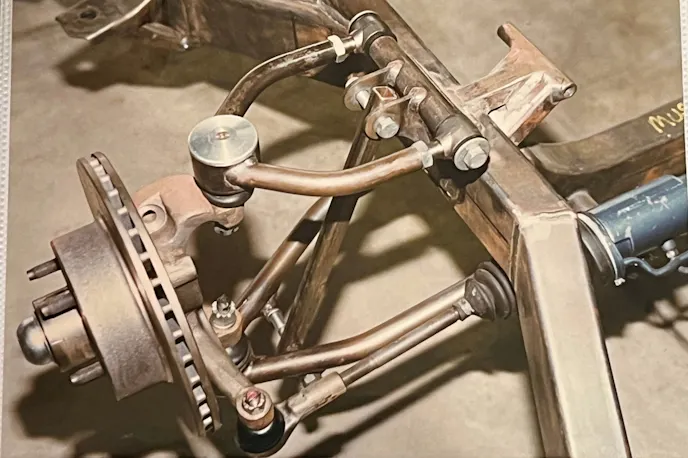
The rear, as noted, is the original 9-inch with a four link with a Panhard bar to locate the rear axle. A 25 gallon fuel tank ensures it can go farther than normal, regardless of the near 600 cubes guzzling petrol. The back was naturally tubbed to accommodate very large tires. It has 16.5-inch wide tires now, but can accommodate 18-inch wide rubber.
According to Allen, the car is in maintenance mode now. No major changes are expected. If he is going to start messing with anything, it’ll be the ’66 Ford F250 in his garage, which once belonged to his father. Other than that, he’s just going to keep piling the miles on the ’57 Ranch Wagon.
You might also like
1,511-HP Street Machine: John Warren’s Nuclear ’72 Chevy Nova
It's still the same Chevy Nova that Warren drove to school, only it's packing enough power to run with the quickest cars in the country.