
Seeing Leno’s Law signed delivers massive relief to enthusiasts across the Golden State. Following our Leno’s Law recently secured a historic, bipartisan 49-4 vote to pass through the California Legislature, the state finally provided the news gearheads wanted.
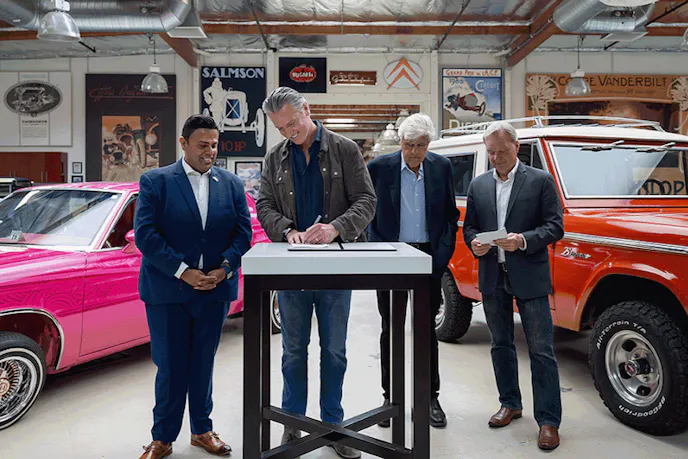
Governor Gavin Newsom stood among rows of vintage machinery inside Jay Leno’s private garage to put pen to paper on Senate Bill 1392. Joining the governor, lowrider clubs, shop owners, and SEMA leaders celebrated a major emissions policy win.
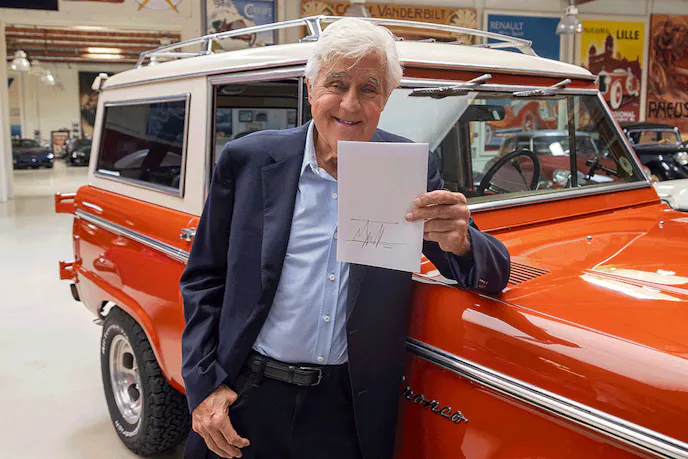
Authored by Senator Dave Cortese alongside principal coauthor Senator Shannon Grove, the statute establishes a phased exemption pathway for vehicles built between 1976 and 1985. Starting on January 1, 2028, qualifying 1976 through 1980 models skip standard biennial tailpipe testing.
That exemption window expands annually by one model year until 2033, when it covers 1985 models. Owners must carry collector insurance or verify driving less than 1,000 miles annually through a future DMV process.
Emphasizing the cultural victory, Spagnola states, “SEMA applauds Governor Newsom for putting his signature on a historic win for California’s automotive community and for every family, enthusiast, and small business working to keep this culture alive.”
Watching Leno’s Law signed into law energized independent builders throughout California’s $40 billion automotive aftermarket industry. Grassroots enthusiasts and lowrider clubs generated more than 1,700 letters urging state leaders to protect rolling history without harming air quality goals.
Praising the coalition, Spagnola notes, “Leno’s Law shows that California can protect clean air while also showing the appropriate reverence for the vehicles that connect generations and tell an important part of our state’s story. We are grateful to Senators Cortese and Grove, Jay Leno, our member companies and the thousands of advocates whose energy fueled this effort with an unrelenting passion for our shared automotive heritage.”
For folks wrenching on an 1980s Fox Body Mustang or a classic square body pickup truck, this statutory change breathes fresh life into weekend cruising. Rare specialty machines belong on sunny boulevard parades rather than rotting away behind bureaucratic red tape. It does not help those with later ’80s machinery yet, but the hope is it can be amended down the road to include more powerful late-model muscle and trucks.
You might also like
1965 Plymouth Satellite 440-Plus Six Packs A Punch
Kenton, the second owner, was lucky enough to score a complete, running 440 Six-Pack out of a totaled '71 Charger R/T