
Loose, wandering steering is one of the most common complaints among classic Mopar owners, and it is often the last thing addressed after an engine build or suspension refresh. Borgeson Universal Company’s Mopar power steering kit tackles that problem directly, giving 1970 through 1972 Dodge and Plymouth owners a complete, bolt-in solution instead of a parts-counter scavenger hunt. Built specifically for LA series 318, 340, and 360 small-block engines paired with a 1-1/8-inch pitman shaft, this kit swaps out a car’s tired manual or worn power steering setup for a quick-ratio box, a matched pump, and every bracket and hose needed to complete the conversion.
For anyone who has chased down individual power steering parts for a vintage Mopar, the appeal of a single, engineered Mopar power steering kit is easy to understand. Compatibility questions, mismatched hardware, and guesswork over hose routing disappear when every component ships together and is designed to work as one system. It is the kind of upgrade that quietly transforms how a car feels from behind the wheel, even though it never shows up on a dyno sheet or a timeslip.
What’s Included in the Small-Block Mopar Power Steering Kit
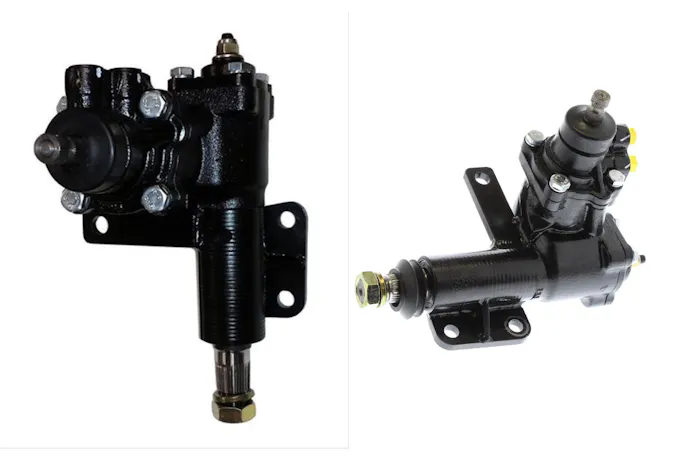
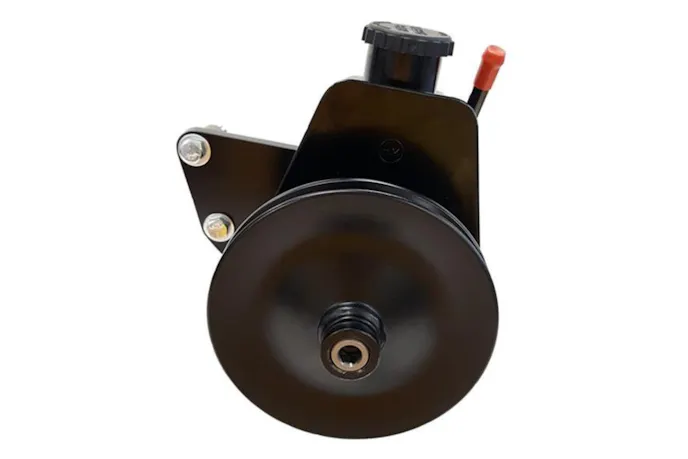
Borgeson’s kit centers on a 14:1 quick-ratio steering box, a noticeably faster ratio than the original equipment manufacturer (OEM) boxes found in most early-1970s Mopar cars. A matched power steering pump, mounting bracket, and pulley round out the pump side of the system, while a set of hoses handles fluid transfer between the pump and box.
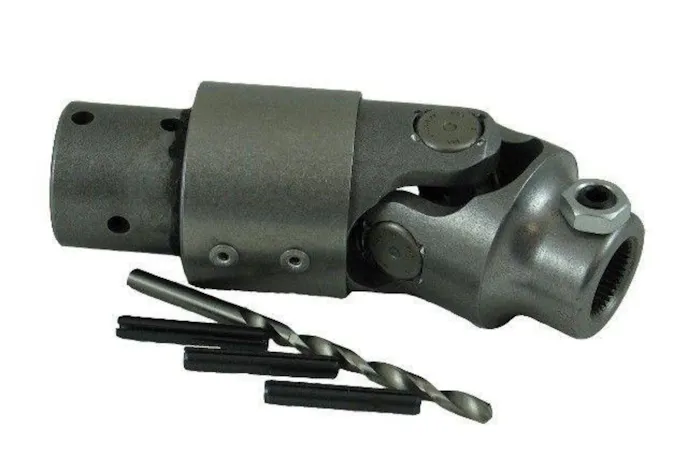
Rounding out the kit is a steering column coupler, Borgeson’s part number 036425, described as a vibration-reducing universal joint coupling. Because the original steering column shaft must be cut and shortened during installation, the coupler ships with the drill bit and pins needed to pin it to the shortened shaft. That single detail matters more than it might seem: a coupler that does not properly dampen vibration can transmit every bit of road feedback and driveline shudder straight into the driver’s hands, so building that isolation into the kit from the start is a meaningful design choice rather than an afterthought.
Borgeson notes that all of its power steering boxes and pumps are assembled and tested in the United States and the company backs the kit with a three-year warranty. The complete kit weighs 45 pounds, and Borgeson recommends adding a power steering cooler, sold separately, for long-term durability in these applications. Keeping fluid temperatures in check helps protect seals and hoses over years of driving, which is a small additional investment that pairs naturally with a kit built to last.
How a Mopar Power Steering Kit Improves Steering Safety
Steering play is not just an annoyance behind the wheel of a 50-plus-year-old muscle car; it is a genuine safety concern. Worn boxes and stretched linkages force a driver to make repeated small corrections just to hold a straight line, which becomes especially dangerous at highway speeds or during an emergency maneuver.
A quick-ratio box like the one included in this kit shortens the distance between steering input and front-wheel response. Less play means less delay when a driver needs to react, whether that is avoiding a pothole, correcting for a crosswind, or responding to traffic ahead. For a car that may be seeing more spirited driving after an engine or suspension upgrade, tightening up the steering system is not a cosmetic improvement. It is a functional one that directly affects how confidently and safely the car can be driven.
That confidence matters just as much on a relaxed cruise night as it does on a back road. A driver who trusts the car’s steering response is less likely to overcorrect, and overcorrection is often what turns a minor surprise into a real problem. Pairing a numerically quicker steering ratio with fresh, matched components also reduces the chances of a leak or failure at the box or pump, both of which can rob a driver of steering assist at the worst possible moment. Addressing steering slop alongside other common upgrades, such as brakes and suspension, keeps a classic Mopar’s safety systems working together rather than leaving one weak link in the chain.
Why Buying the Complete Kit Beats Sourcing Parts Separately
Assembling a Mopar power steering kit piece by piece invites problems. A pump that is not matched to the box can produce too much or too little assist. A generic coupler may not account for the vibration characteristics of a Mopar steering column. Hoses cut to the wrong length or fitted with mismatched ends can lead to leaks or, worse, a loss of steering assist while driving.
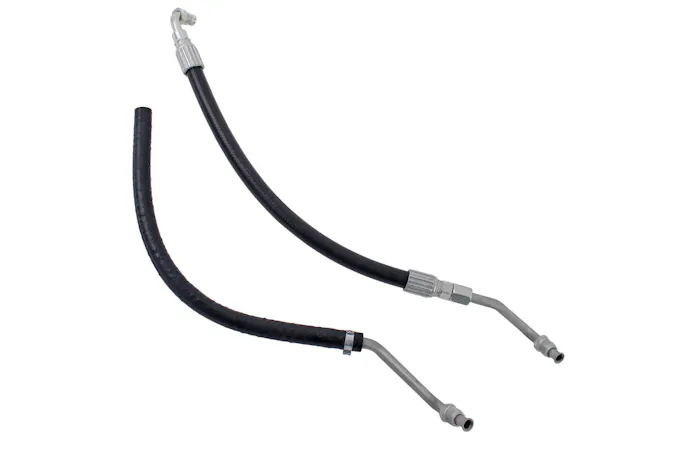
Because Borgeson designs and tests this kit as a complete system, the box, pump, bracket, pulley, hoses, and coupler are already matched to each other and to the intended application. That eliminates the trial-and-error phase that comes with piecing together a conversion from a mix of suppliers, and it means a builder is not left guessing whether a part will actually fit once it arrives. For a shop or DIY builder working against a deadline, ordering one part number instead of six or seven also simplifies the entire purchasing process.
There is also the matter of accountability. When every part in a conversion comes from a single manufacturer that stands behind the complete assembly with a three-year warranty, there is no finger-pointing between suppliers if something does not perform as expected. Buying individually sourced parts might occasionally save a few dollars on paper, but it shifts the burden of research, compatibility checking, and troubleshooting onto the builder. A kit built for a specific application removes that burden entirely.
Which Mopar Models Fit This Kit
Borgeson built this kit for a specific slice of the Mopar lineup: 1970-’72 Dodge Challenger, Charger, Coronet, and Dart models, along with their Plymouth siblings, the Barracuda, ’Cuda, Duster, Satellite, and Valiant. The Plymouth Road Runner joins the fitment list for 1971 and 1972. Every one of these applications shares the same LA series small-block engine family and 1-1/8-inch pitman shaft, which is what allows Borgeson to offer a single kit rather than a car-by-car custom setup.
Builders working with a big-block instead of a small-block should note that Borgeson also offers a separate big-block version of this same kit, so it is worth double-checking engine compatibility before ordering. This kit is listed as vehicle-specific rather than universal, and Borgeson provides a fitment check by year, make, and model, which helps confirm compatibility before purchase rather than after the box shows up on the workbench.
Installation Considerations Worth Knowing
The one modification every installer should plan for is shortening the factory steering column shaft. Borgeson’s instructions call for cutting the original shaft to length, then drilling and pinning the included coupler in place using the supplied drill bit and pins. It is a straightforward job for anyone comfortable with basic hand tools, but it is not a pure bolt-on swap, and it should be factored into the installation timeline.
Given how much heat these small-block engines can generate in a tight 1970s Mopar engine bay, Borgeson’s recommendation to add a power steering cooler is worth taking seriously, particularly for cars that see track time, towing duty, or extended highway driving in hot climates.
Between the quick-ratio box, the matched components, and the straightforward installation process, Borgeson’s small-block Mopar power steering kit offers a practical path to sharper, safer steering without the headache of sourcing parts from half a dozen different suppliers.
You might also like
1-of-48 And Great: 396/350-Horse Chevy II Is A Pure Stock Oddity
So what is the secret to running mid-12s on slippery F70-14 bias-ply tires with a near-stock combination? Practice, practice, practice ...