

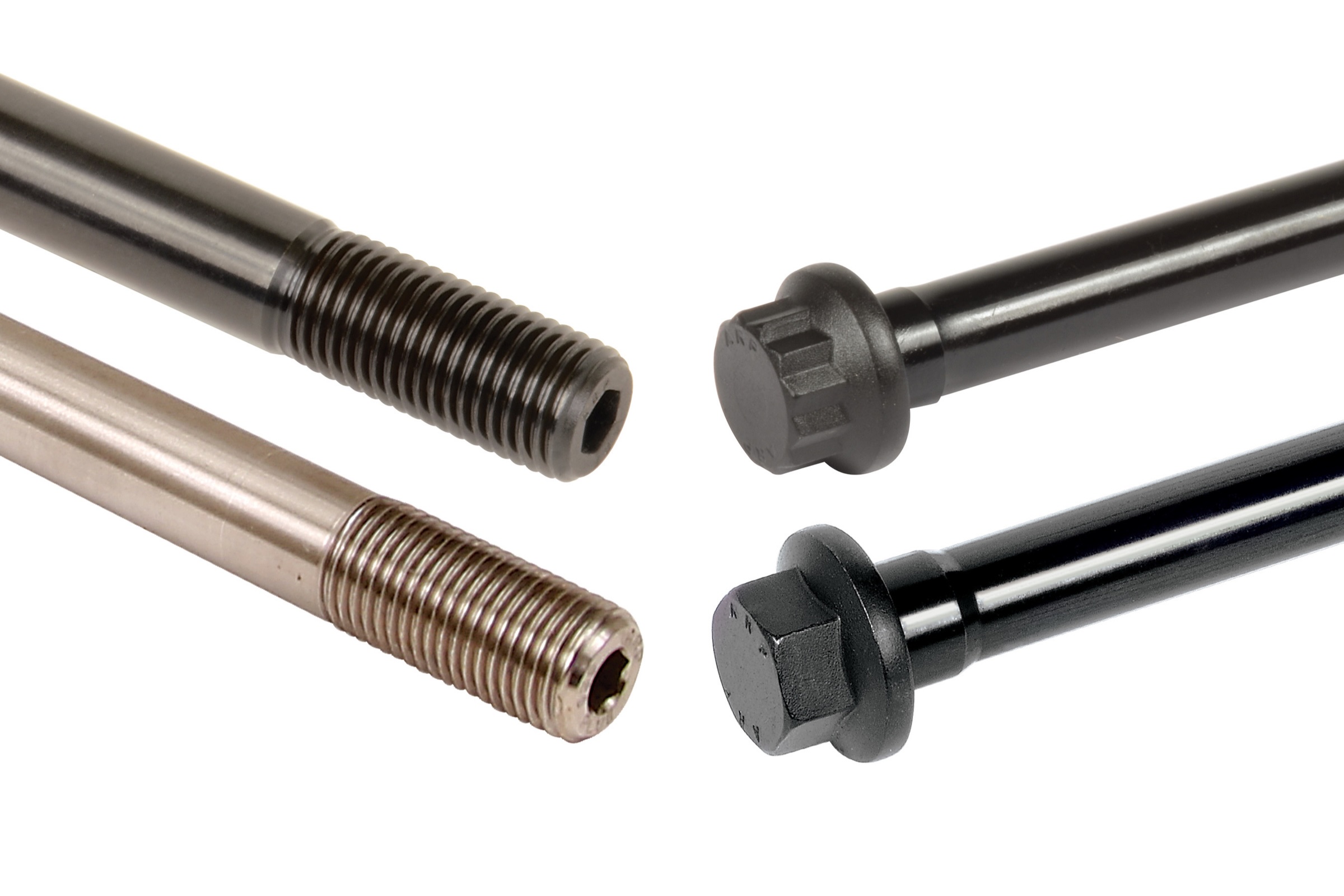
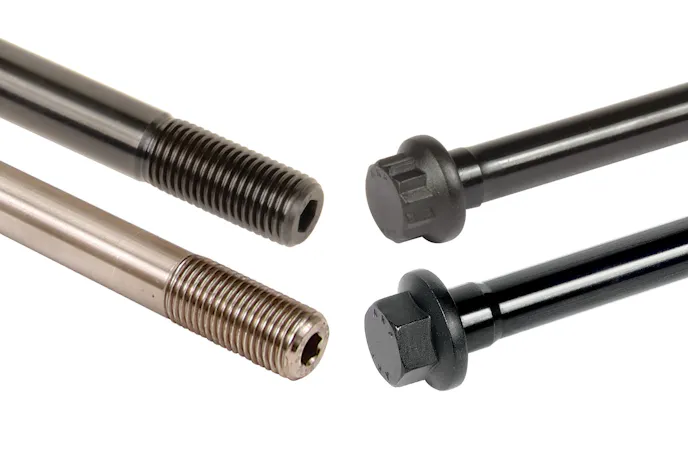
One of the most common questions asked of ARP’s tech tech team is whether it’s best to use bolts or studs. The simple answer is “It depends on the application.” There are many times when studs provide advantages and others where bolts are favored — access often being the determining factor.
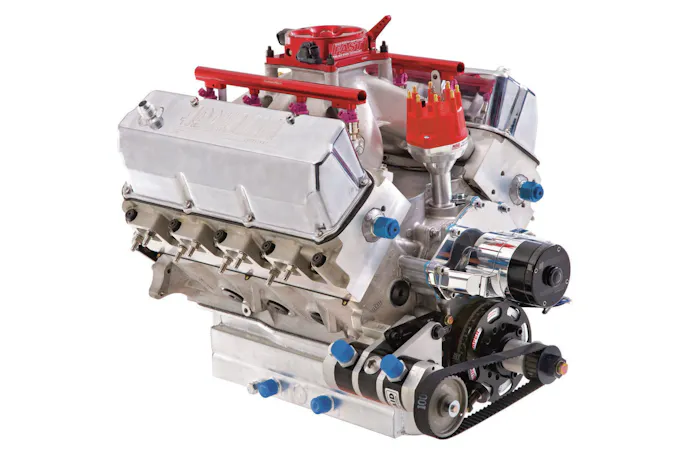
To be sure, a large number of the inquiries involve securing a cylinder head to the block. Obviously, the goal is to have sufficient clamping force on the gasket to optimize combustion chamber sealing.
It’s important to recognize how the preload forces differ between studs and bolts — this is especially important when aluminum blocks are employed. With head bolts you’re essentially “twisting” it into the block while torque is applied. As the bolt stretches it reacts to two different forces simultaneously. Conversely, a stud should be installed in the block finger-tight, with the application of torque on the nut pulling upward on the stud to achieve the desired preload. It’s much easier on the threads in the block and provides a more consistent preload of the fastener. There’s only one point of pressure: under the nut.
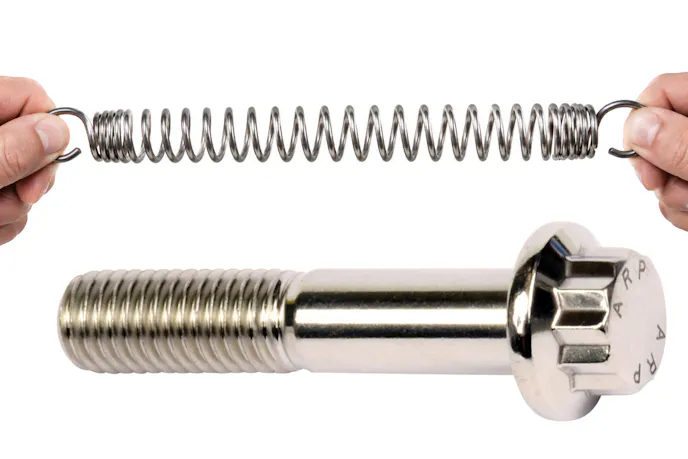
Bear in mind that studs or bolts react similarly to a spring or rubber band, as they must be stretched a specific amount to apply the desired rebounding preload. By way of example, a ⅜-inch diameter rod bolt made of 8740 chrome moly steel will need to be stretched between 0.0055- and 0.006-inch to apply approximately 10,000 lbs. of preload. Of course, the amount of stretch is dictated by the type of material, thickness and length of the fastener.
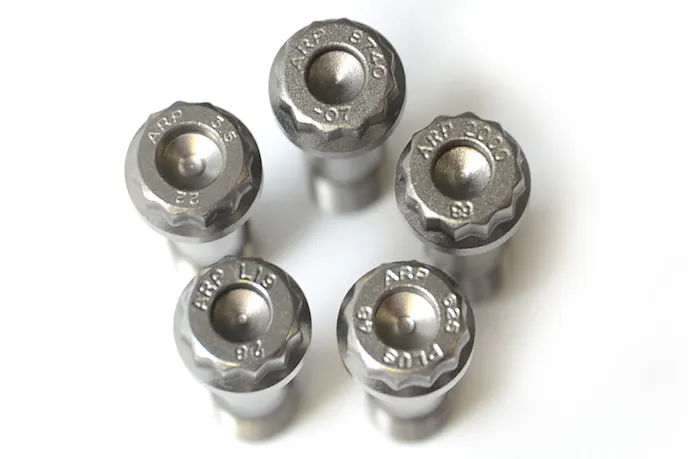
While ARP manufactures studs and bolts made from five different alloys, the vast majority of applications will use either 8740 chrome moly (190,000 nominal tensile strength), ARP2000 (220,000 psi) or Custom Age 625+ (260-280,000 psi). There are two others, but primarily used for supercharged/turbocharged fuel-burning engines with extremely high combustion pressures.
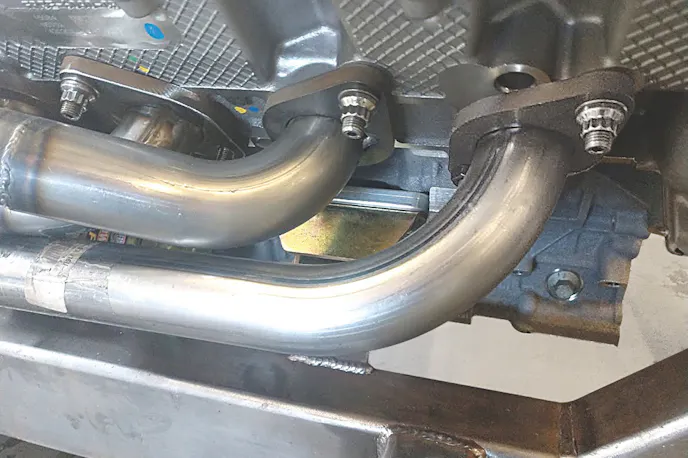
When it comes to installing headers, studs are often the favorite, as their ability to guide the flange into position is a huge benefit.
There is, however, a common thread between all five alloys, as ARP employs only the highest quality, most pure, grade alloys in all of its fasteners — far superior to “commercial” or “aircraft” grade.
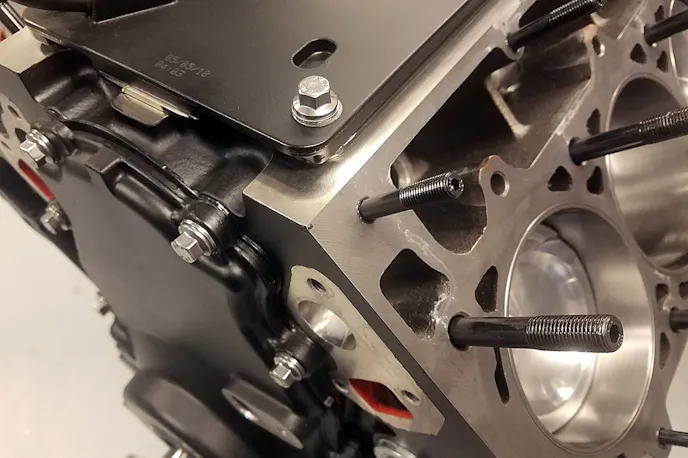
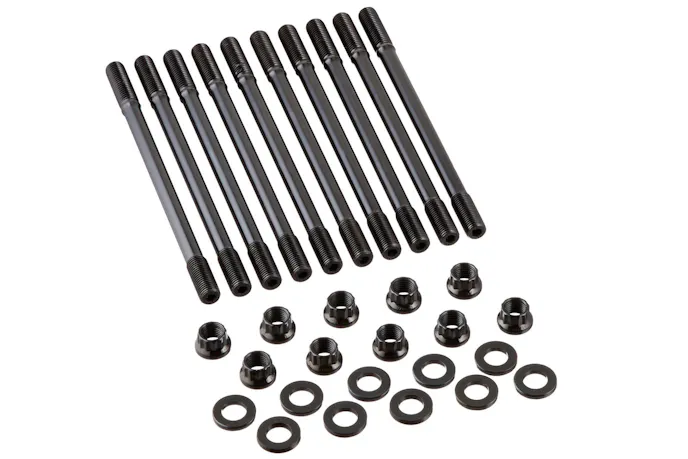
Anyone assembling an engine can appreciate the advantages of using head studs and being able to simply slide the head gasket and cylinder head into position. However, in some street applications there are things like brake boosters, heaters, etc. that can get in the way of things. That’s why many years ago ARP began hex-broaching its head studs (this also makes inserting the studs into the block a more efficient task).
It should also be pointed out that ARP takes great pains to ensure that the studs are concentric to facilitate the cylinder head sliding into place. All head studs are centerless ground to assure this. What’s more, ARP technicians place the studs vertically in special racks for heat treating to ensure 360° penetration. Threads are rolled — after heat-treat (when the material is harder)— to improve fatigue life.
Main Studs & Bolts
It’s the same song, second verse when it comes to main studs in regards to main studs and bolts. However, ARP does manufacture special kits for late model Chevy, Chrysler and Ford applications that feature both main studs and side bolts.
When it comes to installing headers, studs are often the favorite, as their ability to guide the flange into position is a huge benefit. ARP’s header studs have a unique “nut starter” nose that makes it easy to install the nut without the fear of cross-threading. Both hex or 12-point nuts are offered, with the compact 12-point nut making it easy to use a socket in tight quarters. ARP also offers special “reduced wrenching” fasteners for really cramped applications (like large primary tube headers). Both the studs and bolts are offered in polished stainless steel or black oxide treated 8740 chrome moly with hex or 12-point heads.
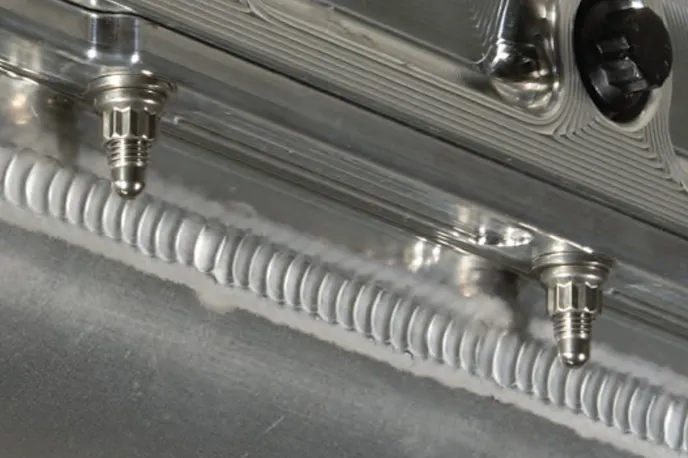
Similarly, ARP offers both studs and bolts for attaching valve covers, oil pans, and front covers. Again, studs offer the benefit of holding a gasket in place when the primary item is being installed. Options include being made of polished stainless steel or black oxide treated 8740 chrome moly with hex or 12-point wrenching.
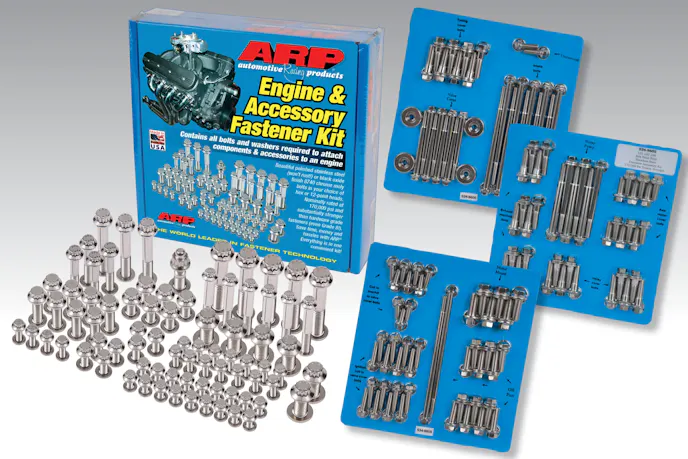
If bolts are your preferred fastener, ARP makes it easy to put a finishing touch on your engine through its popular, money saving Engine & Accessory Fastener Kits that cover no less than a dozen installations from intake manifolds to oil pans. They’re available for most popular engines and come in handy skin packed cards with easy identification. They’re available in polished stainless steel or black oxide finished 8740 chrome moly bolts with hex or 12-point heads.
To securely attach virtually any item not covered by a dedicated kit, ARP offers both polished stainless steel or black oxide treated 8740 chrome moly bolts in hand 5-packs by size. Sizes range from tiny #8-32 bolts 0.375-inch long to big ½-inch diameter bolts up to 6-inches in length (or similar metric sizes). Note that these are both nominally rated at 180,000 psi tensile strength and 20 percent stronger than Grade 8 hardware.
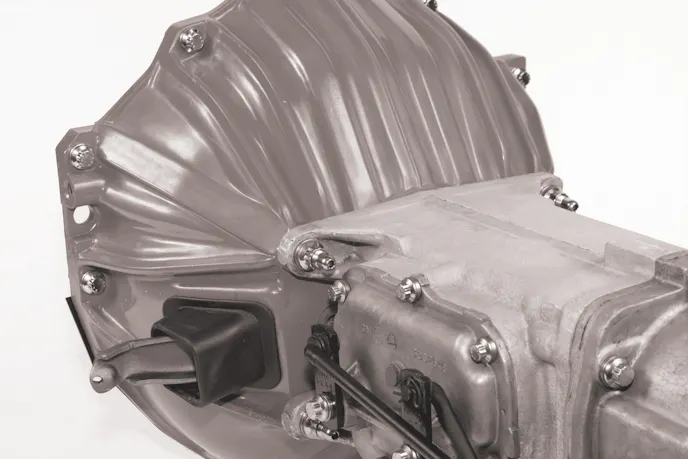
One stud application that’s becoming increasingly popular is in the driveline — bellhousing-to-block and bellhousing-to-transmission applications. Anyone who has wrestled a trans or bellhousing into position “the old fashioned way”can appreciate the efficiency of these unique stud kits. They’re hex-broached for easy installation and come with special “nut starter” noses. Washers and nuts (12-point or hex) are included. Choose between polished stainless steel or black oxide treated 8740 chrome moly.
There are two other important considerations. One is that all fasteners are manufactured in-house at ARP’s California facilities to ensure total quality control, and the other being that threads are rolled (not cut) to AS 8879D specifications — the industry’s most stringent. By rolling the threads you “work harden” them while cutting interrupts the grain flow. You can actually feel the difference in thread engagement compared to lesser quality fasteners.
A huge amount of additional technical information can be found in the latest ARP catalog, which is available for downloading at www.ARPcatalog.com. Personalized technical assistance is available by calling 800-826-3045 and a free printed copy of the catalog can be requested.
You might also like
Isky: The Camfather Who Changed Horsepower Forever
Isky never lost his love of hot rodding or tinkering. Even after his 100th birthday, he would go to work and and the SEMA Show.