

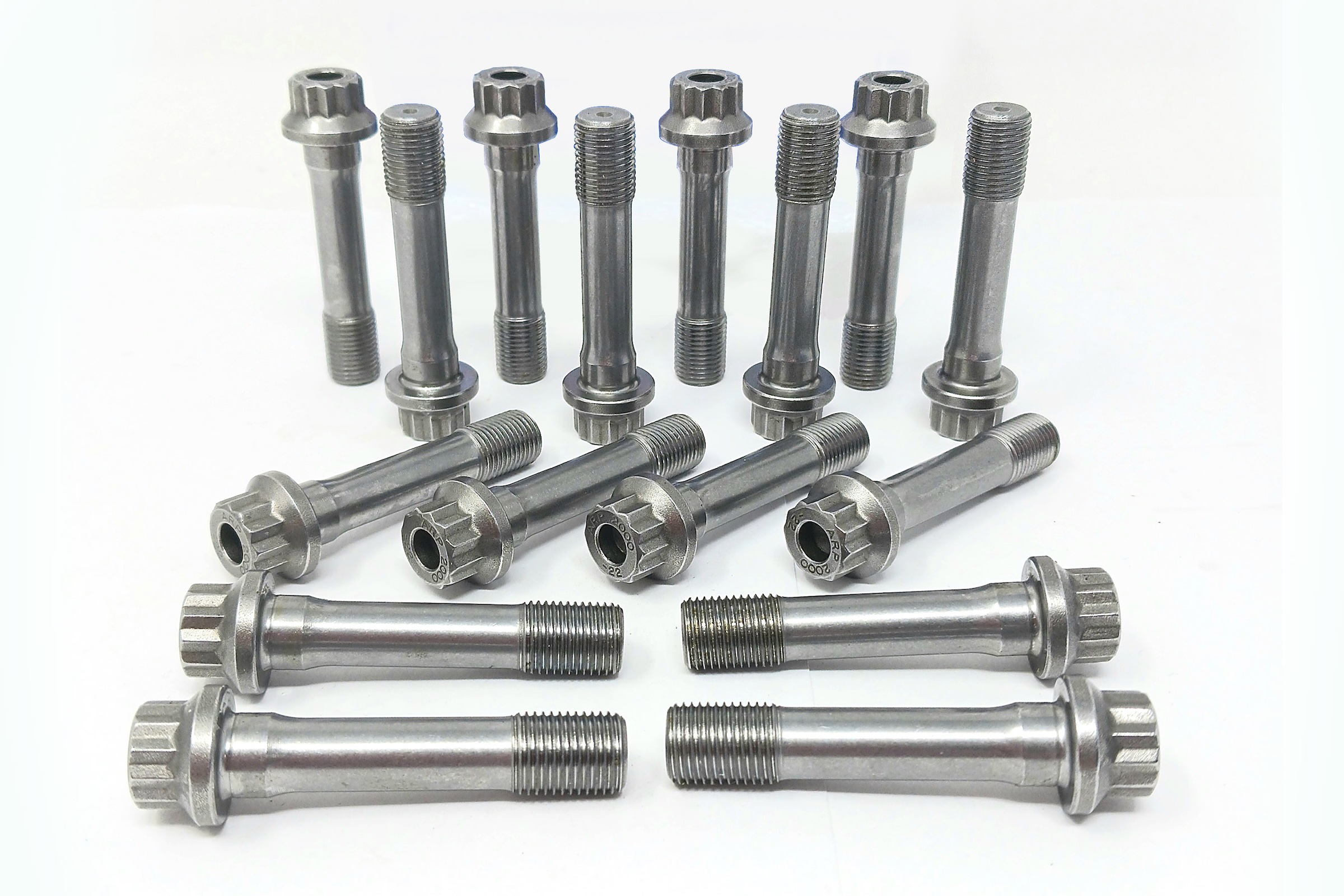
Ask any professional engine builder what the most critical fastener is in an engine and most will say connecting rod bolts. That’s because a rod bolt failure can lead to catastrophic carnage. For input on the types of rod bolts to consider, proper installation techniques, and monitoring procedures to nip any problem in the bud, we turned to the folks at ARP, a leading manufacturer of high performance fasteners since 1968.
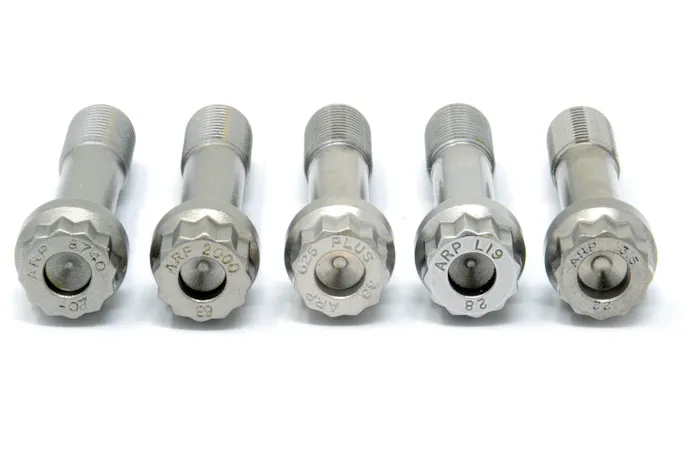
Readers of this website are concerned with engines that range anywhere from stock applications to highly-boosted powerplants, so we’ll endeavor to cover all the bases when it comes to rod bolt tech.
The most important aspect of any installation is fastener preload. Consider that a bolt functions like an extension-type coil spring, where it offers resistance (i.e. rebound) when it’s stretched. By way of example, a typical ⅜-inch small-block Chevy rod bolt must be stretched between 0.0055- and 0.006-inch to exert about 10,000 lbs. clamping force. Also keep in mind that ARP has special tools to ensure you accurately assemble your engine.
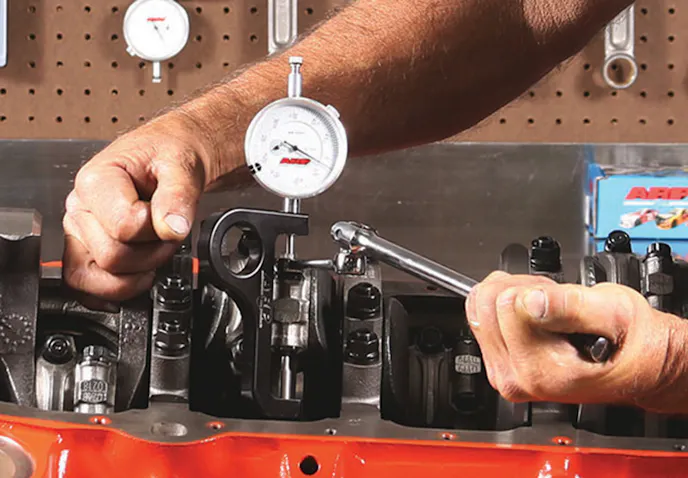
If the bolt is over-torqued, it can be yielded. Conversely, insufficient preload can cause the bolt to loosen. While installing rod bolts with a torque wrench is an acceptable practice, use of a stretch gauge eliminates any guesswork. Bear in mind that there are factors that affect the accuracy of a torque reading, like the fastener lubricant employed and the wrench itself. ARP has offered free torque wrench testing at many venues over the years and found errors of 30 percent or more. Torque wrenches are delicate instruments that must be handled with care and never used as a breaker bar to loosen fasteners.
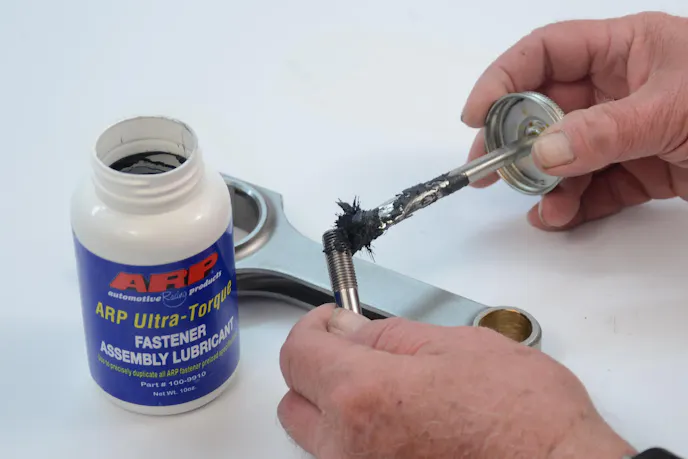
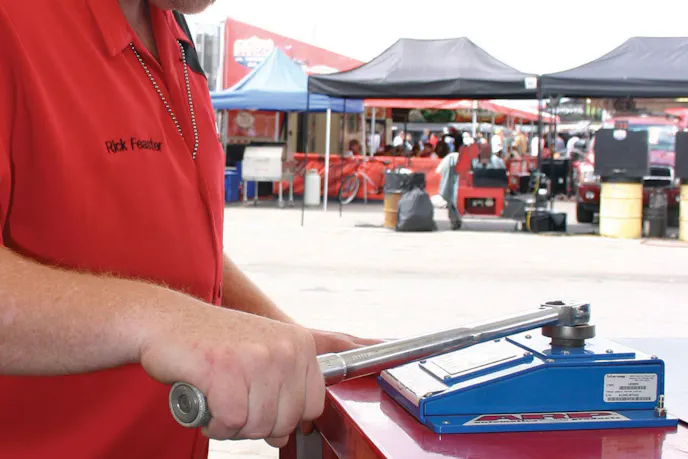
ARP has spent many years rigorously testing lubricants like oil, moly, EPL, “peanut butter” and others and found discrepancies in their accuracy and repeatability. Oftentimes it requires many cycles of torquing a bolt, loosening it, and retorquing again to mitigate the friction. The data gleaned from these tests enabled the company to develop ARP Ultra-Torque Fastener Lubricant, which delivers 95-100 percent of the desired preload on the first (and any subsequent) pull.
Speaking of pulls, ARP recommends the desired preload be obtained in three equal stages (i.e. 25 lb to 50 lb to 75 lb). Always use the rod manufacturer’s load specs.
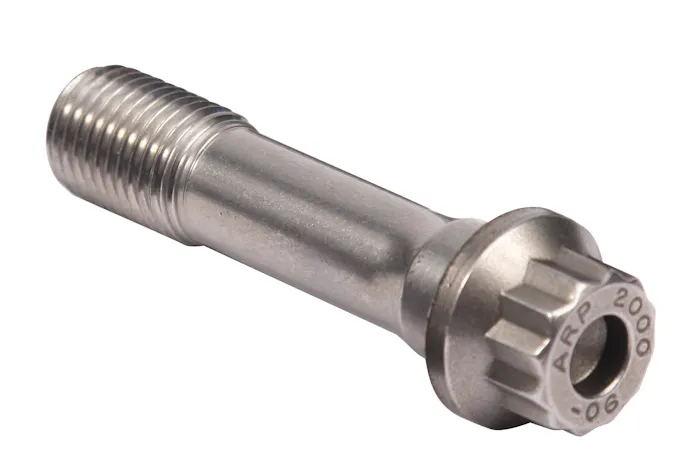
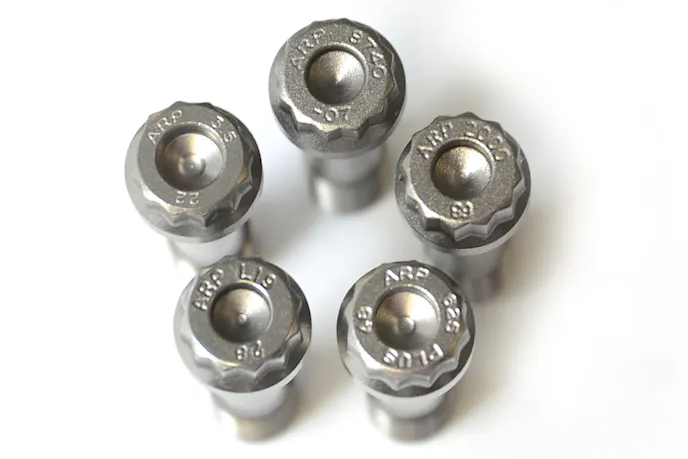
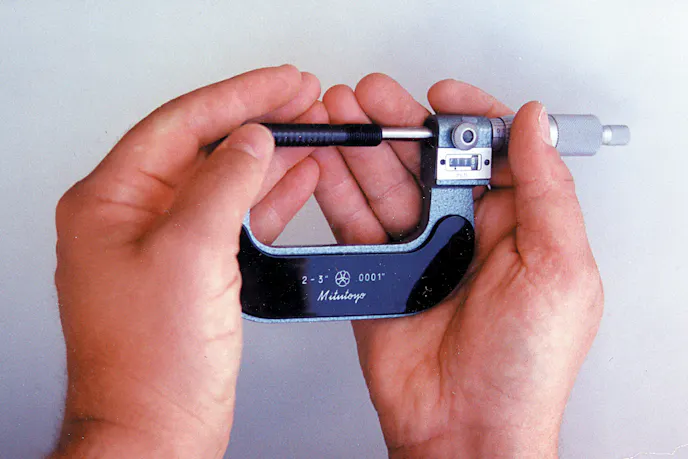
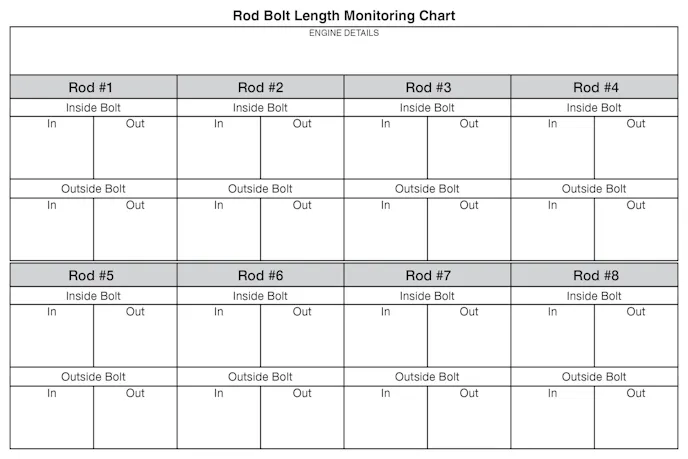
An easy way to monitor the condition of a rod bolt is to measure its length in a relaxed state prior to engine assembly and make note of it. When the engine is serviced and the rods come out, measure the bolt again. If it has stretched by .001-inch or more, it should be replaced. The ARP catalog (available free upon request) contains a handy chart (page 54) that can be used to keep track of the rod bolts.
Types Of Bolts
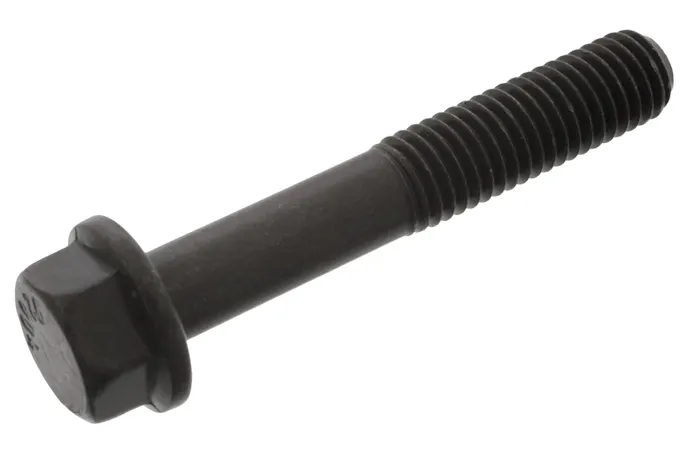
There are basically two types of rod bolts; the cap screw type that seat in the rod cap and OEM replacement types with different style heads that nestle into the rod and rely on nuts to apply preload. ARP offers replacement rod bolts for virtually every engine you can think of, with 34 different head styles covering domestic and import applications.
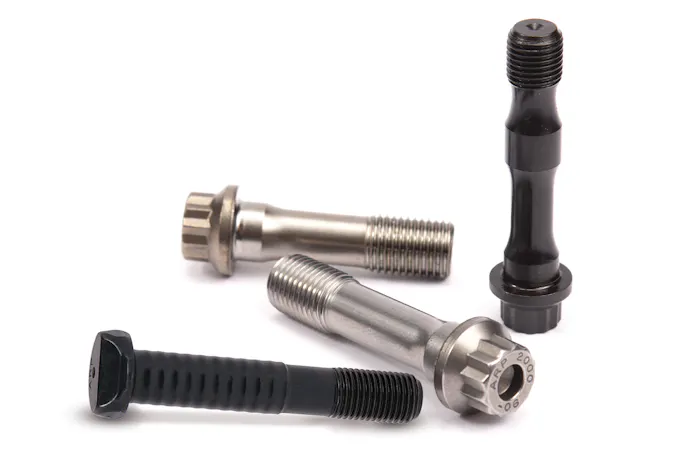
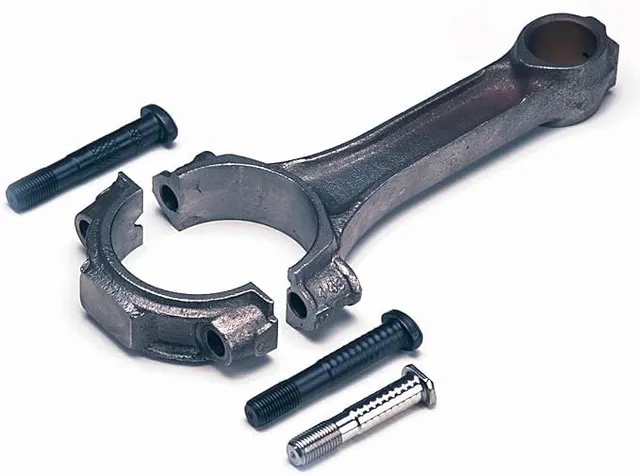
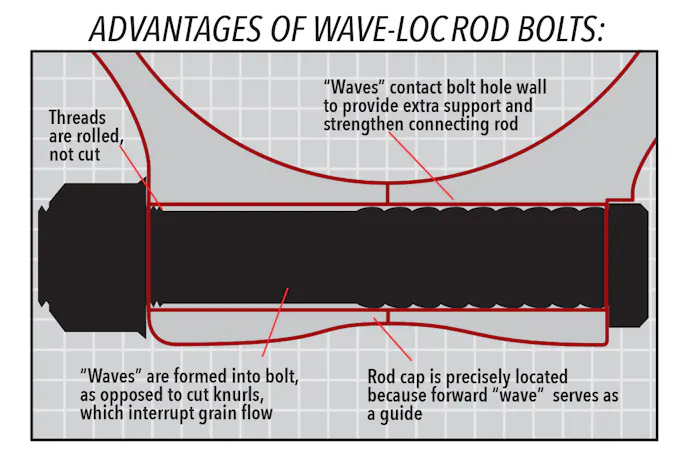
To take OEM-style rod bolts to the next level ARP developed the patented Wave-Loc bolt. Instead of the shank being knurled, a series of “waves” are forged into the shank to provide the necessary seating contact. Because knurls are cut into the shank and disrupt grain flow. The Wave-Loc design provides long-term reliability while actually strengthening the rod. The “waves” also serve to properly align the rod cap. Most replacement type bolts are made of 8740 chrome moly steel (190,000 psi) while “Pro Series” Wave-Loc bolts are offered made of ARP2000 material (220,000 psi).
It’s important to note that all ARP connecting rod bolts are manufactured in-house from the highest quality materials. They are far superior to “aircraft quality.” After they are forged, they are heat-treated, with threads rolled after the material is heat-treated which vastly improves fatigue strength.
Replacements For Any Brand
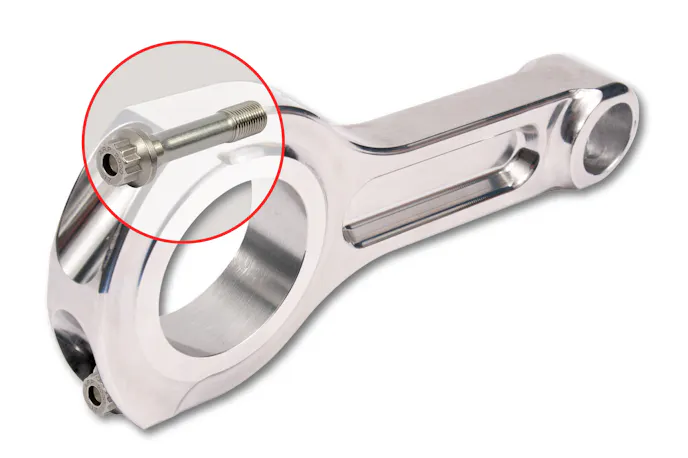
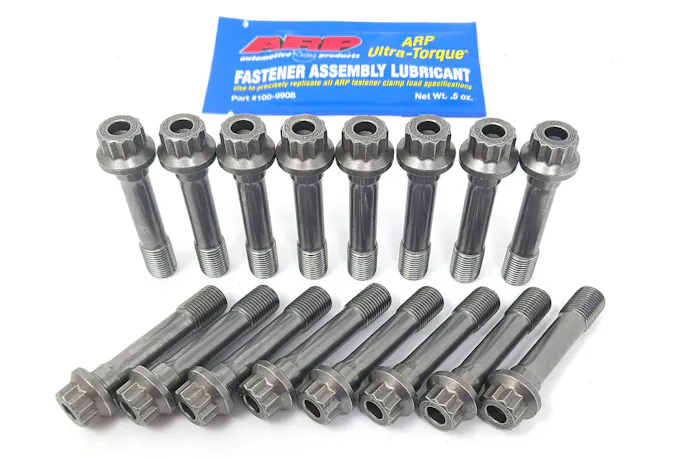
While many aftermarket forged steel and aluminum connecting rods are equipped with ARP bolts, high-strength replacements are available for most any brand. They are available in five different alloys ranging from 8740 chrome moly steel rated at 190,000 psi nominal tensile strength to the proprietary ARP2000 (220,000 psi) and up through Custom Age 625+, L19 and ARP3.5 that top out at 280,000 psi.
If there’s any question as to what’s the optimum rod bolt for your application and budget, call ARP’s factory tech reps at 800-826-3045. You can check out the latest catalog, which contains dozens of pages of valuable tech information, at www.ARPcatalog.com.
You might also like
Project F-Zilla: Building A Bulletproof IRS For Our Street Truck
We wanted to address our IRS center section. To ensure it can handle all 764-horsepower, we turned to Strange Engineering.