
In the late 1960s and early ‘70s, the car movie, one of the oldest film genres with its origins dating back to the 1920s, started to come of age. Elevated from typical B-movie status by films like Bullitt and Vanishing Point, which combined larger budgets, A-list stars, and seasoned directors, the car movie became one of the most popular cinematic staples of the era. And then, in 1971, came a film called The French Connection, which brought the genre to the ultimate level: Academy Award-winning status.
Though primarily a crime thriller, The French Connection nonetheless earned its car-movie bonafides by featuring a car chase that was intentionally designed to top anything that preceded it, including Steve McQueen’s romp through the streets of San Francisco in a Highland Green Ford Mustang.
In this special installment of Rob’s Car Movie Review, I thought we would not only assess the film as we usually do, but also take a deep dive into its legendary chase sequence and explore exactly how it was captured on film. Trust me, you won’t believe some of what you’re about to learn, so fasten your seatbelts now before we go.
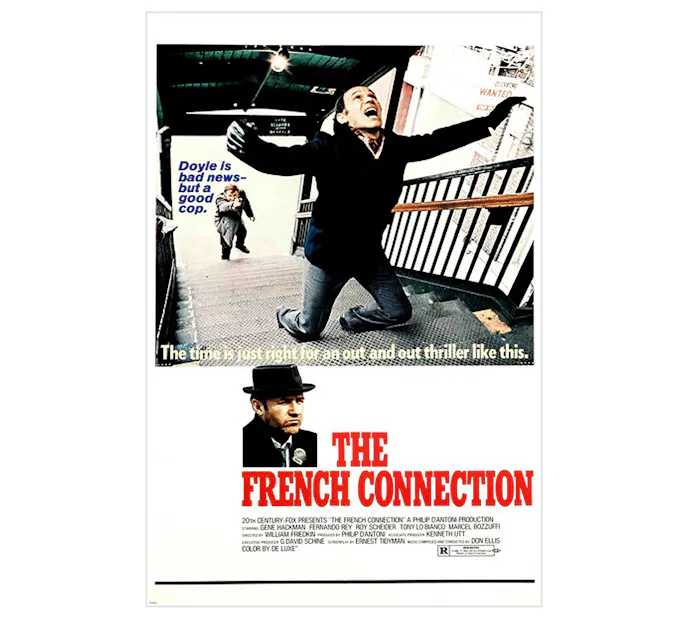
The events dramatized in The French Connection were part of a real-life case that occurred in New York City in 1961, during which NYPD detectives Eddie Egan and Sonny Grasso broke up what was then the largest heroin importation operation in the United States. Their exploits were documented in Robin Moore’s 1969 book, The French Connection: A True Account of Cops, Narcotics, and International Conspiracy.
The rights to the book were optioned by Twentieth Century Fox, with producer Phillip D’Antoni hiring Shaft screenwriter Ernest Tidyman to adapt the book into a film script. Capable TV and film director, William Friedkin was then attached to helm the picture.
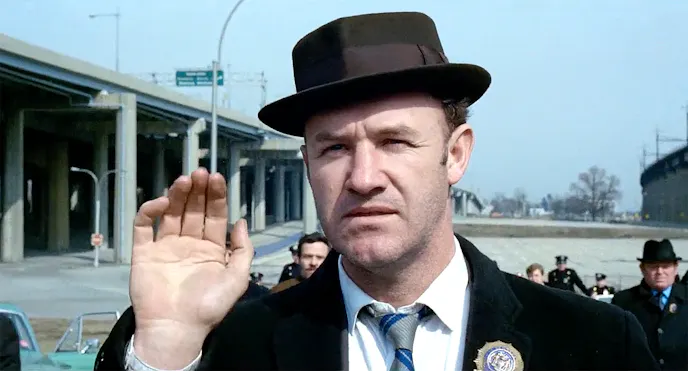
Casting, which ended up being one of the film’s strongest suits, was initially considered controversial, with Friedkin insisting on giving the lead role of Eddie Egan substitute Jimmy “Popeye” Doyle to a then little known and 40-year-old Gene Hackman. Playing his loyal partner, fictional Sonny Grasso counterpart Buddy “Cloudy” Russo, was the versatile Roy Scheider, while the rest of the ensemble was filled out by Fernando Rey, Tony Lo Bianco, and legendary stunt driver Bill Hickman (more on him later), along with cameos by the real Eddie Egan and Sonny Grasso.
The plot of the movie concerns Marseille-based drug kingpin, Alain Charnier (Rey), who intends to smuggle a gigantic haul of 89 percent pure heroin into the United States secreted in the car of a French TV personality who is traveling to America by ship.
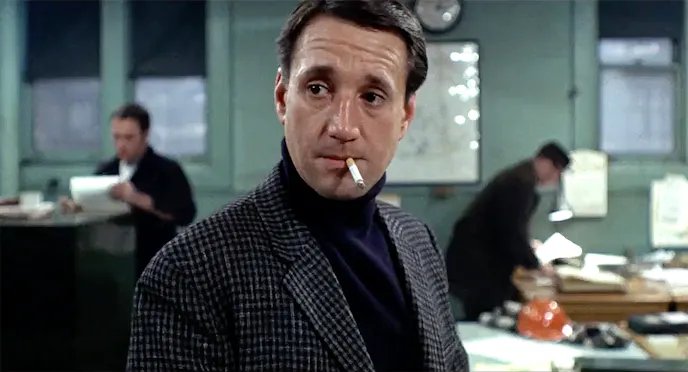
Meanwhile, on the mean streets of Brooklyn, New York, narcotics officers Popeye Doyle and Cloudy Russo note that there is an utter dearth of heroin on the scene of late. They get a tip from an informant that a massive shipment of the drug is due to hit the streets soon, and every junkie in New York City is dope sick and awaiting this event to “get well.”
Later, while having some after-hours drinks together at Manhattan’s famous Copacabana club, Popeye and Cloudy recognize a table of big-time mobsters being entertained by a small-time hood, Sal Boca (Lo Bianco). Getting a feeling that there is something wrong with this picture, the two cops tail Sal and soon discover that he, along with a dirty local politician and the mobsters at the Copa, are all in cahoots to purchase Charnier’s heroin.
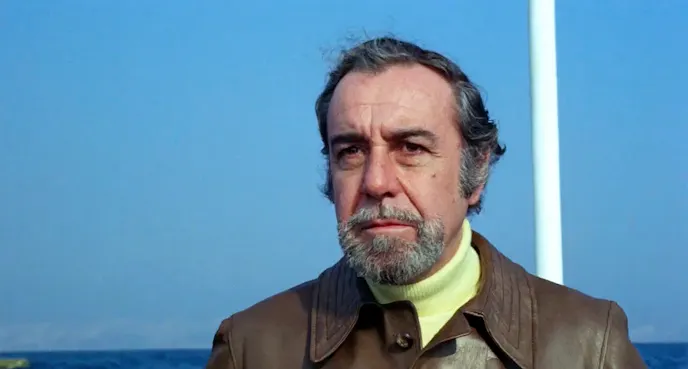
What follows is a high-stakes game of cat-and-mouse in which Popeye and Cloudy seek to foil the transaction, prevent the heroin from being distributed, and bring Charnier, Boca, and all the other participants to justice.
Upon the film’s original theatrical release, audiences were stunned by what they saw, to the extent thatThe French Connection became an unmitigated blockbuster, grossing an astonishing $51,708,862 (in 1971 dollars) off an estimated production budget of only $1.8 million.
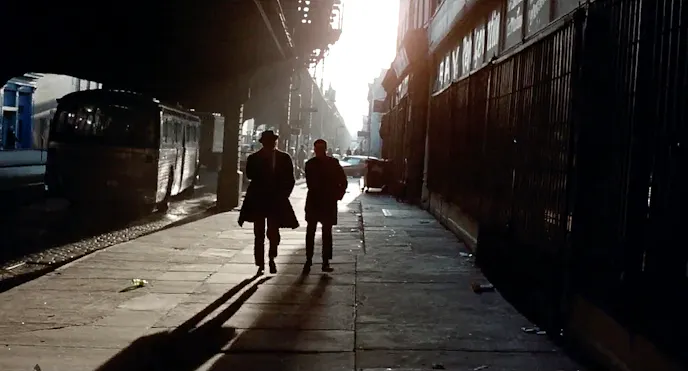
In large part, that astonishment was in response to the masterful, auteur-style efforts of director William Friedkin. Borrowing from Konstantinos “Costa” Gavras’ 1969 political assassination film Z, Friedkin opted to shoot the film largely handheld and with a set of “normal” lenses that approximated the natural perspective and field of view of the human eye. This imparted a disturbing level of documentary and cinéma vérité feel to the proceedings, which afforded the viewer a sensation of being a voyeur within the film’s world.
Reinforcing the realism informed by these choices, Friedkin also opted to shoot almost entirely on location in Marseille, Brooklyn, and Manhattan, and to desaturate the daylight shots and super-saturate the nighttime ones to emphasize the cold, gritty, and decrepit infrastructure of New York City in the early 1970s.
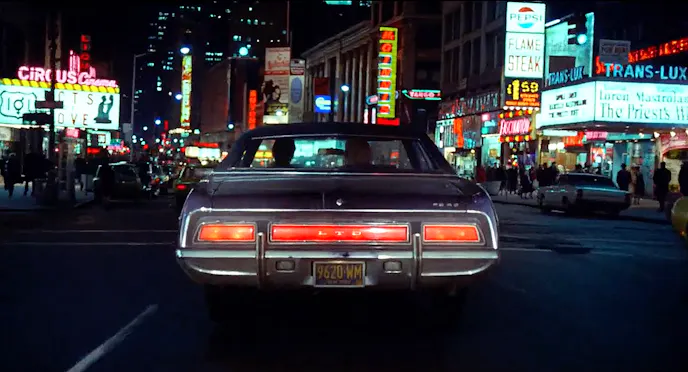
This landmark look would go on to influence how directors handled urban decay forever after, from Dog Day Afternoon (1975) and Taxi Driver (1976), to the recent Academy Award winning film, Anora (2024).
The film’s acting was also something new for audiences in the early 1970s. There was none of the melodramatic emoting that was still prevalent in Hollywood films, replaced instead with interplay that mirrored real-world relationships. The bond, or lack thereof, between characters was not revealed in expository dialogue, but rather in the way they behave with one another.
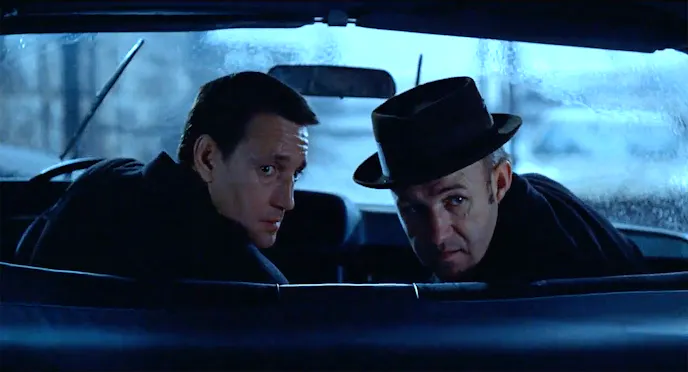
We sense that Popeye and Cloudy are tight and have always got each other’s back by actions, not words. Likewise, their obsession to foil the bad guys’ plans were also communicated on screen by the lengths they go to, not by cheap dialogue designed to reveal inner strategies and feelings. This too added greatly to the realism and grittiness of the movie and set new standards for similar films that followed in The French Connection’s wake.
So powerful were the film’s performances (which I should note were aided by having the real Eddie Egan and Sonny Grasso routinely on set to work with Hackman and Scheider to get the mannerisms, attitudes, and tactics of tough New York City narcotics cops correct) that both Hackman and Scheider were nominated for Academy Awards, with the former winning the Best Actor statue, thereby launching his career anew as a genuine movie star.
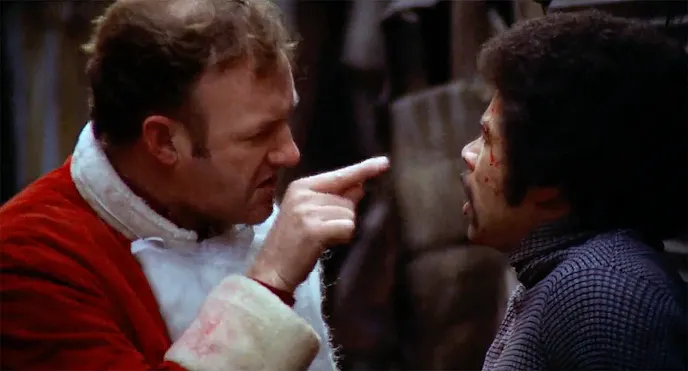
But beyond all these startling facets, what really left the film’s original audiences amazed was the chase sequence that constitutes the movie’s midpoint. Notice that I didn’t label it as a “car chase;” as the scene actually begins as a pursuit on foot.
After a hitman employed by Charnier unsuccessfully attempts to kill Popeye by sniping at him from a rooftop, Popeye maniacally runs after the man through the streets of Brooklyn, leading to the assassin getting on a subway train travelling on an elevated platform to attempt to escape.
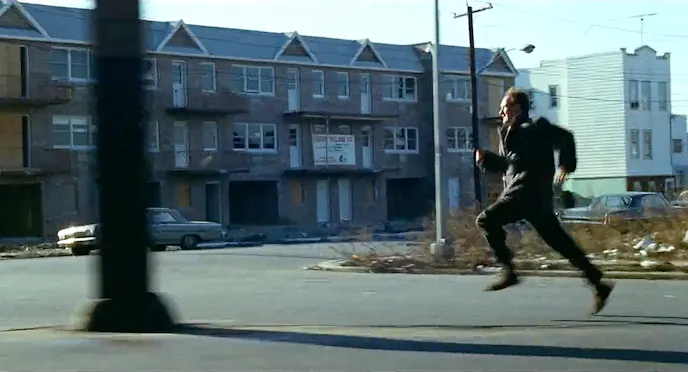
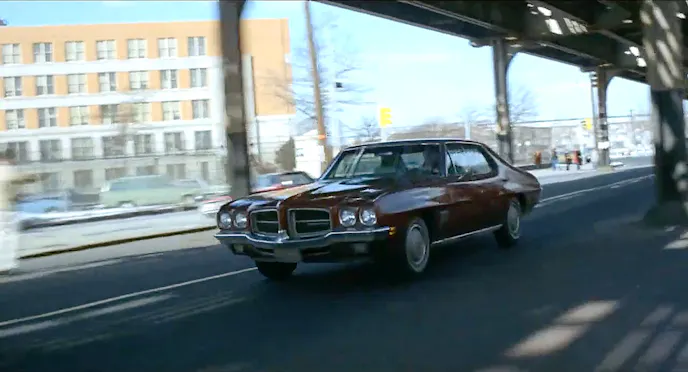
Unable to get onboard the train in time himself, Popeye runs back down to the street, commandeers a car from a passing motorist, and chases the train through weekday traffic, dodging pedestrians and often crashing into other vehicles, until he is able to ascertain that the assassin has gotten off the subway. Popeye then corners the man on the stairs to the elevated platform, and shoots him dead when the would-be murderer attempts to evade arrest.
The sequence, which in totality lasts nearly 15 minutes, is nerve-racking, heart-pounding, and unlike anything ever seen before in a movie to that point.
Remarkably, no chase originally existed in the film’s screenplay, and it wasn’t until 20th Century Fox top executive, Richard Zanuck, started seeing dailies of the movie, that the idea of adding one became strongly suggested to director William Friedkin so as to spice things up.
Friedkin readily took to the idea, but with the understanding that he was free to do anything he wanted for the chase scene. Zanuck agreed, and a mere week before the chase was to be shot, Friedkin came up with the foot/car/subway idea.
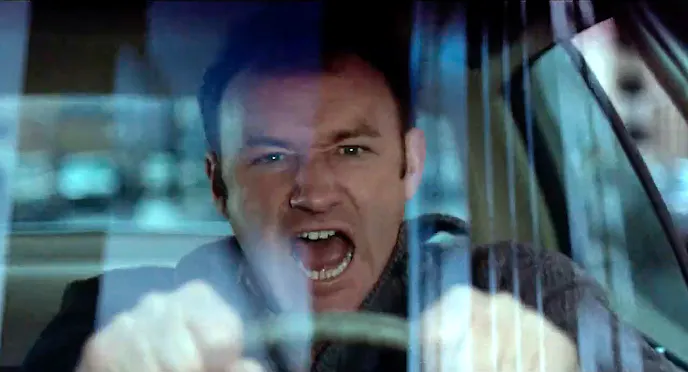
In order to capture the sequence he envisioned on film, Friedkin intuitively knew that he was going to have to throw out the book in terms of on-set production convention, and indeed employ new ways to shoot such a scene on the fly.
Working closely with director of photography, Owen Roizman, and the aforementioned stunt driving legend, Bill Hickman (I told you his name would come up again), who had recently been the stunt driver on Bullitt and Vanishing Point, amongst a couple dozen other previous productions, the men plotted out a course comprising Stillwell Avenue, New Utrecht Avenue, and 86th Street in Bensonhurst, Brooklyn, under what was then the elevated BMT West End subway line.
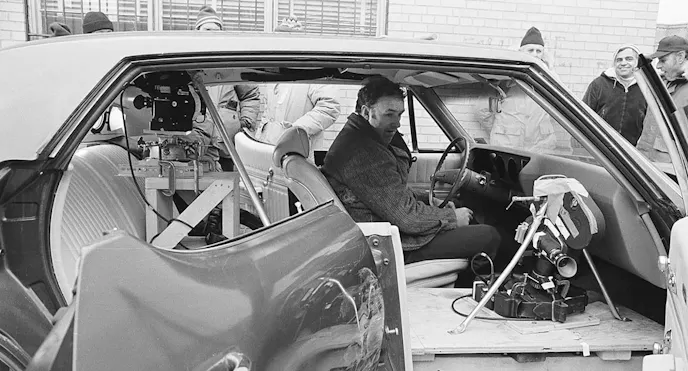
They broke the sequence down into five main stunts, with Friedkin working out where he wanted cameras situated for each sequence. His idea was to eschew any standard-type dolly or crane shots, and instead mount multiple cameras in the interior and exterior of the car as well as handheld cameras operated by cameramen in the streets and sidewalks around the action, to lend a pedestrian’s point-of-view to things. To get the in-car angles Friedkin wanted, the production crew would have to jury-rig many of the camera mounts, as some they needed didn’t exist at the time.
In pre-production for the chase, Friedkin, Roizman, and Hickman estimated they would need two weeks in total to film it, and to make it look real, they determined that in spite of undercranking the camera to 18 frames-per-second to add some artificial fake speed to the filmed proceedings, the car Hackman and Hickman would be driving would indeed have to be traveling at high rates of speed.
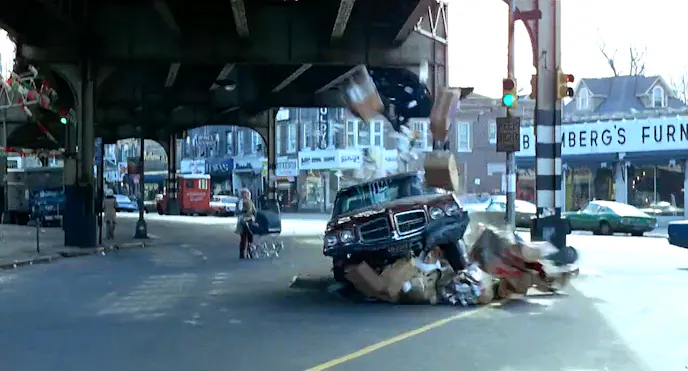
Taking into account production budget restrictions and noting that the City of New York would never agree to issue a permit to close busy Brooklyn streets for that long and have a vehicle travelling at incredibly unsafe speeds on said roadways, Friedkin concluded with producer D’Antoni that they would have to request only the most basic filming permits from the city, and shoot the chase illegally, guerilla-style, with actual cross-traffic and pedestrians on the streets during filming.
In today’s litigious and regimented world, this decision seems an outrageous, incredibly irresponsible, and indeed criminal act that would undoubtedly have ended up with the entire crew being arrested and the production shut down, but in 1971 no such restrictions existed, so that’s exactly what the production did: for close to two weeks, Gene Hackman and Bill Hickman threw a 1971 Pontiac LeMans around the streets of Brooklyn in midday traffic with no road closures, at completely reckless speeds. As you can imagine, this resulted in a few close calls and even some actual unplanned incidents.
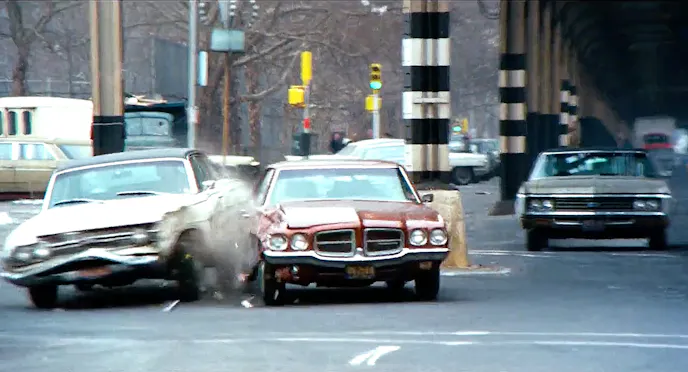
“There were a lot of accidents, a lot of things that happened that we didn’t think about, and it’s a miracle that nobody got hurt,” Friedkin admitted in an interview years after. “I wouldn’t do that today. It was very dangerous. I can’t tell you how much. At one time, we were in the car at 90 miles an hour for 26 straight blocks, and we paid no attention to green lights or red lights. We just blew through traffic, as you can see.”
In the end, the chase sequence in The French Connection was indeed just the spice the film needed to propel it into the pantheon of the greatest films ever made, to the degree that it has reached true legendary status amongst modern cinephiles. Even in its day, The French Connection garnered a total of 13 Academy Award nominations, ultimately sweeping the Oscars with wins for Best Picture, Best Director, Best Adapted Screenplay, and Best Editing along with Hackman’s Best Actor statue.
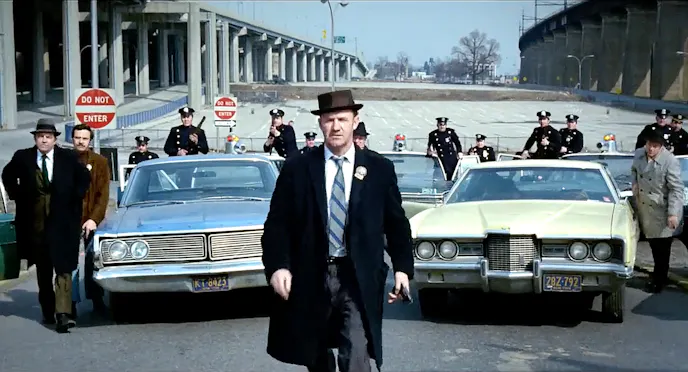
While it would be a safe bet that such an utterly reckless method to capturing a chase will never be attempted again, most certainly by a production financed by a major Hollywood entity, William Friedkin’s extraordinary efforts no doubt cemented the chase in The French Connection as one of the greatest of all time.
See y’all next time!
You might also like
1965 Plymouth Satellite 440-Plus Six Packs A Punch
Kenton, the second owner, was lucky enough to score a complete, running 440 Six-Pack out of a totaled '71 Charger R/T